
Hatch-Waxman Act: How Generic Drugs Got Approved and Changed Healthcare
When you pick up a generic pill at the pharmacy, you’re benefiting from a law passed in 1984 called the Hatch-Waxman Act, a U.S. law that created a legal pathway for generic drugs to enter the market without repeating expensive clinical trials. Also known as the Drug Price Competition and Patent Term Restoration Act, it was designed to fix a broken system where brand-name drugs held monopolies for too long, keeping prices high. Before this law, companies spent years and millions to prove a drug worked—even if it was chemically identical to one already approved. The Hatch-Waxman Act changed that by letting generic makers prove bioequivalence instead, saving billions and putting pressure on brand-name drug prices.
This law didn’t just help patients—it reshaped the entire pharmaceutical industry. It gave brand-name companies a way to extend their patent life by up to five years if they invested in new uses or formulations, which encouraged innovation. At the same time, it gave generic manufacturers a clear roadmap: file an Abbreviated New Drug Application (ANDA), show their drug behaves the same in the body as the original, and get approved fast. That’s why today, nearly 9 in 10 prescriptions in the U.S. are filled with generics. But it’s not perfect. Some drugs, like those with a narrow therapeutic index, still cause problems when switched—something you’ll see covered in posts about generic side effects and absorption issues.
The Hatch-Waxman Act also connects to how the FDA, the U.S. agency responsible for ensuring drug safety and effectiveness inspects manufacturing sites, checks for quality, and approves every generic before it hits shelves. It’s why you can trust that a generic levothyroxine or metformin works the same as the brand, even if it looks different. And it’s why the FDA’s facility inspections and bioequivalence testing are so important—because without them, the whole system would collapse. You’ll find posts here that dig into exactly how these tests work, from fasted vs fed state studies to why some people feel worse after switching generics.
This law also set the stage for today’s debates: Who gets to make generics? Why do some drugs still cost too much? Why do insurance companies push generics but sometimes block access? The Hatch-Waxman Act didn’t solve all problems—but it gave patients real power. Now, every time you save money on a prescription, you’re seeing the impact of this law in action. Below, you’ll find real-world stories and data on how it affects your meds—from thyroid pills to anticoagulants—and why understanding it helps you make smarter choices.
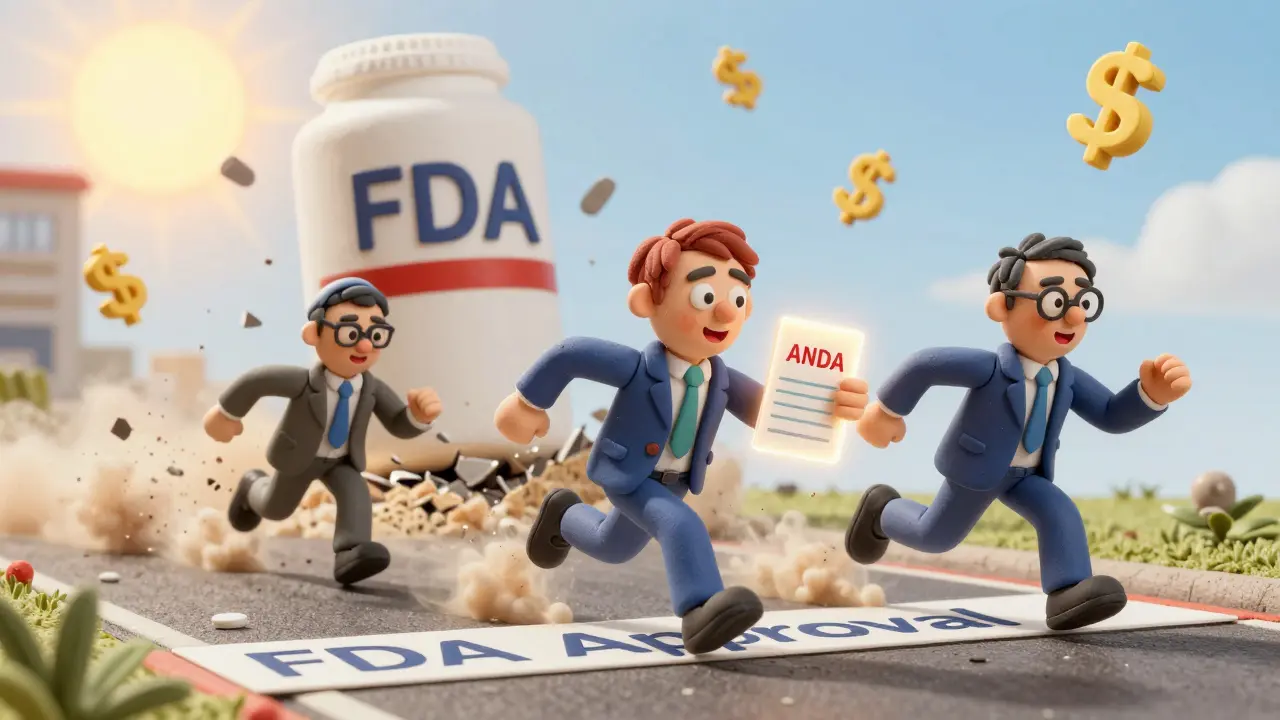
First generic approval is the key to lowering drug prices in the U.S. It gives the first company to file a generic application 180 days of exclusivity, sparking massive price drops and saving patients billions. Here's how it works and why it matters.
Jan, 13 2026
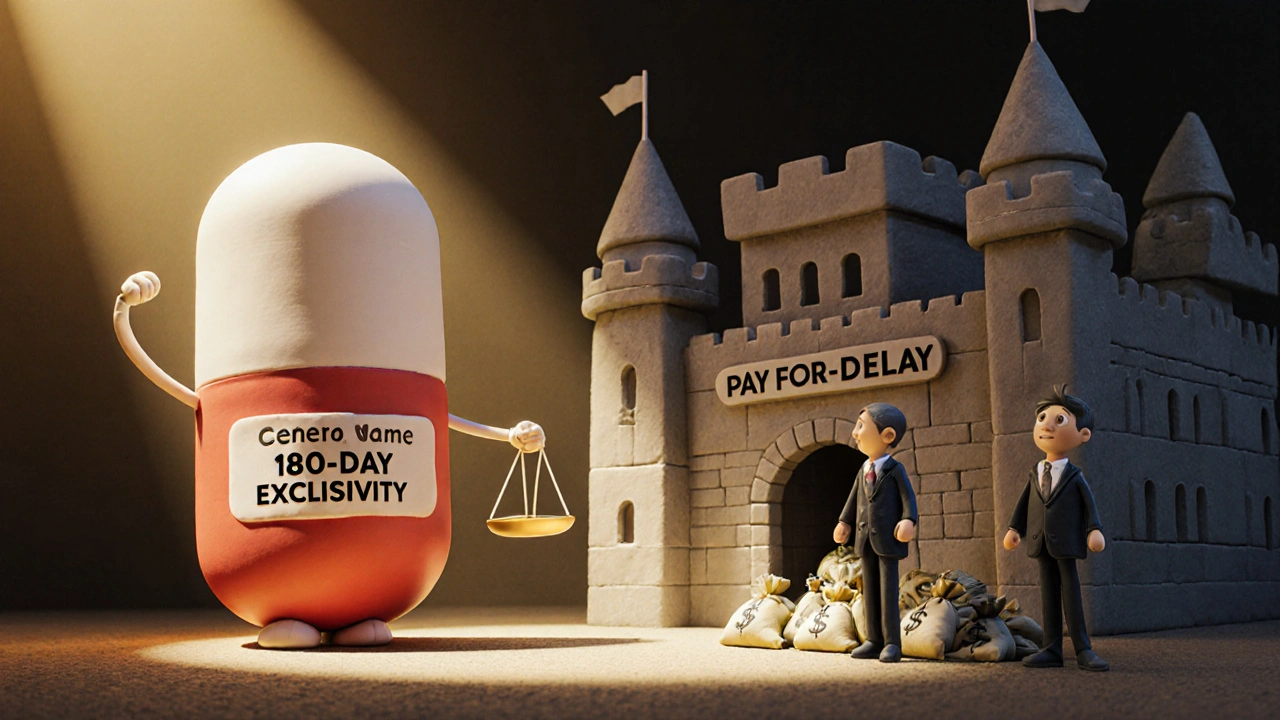
Antitrust laws in the generic drug market prevent companies from blocking cheaper alternatives through pay-for-delay deals, patent manipulation, and product hopping. These practices cost patients billions and reduce access to essential medicines.
Nov, 28 2025