
Zepbound: What It Is, How It Works, and What You Need to Know
When you hear Zepbound, a once-weekly injectable medication approved for chronic weight management in adults with obesity or overweight. Also known as tirzepatide, it’s not just another diet pill — it’s a dual-action drug that mimics two natural hormones your body already uses to control hunger and blood sugar. Unlike older weight loss drugs that only target one pathway, Zepbound works on both GLP-1 and GIP receptors, which means it slows digestion, reduces appetite, and helps your body burn fat more efficiently — all without the jittery side effects you get from stimulants.
It’s not for everyone. Zepbound is meant for people with a BMI of 30 or higher, or 27 with weight-related conditions like high blood pressure or type 2 diabetes. It’s not a quick fix. People who’ve used it report feeling full faster, fewer cravings, and more energy — but results take time. Most see noticeable changes after 12 weeks, with peak results around 72 weeks. It’s also not a replacement for lifestyle changes. Doctors still recommend combining it with better eating habits and regular movement. If you’ve tried other weight loss methods and hit a wall, Zepbound might be worth discussing with your provider — especially if you’ve struggled with insulin resistance or metabolic syndrome.
Side effects are real, though often mild. Nausea, diarrhea, and stomach discomfort are common at first, especially when starting or increasing the dose. These usually fade within a few weeks. More serious risks include pancreatitis, gallbladder problems, and potential thyroid tumors (seen in animal studies, not confirmed in humans). If you have a personal or family history of medullary thyroid cancer or MEN2 syndrome, you shouldn’t take it. And while it’s approved for adults, it’s not yet cleared for teens or pregnant women. Always tell your doctor about other meds you’re on — especially insulin or diabetes pills — because Zepbound can lower blood sugar too much if used together.
What’s interesting is how Zepbound fits into the bigger picture of obesity treatment. It’s part of a new wave of drugs that treat weight as a medical condition, not a moral failing. It’s not magic, but it’s one of the most effective tools we’ve had in decades. The fact that it’s now available under the brand name Zepbound (not just Mounjaro, its diabetes version) means more people can access it. And while cost and insurance coverage are still hurdles, the data shows it works — for people who stick with it.
Below, you’ll find real patient stories, comparisons with similar drugs, and practical tips on how to use Zepbound safely and effectively. Whether you’re considering it, already on it, or just curious, these articles give you the straight facts — no hype, no fluff, just what matters.
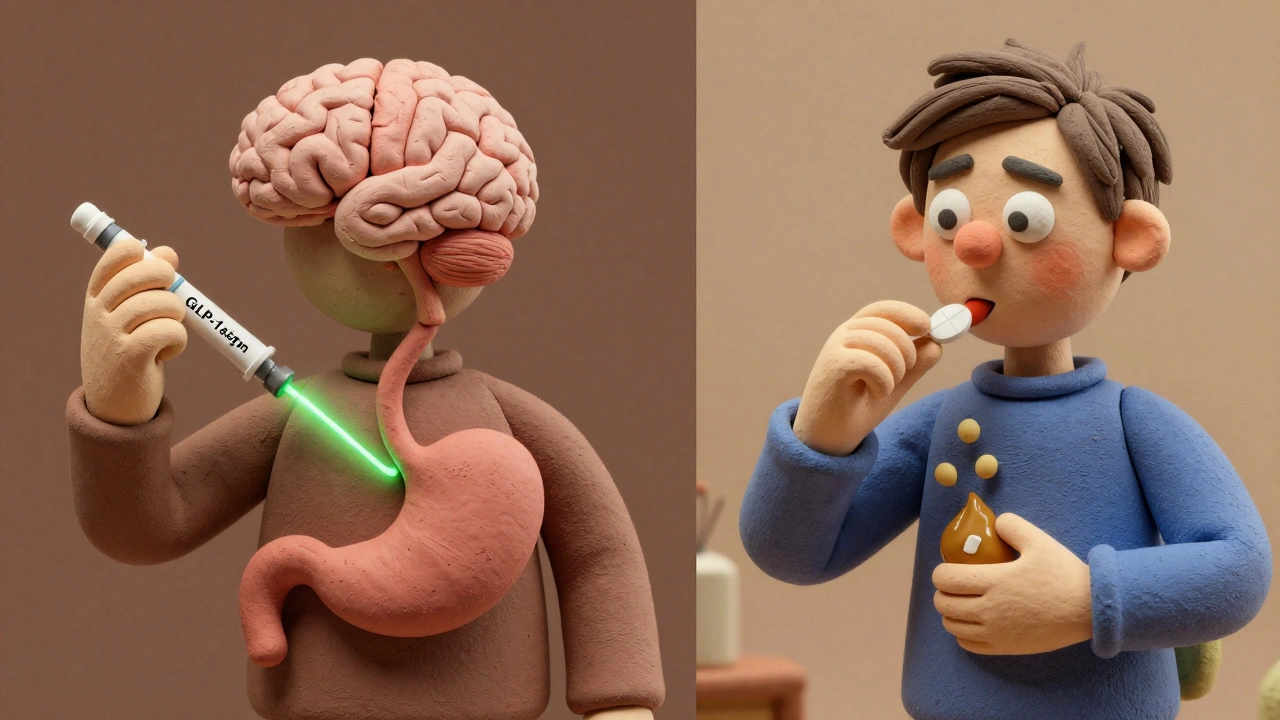
GLP-1 agonists like Wegovy and Zepbound offer far greater weight loss than older drugs like orlistat or phentermine, but they cost more, require injections, and have stronger side effects. Here's how they compare - and which one might work for you.
Dec, 7 2025