
Warfarin Diet: What to Eat and Avoid for Safe Blood Thinning
When you're on warfarin, a blood thinner used to prevent dangerous clots in people with atrial fibrillation, artificial heart valves, or deep vein thrombosis. Also known as Coumadin, it works by blocking vitamin K’s role in clotting—but that’s exactly why your diet matters. Warfarin isn’t like other pills where what you eat barely affects it. A handful of spinach or a glass of cranberry juice can throw your INR off, leading to bleeding or clotting risks. This isn’t theoretical—it’s why pharmacists and doctors stress consistency, not restriction.
At the heart of the warfarin diet, a pattern of eating that maintains steady vitamin K intake to keep warfarin’s effect predictable is balance, not elimination. You don’t need to cut out leafy greens forever. You just need to eat about the same amount every day. One day you eat a big salad, the next day you eat none? Your INR will swing. That’s why people on warfarin do best when they treat vitamin K like a daily dose: consistent, not extreme. vitamin K, a nutrient essential for blood clotting found in green vegetables, soy products, and certain oils is the main player here. Foods like kale, broccoli, Brussels sprouts, and parsley are high in it. So are some oils and fermented foods like natto. If you love these, keep eating them—but don’t suddenly double your portions. On the flip side, cranberry juice, a common beverage linked to increased warfarin effects and bleeding risk can be dangerous, even in small amounts. Same goes for green tea and alcohol. They don’t need to be banned, but they do need to be monitored. And don’t forget about supplements—vitamin K pills, fish oil, or even garlic supplements can interfere. Always tell your pharmacist what you’re taking.
It’s not just about food. Changes in your body—like weight loss, illness, or starting a new medicine—can also change how warfarin works. That’s why regular blood tests aren’t optional. They’re your safety net. The goal isn’t to eat perfectly. It’s to eat predictably. You can still enjoy your favorite meals. Just keep them steady. The posts below give you real examples: what people actually eat on warfarin, how to handle restaurant meals, why some generics cause trouble even when diet stays the same, and what to do if your INR suddenly spikes. No myths. No fear. Just what works.
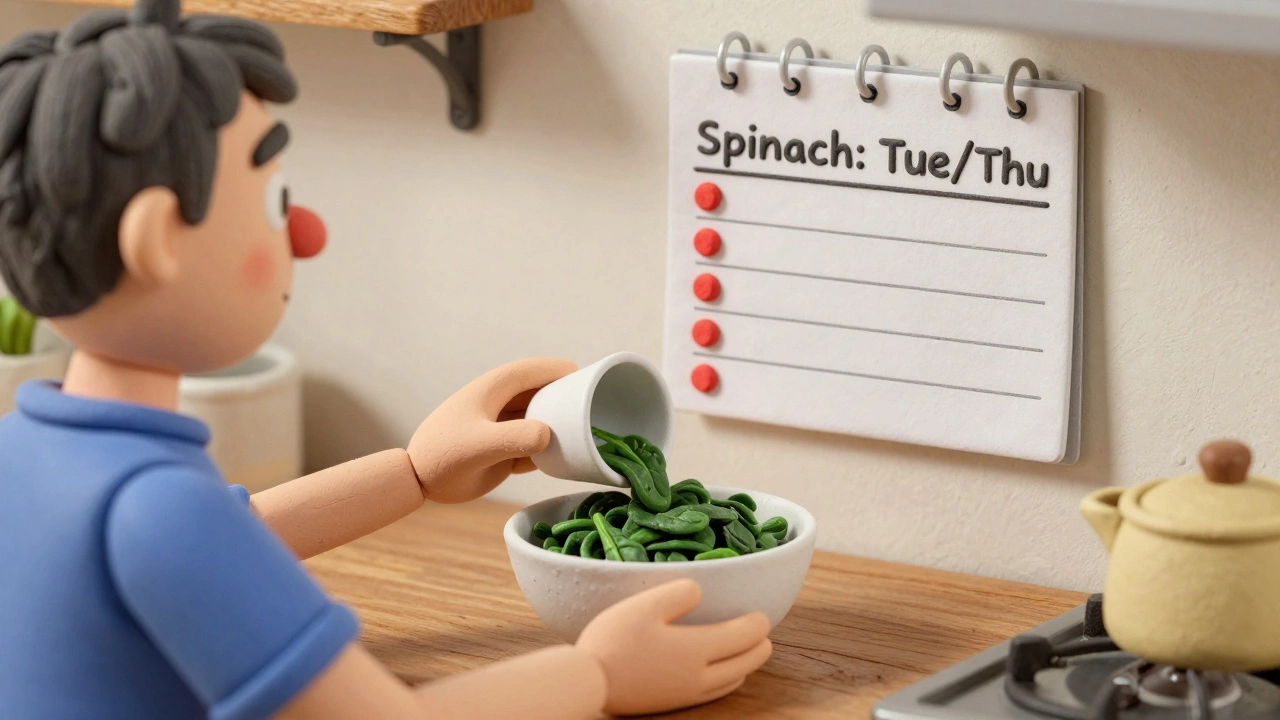
Maintaining a consistent intake of vitamin K-rich foods is crucial when taking warfarin. Sudden changes can cause dangerous INR fluctuations. Learn which foods affect blood thinning and how to eat them safely.
Dec, 5 2025