
Warfarin and Vitamin K: What You Need to Know About Diet, Dosing, and Safety
When you’re on warfarin, a blood thinner used to prevent clots in people with atrial fibrillation, artificial heart valves, or a history of deep vein thrombosis. Also known as Coumadin, it works by blocking vitamin K’s role in clotting—but that’s also why what you eat matters so much. Warfarin doesn’t work the same for everyone. A small change in your vitamin K intake can throw off your INR, the number your doctor checks to make sure your blood isn’t too thin or too thick. Too high, and you risk bleeding. Too low, and you could get a stroke or clot.
Vitamin K, a nutrient found in leafy greens, broccoli, and certain oils, directly fights warfarin’s effect. It’s not that you need to avoid it completely—you need to keep it steady. Eating a big salad one day and none the next? That’s a recipe for unstable INR levels. People who switch from spinach to lettuce, start taking a multivitamin with K, or begin eating more kale after a holiday can see their blood clotting time shift in just a few days. This isn’t theoretical. Pharmacists see it all the time: patients who switched generics or changed their diet and ended up back in the ER with bleeding or a clot. The same thing happens with INR monitoring, the regular blood test that tracks how long it takes your blood to clot. If you skip tests or don’t tell your doctor about new supplements, you’re flying blind.
It’s not just food. Some antibiotics, herbal teas, and even over-the-counter painkillers can mess with warfarin. One patient took St. John’s Wort for low mood and saw her INR drop so low she had a pulmonary embolism. Another started eating more natto—a Japanese fermented soybean dish packed with vitamin K—and ended up hospitalized. These aren’t rare cases. They’re textbook examples of what happens when the connection between diet and medication isn’t treated seriously.
You don’t need to eat the same exact meal every day. But you do need consistency. If you love kale, keep eating it. If you hate spinach, don’t force it. The goal isn’t restriction—it’s predictability. Your doctor isn’t asking you to become a nutritionist. They’re asking you to be aware. And if you’ve ever switched from a brand to a generic version of warfarin, you know how sensitive this drug can be. Even tiny differences in fillers or absorption can cause big changes.
Below, you’ll find real stories and facts from people who’ve lived with warfarin and vitamin K. You’ll learn which foods are safest, what supplements to avoid, how to talk to your pharmacist about interactions, and why some people need more frequent INR checks than others. This isn’t guesswork. It’s what works—for your body, your routine, and your peace of mind.
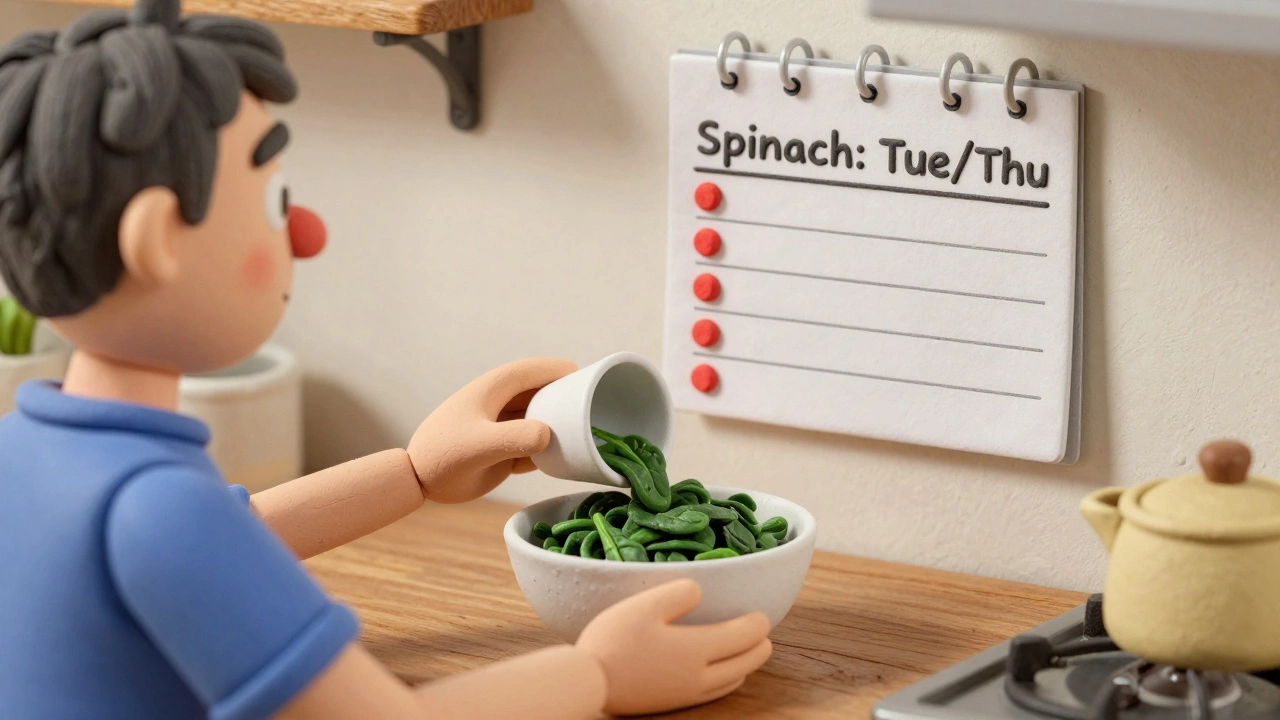
Maintaining a consistent intake of vitamin K-rich foods is crucial when taking warfarin. Sudden changes can cause dangerous INR fluctuations. Learn which foods affect blood thinning and how to eat them safely.
Dec, 5 2025