
Vitamin K Foods: Best Sources and Why They Matter for Blood and Bone Health
When you think of vitamin K, a fat-soluble nutrient essential for blood clotting and bone metabolism. Also known as phylloquinone (K1) and menaquinone (K2), it’s not just about stopping cuts from bleeding—it’s about keeping your bones dense and your arteries clear. Most people get enough to avoid bleeding problems, but far fewer get the right kind or enough to support long-term health.
Vitamin K1, the main form found in plants shows up in large amounts in dark leafy greens like kale, spinach, and collard greens. One cup of cooked kale gives you over 1,000 micrograms—more than 1,000% of your daily need. But here’s the catch: your body doesn’t absorb it well unless you eat it with fat. A drizzle of olive oil, a handful of nuts, or even butter on your greens makes a real difference. Vitamin K2, the form made by bacteria and found in fermented or animal products, is harder to get from diet alone. It’s in natto (fermented soy), certain cheeses like Gouda and Brie, egg yolks, and chicken liver. K2 is the one that actually directs calcium to your bones instead of letting it build up in your arteries. Studies show people who eat more K2-rich foods have lower rates of heart disease and hip fractures.
Many folks think they’re covered because they take a multivitamin, but most don’t contain K2 at all. Even if they do, the doses are tiny. Real food sources are the only reliable way to get enough. If you’re on blood thinners like warfarin, you need to keep your vitamin K intake steady—not cut it out. Sudden changes can throw off your INR levels. That’s why your doctor or pharmacist asks about your spinach habits. It’s not a diet rule—it’s a safety rule.
There’s no magic number for vitamin K you need daily beyond the basics, but if you want to go beyond just avoiding bleeding risks, aim for variety: a salad with kale and olive oil one day, a slice of aged cheese the next, maybe some eggs scrambled with sautéed greens. That’s how nature intended it. The posts below show real cases where people improved their health by adjusting what they ate—not by popping pills. You’ll find practical tips on which foods pack the most punch, how to pair them for better absorption, and what to watch out for if you’re on medication. No guesswork. Just what works.
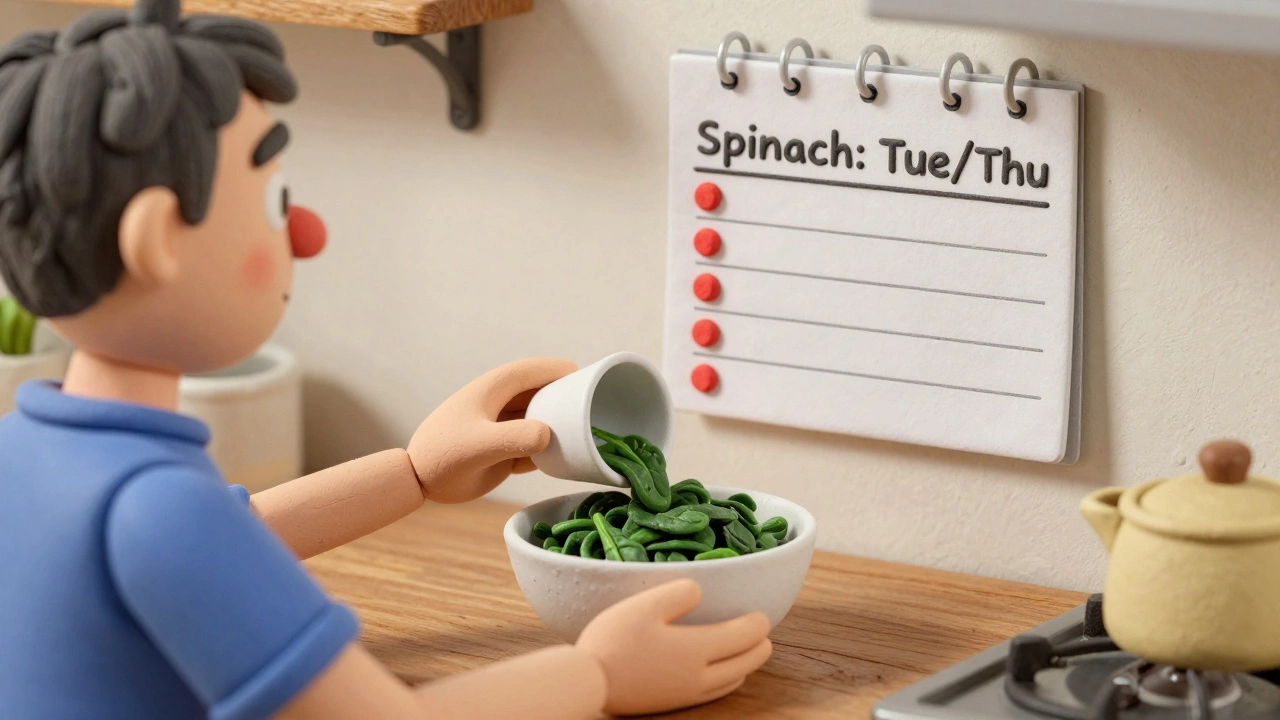
Maintaining a consistent intake of vitamin K-rich foods is crucial when taking warfarin. Sudden changes can cause dangerous INR fluctuations. Learn which foods affect blood thinning and how to eat them safely.
Dec, 5 2025