
Narrow Therapeutic Index Drugs: What They Are and Why They Require Careful Use
When a medication has a narrow therapeutic index, a small range between the effective dose and the toxic dose. Also known as narrow therapeutic window drugs, these medications demand precision—too little won’t work, too much can kill. Think of it like walking a tightrope: one wrong step and things go bad fast. Drugs like warfarin, digoxin, phenytoin, and lithium fall into this category. They’re not rare—millions take them daily—but they’re not safe to guess with.
Why do these drugs exist if they’re so risky? Because they work where others don’t. For example, warfarin prevents deadly blood clots, but if your INR goes just a bit too high, you could bleed internally. Phenytoin controls seizures, but a tiny overdose can cause confusion, slurred speech, or even coma. This isn’t theoretical—it’s why pharmacists check labs, why doctors adjust doses slowly, and why patients need to know the signs of trouble. These drugs don’t play nice with food, alcohol, or other meds. A common antibiotic can turn a safe dose of digoxin into a poison. That’s why therapeutic drug monitoring, the practice of measuring drug levels in the blood to ensure they stay in the safe zone isn’t optional—it’s life-saving.
People often assume all prescriptions are equally safe, but that’s not true. A regular painkiller like ibuprofen? You can miss a dose or take an extra one and be fine. A narrow therapeutic index drug? That’s a different story. That’s why the posts here focus on real-world risks: dangerous drug interactions, how to spot early signs of toxicity, why some patients need more frequent blood tests, and how to avoid mistakes at home. You’ll find guides on managing anticoagulants like warfarin, understanding lithium levels in bipolar treatment, and why even small changes in kidney function can throw off your dose. These aren’t abstract concepts—they’re daily realities for people on these meds and the caregivers who support them.
If you or someone you know takes one of these drugs, you’re not alone. But you need to be informed. This collection gives you the facts without the fluff—what to watch for, what questions to ask your doctor, and how to stay in control when the margin for error is razor-thin.
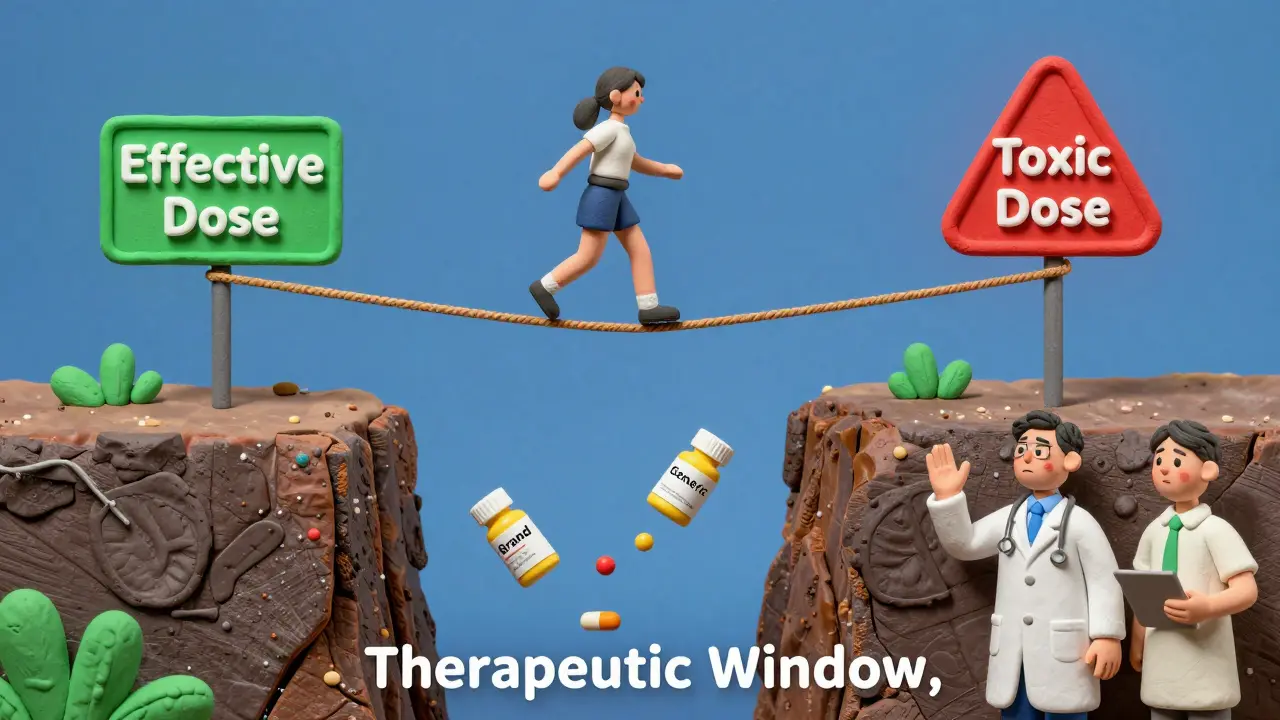
Learn how narrow therapeutic index drugs work, why generic versions require extra caution, and what steps to take to stay safe when switching between brand and generic versions of critical medications.
Dec, 25 2025

Switching to generic medications saves money, but for some people, it can trigger side effects or reduce effectiveness. Learn which drugs carry the highest risks and what to do if you feel worse after a switch.
Nov, 23 2025