
Why Patients Stick to Brand-Name Meds: The Psychology of Brand Loyalty in Healthcare
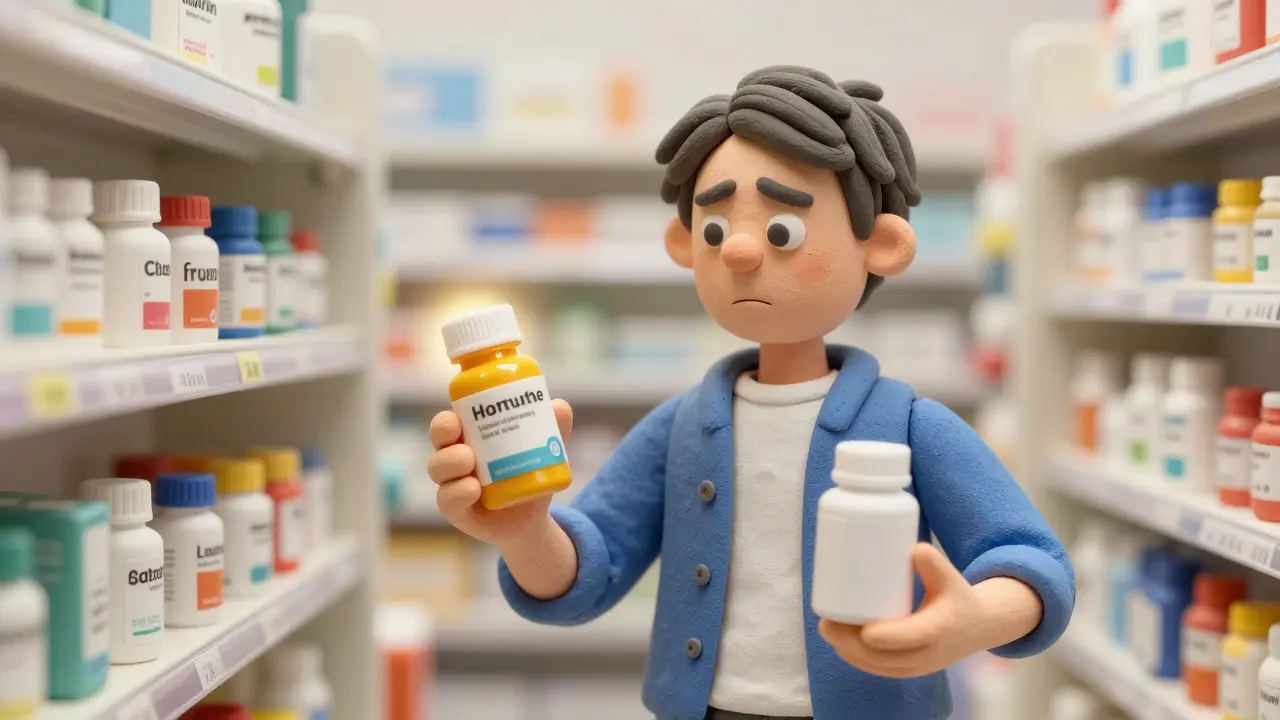
Ever wondered why some people insist on paying triple the price for a brand-name pill when the generic version is sitting right next to it on the pharmacy shelf? It seems illogical. If the active ingredients are the same and the science says they work identically, why do we feel a deep-seated trust in the "famous" version? This isn't just about stubbornness; it's a complex mix of brand loyalty in medications, psychological safety, and a touch of fear. While regulators swear by bioequivalence, the human brain doesn't always process data the same way a lab does.
The Psychology Behind the Price Tag
For many, a brand name isn't just a label; it's a promise. When a patient sees a familiar brand, they aren't thinking about molecular structures-they're thinking about reliability. A 2022 Fortune survey highlighted that 62% of Gen Z consumers trust brand-name drugs more for quality and safety, and 57% actually perceive them as more effective. This is a classic psychological phenomenon where we associate higher cost and brand recognition with superior performance, even when the data says otherwise.
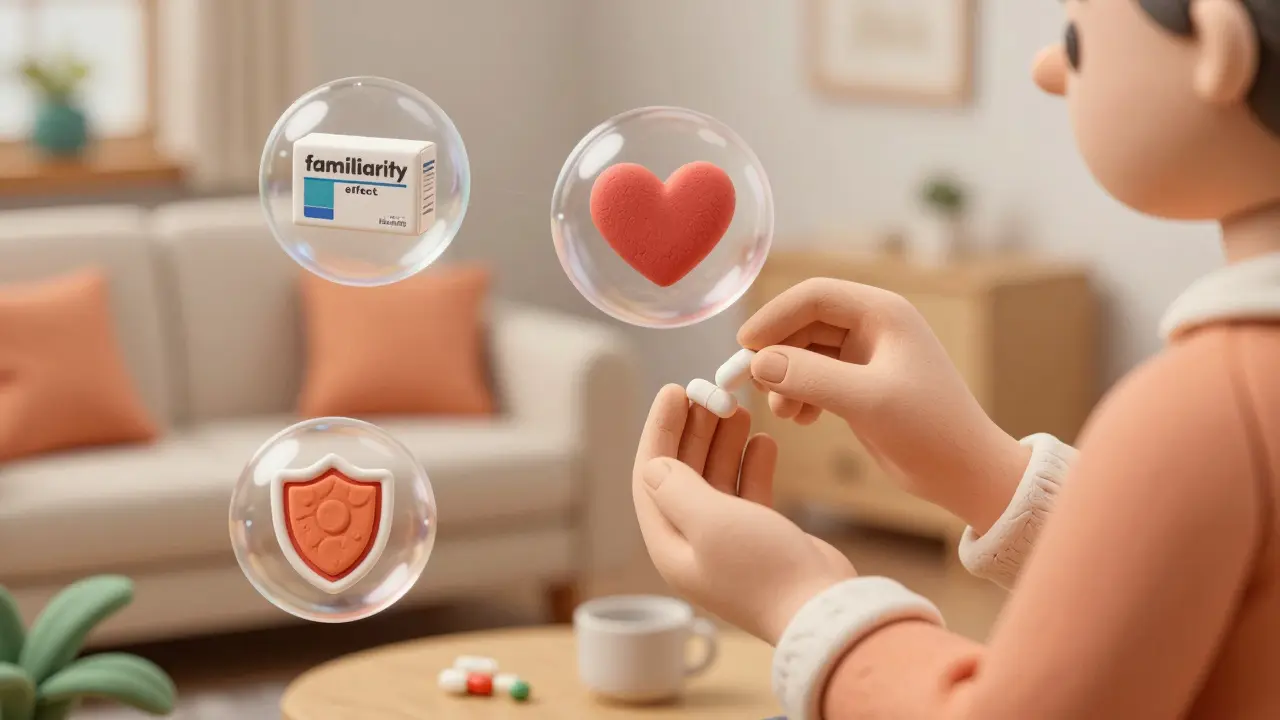
Then there's the "familiarity effect." When you've used a specific medication for years to manage a chronic condition, that specific pill-its color, shape, and the box it comes in-becomes part of your safety routine. Switching to a generic, even one that is chemically identical, can trigger anxiety. You start wondering, "Will this one actually work?" This is especially true for psychiatric medications. Unlike blood pressure meds, where you can't "feel" if the drug is working in real-time, mental health patients often worry that subtle formulation differences could trigger a relapse or mood swing.
The "Generics Paradox" and Physician Influence
It's not just patients who struggle with this. Doctors are humans too, and they have their own biases. According to a 2023 GlobalData survey, about 40% of physicians would prescribe branded drugs if cost wasn't a factor. In some countries, this is even more pronounced-57% of Japanese doctors prefer brands, often citing different regulatory standards for generic approvals compared to the U.S. FDA.
This creates a feedback loop. If a doctor expresses a slight preference for a brand, the patient views that as professional validation. We see this in the "generics paradox," where some originator companies actually raise prices once a generic enters the market, betting on the fact that a certain percentage of the patient base is too loyal (or too scared) to switch.
| Feature | Brand-Name Drugs | Generic Drugs |
|---|---|---|
| Active Ingredients | Identical | Identical |
| Price Point | Significantly Higher (Avg +79%) | Lower/Accessible |
| Psychological Trust | High (Associated with Quality) | Variable (Often Viewed as "Budget") |
| Inactive Ingredients | Consistent per brand | Varies by manufacturer |
| Prescription Volume (US) | Low (~10%) | High (~90%) |
Why Some People Refuse to Switch
Is it just a placebo effect? Not always. While the FDA requires generics to be bioequivalent-meaning they deliver the same amount of active drug to the bloodstream in the same amount of time-the inactive ingredients (fillers, dyes, binders) can vary. For 27% of people leaving negative reviews on Trustpilot about generics, these fillers are the culprit, causing allergic reactions or digestive issues that the brand-name version didn't have.
There is also a surprising correlation with education and socioeconomics. A 2023 PMC study found that lower-educated consumers actually had 1.54 times higher odds of remaining brand loyal regardless of price changes. This might seem counterintuitive, but it often stems from a lack of trust in the systemic "cheaper" alternative or a deeper reliance on the recommendation of a single trusted provider rather than reading clinical data.
The Role of Bioequivalence and the Orange Book
To understand if a generic is truly a match, pharmacists look at the FDA Orange Book. This is the gold standard for therapeutic equivalence. When a generic is rated as "A-rated," it means it is considered therapeutically equivalent to the brand name. It's not a guess; it's based on strict confidence intervals for AUC (Area Under the Curve) and Cmax (maximum concentration), ensuring the drug behaves the same way in the body.
Despite this, the "lived experience" often differs. In forums like r/pharmacy, users frequently discuss "therapeutic fluctuations." One patient might feel that three different generics of the same antidepressant all felt slightly "off," while the brand-name version felt "just right." While science suggests this is often a psychological or placebo response, for the patient, the result is a real-world preference for the brand.
The Future: Biosimilars and Premium Support
As we move toward more complex medicines, like biologics, brand loyalty is getting even stronger. Biosimilars are the generic versions of biologic drugs (made from living cells). These are much harder to copy than a simple chemical pill. McKinsey reports that only 32% of eligible patients switch to biosimilars in the first year. The stakes feel higher with biologics, so patients cling to the brand they know.
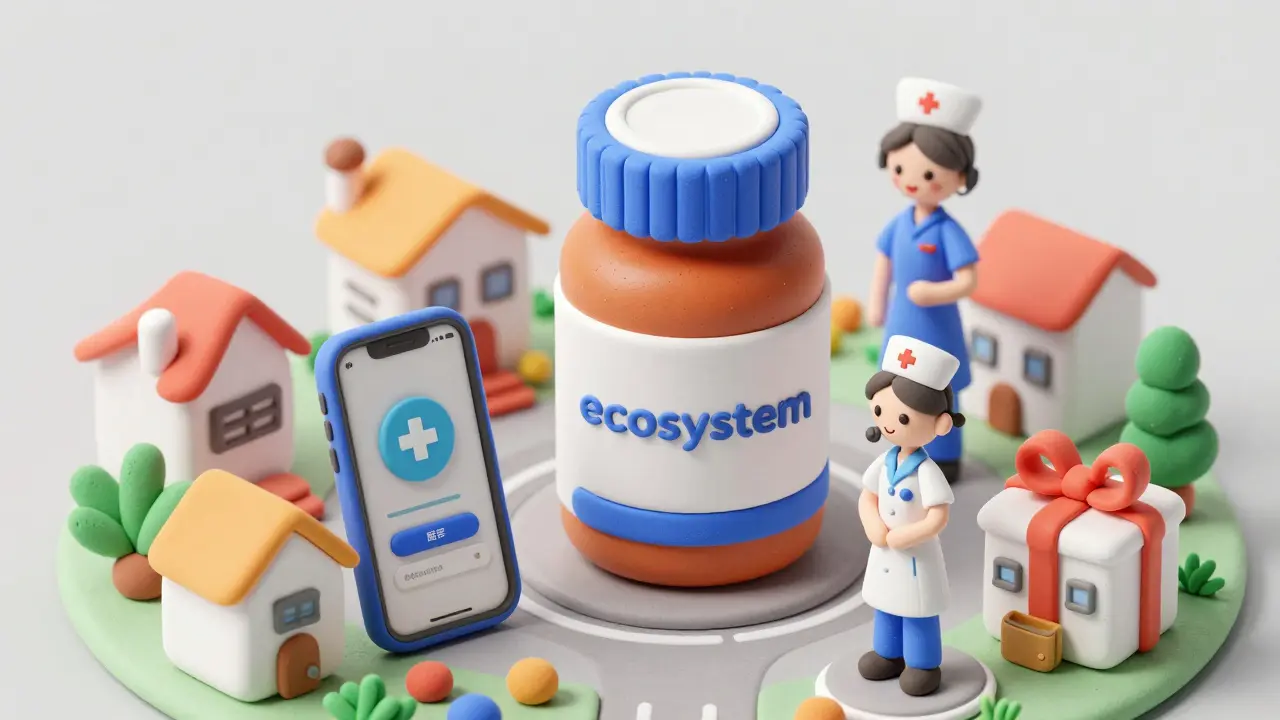
Pharmaceutical giants aren't just relying on the drug itself, either. They're building "patient support programs"-apps, nurse hotlines, and loyalty rewards-that make the brand an ecosystem rather than just a product. This is why some experts believe premium brands will maintain a 35-40% market share even as generic competition grows.
Are generic drugs really as effective as brand-name ones?
Yes. Regulatory bodies like the FDA require generics to be bioequivalent, meaning they have the same active ingredient, strength, dosage form, and route of administration. They must perform the same way in the body to be approved.
Why do some people feel the brand-name drug works better?
This is often due to the placebo effect or a psychological preference for a familiar brand. However, in rare cases, a patient may react poorly to the inactive ingredients (fillers or dyes) used in a specific generic version, which can make it feel less effective or cause side effects.
Why are brand-name drugs so much more expensive?
The high cost covers the initial research, development, and clinical trials required to bring a new drug to market. Once the patent expires, other companies can produce generics without those massive R&D costs, which is why prices drop significantly.
What is an "A-rated" generic?
An A-rated generic is a designation in the FDA's Orange Book. It means the generic drug is therapeutically equivalent to the reference brand-name drug and can be substituted by a pharmacist without a new prescription from the doctor.
Should I switch from a brand-name drug to a generic?
For most people, generics are a safe and effective way to save money. However, if you have a history of severe allergies to dyes or fillers, or if you are taking a medication with a very narrow therapeutic index (where a tiny change in dose matters), you should discuss the switch with your doctor first.
Next Steps for Patients and Providers
If you're a patient feeling anxious about a switch, ask your pharmacist for the specific bioequivalence data or check if the generic is "A-rated" in the Orange Book. Often, a detailed explanation of how the drugs are tested can lower anxiety and increase acceptance.
For healthcare providers, the key is proactive communication. Instead of just writing "generic substitution permitted," take a few minutes to explain why the generic is equivalent. Research shows that generic acceptance rates jump by 67% when pharmacists provide detailed education during the encounter.
Rob Newton
April 4, 2026 AT 21:10Generic drugs are fine. Stop overthinking it.
Hudson Nascimento Santos
April 5, 2026 AT 04:17The intersection of chemistry and psychology is fascinating here. We aren't just consuming a molecule; we are consuming a sense of security and a perceived history of reliability. It makes you wonder if the 'effectiveness' of a drug is partly an extension of the trust we place in the institution that created it.
Aysha Hind
April 5, 2026 AT 06:34Oh please, the 'inactive ingredients' excuse is just a smokescreen for the big pharma machine to keep us hooked on the expensive stuff. You really think some random dye is the issue? It's a total scam to keep the revenue flowing into those corporate pockets while they laugh at us from their ivory towers. Total nonsense. Wake up people, they control the narrative and the Orange Book is probably just a fancy piece of fiction written by the same suits who price gouge us into poverty. Absolute circus.
Mark Zhang
April 7, 2026 AT 06:25I totally get why people feel anxious about switching, especially with things like antidepressants. It's not just about the science; it's about how you feel every single day. If someone feels that a brand-name version keeps them stable, that's a valid experience and we should be supportive of that choice.
Brian Shiroma
April 8, 2026 AT 22:21Right, because paying 80% more for the same chemicals is such a brilliant financial strategy. Truly a masterclass in economics. I'm sure the pharmaceutical CEOs are very touched by our unwavering loyalty to their profit margins.
Rachelle Z
April 10, 2026 AT 12:43Omg... imagine actually thinking a logo makes a pill work better!!! 🙄✨ Truly a gold-tier level of delusion right here!!!
Beth LeCours
April 11, 2026 AT 22:22Too long. Generic is just cheaper.
Lawrence Rimmer
April 11, 2026 AT 23:37This whole debate is just a symptom of a deeper existential dread. We cling to brands because we can't handle the chaos of a world where a different factory in a different country might make our meds. We're just paying for the illusion of control over our own biology, which is honestly kind of pathetic when you think about it. The 'lived experience' is just a fancy term for a placebo that costs three hundred bucks a month. Why even bother with the science if the feeling is all that matters? It's all just noise in the end.
Ace Kalagui
April 13, 2026 AT 20:58I've actually spent quite a bit of time talking to people from different backgrounds about their healthcare journeys, and it's really interesting to see how cultural trust plays into this. In many communities, the doctor's word is law, so if a physician mentions a brand, it's not just a suggestion, it's a directive. I think we can help people transition to generics more comfortably if we just listen to their fears and guide them with kindness instead of just telling them they're being illogical, because the fear is real even if the chemistry is the same.
Branden Prunica
April 13, 2026 AT 21:03Wait, you're telling me my pharmacist has been switching my meds to 'equivalent' generics this whole time without me knowing? This is literally a betrayal of the highest order! I feel like my whole health history is just a game of musical chairs with different manufacturers! This is absolute chaos!
Dipankar Das
April 14, 2026 AT 18:43It is absolutely imperative that patients recognize the superiority of the clinical data provided by regulatory bodies! One must not allow psychological whims to override the empirical evidence of bioequivalence! You should be striving for the most efficient and cost-effective treatment possible to ensure the sustainability of the healthcare system! Any hesitation to switch to an A-rated generic is a failure to trust the scientific method!
Hope Azzaratta-Rubyhawk
April 15, 2026 AT 06:41I strongly agree that education is the only way forward! We must demand that providers take the time to explain these differences clearly! It is completely unacceptable for a patient to feel anxious simply because they weren't given the proper information about their medication!
angel sharma
April 17, 2026 AT 01:24Let's get everyone pumped up about saving money and staying healthy! Imagine the thousands of dollars you can save over a lifetime just by trusting the generics and pushing your doctor to be more open about the options! It's a win-win for everyone involved and we should be spreading this energy everywhere so no one feels scared of a different colored pill! Let's make the switch and feel the freedom of a lighter pharmacy bill!
Sakshi Mahant
April 17, 2026 AT 06:49It's a very delicate balance between trusting the science and trusting our own bodies. In my experience, some people just need a bit more time to adjust to a change, and that's perfectly okay as long as the health outcomes remain positive.