
What to Do If You Miss a Dose: Decision Tree by Medication Type
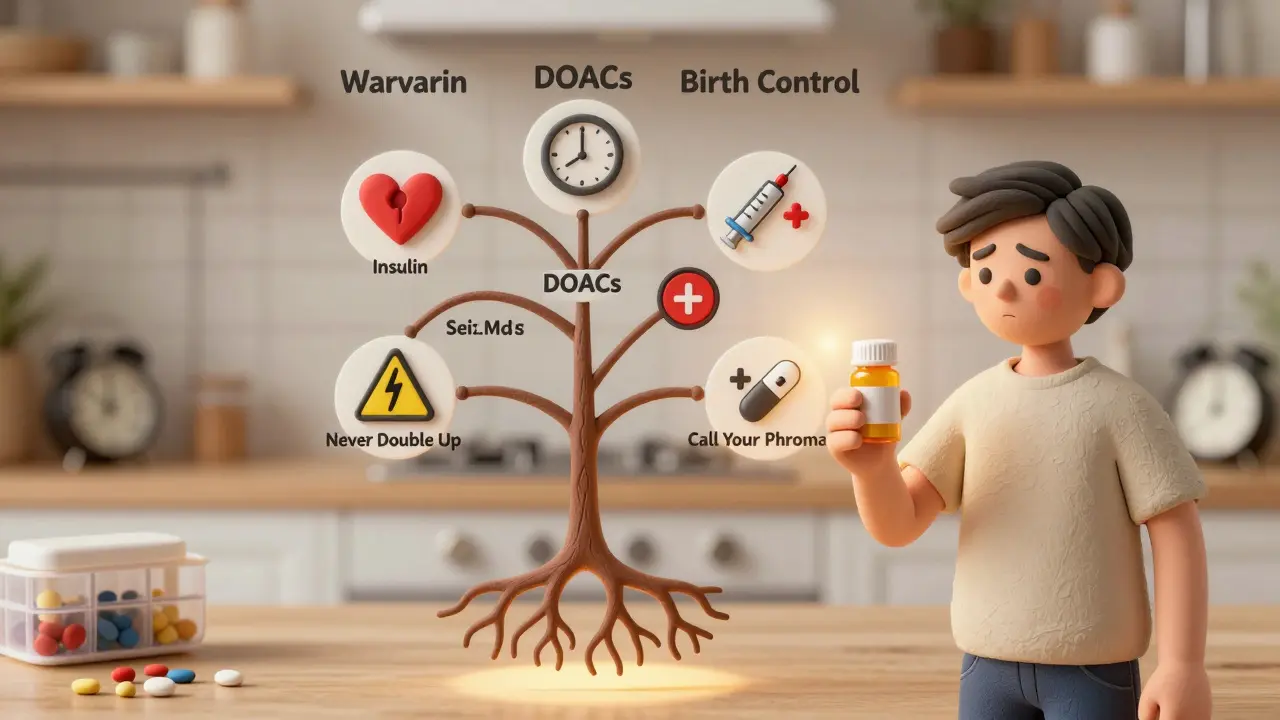
Medication Missed Dose Decision Guide
Find out what to do if you miss a medication dose
This guide helps determine the safe next steps based on your specific medication and how long ago you missed the dose.
What to do next
Missing a dose of your medication happens to almost everyone at some point. Maybe you overslept. Maybe you were in a rush. Maybe you just forgot. But here’s the thing: what you do next isn’t the same for every pill. Taking two pills to make up for one might save you from a headache-or it could send you to the hospital. The rules change depending on what’s in that pill bottle.
There’s no universal "just take it when you remember" rule. That advice, common on old pamphlets, is dangerously outdated. Modern medicine understands that drugs behave differently in the body. Some need to be in your system at exact levels. Others can slip a bit without consequence. Getting it wrong can mean a seizure, a blood clot, a heart attack, or worse.
Anticoagulants: Warfarin vs. DOACs
If you’re on warfarin (Coumadin), timing is everything. The NHS and Scottish Patient Safety Programme agree: if you remember you missed a dose before midnight, take it. If it’s past midnight? Skip it. Never double up. Warfarin’s effect builds over days, and a double dose can spike your INR-raising your risk of internal bleeding. This isn’t a suggestion. It’s a protocol followed in 97% of UK anticoagulation clinics.
For direct oral anticoagulants (DOACs) like apixaban (Eliquis) or rivaroxaban (Xarelto), the window is tighter. The American College of Chest Physicians says: if you remember within 6 hours of your usual time, take the missed dose. If it’s been longer than that? Skip it. DOACs have short half-lives. A double dose doesn’t help-it just increases bleeding risk.
Diabetes Medications: Insulin Is High-Risk
Insulin is where missed doses turn dangerous fast. For rapid-acting insulin (like Humalog or NovoLog), there’s no catch-up. If you forgot to take it before your meal, don’t take it afterward. Doing so can cause a dangerous drop in blood sugar hours later. Just eat less or adjust your next meal. Your doctor should’ve given you a plan for this.
Long-acting insulin (like Lantus or Tresiba) is different. If you miss it by more than 2 hours, don’t guess. Call your provider. Taking it late can overlap with your next dose and cause low blood sugar. Missing two doses in a row? That’s a red flag. You could slip into diabetic ketoacidosis-especially if you have type 1 diabetes. The Kentucky Department for Public Health labels insulin as a "RED FLAG" medication for this exact reason.
Oral diabetes meds? Metformin? You can take it up to 2 hours late with no issue. But sulfonylureas like glipizide? Skip the missed dose. These drugs force your pancreas to release insulin. Taking them late can spike insulin levels when you’re not eating-and that’s how hypoglycemia starts.
Cardiovascular Drugs: Beta-Blockers, ACE Inhibitors, and More
Beta-blockers like metoprolol? If you remember within 4 hours of your usual time, take it. After that? Skip it. Doubling up can slow your heart too much, leading to dizziness, fainting, or worse.
ACE inhibitors like lisinopril? More forgiving. You can usually take a missed dose up to 12 hours late. But don’t make a habit of it. Consistency matters for blood pressure control.
Now, amiodarone-that’s a different story. This antiarrhythmic has a narrow therapeutic window. Miss even one dose? Call your cardiologist. Your heart’s rhythm could destabilize within hours. The European Heart Rhythm Association says: no exceptions. Same goes for digoxin. A double dose can be fatal. That’s why the Medication Safety Institute reports 28% of preventable hospitalizations in older adults come from doubling digoxin or levothyroxine.
Seizure Medications: One Missed Dose Can Trigger a Seizure
Levetiracetam, valproate, phenytoin-these aren’t like painkillers. The American Epilepsy Society says missing one dose can increase seizure risk by 27% to 43%. Why? Your brain needs steady drug levels. If it dips too low, neurons fire out of control.
Rule: if you remember within half the dosing interval, take it. For a twice-daily drug, that’s 6 hours. If it’s been longer? Skip it. Don’t try to catch up. Overdosing can cause dizziness, nausea, or even toxicity. If you miss two doses in a row? Call your neurologist. 92% of U.S. epilepsy centers require this.
Immunosuppressants: Transplant Patients Can’t Afford Mistakes
Tacrolimus, cyclosporine, mycophenolate-these drugs keep your body from rejecting a new organ. Miss one dose? You’re at 4.7 times higher risk of acute rejection within 30 days, according to the American Society of Transplantation.
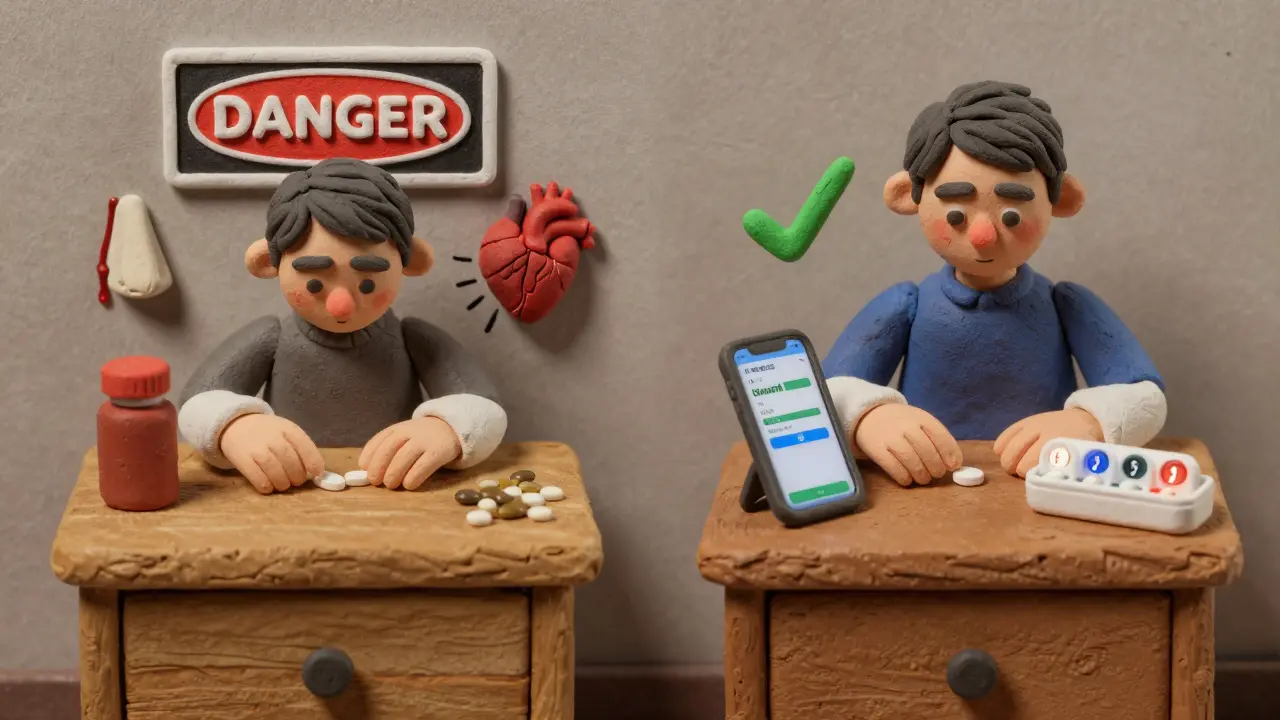
No exceptions. No "I’ll take it tomorrow." If you miss a dose, contact your transplant team immediately. They’ll tell you whether to take it late, skip it, or adjust the next dose. This isn’t advice-it’s a life-or-death protocol. Many transplant centers now use smart pill dispensers that lock until the right time and send alerts if a dose is missed.
Antibiotics: Don’t Double Up, Don’t Quit Early
Time-dependent antibiotics like penicillin or amoxicillin need steady levels in your blood. If you miss a dose and remember within 2 hours, take it. If it’s been longer? Skip it. Don’t double up. You won’t kill more bacteria-you’ll just increase side effects like diarrhea or yeast infections.
Concentration-dependent antibiotics like gentamicin? That’s different. Missing a dose throws off your blood levels. You need a lab test before the next dose. Call your provider.
And here’s the big one: don’t stop antibiotics just because you feel better. SingleCare’s 2023 study found 63% of patients quit early. That’s how superbugs like MRSA spread. Finish the full course-even if you missed a few doses.
Hormonal Contraceptives: The Only Exception to "No Double Dose"
Birth control pills are the only common exception to the "never double up" rule. If you miss one active pill, take it as soon as you remember-even if that means taking two pills in one day. Then take your next pill at the usual time. Use backup contraception (like condoms) for the next 7 days.
Miss two active pills? Take two pills the day you remember, and two more the next day. Then resume your regular schedule. Use backup for 7 days. If you missed pills in the third week, skip the placebo week and start a new pack right away.
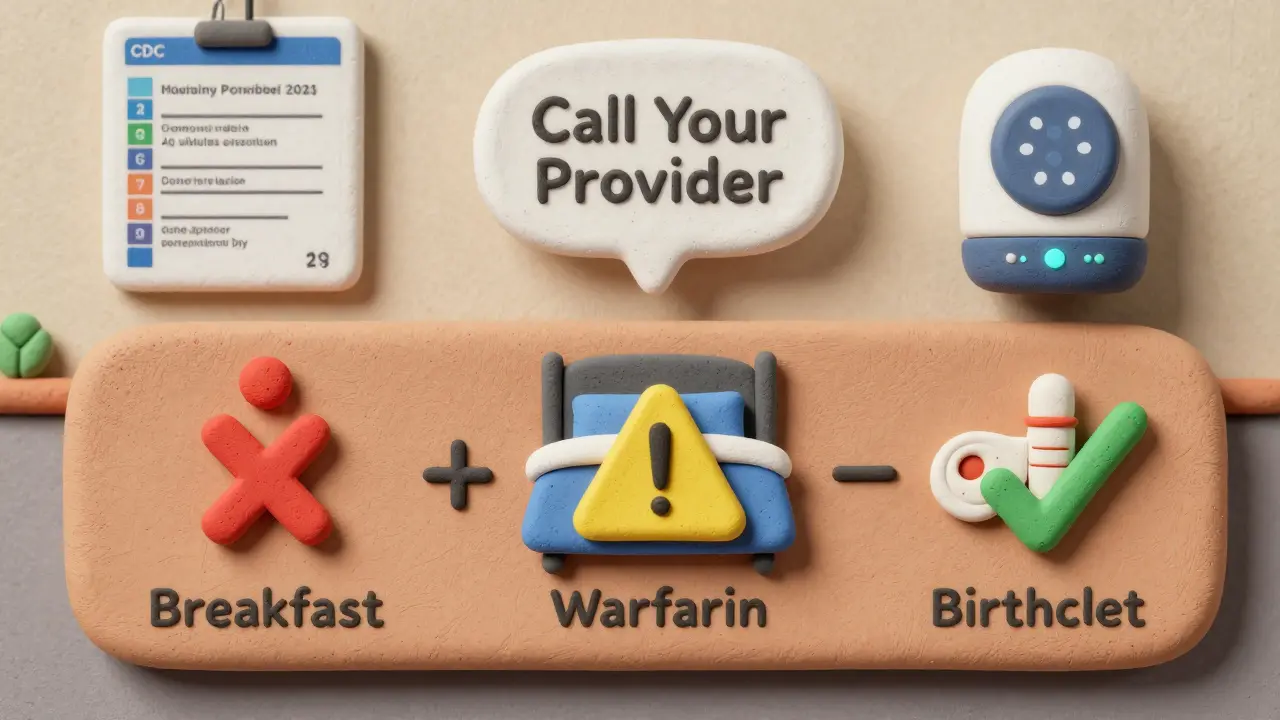
Miss three or more? Talk to your provider. You might need emergency contraception. The CDC has clear, step-by-step guidelines for every type of pill-don’t guess.
Psychiatric Medications: Rebound Risk Is Real
SSRIs like sertraline or fluoxetine? Missing one dose usually won’t hurt. You might feel a little off, but no need to double up. The American Psychiatric Association says: just resume your normal schedule.
But MAOIs like phenelzine? If you miss a dose, call your doctor. Restarting after a gap can cause a hypertensive crisis-a sudden, dangerous spike in blood pressure.
Antipsychotics? The FDA found that 38% of patients experience severe rebound symptoms after missing just two doses. That means hallucinations, agitation, or even psychosis can return fast. Don’t skip. If you miss a dose, take it as soon as you remember-unless it’s close to the next one. Then skip it.
Universal Rules: What Always Applies
Here’s what every medication has in common:
- Never double a dose-unless it’s a birth control pill.
- If more than half the dosing interval has passed (e.g., more than 12 hours for a twice-daily drug), skip the missed dose.
- When in doubt, call your pharmacist or provider. They’ve seen this before.
- Don’t rely on memory. Use a pill organizer with alarms. Apps like Medisafe have helped users cut missed doses by 38%.
The Scottish Patient Safety Programme says 99.3% of medications should never be doubled. That’s not a suggestion-it’s a safety standard backed by over 17,000 reported adverse events in the U.S. alone.
How to Prevent Missed Doses
Prevention beats correction every time. Here’s what works:
- Use a pill box with AM/PM compartments. Studies show a 27% improvement in adherence.
- Set two phone alarms: one for the time, one 30 minutes later.
- Link your dose to a habit: brush your teeth, eat breakfast, turn off the lights.
- Ask your pharmacist for a printed missed-dose guide. Only 54% of U.S. pharmacies give this out.
- Keep a spare dose at work or in your bag. One Reddit user said: "I keep my thyroid pill in my work bag. Missed one once. Fatigue for three days. Never again."
And if you’re on five or more medications? That’s polypharmacy. The risk of a missed dose mistake goes up fast. Ask your doctor or pharmacist for a medication review. Many health systems now use AI tools like MedSentry to give personalized advice based on your specific drugs and schedule.
What to Do If You’re Still Unsure
Still confused? Here’s your quick action plan:
- Check the prescription label. Some now include specific missed-dose instructions.
- Call your pharmacy. They have access to updated guidelines.
- Use the CDC’s online medication safety tool (available at cdc.gov/medsafety).
- If you’re on a high-risk drug (insulin, warfarin, immunosuppressants, seizure meds) and missed more than one dose-call your provider today.
There’s no shame in asking. The people who get hurt are the ones who guess.
What should I do if I miss a dose of my blood pressure medication?
It depends on the drug. For beta-blockers like metoprolol, take it if you remember within 4 hours. After that, skip it. For ACE inhibitors like lisinopril, you can usually take it up to 12 hours late. Never double the dose. If you’re unsure, call your pharmacist-they’ll know your specific medication’s protocol.
Can I take two pills the next day if I miss one?
No, almost never. Doubling a dose is dangerous for most medications, especially anticoagulants, seizure drugs, and heart medications. The only common exception is combined oral contraceptives. For everything else, skip the missed dose and go back to your regular schedule. If you’re worried about missing multiple doses, talk to your doctor about a better system.
Why do some medications have different rules than others?
Because drugs work differently. Some have a narrow therapeutic window-small changes in blood levels can cause harm (like warfarin or digoxin). Others are more forgiving (like metformin). Some need steady levels (antibiotics, seizure meds), while others can be taken with more flexibility. Pharmacokinetics-how your body absorbs, uses, and removes the drug-determines the rule.
I missed my insulin dose. Should I take it now?
For rapid-acting insulin, no-don’t take it after a meal. For long-acting insulin, if you missed it by more than 2 hours, don’t take it without calling your doctor first. Taking it too late can cause overlapping doses and dangerous low blood sugar. If you’ve missed two doses in a row, contact your provider immediately.
How can I stop forgetting my pills?
Use a pill organizer with alarms, set phone reminders, link your dose to a daily habit (like brushing your teeth), and keep spare doses in your bag or at work. Apps like Medisafe have helped 22 million users reduce missed doses by 38%. If you’re on multiple meds, ask your pharmacist for a medication review-they can simplify your schedule.
Mary Carroll Allen
February 7, 2026 AT 19:32OMG I missed my warfarin last week and panicked 😭 I just took the next one like normal but now I’m scared I did it wrong. This post saved me. Thank u so much for laying out the exact rules. I’m printing this out and taping it to my fridge.
Niel Amstrong Stein
February 8, 2026 AT 07:42bro this is wild. i thought all meds were like "eh just take it later" but nooo. digoxin double dose = death? 🤯 i just lost 3 years of my life wondering why my grandma kept yelling at me for not "being careful with pills". now i get it. also i’m gonna buy one of those smart pill boxes. my phone alarms are trash.
Tola Adedipe
February 10, 2026 AT 07:23This is the most important public health guide I’ve read in years. People treat meds like candy. I work in ER. Saw a guy come in with a hemorrhage because he doubled his rivaroxaban after "forgetting". He didn’t even know it was a DOAC. We had to transfuse him. Don’t be that guy. Save yourself. Read the label. Call your pharmacist. This isn’t a suggestion-it’s survival.
Ritu Singh
February 10, 2026 AT 08:50As a healthcare professional from India, I must commend this comprehensive overview. The distinction between pharmacokinetic profiles is not merely academic-it is life-sustaining. In low-resource settings, where patients often lack access to pharmacists, such clear, evidence-based guidelines are indispensable. I will distribute this to my clinic. Thank you for your diligence.
Mark Harris
February 10, 2026 AT 12:33YESSSS. I’ve been on 7 meds since my transplant. Missed one dose of tacrolimus once. Felt fine. Next day? My body felt like it was being eaten from the inside. Called my team-they said I was lucky. Now I have alarms on my watch, phone, and smart speaker. I even have a backup pill in my glovebox. This isn’t just health-it’s identity.
Marcus Jackson
February 12, 2026 AT 07:44So you’re saying the only thing worse than missing a dose is trying to fix it? That’s wild. I’ve been doubling my metformin for years because I thought it was harmless. Turns out I was fine. But also, what if I wasn’t? Shouldn’t there be a universal app that auto-checks your meds against this database? Like a Shazam for pills?
Natasha Bhala
February 12, 2026 AT 21:02i forgot my levetiracetam yesterday and had a tiny aura. just a flash. no seizure. but i felt it. i’m scared now. i’m gonna get that medisafe app. i’ve been using sticky notes. not great. thanks for this. i feel less alone.
Catherine Wybourne
February 13, 2026 AT 16:14Of course birth control is the exception. Because women’s bodies are always treated like a special case, aren’t they? 🙄 I mean, we get the only "double up" rule, but also get blamed for forgetting. Funny how that works. Anyway, this guide is actually brilliant. I’m printing it for my sister. She’s on warfarin and thinks "it’s just a pill."
Joey Gianvincenzi
February 14, 2026 AT 08:15While this information is accurate and well-referenced, I must emphasize that the underlying assumption-that patients are capable of self-managing complex pharmacological regimens-is fundamentally flawed. The burden of adherence is disproportionately placed on individuals without systemic support. This document is a Band-Aid on a hemorrhage. We need mandatory pharmacist consultations, subsidized pill dispensers, and regulatory oversight-not another pamphlet.
Amit Jain
February 14, 2026 AT 11:24LMAO so you're telling me I can't just take two pills if I'm lazy? Newsflash: I'm not a robot. My body doesn't need perfect levels. I've missed doses for years. Still here. Maybe the real problem is that doctors overprescribe? Maybe we don't need 10 pills a day? Maybe we need less medicine, not more rules?
Eric Knobelspiesse
February 14, 2026 AT 19:17Let’s be real-this whole system is a capitalist scam. Pharma companies don’t want you to be consistent. They want you to forget, panic, call your doctor, get a new script, then forget again. Rinse. Repeat. Profit. The "never double up" rule? It’s not safety-it’s profit-driven fear. But hey, if you wanna play along, go ahead. I’ll be over here, taking my pills when I feel like it.
Jesse Lord
February 15, 2026 AT 04:51thank you for this. i’ve been on meds for 12 years. i used to feel guilty every time i missed one. now i know it’s not my fault the system doesn’t make it easy. i’m getting a pill box with alarms. and i’m telling my doctor i need a printed guide. no more guessing. i’m done with guessing.