
Calcium with Thyroid Medication: What You Need to Know
When you take calcium with thyroid medication, calcium supplements can block the absorption of thyroid hormones like levothyroxine, making your treatment less effective. This isn't just a minor warning—it's a common mistake that can leave your TSH levels out of range, even if you're taking your pill every day. Many people don’t realize that calcium, whether from a pill, antacid, or fortified orange juice, acts like a sponge in your gut, grabbing onto your thyroid medicine before it can enter your bloodstream.
It’s not just calcium. levothyroxine, the most common thyroid hormone replacement, is highly sensitive to what you eat and take around the same time. Also known as Synthroid or Tirosint, it needs a clean path to your system. Iron, magnesium, soy, fiber supplements, and even coffee can interfere. But calcium is the biggest offender because it’s so common—people take it for bones, after menopause, or because their doctor recommended it. The science is clear: if you take calcium within 4 hours of your thyroid pill, your body absorbs up to 30% less of the hormone. That’s enough to make you feel tired, gain weight, or struggle with brain fog—even if your dose seems right.
So what’s the fix? Simple. Take your thyroid medication on an empty stomach, first thing in the morning, with a full glass of water. Wait at least 30 to 60 minutes before eating, drinking coffee, or taking any supplement. Then, take your calcium later—preferably at dinner or before bed. That way, your thyroid medicine gets a clear shot, and your bones still get what they need. No guesswork. No overlap. Just timing.
And it’s not just about pills. Some calcium-fortified foods—like almond milk, cereals, or even certain brands of orange juice—can do the same thing. If you’re unsure, check the label. If it says “fortified with calcium,” treat it like a supplement. Same rules apply.
There’s also a big difference between calcium carbonate and calcium citrate. Calcium carbonate, found in Tums and many cheap supplements, binds to thyroid meds more tightly. Calcium citrate is a bit gentler, but still risky if taken too close to your dose. Best to avoid all forms within that 4-hour window unless your doctor says otherwise.
And don’t assume your pharmacist caught it. Most don’t ask what supplements you take unless you bring it up. You have to be the one to speak up. Write down everything you take—meds, vitamins, even herbal teas—and show it to your doctor every visit. Small details matter.
If you’ve been taking calcium and thyroid meds together for months and still feel off, this could be why. It’s not your fault. It’s just how the chemistry works. Fix the timing, and you might feel better faster than you expect.
Below, you’ll find real stories and science-backed advice from people who’ve been there—how they fixed their interactions, what worked, and what didn’t. No fluff. Just what helps.
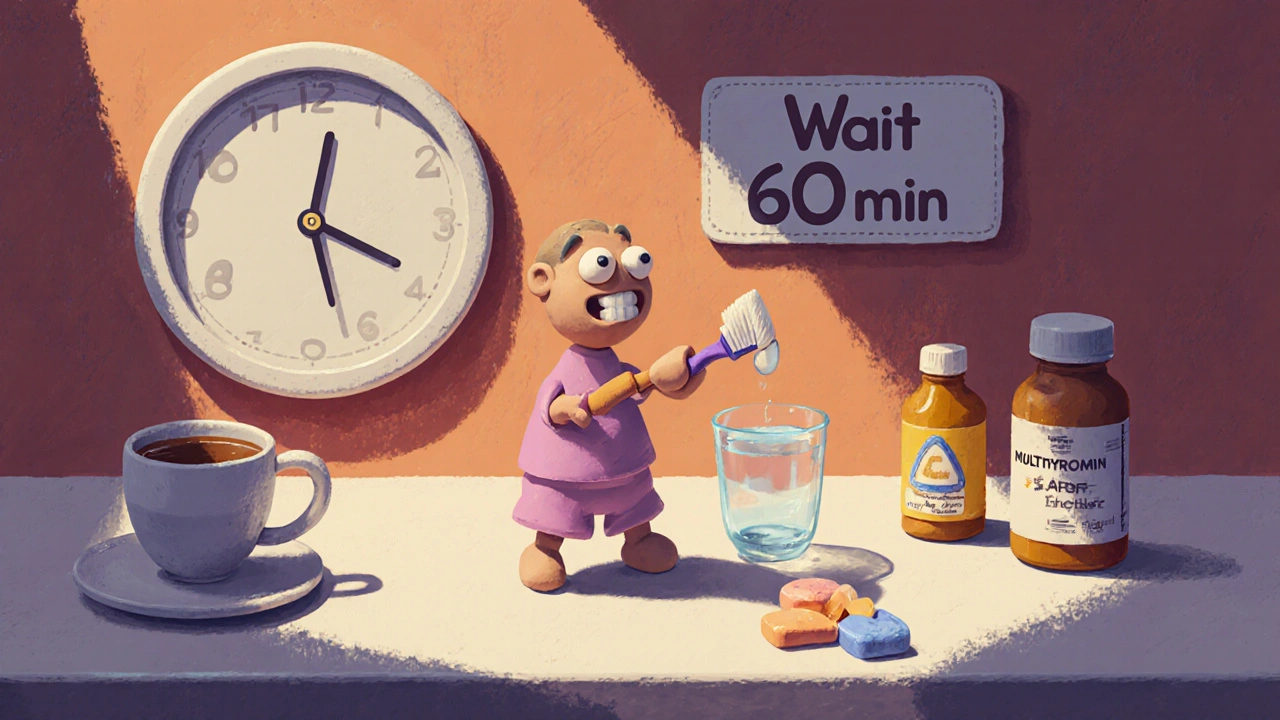
Learn how to take levothyroxine correctly to avoid absorption problems. Discover what foods, drinks, and supplements interfere with thyroid medication and how timing affects your TSH levels.
Nov, 27 2025