
PTSD Nightmares: How Prazosin and Sleep Therapies Actually Work

When you live with PTSD, sleep isn't rest-it's a battleground. Nightmares don’t just wake you up. They rip you back into the trauma, heart pounding, sweat-soaked, gasping for air. And when morning comes, the exhaustion lingers. You’re tired before you’ve even started the day. This isn’t just bad sleep. It’s a core symptom of PTSD, affecting 71-90% of military veterans and over half of civilian trauma survivors. For years, doctors reached for sleep aids, anti-anxiety meds, even antipsychotics. But the real breakthroughs? They came from looking at sleep itself-not as a side effect of PTSD, but as a key part of the healing process.
Why PTSD Nightmares Don’t Go Away on Their Own
Most people think trauma fades with time. But for many, the brain doesn’t let go. Nightmares aren’t just memories replaying-they’re the nervous system stuck in fight-or-flight mode, even during REM sleep. That’s why simply avoiding triggers or trying to "think positive" rarely helps. The brain’s alarm system, centered in the amygdala, stays hyperactive. And without deep, restorative sleep, emotional regulation tanks. You become more reactive, more anxious, more easily overwhelmed. It’s a cycle: bad sleep worsens PTSD, and worse PTSD makes sleep even harder.
That’s why treating PTSD without addressing sleep is like trying to fix a leaky roof while ignoring the flooding below. Studies show that when nightmares reduce, so do flashbacks, hypervigilance, and emotional numbness. Sleep isn’t just recovery time-it’s repair time.
Prazosin: The Blood Pressure Drug That Quieted Nightmares
In the early 2000s, Dr. Murray Raskind at the VA noticed something strange. Veterans taking prazosin for high blood pressure also reported fewer nightmares. It wasn’t a coincidence. Prazosin blocks alpha-1 receptors in the brain, which are overactive in PTSD. These receptors flood the system with norepinephrine-a stress chemical that keeps the brain on high alert, even at night. By dialing that down, prazosin helps the brain transition out of fight mode during sleep.
Most patients start with 1 mg at bedtime. Doses are slowly increased, usually by 1 mg per week, up to 15 mg or more. The goal? To hit the sweet spot where nightmares fade without causing dizziness or low blood pressure. Clinical trials show a moderate reduction in nightmare frequency-around 40-50% on average. For some, it’s a game-changer. One veteran in a VA clinic told me, "I hadn’t slept through the night in 12 years. Prazosin gave me back my sleep. Not perfectly, but enough to feel human again."
But it’s not perfect. Side effects are common: dizziness (nearly 30% of users), nasal congestion, and orthostatic hypotension-that sudden drop in blood pressure when standing up. And here’s the catch: if you stop taking it, nightmares often come back. A 2021 VA report found 28% of users experienced rebound nightmares after discontinuing prazosin. That’s why many see it as a bridge-not a cure.
The Real Game-Changer: CBT-I for PTSD
If prazosin targets the chemistry of nightmares, Cognitive Behavioral Therapy for Insomnia (CBT-I) targets the behavior. And it’s working better than drugs for many people. Developed in the 1990s, CBT-I is now the gold standard for chronic insomnia. In PTSD, it’s even more powerful.
Here’s what it actually looks like:
- Sleep restriction: You limit time in bed to match how much you’re actually sleeping. If you only sleep 5 hours, you’re only allowed 5 hours in bed-even if you’re tired. Sounds cruel? It is. But within days, sleep efficiency shoots up. Your brain learns: bed = sleep, not worry.
- Stimulus control: Get out of bed if you’re awake for more than 20 minutes. Go read, listen to music, sit in another room. Come back only when sleepy. This breaks the association between bed and anxiety.
- Cognitive restructuring: You challenge thoughts like, "I’ll never sleep again," or "If I don’t sleep, I’ll collapse tomorrow." These thoughts keep your nervous system locked in panic mode.
- Sleep hygiene: No caffeine after noon. No screens 90 minutes before bed. Cool, dark room. Consistent wake time-even on weekends.
A 2021 review found CBT-I reduced insomnia severity by 1.35 standard deviations-that’s a massive effect. And it didn’t stop there. PTSD symptoms dropped too. In one study, total sleep time increased by 78 minutes when CBT-I was combined with trauma therapy. That’s over an hour and a half more sleep per night. And the gains? They stick. 63% of patients still had better sleep six months later.
Imagery Rehearsal Therapy: Rewriting the Nightmare
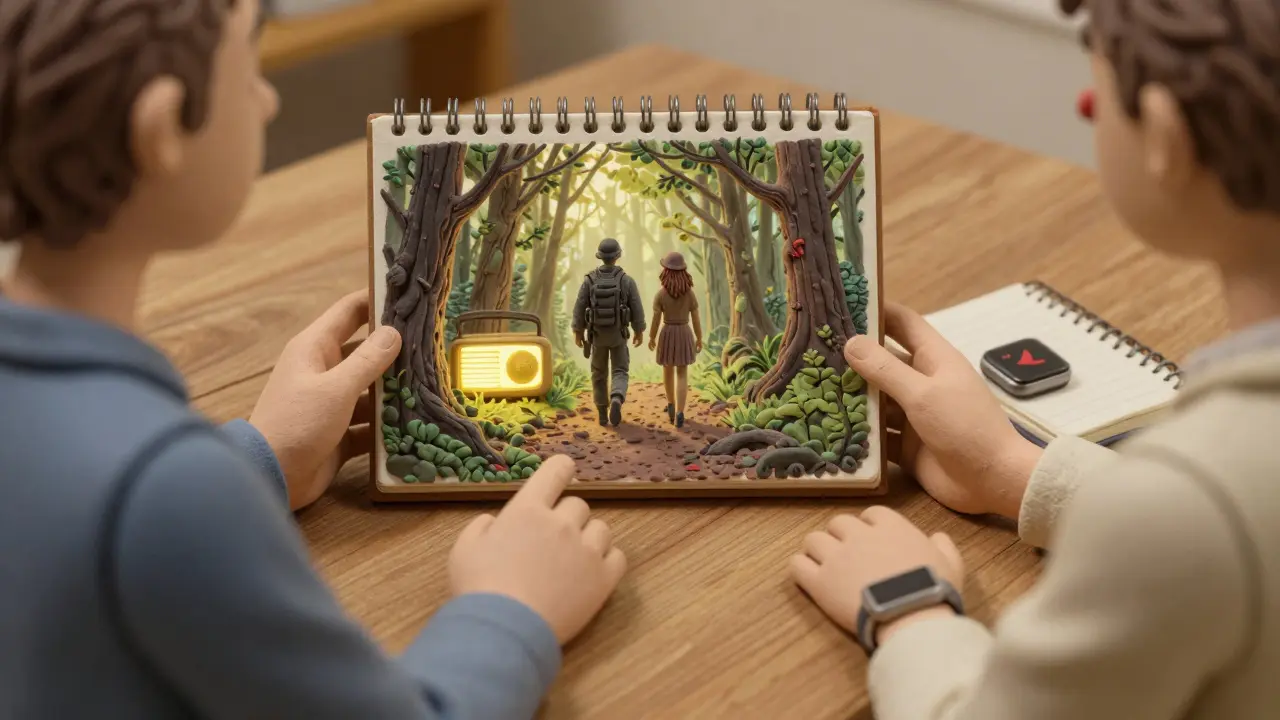
What if you could change the script of your nightmare while you’re awake? That’s the idea behind Imagery Rehearsal Therapy (IRT). You pick a recurring nightmare. Then, with your therapist, you rewrite it. Not just a little-completely. A soldier haunted by a firefight might change it to: "I see the smoke, but I’m safe. I hear the radio crackle. My team is beside me. We’re moving out."
You rehearse this new version for 10-15 minutes every day. Not just once. Every day. For weeks. The brain doesn’t distinguish between imagination and memory. So when you rehearse a safe ending, your brain starts to believe it. Studies show 67-90% of PTSD patients see a major drop in nightmare frequency after IRT. One woman, a survivor of domestic violence, told me: "I used to wake up screaming every night. After three weeks of rewriting, I had one nightmare. Then none. I haven’t had one in over a year."
IRT isn’t magic. It takes effort. But it’s drug-free, doesn’t require long-term commitment, and works even when trauma-focused therapy feels too overwhelming.
Why Prazosin Alone Isn’t Enough
Here’s the truth most providers don’t say out loud: prazosin helps nightmares, but it doesn’t fix PTSD. A 2022 meta-analysis found it had almost no effect on overall PTSD symptoms. It’s like giving someone a bandage for a broken leg. It helps with the pain, but the bone still needs setting.
Meanwhile, trauma-focused therapies like Cognitive Processing Therapy (CPT) and Prolonged Exposure (PE) directly rewire how the brain stores trauma memories. When you combine those with CBT-I? The results are explosive. One study showed insomnia severity dropped by 12.4 points with CBT-I + PE, compared to just 4.2 points with PE alone. Total sleep time jumped by 78 minutes-nearly 1.5 hours-versus 22 minutes with PE alone.
The VA now calls this "CBT-I-PE." And it’s becoming the new standard. Why? Because sleep isn’t a symptom to be managed-it’s a pathway to recovery.
The New Frontier: Digital Tools and What’s Coming
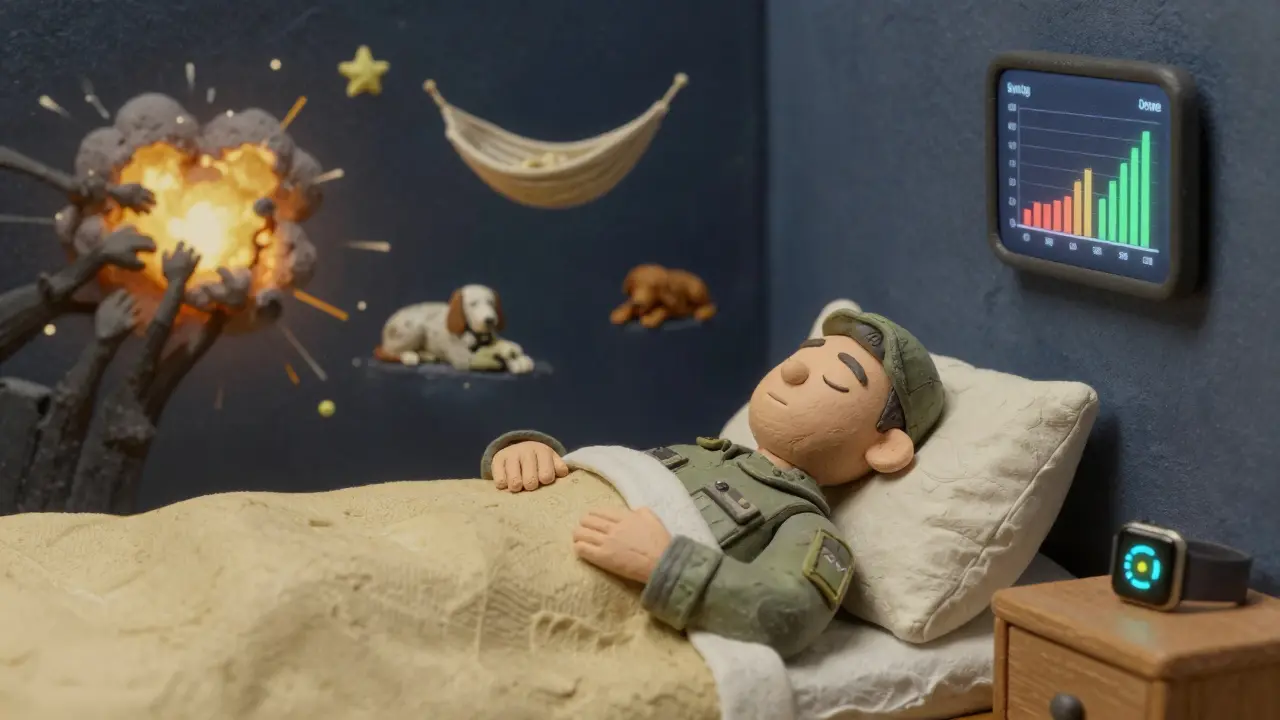
Technology is stepping in where access is limited. The NightWare app, approved by the FDA in 2020, uses an Apple Watch to detect changes in heart rate and movement that signal a nightmare is starting. It then delivers a gentle vibration to disrupt the nightmare without fully waking you. In trials, it cut nightmare frequency by 58%. No pills. No therapy sessions. Just a smartwatch.
The VA’s "Sleep SMART" initiative is rolling out CBT-I in 143 facilities, serving over 86,000 veterans. Completion rates? 74%-far higher than in private clinics. Why? Because they make it easy: group sessions, digital tracking, follow-up texts. Meanwhile, the Department of Defense just allocated $28 million to study combining CBT-I with virtual reality exposure therapy. Imagine facing a trauma memory in VR, then immediately practicing sleep skills. That’s the future.
What Works Best? A Real-World Guide
So what should you do if you’re struggling with PTSD nightmares?
- If you’re new to treatment: Start with CBT-I. It’s evidence-based, has no long-term side effects, and helps both sleep and PTSD. You don’t need to be ready for trauma therapy to begin.
- If you can’t access a CBT-I specialist: Prazosin is still a valid option. But start low (1 mg), go slow, and monitor your blood pressure. Talk to your doctor about side effects.
- If nightmares are your main problem: Try IRT. It’s short-term, focused, and highly effective. Many therapists now offer it as a standalone treatment.
- If you’re a veteran: Ask about VA’s Sleep SMART program. You’re eligible. They’ll help you navigate it.
- Never stop prazosin cold turkey. Taper slowly under medical supervision to avoid rebound nightmares.
And here’s the most important thing: track your sleep. Use a simple journal or the CBT-I Coach app. Record nightmare frequency, how long it took to fall asleep, how many times you woke up. You can’t fix what you don’t measure.
Why This Matters Now
In 2023, the American Academy of Sleep Medicine upgraded its recommendation for CBT-I in PTSD from "conditional" to "strong." That’s huge. It means sleep-focused therapy isn’t a nice-to-have anymore-it’s essential. The FDA hasn’t approved any drug specifically for PTSD nightmares. Prazosin remains off-label. But the science is clear: treating sleep isn’t secondary. It’s central.
By 2027, 92% of PTSD treatment guidelines are expected to require routine sleep assessment. That’s not a prediction-it’s a movement. Because when you fix sleep, you don’t just sleep better. You heal faster. You feel safer. You get your life back.
Can prazosin be used long-term for PTSD nightmares?
Yes, many patients use prazosin for months or even years. But it’s not without risks. Long-term use can lead to tolerance, meaning higher doses may be needed over time. It also carries risks of low blood pressure, dizziness, and fainting-especially in older adults or those with heart conditions. Regular blood pressure checks are essential. Some patients find they can taper off after 6-12 months of improved sleep and trauma therapy, while others need to stay on it longer. Always work with a doctor who understands PTSD and sleep.
Is CBT-I only for veterans?
No. CBT-I works for anyone with PTSD, regardless of how the trauma happened. Civilian survivors of assault, accidents, natural disasters, or abuse benefit just as much. The core issue is disrupted sleep and hyperarousal-not the source of trauma. The VA developed the protocols, but they’re used worldwide. Look for a certified behavioral sleep medicine specialist. The Society of Behavioral Sleep Medicine lists over 400 certified providers in the U.S. alone.
What if I can’t afford therapy or can’t find a specialist?
There are options. The VA offers CBT-I and IRT at no cost to eligible veterans. For civilians, some universities and clinics offer low-cost or sliding-scale services. The CBT-I Coach app (free on iOS and Android) provides guided sessions based on proven protocols. There are also online CBT-I programs with therapist support, like Sleepio and SHUTi. While not as effective as in-person care, they still show significant improvement in sleep and PTSD symptoms. Don’t wait for the "perfect" option-start with what’s accessible.
Do nightmares always mean PTSD?
Not always. Recurrent nightmares can also be linked to other conditions like depression, anxiety, sleep apnea, or even certain medications. But in PTSD, nightmares are specific: they replay the trauma, feel intensely real, and cause strong emotional reactions upon waking. If you’re having nightmares after a traumatic event and they’re affecting your daily life, it’s worth getting evaluated. A sleep specialist or trauma-informed therapist can help determine if it’s PTSD or something else.
Can I do IRT on my own?
Yes, but with caution. IRT is most effective with a trained therapist, especially in the beginning, because trauma can resurface during the rewriting process. That said, there are structured workbooks and apps that guide you through the steps. The key is consistency: rewrite your nightmare daily, visualize the new version vividly, and repeat it for at least two weeks. If you feel overwhelmed, stop and seek help. IRT should reduce distress-not increase it.
There’s no single fix for PTSD nightmares. But there is hope. And it’s not just in a pill. It’s in a bedtime routine. In a rewritten dream. In a quiet room, a steady breath, and the slow, steady return of safety-not just in your mind, but in your sleep.
Anil bhardwaj
February 24, 2026 AT 12:10Been on prazosin for 8 months now. Didn’t expect it to work, but damn if it didn’t finally let me sleep past 3am. No more jolting awake like I’m back in the desert. Still get dizzy standing up, but worth it. My wife says I’m actually smiling again.
lela izzani
February 25, 2026 AT 13:52As a sleep specialist, I can’t stress enough how CBT-I changes everything for PTSD. Prazosin? Great tool. But if you’re not retraining your brain’s association with bed, you’re just putting a bandaid on a hemorrhage. I’ve seen patients go from 2 hours of sleep to 7 in 6 weeks-no meds. Just structure, consistency, and patience.
Joanna Reyes
February 27, 2026 AT 10:09I’ve been doing IRT for 14 months now. It’s not glamorous. You sit there, eyes closed, rewriting the same damn nightmare over and over-like practicing a speech for a funeral you didn’t know you’d have to give. But after the third week, something shifts. The nightmare doesn’t vanish, but it loses its teeth. Last week, I dreamed I was walking through the old neighborhood. No sirens. No shouting. Just wind. I woke up and didn’t move for ten minutes. Just… breathed. That’s the win.
And yeah, it’s exhausting. But so is living like a ghost.
Nerina Devi
February 28, 2026 AT 08:53My brother is a veteran from Afghanistan. He tried everything-meds, therapy, yoga, even acupuncture. Nothing stuck until he started CBT-I through the VA. Now he sleeps 6 hours straight. He says it’s not perfect, but for the first time in 15 years, he doesn’t dread bedtime. That’s huge. I’m so glad they’re finally treating sleep like part of the healing, not just an afterthought.
Dinesh Dawn
March 1, 2026 AT 05:41Man, I wish I’d known about this five years ago. I was on 4 different meds, still waking up screaming. Then my therapist said, "Let’s try sleep restriction." I thought she was crazy. But after 10 days of only being in bed 4 hours? I slept like a baby. No drugs. Just discipline. And now? I’m off all meds. Just CBT-I and a damn good fan.
Vanessa Drummond
March 3, 2026 AT 01:55So prazosin works? Cool. But let’s be real-this whole PTSD sleep thing is just another way the system keeps people dependent on meds and therapists. Why not just learn to chill? You think your brain’s broken? Maybe it’s just tired of being treated like a broken machine. Stop chasing fixes. Just breathe. That’s all you need.
Gabrielle Conroy
March 4, 2026 AT 17:08OMG, I just started IRT last week, and I already had ONE nightmare instead of 4! 😭 I’m crying happy tears! I rewrote my nightmare so I’m hugging my dog in the middle of the fire, and he’s licking my face like it’s a picnic 🐶💕 I do it every night before bed-it’s like a bedtime story for my trauma. I’m telling everyone I know!!
Spenser Bickett
March 6, 2026 AT 00:19so u mean to say we need a whole 78 min more sleep? wow. i thought the answer was just stop being dramatic. maybe if u stopped rehashing the trauma in ur head every night u’d sleep better. also prazosin? that’s just a blood pressure drug. lol. they’re just giving people pills to make them feel better while the system ignores the real issue: people need to toughen up.
Christopher Wiedenhaupt
March 7, 2026 AT 16:11While the data on CBT-I and prazosin is compelling, it’s important to acknowledge that access remains uneven. Rural veterans, low-income civilians, and those without insurance still face significant barriers. The VA’s rollout is commendable, but scaling this nationally requires infrastructure investment, not just clinical protocols. Sleep is not a luxury-it’s a biological necessity. Policy must reflect that.
John Smith
March 7, 2026 AT 18:21