
Psoriasis Triggers: How Stress, Infections, and Skin Barrier Care Impact Flares

Psoriasis isn’t just a rash. For millions of people, it’s a constant battle where your own immune system turns against your skin. Thick, scaly patches appear out of nowhere, burning or itching, often flaring up without warning. If you’ve lived with this condition, you know it’s not just about appearance-it’s about sleepless nights, social anxiety, and the frustration of trying to control something that seems to have a mind of its own. The good news? While psoriasis can’t be cured, its flares can be managed. And the biggest keys to controlling it lie in understanding three core triggers: stress, infections, and skin barrier care.
Stress: The Silent Flame That Fuels Flares
Stress doesn’t just make you feel overwhelmed-it rewires your body’s immune response. When you’re under pressure-whether it’s from a deadlined project, a family crisis, or even a big move-your body releases cortisol and other inflammatory chemicals. These don’t just raise your heart rate; they activate the exact immune pathways that drive psoriasis.
Studies show that up to 70% of people with psoriasis report stress as a major trigger. One woman in Sydney, after losing her mother, saw her mild elbow plaques explode into patches covering 30% of her body within three months. That’s not coincidence. Stress doesn’t cause psoriasis in someone who’s genetically clear, but for those with the risk, it’s the spark. Even positive stress-like a new job or a wedding-can trigger flares. And here’s the cruel twist: the stress of having a flare can make the flare worse, creating a loop that’s hard to break.
What helps? Not just "relaxing." Real, measurable change comes from consistent habits. A 20-minute daily mindfulness meditation routine has been shown to lower cortisol by 25% in just eight weeks. Regular physical activity, even brisk walking, reduces inflammation. Therapy, especially cognitive behavioral therapy (CBT), helps rewire how you respond to stress. One patient tracked her flares for two years and found that 78% of them happened during high-stress periods. After starting weekly therapy and daily breathing exercises, her flare frequency dropped by over 40%.
Infections: When Your Body’s Defense System Goes Rogue
Your immune system is supposed to fight off germs. In psoriasis, it sometimes mistakes your skin for the enemy. Infections-especially viral and bacterial ones-can throw this system into chaos.
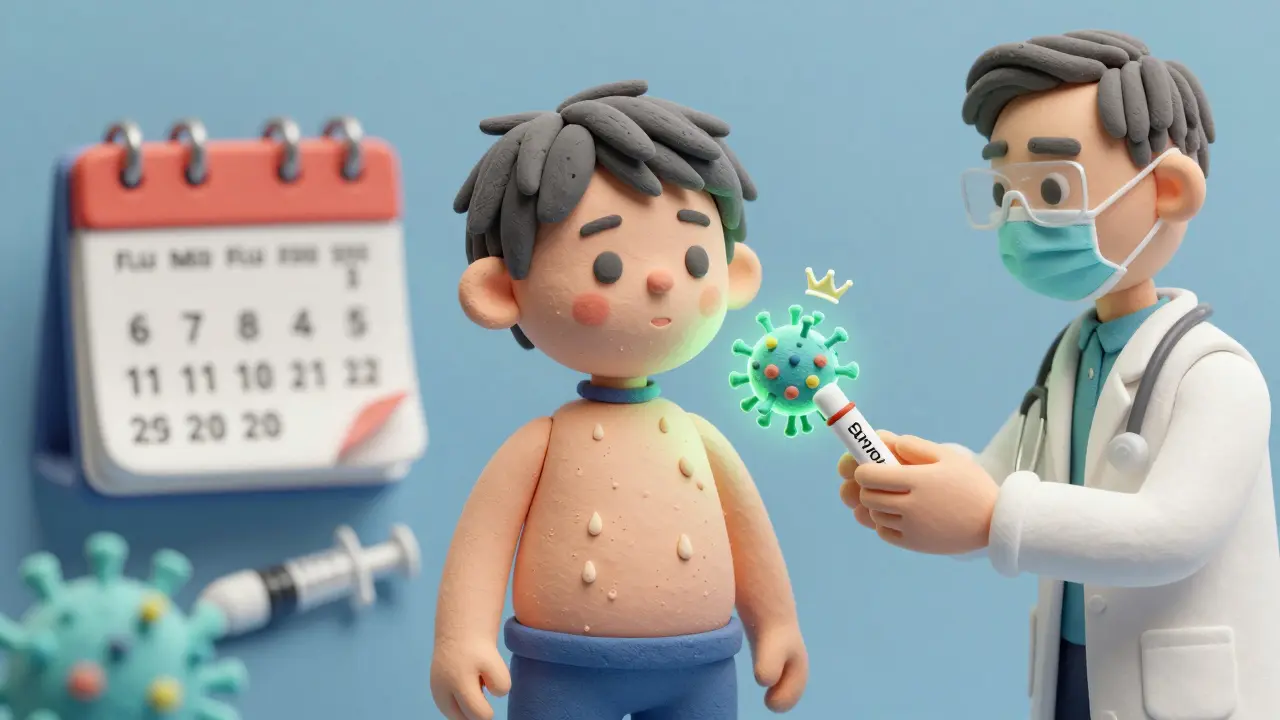
Strep throat is one of the most well-documented triggers. In children and young adults, a bad sore throat can trigger guttate psoriasis: small, drop-like spots that spread quickly across the torso and limbs. The same goes for colds, flu, and even COVID-19. The body’s response to these infections activates immune cells called dendritic cells, which release IL-23-a key driver of psoriasis inflammation. Researchers have found that the RIG-I protein, which detects viruses, can directly trigger this pathway in people with genetic susceptibility.
It’s not just about getting sick. Even minor infections like a sinus infection or a lingering cough can set off a flare. That’s why prevention matters more than treatment. Getting your annual flu shot reduces infection-triggered flares by 35%, according to dermatology clinic data. Regular handwashing, avoiding crowded places during flu season, and staying up to date on vaccines aren’t just smart-they’re part of your psoriasis management plan.
And then there’s the twist: HIV. Even though HIV weakens T-cells-the very cells that drive psoriasis-you’d expect it to improve the condition. But in reality, many HIV patients develop severe psoriasis. Why? Because HIV disrupts immune balance in complex ways, and the resulting inflammation can override any supposed benefit. This shows how unpredictable the immune system can be.
Skin Barrier Care: The First Line of Defense
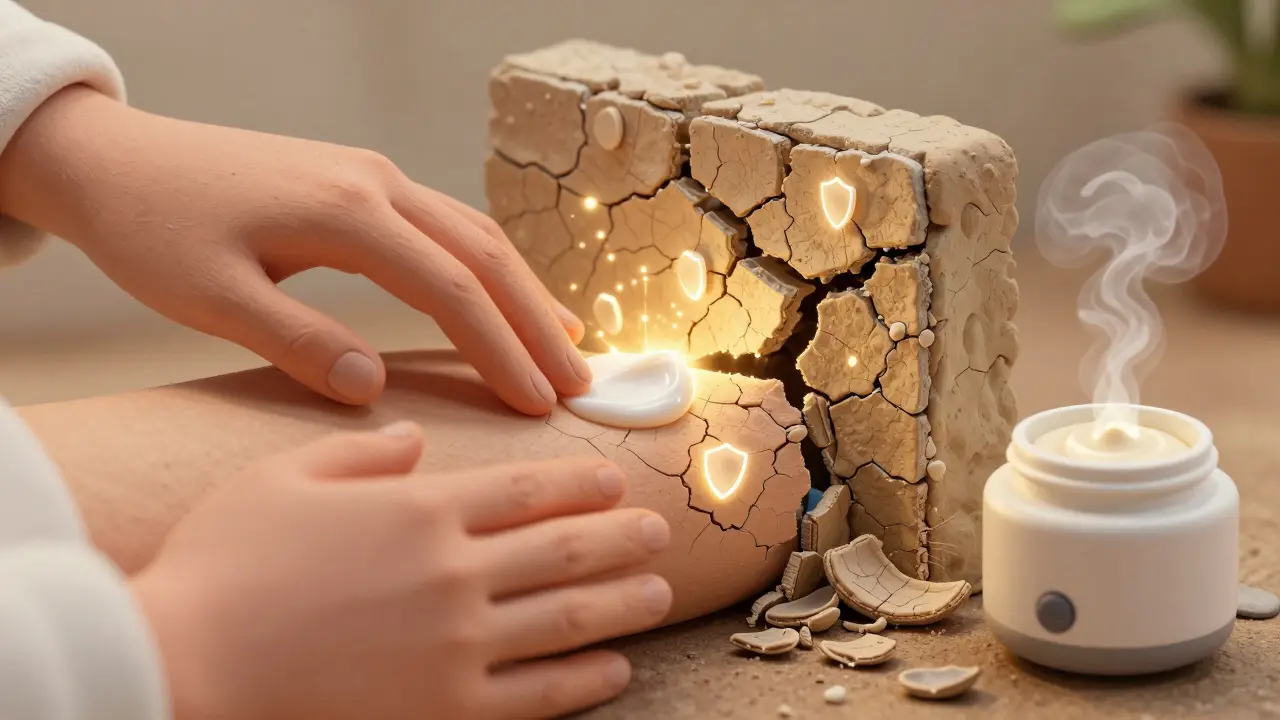
Your skin isn’t just a covering-it’s a living wall. It keeps moisture in, germs out, and signals to your immune system that everything’s under control. In psoriasis, that wall is broken. The skin’s natural barrier is damaged, letting in irritants and bacteria while losing water. This triggers inflammation, which makes the barrier worse-and so the cycle continues.
Research from 2024 shows that when the skin barrier fails, bacteria multiply. These bacteria then activate immune cells that release IL-17 and IL-22-two major players in psoriasis. In mouse studies, applying topical antibiotics to damaged skin reduced these inflammatory signals and cleared psoriasis-like lesions. That’s not just theory-it’s a clue to how we can help humans.
So what does good skin barrier care look like?
- Moisturize twice a day-every single day-with fragrance-free creams containing ceramides, cholesterol, or fatty acids. These rebuild the skin’s natural protective layer.
- Avoid harsh soaps. Most bar soaps have a pH above 5.5, which strips your skin. Use gentle, pH-balanced cleansers instead.
- Keep indoor humidity between 40% and 60%. Dry air, especially in winter, cracks the skin barrier. A simple humidifier can make a huge difference.
- Don’t scratch. Even minor scratches can trigger the Koebner phenomenon-where psoriasis forms exactly where the skin was injured. Use cool compresses or over-the-counter hydrocortisone to calm itching.
- Protect your skin from trauma. Wear gloves in cold weather. Use insect repellent. Be careful when shaving or getting tattoos.
One dermatology clinic tracked 200 patients and found that 45% of new plaques started at sites of unnoticed insect bites or tiny cuts. People didn’t think those minor injuries mattered. They did.
The Bigger Picture: Triggers Are Personal, But Patterns Are Real
Not every trigger affects everyone the same way. One person’s flare is tied to stress. Another’s is linked to dairy or alcohol. Some react to cold weather. Others get worse in the sun. The National Psoriasis Foundation’s survey of over 1,200 patients found that 32% blamed dairy, 25% pointed to gluten, and 18% to nightshades like tomatoes and peppers. But these aren’t universal. What matters is tracking your own pattern.
Start simple: keep a 30-day journal. Note when flares happen, what you ate, how much stress you felt, whether you got sick, and how you cared for your skin. After a month, patterns emerge. You might notice flares always follow a bad night’s sleep. Or maybe they spike after you skip moisturizing for a few days.
That’s the power of personal data. It turns guesswork into strategy.
What’s Next? The Future of Trigger Management
Science is moving fast. New biologic drugs target IL-23 and other immune signals directly, with some patients achieving 90% skin clearance. Researchers are also exploring the gut-skin axis-how gut bacteria influence skin inflammation. Early studies show probiotic supplements can reduce flare frequency by 22% in people with gut microbiome imbalances.
In the next five years, wearable stress monitors and AI-powered apps will help patients track triggers in real time. Imagine getting an alert: "Your heart rate variability dropped 20% today-high stress risk. Try 10 minutes of breathing exercises." That’s not science fiction-it’s coming.
For now, focus on what you can control. Manage stress like you manage your medication. Treat infections like you treat your skin. Moisturize like your life depends on it-because in a very real way, it does.
Can stress cause psoriasis?
No, stress doesn’t cause psoriasis on its own. But if you have a genetic risk for psoriasis, stress can trigger your first flare or make existing symptoms much worse. It activates immune pathways that inflame the skin, and it also weakens the skin’s natural barrier, making flares more likely.
Does every infection trigger psoriasis?
No, but certain infections are strongly linked. Streptococcal throat infections are the most common, especially in kids and young adults, often causing guttate psoriasis. Colds, flu, and even COVID-19 can also trigger flares. The key is how your immune system responds-not every infection leads to a flare, but if you’ve had one before, you’re more likely to have another.
What moisturizers work best for psoriasis?
Look for thick, fragrance-free creams or ointments with ceramides, cholesterol, or fatty acids. These ingredients help rebuild the skin’s natural barrier. Lotions are often too watery. Ointments like petroleum jelly or thick creams like CeraVe Healing Ointment or Eucerin Advanced Repair are top choices. Apply right after bathing while skin is still damp to lock in moisture.
Can diet trigger psoriasis?
For some people, yes. Dairy, gluten, and nightshades (like tomatoes and eggplant) are commonly reported triggers. Alcohol and sugary foods can also worsen inflammation. But there’s no universal diet for psoriasis. The best approach is to track your own reactions. If you notice flares after eating certain foods, try eliminating them for 4-6 weeks and see if your skin improves.
Is psoriasis contagious?
No, psoriasis is not contagious. You can’t catch it from touching someone’s skin or sharing towels. It’s an autoimmune condition-your immune system attacks your own skin cells. It’s not caused by germs, so it can’t spread from person to person.
How long does it take to see improvement after managing triggers?
It varies. Skin cells turn over every 30-40 days, so it can take 4-8 weeks to see noticeable improvement after changing habits like moisturizing, reducing stress, or avoiding infections. Some people notice less itching or fewer new patches in 2-3 weeks. Consistency matters more than speed-stick with your routine for at least two months before judging results.
What to Do Next
If you’re struggling with frequent flares, start with one change. Pick the trigger that feels most obvious to you-stress, an infection you keep getting, or skipping moisturizer-and focus on that for 30 days. Track your skin daily. Write down what you did, how you felt, and what your skin looked like. You might be surprised at what you learn.
And don’t wait for a flare to act. Prevention is always easier than repair. Moisturize every day. Wash your hands. Breathe through stress. Protect your skin. These aren’t just tips-they’re your tools.
Shelby Marcel
January 24, 2026 AT 00:34i legit thought psoriasis was just "dry skin" until my cousin showed me her legs after a flare. like… those patches look like someone spilled cement and let it dry. no joke, i cried. now i’m obsessed with learning how to help.
blackbelt security
January 24, 2026 AT 04:20you’re not alone. i’ve been fighting this for 12 years. the biggest game-changer? daily moisturizing. not fancy, not expensive-just consistent. i use plain vaseline after showers. it’s boring, but it works. no flares in 8 months.
Patrick Gornik
January 25, 2026 AT 20:30let’s be real-this entire narrative is a neoliberal construct disguised as medical advice. stress? infections? skin barriers? please. the real trigger is the pharmaceutical-industrial complex weaponizing your fear of imperfection to sell $10,000 biologics. your immune system isn’t "rogue"-it’s trying to tell you your life is out of alignment with natural rhythms. you’re not broken. you’re being manipulated by a system that profits from your suffering. the cure? disconnect. live off-grid. eat ancestral diets. stop using soap. your skin will thank you. or it won’t. either way, the system loses.
Karen Conlin
January 26, 2026 AT 08:10to everyone here: you’re not weird for struggling. psoriasis doesn’t care if you’re successful, pretty, or "strong." it just shows up. but here’s the truth-you’re not powerless. the 20-minute meditation? the moisturizer? the handwashing? those aren’t chores. they’re acts of rebellion. every time you choose care over chaos, you’re reclaiming your body. you’re not just managing a disease-you’re rewriting your story. and that? that’s power.
Sharon Biggins
January 26, 2026 AT 09:18my dermatologist told me to use ceramides but i kept buying the cheap lotion from walmart. i thought it was the same. big mistake. my skin looked like cracked desert after 2 weeks. then i tried cerave… and my elbows stopped bleeding. i cried. again. but this time it was happy tears. lol.
John McGuirk
January 26, 2026 AT 16:38you all think this is about stress or moisturizer? wrong. it’s 5G. and the flu shots. and the glyphosate in your bread. the CDC knows. the WHO knows. they’re silencing the truth because the vaccine makers own the patents on the "biologics" you’re being sold. i had a flare after my second shot. i checked the ingredients. aluminum. mercury. lithium. they’re poisoning us. and you’re just moisturizing? pathet
Kat Peterson
January 28, 2026 AT 01:11OMG I’M SO RELATEABLE 😭 I had a flare during my wedding photos and my dress looked like a dragon laid eggs on my back. my mom cried. my husband said "it’s beautiful" but he was lying. i still haven’t looked at the album. #psoriashame
Izzy Hadala
January 28, 2026 AT 09:52While the empirical data presented regarding IL-23 pathways and ceramide-repair mechanisms is substantiated by peer-reviewed dermatological literature (cf. JAMA Dermatology, 2024), one must interrogate the epistemological validity of anecdotal self-tracking methodologies as presented in the journaling recommendation. Correlation does not imply causation, and without controlled variables, such self-reports risk confirmation bias. Furthermore, the assertion that "moisturizing like your life depends on it" constitutes a non-falsifiable hyperbole, potentially undermining clinical credibility.
Elizabeth Cannon
January 28, 2026 AT 18:57you guys are all missing the point. it’s not about the triggers. it’s about community. i started a psoriasis support group on zoom. we talk about stress, we share moisturizer tips, we vent about bad days. last week, a 17-year-old girl said she was going to kill herself because she thought no one understood. we talked for 3 hours. she’s alive today. psoriasis doesn’t define you. your people do. find yours.
Gina Beard
January 29, 2026 AT 06:54the skin barrier isn’t a wall. it’s a conversation.
Phil Maxwell
January 30, 2026 AT 20:25i just read this whole thing. didn’t say anything. just nodded. and put on my cream. again. i’ll do it tomorrow too.