
Osteoporosis in Endocrine Disease: How FRAX and Bisphosphonates Guide Treatment
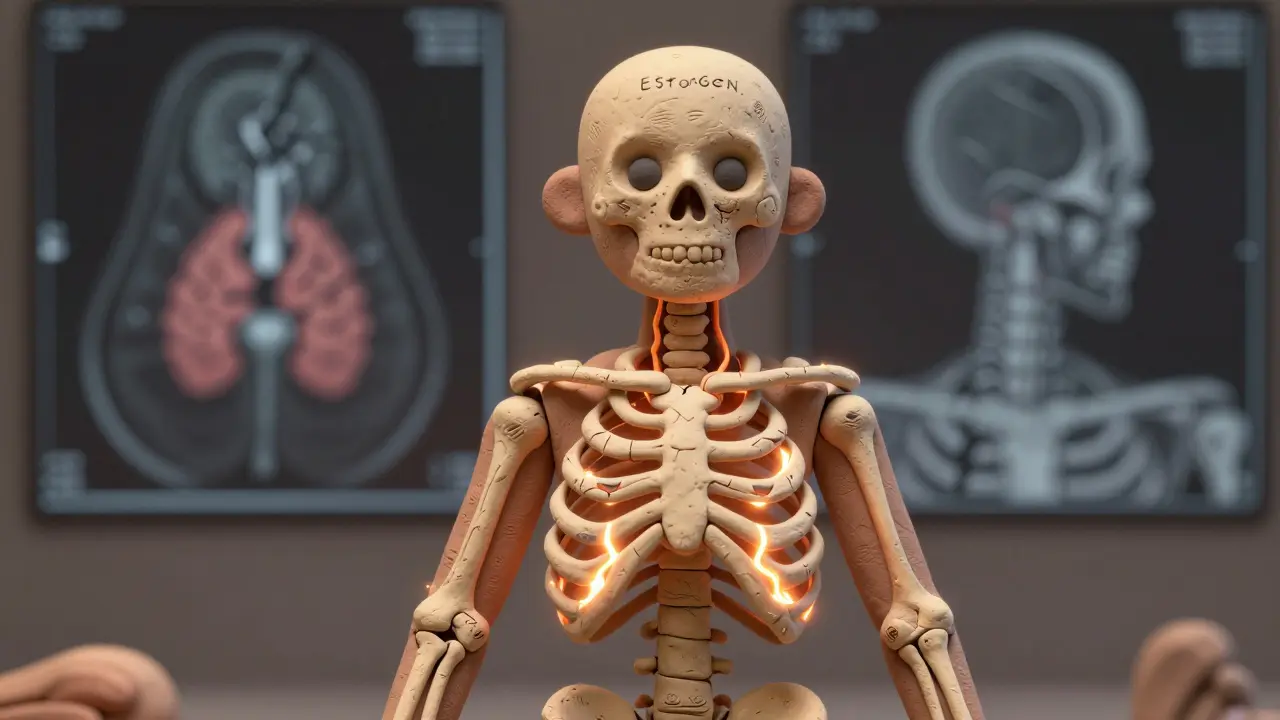
When your hormones are out of balance, your bones pay the price. That’s not just a metaphor-it’s science. People with endocrine disorders like type 1 diabetes, hyperthyroidism, or hypogonadism are at a much higher risk of breaking bones, even when their bone density scans look normal. This isn’t about aging alone. It’s about how hormones control bone remodeling, and when those signals go wrong, bones become fragile without showing it on a DEXA scan. The key to catching this early isn’t just measuring bone density-it’s using tools like FRAX and knowing when to start treatment with drugs like bisphosphonates.
Why Endocrine Disorders Break Bones
Your skeleton isn’t just a static structure. It’s alive, constantly being broken down and rebuilt by cells called osteoclasts and osteoblasts. Hormones like estrogen, testosterone, thyroid hormone, and insulin play a direct role in keeping that balance. When you have an endocrine disease, that balance shatters. In type 1 diabetes, bone density often looks normal on scans. But fracture risk? It’s 6 to 7 times higher than in people without diabetes. Why? Because high blood sugar damages bone quality at a microscopic level. Collagen structure weakens, bone microarchitecture deteriorates, and healing slows. DEXA scans miss all of this. Untreated hyperthyroidism is another silent bone killer. Even mild overactivity of the thyroid speeds up bone turnover so much that you lose 15-20% more fractures than normal. Hypogonadism-low testosterone in men or estrogen in women-leads to bone loss of 2-4% per year. That’s faster than most postmenopausal women lose bone. And if you’re on androgen deprivation therapy for prostate cancer, your bone density can drop sharply within months. The National Institutes of Health lists these as major secondary causes of osteoporosis: type 1 diabetes, untreated hyperthyroidism, hypogonadism, premature menopause before age 45, and chronic malnutrition. These aren’t rare side effects. They’re core reasons why someone under 65 might break a hip.FRAX: The Tool That Sees Beyond Bone Density
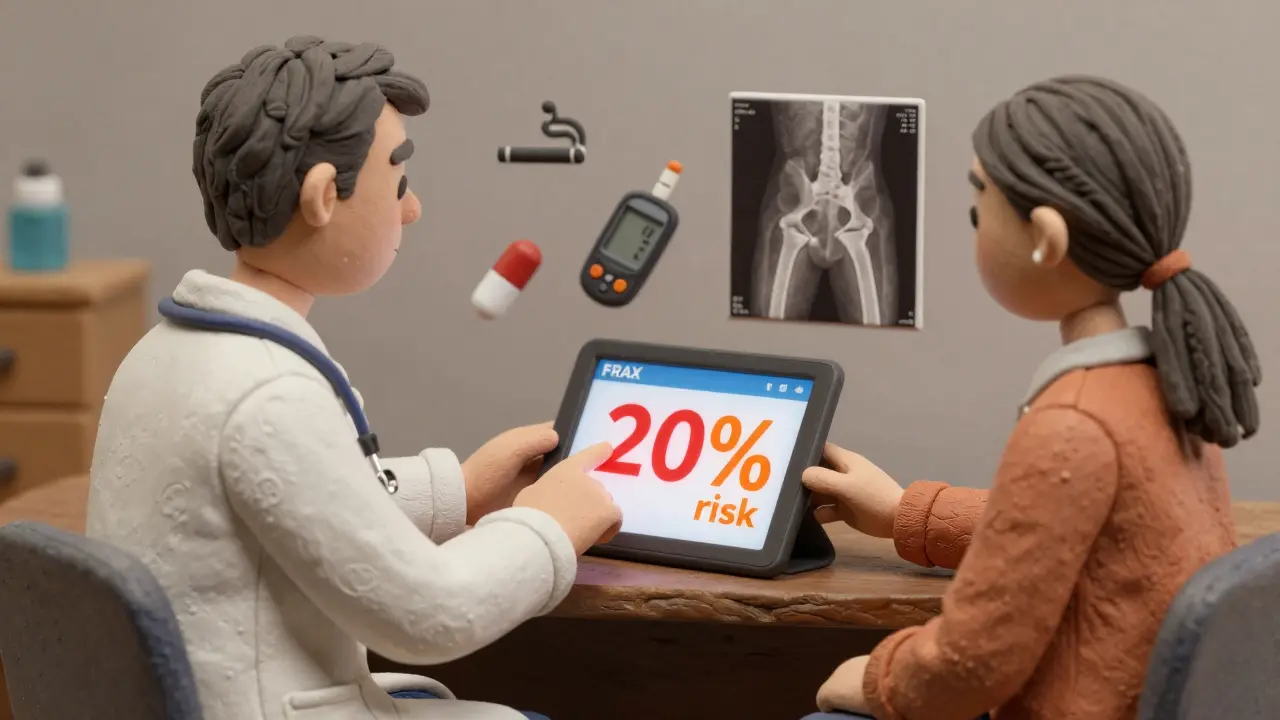
FRAX isn’t just another calculator. It’s the most widely used fracture risk assessment tool in the world, built by the University of Sheffield and adopted in over 120 countries. It doesn’t rely on bone density alone. It asks: How old are you? Are you a smoker? Did your parent break a hip? Do you take steroids? Do you drink more than three alcoholic drinks a day? Do you have rheumatoid arthritis? For people with endocrine diseases, FRAX includes these conditions as risk factors. But here’s the catch: FRAX still underestimates fracture risk in type 1 diabetes by about 30%. That’s not a small error-it’s clinically significant. A 65-year-old woman with type 1 diabetes might have a FRAX score that says she’s at moderate risk, but her real risk is much higher. That’s why experts now recommend using FRAX with bone density (BMD) from a DEXA scan. When you add BMD to FRAX, the tool becomes far more accurate. But even then, it’s not perfect. That’s where the Trabecular Bone Score (TBS) comes in. TBS is a computer-based analysis of the DEXA image that measures bone texture and microstructure. It’s especially useful for people with endocrine disorders because it shows bone quality, not just quantity. The Bone Health and Osteoporosis Foundation says treatment should be considered if you have:- A T-score of -2.5 or lower on DEXA
- A history of hip or spine fracture
- An osteopenia T-score between -1 and -2.5 and a 10-year FRAX risk of 20% or higher for major fractures, or 3% or higher for hip fracture
Bisphosphonates: The First-Line Defense
When the numbers say you’re at high risk, bisphosphonates are the go-to treatment. These drugs-like alendronate (Fosamax), risedronate (Actonel), and zoledronic acid (Reclast)-stick to bone surfaces and shut down osteoclasts. They don’t rebuild bone. They stop it from being eaten away too fast. The data is clear: bisphosphonates reduce vertebral fractures by 40-70% and hip fractures by 40-50%. That’s not a minor benefit. It’s life-changing. For someone with a history of fractures or an endocrine disorder, that reduction can mean the difference between living independently and needing long-term care. In type 1 diabetes, bisphosphonates still work-even though bone density doesn’t improve much. They reduce fracture risk because they slow bone loss. The same goes for people with hyperthyroidism or hypogonadism. Treatment follows the same thresholds as for postmenopausal women: if your FRAX score hits 20% for major fractures or 3% for hip fracture, you start bisphosphonates. But timing matters. Oral bisphosphonates are taken weekly or monthly. You have to stand upright for 30 minutes after taking them. No food, no coffee, no antacids. Miss a dose? The effect drops. Zoledronic acid is given as a yearly IV infusion. No daily pills. But it can cause flu-like symptoms the first few days. Some people prefer one over the other. The choice isn’t just medical-it’s personal.How Long Should You Take Them?
Bisphosphonates aren’t meant to be taken forever. After 3-5 years of oral treatment, or 3 years of yearly infusions, your doctor should reassess. Why? Because long-term use can rarely lead to atypical femur fractures or osteonecrosis of the jaw. These are rare, but serious. The current strategy is called a “drug holiday.” After 3-5 years, you stop the bisphosphonate and monitor. If your FRAX score still shows high risk, you restart. If your bone density is stable and you haven’t had any fractures, you may stay off for another few years. This isn’t guesswork. It’s guided by repeat DEXA scans and updated FRAX scores. For patients with multiple fractures or very high risk, doctors may skip the holiday and continue treatment longer. The American Association of Clinical Endocrinologists says these patients are “at very high risk” and need more aggressive, sustained therapy.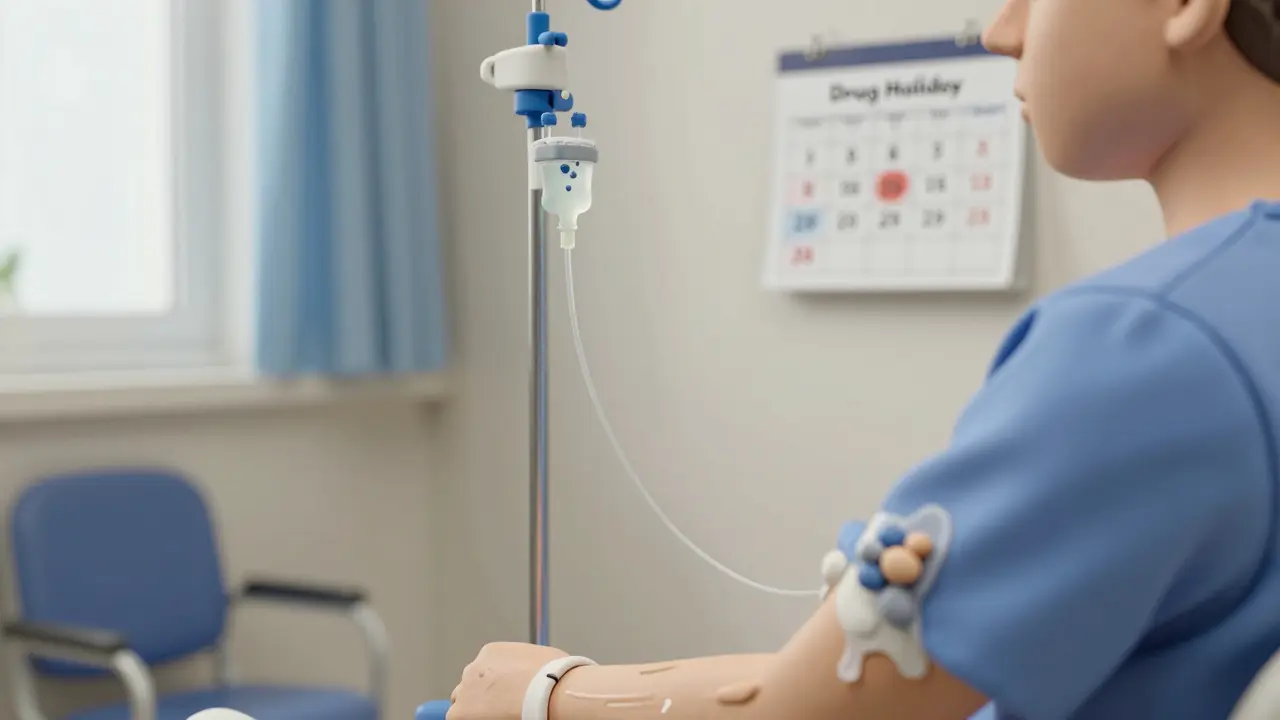
What’s Next? The Future of Fracture Risk Assessment
The field is evolving fast. Researchers are building diabetes-specific versions of FRAX. Early pilot data shows they can improve risk prediction by up to 25%. That’s huge. It means doctors will soon be able to say: “Your diabetes makes your bone risk higher than your current FRAX score shows.” Artificial intelligence is being tested to combine FRAX, TBS, blood biomarkers, and even gait analysis to predict fracture risk with even more precision. Some labs are looking at collagen fragments in the blood as early warning signs of bone breakdown-before a fracture happens. By 2025, industry forecasts suggest 85% of endocrinologists will use adjusted FRAX tools for patients with endocrine diseases. That’s not just progress-it’s a shift in how we think about bone health. It’s no longer about T-scores alone. It’s about understanding the whole person: their hormones, their lifestyle, their past fractures, and their real, lived risk.What Should You Do?
If you have an endocrine disorder and are over 50-or a postmenopausal woman under 50 with risk factors-ask your doctor about FRAX. Don’t wait for a fracture. Don’t assume your normal DEXA scan means you’re safe. Get your FRAX score calculated. If you’re over 65, get a DEXA scan regardless. If you’re younger but have diabetes, thyroid disease, or low sex hormones, get FRAX first. If your score is above 9.3% for major fractures, get the DEXA scan. If your score hits the 20%/3% threshold, talk about bisphosphonates. And if you’re already on a bisphosphonate? Ask: “Should I take a drug holiday?” “Do I need a TBS?” “Is my diabetes changing my risk?” Bone health isn’t just about calcium and vitamin D. It’s about hormones, risk tools, and smart decisions. In endocrine disease, it’s not optional. It’s essential.Is FRAX accurate for people with type 1 diabetes?
FRAX underestimates fracture risk in type 1 diabetes by about 30%, because it doesn’t fully capture how high blood sugar damages bone quality. Even with normal bone density, fracture risk is 6-7 times higher. Experts recommend using FRAX with bone density (DEXA) and the Trabecular Bone Score (TBS) to get a clearer picture. New diabetes-specific FRAX tools are being developed and could improve accuracy by up to 25%.
Do bisphosphonates work if bone density is normal?
Yes. In conditions like type 1 diabetes or hyperthyroidism, bone density may appear normal, but bone quality is poor. Bisphosphonates reduce fracture risk by slowing bone breakdown, even if they don’t raise BMD significantly. Clinical trials show they cut hip fractures by 40-50% in high-risk patients, regardless of baseline DEXA scores.
How often should I get a DEXA scan if I have an endocrine disorder?
If you’re on bisphosphonates, get a DEXA scan every 1-2 years to monitor bone density. After 3-5 years of treatment, your doctor may recommend a break and then recheck. If you have high-risk conditions like type 1 diabetes or hypogonadism, annual monitoring may be needed, especially if your FRAX score is near the treatment threshold.
Can I skip FRAX if my DEXA scan is normal?
No. Many people with endocrine disorders have normal DEXA scans but still have high fracture risk. FRAX looks at clinical factors like age, smoking, steroid use, and your underlying condition. The National Institutes of Health says you should use FRAX to decide whether to get a DEXA scan-not the other way around. Skipping FRAX means missing hidden risks.
What if I can’t take bisphosphonates?
If you have kidney problems, severe reflux, or can’t sit upright after taking oral bisphosphonates, alternatives exist. Denosumab (Prolia) is a monthly injection that works differently and is safe for most with endocrine disease. Teriparatide (Forteo) is a daily injection that actually builds new bone, used for very high-risk cases. Your doctor will choose based on your health, risk level, and preferences.
Sidra Khan
December 24, 2025 AT 04:31FRAX is just a fancy calculator that pharma companies helped design. My aunt had type 1 diabetes, normal DEXA, broke her hip walking to the mailbox. They told her she was low risk. Turns out, her bones were basically Swiss cheese with a nice UI.
Joe Jeter
December 24, 2025 AT 13:10Oh please. You’re acting like bisphosphonates are some miracle cure. I’ve seen people on them for years-jaw necrosis, femur fractures outta nowhere. You’re trading one nightmare for another. Bone health isn’t about drugs, it’s about movement, sunlight, and stopping the sugar addiction.
Lu Jelonek
December 26, 2025 AT 06:17As someone who’s worked in endocrinology for 22 years, I’ve watched this shift from ‘bone density is everything’ to ‘we need to see the whole picture.’ FRAX was revolutionary, but it was never meant to be the final word. TBS, collagen fragments, gait analysis-these are the real future. The science is moving fast, and we’re finally catching up to what patients have been telling us all along: your bones feel different before they show up on a scan.
siddharth tiwari
December 27, 2025 AT 12:34frax is a gov tool to push drugs. they dont want you to know that bone loss is caused by fluoride in water and 5g networks messing with your cells. my cousin took alendronate and got sick. now he cant walk. dont trust the system.
Diana Alime
December 29, 2025 AT 04:33Okay but why is everyone acting like bisphosphonates are the ONLY option? I had hyperthyroidism, FRAX was borderline, DEXA normal, but my TBS was trash. My doc put me on denosumab and I’ve been fine for 3 years. Why is no one talking about this? Like, the article barely mentions alternatives. #OverlookedOptions
Adarsh Dubey
December 29, 2025 AT 08:45There’s a lot of truth here. I’ve got type 1 diabetes and was told my bone density was fine. Then I started walking with a limp after a minor fall. Turned out I had a microfracture. TBS saved me. FRAX is a starting point, not the finish line. The real hero here is the doctor who listens and orders the right tests.
Bartholomew Henry Allen
December 29, 2025 AT 10:13AMERICA NEEDS TO STOP RELYING ON FOREIGN CALCULATIONS. FRAX WAS BUILT IN THE UK. OUR DOCTORS SHOULD USE AMERICAN-BASED RISK MODELS. WE HAVE BETTER DATA. WE HAVE BETTER PATIENTS. WE HAVE BETTER HEALTHCARE. STOP USING EUROPEAN TOOLS FOR AMERICAN BONES.
Jeffrey Frye
December 31, 2025 AT 01:49FRAX underestimates risk in diabetics by 30%? That’s not a flaw, that’s a feature. If they admitted how bad the real risk was, everyone would be on bisphosphonates by 40. Pharma makes more money off long-term management than prevention. The system is designed to keep you sick and dosed.
Andrea Di Candia
January 2, 2026 AT 01:43I just want to say-this post gave me hope. I’m 48, had premature menopause, and thought I was just getting old. Turns out, my bones are crumbling silently. I got my FRAX done last week, hit the 22% threshold. Started talking to my endo about TBS and bisphosphonates. I’m not scared anymore. Knowledge is power, and this article gave me the power to act. Thank you.
bharath vinay
January 3, 2026 AT 17:02theyre lying about bisphosphonates. they cause cancer. the FDA knows. the journals are paid. my uncle took zoledronic acid and died of bone cancer 2 years later. dont be a lab rat.
Dan Gaytan
January 4, 2026 AT 23:45Just wanted to say this is one of the clearest, most helpful posts I’ve read all year. I’ve been avoiding the doctor because I thought ‘normal DEXA’ meant I was fine. Now I’m scheduling my FRAX and TBS. You’re right-it’s not about calcium. It’s about hormones, and listening to your body before it screams. Thank you.
Usha Sundar
January 5, 2026 AT 18:09FRAX is garbage. My mom broke her spine at 52. DEXA was normal. No one listened. Now she’s in a wheelchair. Don’t wait. Get tested. Now.
claire davies
January 6, 2026 AT 23:07There’s something so quietly powerful about how this post ties together endocrine health, bone fragility, and the human cost of ignoring subtle signals. I’m from the UK, and I’ve seen this play out in my own family-my sister with Hashimoto’s, her bones thinning like paper, her doctor dismissing her until she fell climbing stairs. The real tragedy isn’t the disease-it’s the medical inertia. Tools like FRAX and TBS aren’t just data-they’re lifelines for people who’ve been told they’re ‘too young’ to break. Thank you for naming the invisible.
Wilton Holliday
January 8, 2026 AT 23:02Hey, if you’re reading this and you’ve got an endocrine condition-don’t wait. Get the FRAX. Get the TBS. Ask about alternatives. Your bones don’t scream until it’s too late. I’ve coached patients through this for years. The best decision isn’t always the easiest one, but it’s the one that keeps you standing. You’ve got this. And you’re not alone.