
Opioids in Seniors: Safe Pain Management and Essential Monitoring Practices
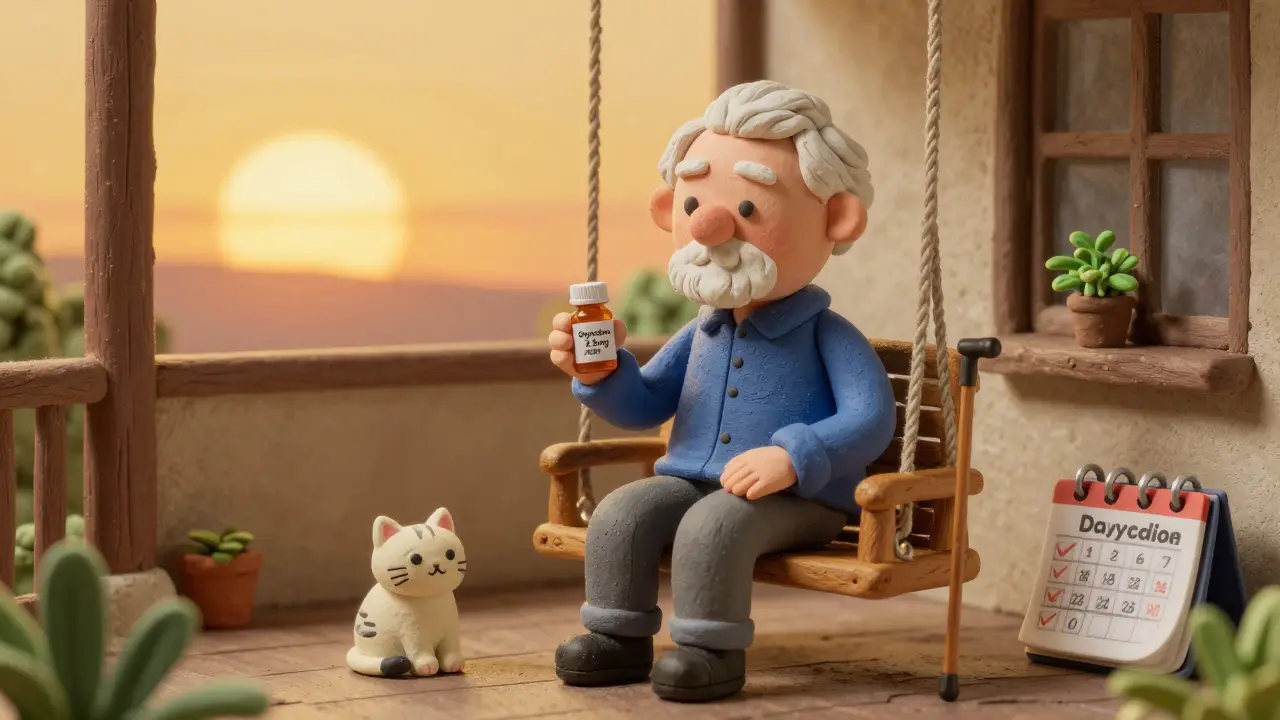
Why Opioids for Seniors Need a Different Approach
Seniors aren’t just smaller adults. Their bodies process drugs differently. Kidneys slow down. Liver function declines. Body fat increases. Muscle mass drops. These changes mean a standard opioid dose meant for a 40-year-old can be too strong - even dangerous - for someone over 65. That’s why blindly following general pain guidelines puts older adults at risk for falls, confusion, breathing problems, and even overdose.
For many seniors, chronic pain from arthritis, nerve damage, or cancer isn’t just uncomfortable - it’s disabling. But the fear of addiction and the fallout from outdated rules have led to widespread undertreatment. In 2016, CDC guidelines pushed doctors to cut opioid doses across the board. Many applied those rules to elderly cancer patients, even though opioids remain the most effective option for moderate-to-severe cancer pain in this group. The result? Too many seniors were left in pain, while doctors turned to alternatives like gabapentin or tramadol - drugs that often cause dizziness, confusion, or worse side effects in older bodies.
What Opioids Are Safe for Seniors?
Not all opioids are created equal for older adults. Some carry hidden dangers. Others are safer when used correctly.
Avoid these: Meperidine (Demerol) and codeine are off-limits. Meperidine breaks down into a toxic compound that can trigger seizures and delirium in seniors. Codeine turns into morphine in the body, but many older adults don’t metabolize it properly, leading to unpredictable and dangerous effects.
Use with caution: Tramadol and tapentadol can cause serotonin syndrome when mixed with antidepressants - a common combo in seniors. They also increase fall risk. These aren’t banned, but they need careful review of all medications the patient is taking.
Preferred options: Morphine, oxycodone, hydromorphone, and buprenorphine are the go-to choices. Buprenorphine stands out. Studies show it causes less constipation and fewer mental side effects like drowsiness or confusion. It’s also less likely to suppress breathing. For many seniors, especially those with cancer or advanced illness, buprenorphine patches offer steady relief without the peaks and crashes of short-acting pills.
Starting Low and Going Slow: The Right Way to Begin
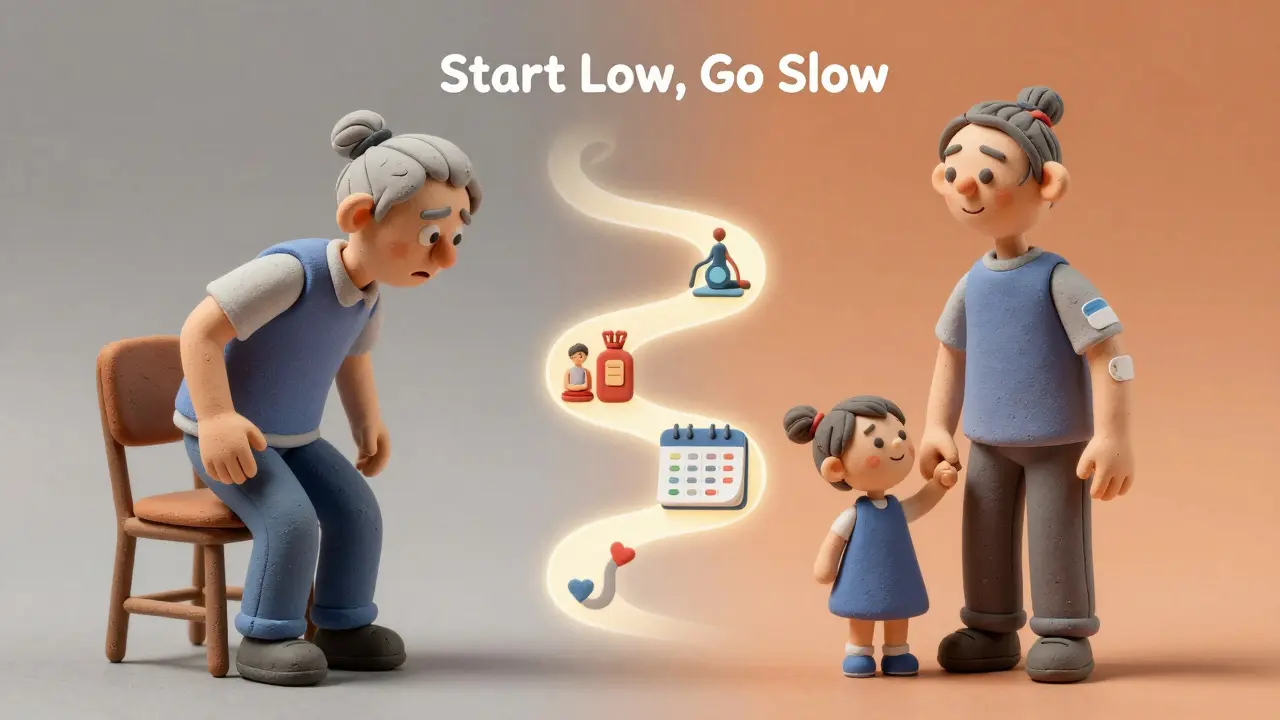
Never start a senior on a full adult dose. Always begin at 30% to 50% of what’s typically prescribed for younger adults. For example:
- Start with 2.5 mg of oxycodone - not 5 mg or 10 mg
- Use 7.5 mg of morphine instead of 15 mg or 30 mg
Many pharmacies offer liquid forms of these drugs so you can give even smaller amounts. Don’t use long-acting or patch forms at first. These are for people who’ve already adjusted to opioids. Starting with a patch or extended-release pill is like turning on a gas stove and walking away - you can’t control the dose if something goes wrong.
Wait at least 48 hours before increasing the dose. That’s how long short-acting opioids like oxycodone take to fully settle in the system. Rushing increases the chance of overdose. One study found that seniors who had their doses doubled too quickly were three times more likely to end up in the hospital for breathing issues.

Monitoring Isn’t Optional - It’s Lifesaving
Once a senior starts opioids, checking in regularly isn’t just good practice - it’s mandatory. Here’s what to track every 1 to 2 weeks at first:
- Respiratory rate: Less than 12 breaths per minute while awake is a red flag
- Cognitive changes: Is the person more confused, forgetful, or withdrawn?
- Fall risk: Are they stumbling more? Have they had a recent fall?
- Constipation: This is the most common side effect. Start stool softeners and laxatives on day one - don’t wait for it to happen
- Pain relief: Is the pain improving enough to let them move, sleep, or eat better?
Doctors should also use a treatment agreement if the plan lasts longer than three months. This isn’t about distrust - it’s about teamwork. It lays out goals: “We want you to walk to the kitchen without pain” or “We want you to sleep through the night.” If those goals aren’t met after six weeks, the plan needs to change.
What About Non-Opioid Options?
Yes, there are alternatives - but many aren’t as effective as people think.
NSAIDs like ibuprofen or naproxen can cause stomach bleeds, kidney damage, or heart problems in older adults. They’re fine for a few days during a flare-up, but not for long-term use. Acetaminophen (Tylenol) is safer, but the max daily dose for seniors is just 3 grams - and only 2 grams if they’re frail, over 80, or drink alcohol regularly.
Gabapentin and pregabalin (gabapentinoids) are often used for nerve pain, but studies show they only reduce pain by about 1 point on a 10-point scale - barely better than a placebo. Worse, they cause dizziness and confusion in up to 40% of seniors. That’s why the 2023 JAMA study found that when opioids were restricted, more seniors ended up on gabapentin - and their fall rates went up.
Physical therapy, heat/cold packs, and cognitive behavioral therapy (CBT) for pain are helpful, but they work best alongside medication - not instead of it. For many seniors, opioids are the only thing that lets them get out of bed and live.
What’s New in 2026? The Guidelines Have Changed
In 2022, the CDC fixed a major mistake. They admitted their 2016 guidelines were wrongly applied to seniors with cancer, palliative care, or end-of-life needs. Now, they say clearly: opioids are still first-line for moderate-to-severe cancer pain. That’s backed by the American Society of Clinical Oncology and the National Comprehensive Cancer Network.
Doctors are now told to focus on function, not just numbers. Instead of asking, “Is the dose under 90 MME?” they ask: “Can the patient get dressed? Walk to the bathroom? Sleep?” If the answer is yes - and there are no serious side effects - the dose is right.
Buprenorphine use is rising because it’s safer. One 2024 study showed elderly patients on low-dose buprenorphine patches could safely take small amounts of oxycodone for breakthrough pain - without withdrawal or overdose. That’s a game-changer.
Red Flags: When to Stop or Change Treatment
Not every senior will respond well. Watch for these warning signs:
- Repeated falls or near-falls
- New confusion or memory loss that doesn’t improve
- Respiratory rate drops below 12 breaths per minute
- Pain isn’t improving after 4 weeks
- They’re using more than one opioid at once without medical supervision
- They’re hiding pills or asking for refills early
If any of these happen, don’t just stop the opioid. Reassess. Maybe the dose is too high. Maybe the drug isn’t right. Maybe they need a different kind of pain control - like a nerve block or physical therapy. The goal isn’t to avoid opioids - it’s to use them wisely.
Final Thought: It’s About Quality of Life
Seniors deserve to live without constant pain. But they also deserve to live safely. The key isn’t avoiding opioids - it’s using them with care. Start low. Go slow. Monitor closely. Focus on function. And never assume that a lower dose is always better. Sometimes, the right dose is the one that lets a grandmother play with her grandkids again - without falling, without confusion, and without suffering.
Liam Tanner
January 4, 2026 AT 07:36Finally, someone lays out the real science behind opioid use in seniors. Too many docs still treat them like fragile porcelain dolls instead of people who deserve dignity in pain management. Starting low and going slow isn’t caution-it’s competence.
Shruti Badhwar
January 5, 2026 AT 07:39While I appreciate the clinical precision of this piece, I must emphasize that cultural attitudes toward pain in many communities-including South Asia-still stigmatize opioid use, even when medically indicated. Families often refuse medications out of fear, not knowledge. Education must extend beyond the clinic walls.
Palesa Makuru
January 5, 2026 AT 22:39Ugh, another ‘buprenorphine is magic’ article. Let’s be real-pharma’s pushing this because it’s patent-protected and profitable. Meanwhile, my grandma got relief from a heating pad and her church choir singing hymns. Maybe we should stop medicalizing everything?
Also, who lets a doctor prescribe opioids without checking if the patient has a living will? Just saying.
Hank Pannell
January 7, 2026 AT 11:48There’s an epistemological tension here between pharmacological efficacy and phenomenological experience. Opioids, as a class, modulate nociceptive signaling via mu-opioid receptor agonism-but the lived reality of chronic pain in aging is not reducible to MME thresholds or respiratory rates.
What we’re really debating is not dosing protocols, but the moral economy of care: who gets to define ‘function’? Is walking to the kitchen more ‘valid’ than reading a book in peace? The CDC’s pivot toward functional outcomes is a step toward patient-centered epistemology, but it still privileges mobility over quiet dignity.
Lori Jackson
January 7, 2026 AT 16:57Oh, so now we’re back to opioids because ‘some seniors need them’? What about the opioid epidemic? The thousands of lives lost? You’re romanticizing dependency under the guise of compassion. This is slippery slope medicine dressed up in jargon. And buprenorphine patches? Please. That’s just fentanyl’s polite cousin.
Wren Hamley
January 7, 2026 AT 17:53Let me tell you what really happens in real clinics: Doc says ‘try gabapentin’ → patient gets dizzy and knocks over the cat → family blames the meds → doc panics and cuts everything → senior sits in bed for 3 months moaning. Meanwhile, the real solution? A 2.5 mg oxycodone pill, a stool softener, and someone to help them get to the bathroom. Simple. Human. Effective.
Stop overthinking. Start helping.
Sarah Little
January 8, 2026 AT 11:46Did you mention family consent forms? Because in 78% of cases I’ve seen, the patient’s daughter signs the opioid agreement without even reading it. And then cries when Grandpa gets ‘addicted.’ Also, why no mention of pharmacy audits? That’s where the real red flags show up.
innocent massawe
January 10, 2026 AT 02:33Thank you for this. In Nigeria, many elderly are left to suffer because families think pain is ‘God’s will.’ This article gives me words to talk to my relatives. 🙏
veronica guillen giles
January 11, 2026 AT 19:51Oh sweetie, you really think we’re still having this conversation in 2026? Like, did you miss the part where the CDC apologized? And that gabapentin is basically sugar water with side effects? I’m just… wow. At least you didn’t say ‘just exercise more.’
Ian Ring
January 12, 2026 AT 16:18Well-researched, thoughtful, and necessary. I especially appreciate the emphasis on function over arbitrary MME caps. A small note: the 48-hour wait before titration should be explicitly tied to opioid half-lives in hepatic impairment. Also-thank you for mentioning stool softeners on day one. So many miss that.
erica yabut
January 14, 2026 AT 00:00Ugh. Another ‘let’s give grandma her oxy’ manifesto. What about the opioid crisis? What about the fact that 80% of seniors on these meds end up in nursing homes? This is just enabling. And buprenorphine? That’s just a gateway to fentanyl. Wake up.
Tru Vista
January 15, 2026 AT 23:55Typo: ‘buprenorphine patches offer steady relief’ - should be ‘patchs.’ Also, CDC didn’t ‘fix’ anything, they just reworded it. And why no data on long-term cognitive decline? Just saying.
Vincent Sunio
January 17, 2026 AT 02:00While the clinical recommendations are superficially sound, the underlying assumption-that opioids are a legitimate first-line intervention for geriatric pain-is fundamentally flawed. This reflects a systemic capitulation to pharmaceutical influence, disguised as evidence-based practice. The 2016 guidelines were not ‘wrong’; they were prophylactic. To revert now is to ignore the empirical evidence of iatrogenic harm across populations. This is not medicine. It is moral negligence dressed in clinical language.
JUNE OHM
January 18, 2026 AT 20:33THIS IS A GOVERNMENT TRAP 😡 They want you hooked so they can track you with microchips in the pills. I heard a guy on YouTube say the patches have GPS. Also, why is everyone ignoring that the FDA is owned by Big Pharma? 🤫💉 #OpioidControl #StopTheLies #NoMorePills