
Levothyroxine Generics: Do You Need TSH Monitoring When Switching Products?

You walk into the pharmacy to pick up your thyroid medication, only to find that the brand of your generic pill has changed. Maybe it was a Mylan tablet last month, but now it's Teva. For most people, this is a non-event. But if you've ever felt a sudden wave of fatigue or heart palpitations after such a switch, you know it's not always that simple. The big question is: do you actually need a blood test to check your levothyroxine generics levels every time the manufacturer changes?
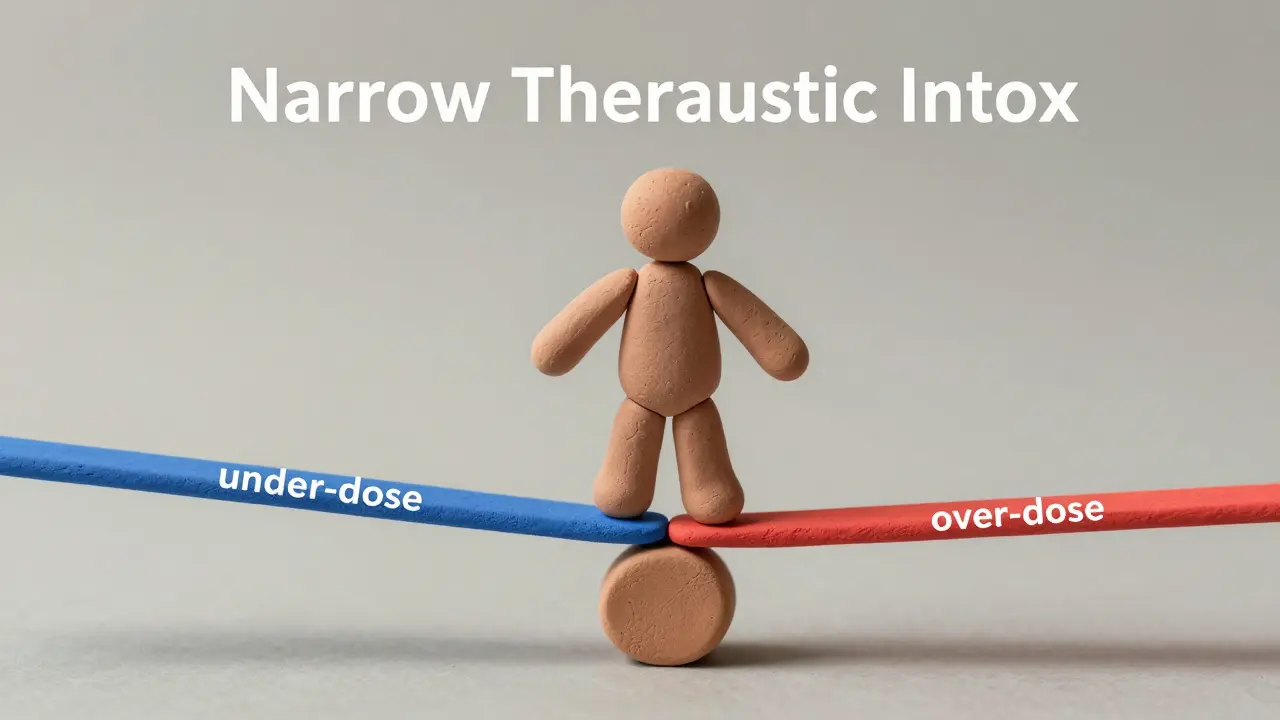
The answer depends on who you ask. Regulatory bodies like the FDA say the products are interchangeable, but many endocrinologists still urge caution. This tension exists because levothyroxine is a Narrow Therapeutic Index (NTI) drug. In plain English, that means the window between a dose that works and a dose that causes problems is incredibly small. A tiny shift in how much hormone your body absorbs can push your TSH (thyroid-stimulating hormone) levels out of the healthy zone.
| Entity | Position on Switching | Monitoring Requirement |
|---|---|---|
| FDA | Interchangeable | Routine follow-up only |
| ATA / AACE | Caution recommended | TSH test 6 weeks after switch |
| EMA (Europe) | Cautious | TSH test 6-8 weeks after switch |
Why the Controversy Over Generic Switches?
To understand why doctors worry, we have to look at Bioequivalence. When a generic company makes levothyroxine, they have to prove their drug is "equivalent" to the brand name. The standard is that the amount of drug in your blood (AUC) and the peak concentration (Cmax) must fall between 80% and 125% of the original. While that sounds like a wide gap for a drug as sensitive as thyroid hormone, the FDA argues it's sufficient for the vast majority of patients.
However, some experts argue that for NTI drugs, the limit should be much tighter-perhaps between 90% and 111%. If a generic is at the low end of the allowed range and you switch to one at the high end, your body might react. For a healthy adult, a slight shift in TSH (usually targeted between 0.4 and 4.0 mIU/L) might not be noticed. But for someone with a precarious balance, it can feel like a rollercoaster of symptoms.
The Data: Does Switching Actually Change TSH?
Recent evidence suggests that the "danger" of switching might be exaggerated for the average person. A massive study published in JAMA Internal Medicine analyzed over 15,000 patients and found no significant difference in TSH control between people who stayed on one generic and those who switched. Both groups had an average TSH of 2.7 mIU/L. This suggests that for most of us, the different generic versions of Levothyroxine Sodium are effectively the same.
But there's a catch. Other data, including a Dutch cohort study, found that people taking higher doses (over 100 mcg) were much more likely to see abnormal TSH levels after a switch-63% compared to only 24% of those who didn't switch. This tells us that while the "average" patient is fine, a specific group of people is much more sensitive to these changes.
Who Really Needs Extra Monitoring?
You probably don't need a blood test every time your pharmacy changes brands if you're stable and feel fine. However, you fall into a high-risk category if any of the following apply to you:
- Pregnancy: Thyroid levels are critical for fetal development; even a small dip can be risky.
- Thyroid Cancer: Many patients use levothyroxine to suppress TSH and prevent cancer recurrence, requiring precision.
- Severe Cardiac Disease: Too much hormone can cause heart palpitations or arrhythmias, especially in older adults.
- History of Instability: If your TSH has jumped around in the past, you're more likely to react to a new product.
For these individuals, the American College of Endocrinology suggests checking TSH 6 to 8 weeks after any brand change. Why six weeks? Because it takes that long for the new medication to reach a "steady state" in your blood and for your pituitary gland to react by adjusting TSH production.

Identifying the "Sensitive" Subpopulation
If you've switched generics and suddenly feel exhausted, depressed, or shaky, you might be part of the 8-12% of patients who are genuinely sensitive to different formulations. It's not always about the active hormone itself. Sometimes, it's the excipients-the fillers and binders used to make the tablet. An allergy or intolerance to a specific filler can change how the drug is absorbed in your gut.
There is also a genetic component. Some people have variations in the DIO2 gene, which affects how the body converts T4 into the active T3 hormone. If you have this variant, you might be much more sensitive to the slight potency differences between a Mylan pill and a Pfizer pill.
Practical Tips for Managing Your Medication
Dealing with pharmacy substitutions can be frustrating. If you suspect a switch is affecting you, don't just guess with your dose. Instead, try these steps:
- Track the Brand: Look at the bottle and write down the manufacturer (e.g., Sandoz, Teva, Mylan). If you start feeling symptoms, you'll know exactly when the change happened.
- Request a Specific Generic: If you find that one specific generic works best for you, ask your doctor to write "Dispense as [Manufacturer Name] only" on the prescription. Note that insurance companies sometimes fight this, but it's worth a try.
- Wait for the Window: If you do switch, give it 6 weeks before requesting a TSH test. Testing too early will give you an inaccurate reading.
- Monitor "Red Flag" Symptoms: Be on the lookout for palpitations, sudden weight gain, or extreme fatigue. These are classic signs that your TSH has drifted.
Is it safe to switch between different generic levothyroxine brands?
For the vast majority of people, yes. Large-scale studies show that most patients maintain stable TSH levels regardless of the generic manufacturer. However, a small percentage of people are sensitive to different formulations or fillers and may experience symptoms.
How soon after switching a brand should I get my TSH tested?
The general clinical recommendation is to wait 6 to 8 weeks. This allows the medication to reach a steady concentration in your system and gives your body time to respond via the TSH feedback loop.
Why do some people feel different symptoms when switching generics?
This can happen due to the narrow therapeutic index of the drug, where small differences in potency lead to clinical changes. It can also be caused by different inactive ingredients (excipients) or genetic variations, such as the DIO2 gene, that affect how you process thyroid hormone.
What is the target TSH range for most adults?
The standard target reference range is typically between 0.4 and 4.0 mIU/L. However, this can vary; for instance, elderly patients may have a higher acceptable upper limit, sometimes up to 6.0 mIU/L.
Can I ask my pharmacy to keep me on the same manufacturer?
Yes, you can request a specific manufacturer. To make this permanent, you may need your physician to specify the brand on the prescription to avoid automatic substitution by the pharmacist or pharmacy benefit manager.