
Immune-Related Adverse Events: How to Recognize and Treat irAEs in Cancer Patients
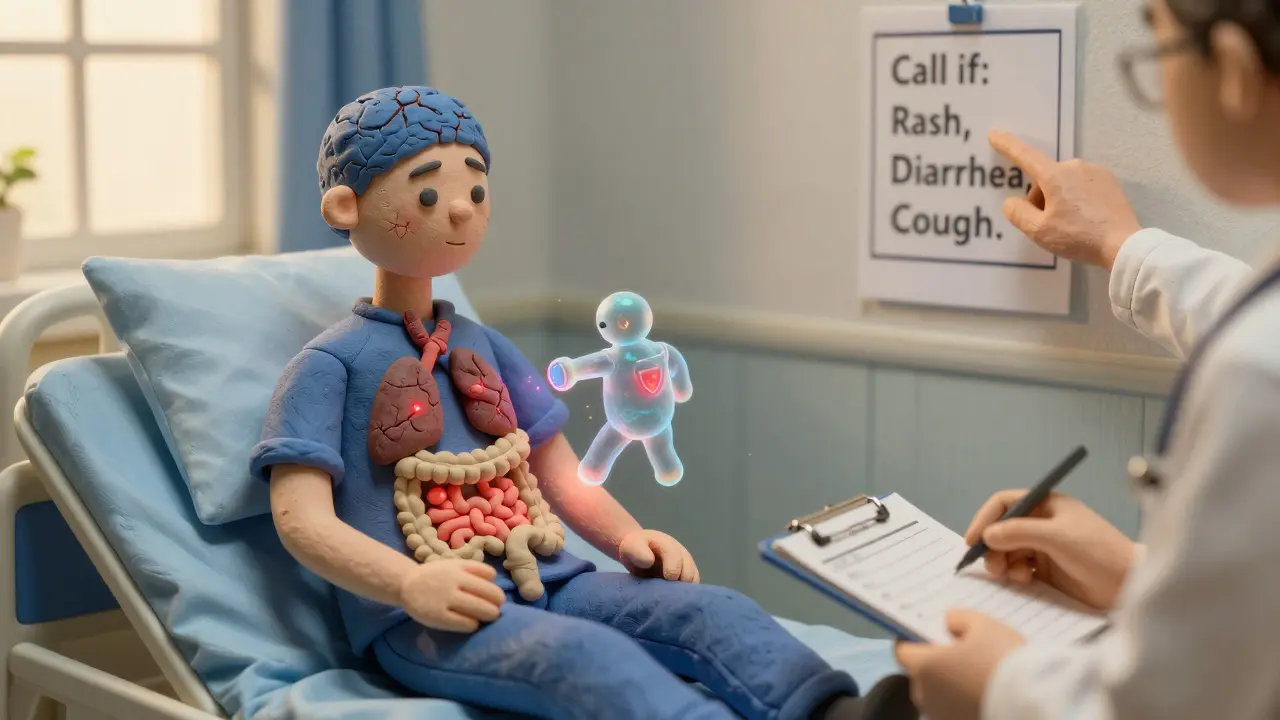
When cancer patients start treatment with immune checkpoint inhibitors (ICIs), they’re often hopeful. These drugs have changed the game for melanoma, lung cancer, kidney cancer, and more. But there’s a hidden risk: immune-related adverse events, or irAEs. These aren’t typical chemo side effects like nausea or hair loss. They’re autoimmune reactions - the immune system, now unleashed, starts attacking the body’s own tissues. And if you don’t catch them early, they can turn deadly.
What Exactly Are irAEs?
irAEs happen because immune checkpoint inhibitors block the brakes on your immune system. Normally, those brakes keep your immune cells from going too far. But when you take drugs like ipilimumab, pembrolizumab, or nivolumab, you remove those brakes. That’s great for killing cancer - but sometimes, your immune system turns on your thyroid, your colon, your lungs, or even your heart.
The numbers don’t lie. About 83% of people on CTLA-4 inhibitors, 72% on PD-1 inhibitors, and 60% on PD-L1 inhibitors develop some form of irAE. Most show up within the first three months. But here’s the twist: they can pop up months - even a year - after treatment ends. That’s why patients can’t just stop worrying once therapy is over.
Where Do irAEs Show Up?
irAEs can hit almost any organ. But some are far more common than others.
- Skin: Rashes, itching, blistering. Often mild at first, but can escalate.
- Gut: Diarrhea, abdominal pain, bloody stools. Colitis is the most frequent severe irAE.
- Thyroid: Fatigue, weight changes, mood swings. Usually hypothyroidism - easy to fix with hormone pills.
- Lungs: Cough, shortness of breath. Pneumonitis can be silent until it’s critical.
- Liver: Jaundice, elevated liver enzymes. Often found on blood tests before symptoms appear.
- Heart: Chest pain, irregular heartbeat. Myocarditis is rare - but kills about 2.7% of those who get it.
- Nervous system: Weakness, numbness, confusion. Neurological irAEs are rare but need neurology help fast.
Endocrine issues like thyroid or pituitary problems don’t always need steroids. Often, they just need hormone replacement - like levothyroxine for low thyroid. That’s a key difference from other irAEs. You’re not suppressing the immune system here; you’re replacing what it broke.
How Do Doctors Grade irAEs?
Not all irAEs are created equal. Doctors use the CTCAE system - Common Terminology Criteria for Adverse Events - to grade them from 1 to 4:
- Grade 1: Mild. No treatment needed. Just watch.
- Grade 2: Moderate. Symptoms interfere with daily life. Stop ICI. Start oral steroids.
- Grade 3: Severe. Hospitalization needed. IV steroids. ICI permanently stopped.
- Grade 4: Life-threatening. ICU-level care. High-dose steroids, possible ICU admission.
Grade 2 is where most patients get caught off guard. They think, “It’s just a rash,” or “A little diarrhea is normal.” But by the time they wait another week, it’s Grade 3. That’s why education is everything.
How Are irAEs Treated?
The first line? Corticosteroids. Always.
For Grade 2 irAEs, doctors start with prednisolone at 1 mg per kg per day. That’s about 60-80 mg for an average adult. Symptoms must improve to Grade 1 before restarting any ICI - and even then, only after careful discussion.
For Grade 3 or 4, you go straight to intravenous methylprednisolone - 1 to 2 mg/kg daily, up to 1 gram per day. After three days, you switch to high-dose oral prednisolone. But here’s what most people don’t know: you can’t just stop steroids fast.
There’s a steroid taper - usually 4 to 6 weeks. Rush it, and the irAE comes back. Take too long, and you get steroid side effects: weight gain, insomnia, mood swings, high blood sugar. One study found 72% of patients struggled with insomnia during tapering. Sixty-five percent gained significant weight. Fifty-eight percent had depression or anxiety.

What If Steroids Don’t Work?
About 15-20% of cases don’t respond. These are called steroid-refractory irAEs.
Then you move to second-line drugs:
- Infliximab: An anti-TNF drug. Works great for colitis and some skin rashes. Given as an IV infusion.
- Mycophenolate mofetil: Used for liver or lung irAEs.
- IVIG: Intravenous immune globulin. Good for neurological or blood-related irAEs.
- Vedolizumab: Newer option. Targets only the gut. Less risk of whole-body immunosuppression. A 2024 study showed it worked in 68% of steroid-refractory colitis cases - better than infliximab’s 52%.
And here’s the good news: treating irAEs doesn’t kill your cancer response. Early fears that immunosuppression would let tumors grow back? Those were wrong. Multiple studies now confirm: patients who get treated for irAEs still have the same chance of long-term survival as those who didn’t develop them.
Why Timing Matters - So Much
One of the biggest mistakes? Waiting.
A 2023 analysis of 12,500 patients showed that if treatment started within 48 hours of symptom onset, hospitalization rates dropped from 34% to just 19%. That’s a 44% reduction. Early action saves lives.
But patients often delay. They think, “I’ll wait and see.” Or they don’t know what counts as serious. Oncology nurses report that 79% of patients don’t understand when to call their team. A little diarrhea? “I’ll tough it out.” A new cough? “It’s just a cold.”
That’s why patient education isn’t optional - it’s life-saving. The European Society for Medical Oncology is now rolling out multilingual educational materials to fix this gap. Because if a patient doesn’t know the signs, no protocol in the world will help.
The Hidden Burden: Long-Term Damage
Most irAEs resolve. About 85-90% do, with treatment lasting 4 to 8 weeks.
But 10-15% become chronic.
Thyroid damage? Lifelong hormone pills. Pituitary failure? Daily cortisol replacement. Severe colitis? Ongoing immunosuppression. Some patients need infliximab every 8 weeks for years.
And the psychological toll? Underreported. Patients feel guilty for needing steroids. They’re scared to restart treatment. They’re exhausted from the side effects. Many stop working. Relationships strain. The emotional cost is as real as the physical one.
What’s Changing in 2026?
irAE management is evolving fast.
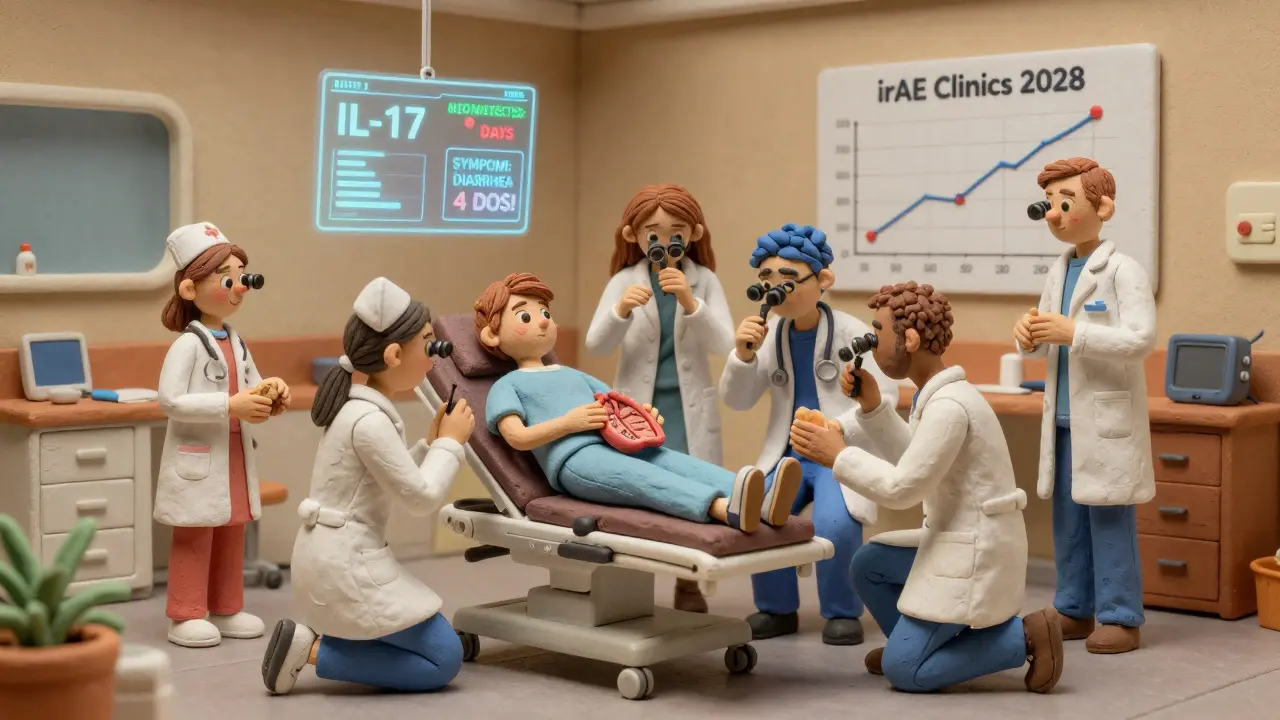
- Predictive biomarkers: A 2023 study found that if your blood has IL-17 levels above 5.2 pg/mL before starting ICI, you’re nearly five times more likely to get a severe irAE. That could mean screening before treatment begins.
- Dedicated teams: Leading cancer centers now have immune toxicity teams - nurses, pharmacists, specialists - all trained to spot and manage irAEs. MD Anderson reports 92% protocol adherence with these teams. Community centers without them? Only 68%.
- Electronic alerts: Epic’s 2023 oncology update now flags patients who report new symptoms in their portal. If a patient says, “I’ve had diarrhea for 4 days,” the system auto-sends a nurse alert. No more waiting for the next appointment.
- More combinations: With over 287 ICI combinations in trials, irAEs are getting more complex. Two drugs together? Double the risk. That means even more need for expert management.
By 2028, specialized irAE clinics are projected to grow by 22% a year. It’s not a niche anymore. It’s standard of care.
What Should Patients Do?
If you’re on an immune checkpoint inhibitor:
- Know the warning signs: diarrhea, rash, cough, fatigue, abdominal pain, vision changes, muscle weakness.
- Call your oncology team immediately if you have new symptoms - don’t wait.
- Keep a symptom diary. Note when things started, how bad they are, what makes them better or worse.
- Ask about steroid tapering. Understand why you can’t stop pills suddenly.
- Ask: “Is this an irAE - or something else?” Infections can mimic irAEs. Blood tests are critical.
And if you’re a caregiver? Learn the signs. Be the person who says, “This isn’t normal. We need to call now.”
Final Thought
irAEs are the price of progress. Immune checkpoint inhibitors have given people years - even decades - they wouldn’t have had. But that progress comes with responsibility. Recognizing irAEs early isn’t just medical knowledge - it’s a survival skill. The drugs are powerful. The side effects are real. But with the right awareness, the right team, and the right timing, most irAEs can be controlled. And most patients can keep living - not just surviving - after cancer.
Are irAEs the same as chemotherapy side effects?
No. Chemotherapy side effects like nausea, hair loss, or low blood counts come from direct damage to fast-dividing cells. irAEs are autoimmune reactions - your immune system attacks your own organs. They can affect any part of the body and often appear weeks or months after treatment starts - even after it ends.
Can I keep taking my cancer drug if I get an irAE?
It depends on the severity. For Grade 1 irAEs, you usually continue treatment with close monitoring. For Grade 2, you pause the drug until symptoms improve. For Grade 3 or 4, you stop permanently. But stopping doesn’t mean you’ve lost your chance - many patients still respond well to treatment even after an irAE.
Do steroids reduce the effectiveness of cancer treatment?
No. Early concerns that steroids might weaken the anti-cancer effect have been disproven. Multiple studies now show patients who receive timely steroid treatment for irAEs have the same long-term survival rates as those who never developed side effects. Treating irAEs doesn’t hurt your cancer outcome - it protects your life.
How long does it take to recover from an irAE?
Most patients see improvement within 2-4 weeks of starting treatment. Full recovery can take 4-8 weeks. But steroid tapering takes 4-6 weeks to avoid rebound symptoms. About 10-15% of patients develop chronic conditions - like thyroid or adrenal failure - that require lifelong medication.
What should I do if I develop a rash while on immunotherapy?
Don’t ignore it. Even a mild rash can be the first sign of a serious irAE. Take a photo, note when it started, and call your oncology team. Avoid over-the-counter steroids without medical advice. Your doctor may prescribe oral prednisolone or recommend a skin biopsy to confirm it’s an irAE and not an infection or allergy.
Can irAEs come back after treatment is done?
Yes. While most irAEs appear within the first 3 months, some occur months - or even over a year - after stopping immunotherapy. That’s why ongoing monitoring is critical. If you develop new symptoms like fatigue, diarrhea, or shortness of breath after treatment ends, contact your oncologist immediately.
Are there tests to predict who will get irAEs?
Not yet routine - but promising. A 2023 study found that high baseline levels of IL-17 in the blood (above 5.2 pg/mL) predict a 4.7-fold higher risk of severe irAEs. Research is ongoing to develop blood or genetic tests that could help identify high-risk patients before treatment begins.
Next Steps for Patients and Providers
If you’re a patient: Talk to your oncology team about irAEs before starting treatment. Ask for written materials. Know your symptoms. Keep a journal. Don’t wait.
If you’re a provider: Implement a structured irAE protocol. Train your nurses. Use electronic alerts. Build relationships with specialists. Don’t assume community patients know what to do. The gap between academic centers and community practices is still too wide.
irAEs are no longer a footnote in cancer care. They’re central to it. And managing them well isn’t just about avoiding complications - it’s about giving patients the best chance at a full, long life after cancer.
Dusty Weeks
January 2, 2026 AT 09:56Sally Denham-Vaughan
January 3, 2026 AT 21:42Richard Thomas
January 5, 2026 AT 08:31Phoebe McKenzie
January 5, 2026 AT 10:43Paul Ong
January 6, 2026 AT 17:05sharad vyas
January 8, 2026 AT 04:43Andy Heinlein
January 10, 2026 AT 00:09gerard najera
January 10, 2026 AT 08:18Ann Romine
January 11, 2026 AT 07:11Bill Medley
January 12, 2026 AT 02:39