
How to Use Manufacturer Savings Programs for Brand Drugs
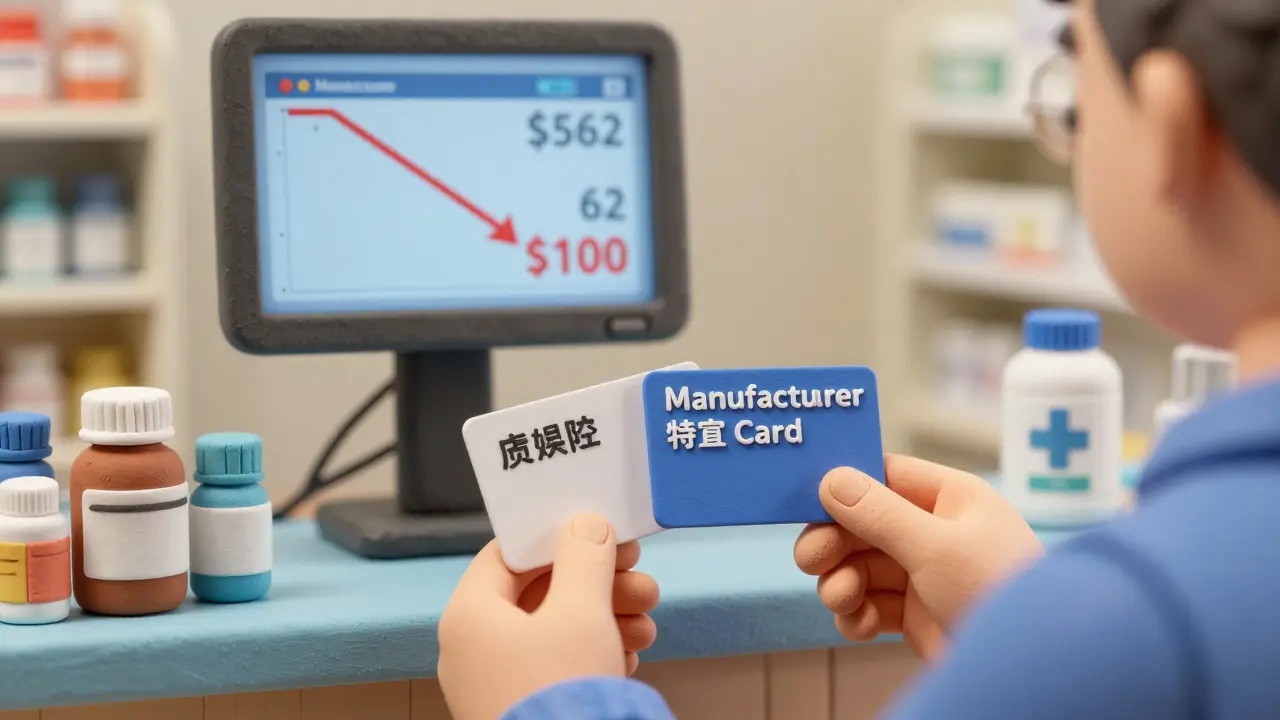
Brand-name drugs can cost hundreds of dollars a month - even if you have insurance. That’s not a hypothetical scenario. It’s reality for millions of people in the U.S. who rely on medications for diabetes, asthma, rheumatoid arthritis, or high cholesterol. But there’s a tool most patients don’t know how to use properly: manufacturer savings programs. These aren’t charity. They’re financial tools built by drug companies to help you pay less out of pocket - but only if you know how to navigate them.
What Are Manufacturer Savings Programs?
These are coupons or cards offered directly by pharmaceutical companies. They’re not the same as pharmacy discount cards like GoodRx. Those work for both brand and generic drugs. Manufacturer programs only apply to specific brand-name drugs, and they cut your cost by 70% to 85%. For example, if your monthly prescription for Jardiance costs $562.50, a manufacturer coupon could drop it to $100. That’s not a small difference - it’s life-changing.These programs started in the early 2000s as drug prices climbed and insurance plans started making patients pay more. By 2023, nearly one in five prescriptions for privately insured patients used one of these coupons. The total value? Over $23 billion a year. But here’s the catch: you can’t use them if you’re on Medicare, Medicaid, or any other federal health program. The law forbids it. That’s because these programs are designed to keep people on expensive brand drugs instead of switching to cheaper generics.
Who Can Use These Programs?
You’re eligible if you have private insurance - not government insurance. That means if you get your coverage through an employer, a private plan from the marketplace, or even COBRA, you might qualify. But not all private plans are equal. Some insurance companies have something called an accumulator adjustment program. That’s a fancy way of saying they won’t let the manufacturer coupon count toward your deductible or out-of-pocket maximum. So even if your copay drops to $10, your insurance still treats you like you paid the full $500. That can leave you stuck paying more later in the year.Check your plan documents. If you’re not sure, call your insurer. Ask: “Does my plan allow manufacturer coupons to count toward my deductible?” If they say no, you might still use the coupon to lower your monthly cost - but it won’t help you reach your out-of-pocket limit faster.
How to Find and Enroll in a Program
Start with the drug’s manufacturer website. Go to the brand name of your medication - for example, Humira, Jardiance, or Enbrel. Look for tabs like “Savings,” “Patient Assistance,” or “Copay Card.” Most companies have a dedicated page. You can also use trusted aggregator sites like GoodRx or NeedyMeds, which list programs for hundreds of drugs.Once you find the right page, you’ll fill out a short form. You’ll need:
- Your full name
- Your date of birth
- Your insurance information (member ID, group number)
- Your doctor’s name and prescription details
You won’t need to submit proof of income. These programs don’t ask if you can afford the drug - they just want to know you have private insurance. After submitting, you’ll get a digital card via email or text. Some programs mail you a physical card. Either way, you’ll get a unique ID number or barcode.
How the Program Works at the Pharmacy
When you go to fill your prescription, hand the pharmacist your insurance card AND your manufacturer savings card. The pharmacy’s system will process both at once. A third-party administrator - like ConnectiveRx or Prime Therapeutics - steps in behind the scenes. It checks if you’re eligible, applies the discount, and bills the drug company for the difference.You pay only the reduced amount. If the coupon covers $450 of a $500 drug, you pay $50. That’s it. No waiting. No paperwork. The system does the work for you.
But here’s what trips people up: not all pharmacies participate. Some independent pharmacies don’t have the software to process these claims. Always call ahead. Ask: “Do you process manufacturer copay cards for [drug name]?” If they say no, go to a CVS, Walgreens, or Walmart. They almost always do.
What You Need to Watch Out For
These programs aren’t perfect. Here are the biggest traps:- Annual limits: Most programs cap how much they’ll cover per year - usually between $5,000 and $15,000. If your drug costs $600/month, you’ll hit that limit in about 10 months. After that, you pay full price again.
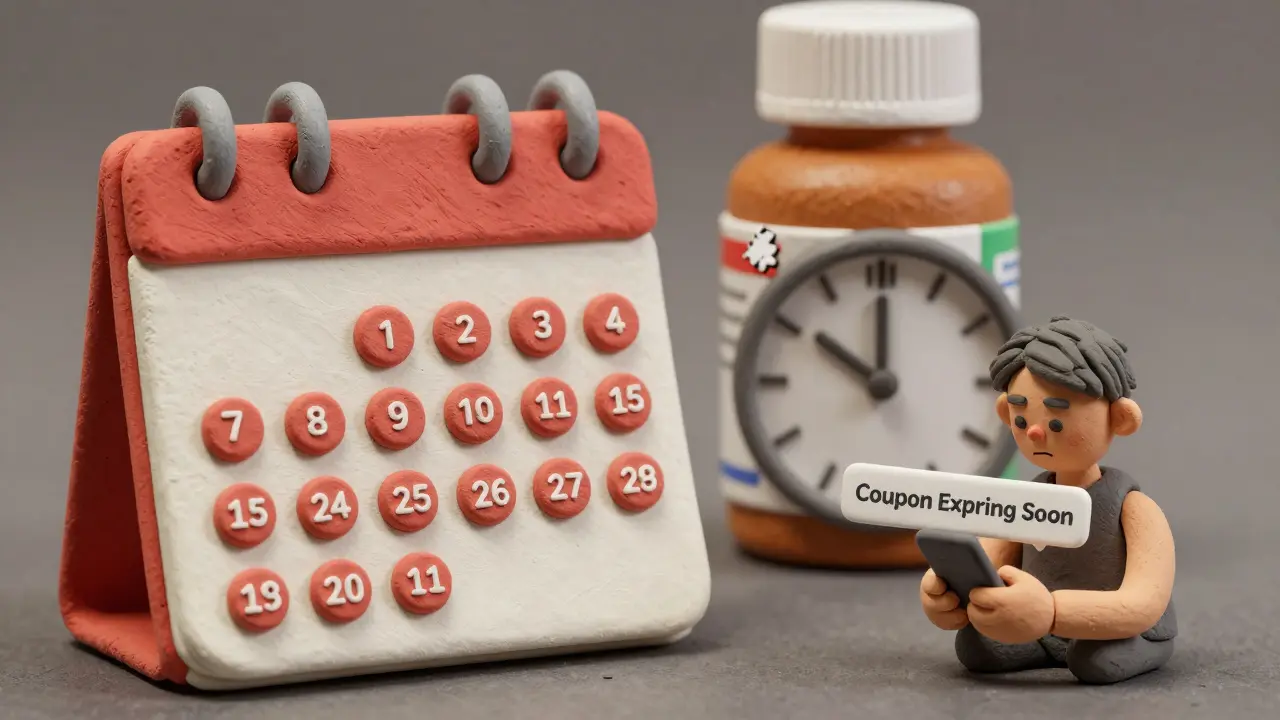
- Time limits: Many coupons expire after 12 or 24 months. You’ll need to reapply. Some companies send reminders. Others don’t. Mark your calendar.
- Program discontinuation: Companies can stop a program anytime. One Reddit user shared how Humira’s coupon vanished overnight. Their monthly cost jumped from $100 to $1,200. No warning. No grace period.
- Accumulator programs: As mentioned, some insurers don’t let the coupon count toward your deductible. That means you’re still far from hitting your out-of-pocket maximum. You’re saving money now, but you might pay more later.
Manufacturer Programs vs. Pharmacy Discount Cards
Let’s compare two options:| Feature | Manufacturer Savings Programs | Pharmacy Discount Cards (e.g., GoodRx) |
|---|---|---|
| Eligibility | Private insurance only | Anyone - insured or uninsured |
| Discount Depth | 70%-85% off | 30%-60% off |
| Applies to Generics? | No | Yes |
| Annual Cap | Yes - $5K to $15K | No |
| Duration | Usually 12-24 months | Indefinite |
| Counts Toward Deductible? | Only if plan allows | No |
Manufacturer programs give deeper discounts - but only for brand drugs. Pharmacy cards give smaller discounts - but they work for generics too. If your drug has a generic version, always check both options. Sometimes the discount card gives you a lower price than the manufacturer coupon.
What Experts Say
Some doctors and researchers say these programs hurt the system. Dr. Robin Feldman, a law professor and health policy expert, says they keep drug prices high by reducing competition from cheaper generics. She argues that when patients pay less out of pocket, they don’t push insurers to negotiate lower prices. The result? Everyone else pays more.Drug companies disagree. They say these programs help people stay on their medication. Without them, many would skip doses or stop taking their drugs entirely. That leads to hospital visits - which cost even more.
The truth? Both sides have a point. These programs help individuals right now. But they also make the long-term problem worse.
Real Stories From Real People
A 58-year-old woman with rheumatoid arthritis on Enbrel used her manufacturer coupon for two years. Her monthly cost dropped from $780 to $75. She saved over $8,000 in that time. When the program ended, she switched to a biosimilar - a cheaper version of the same drug - and kept paying under $100/month.Another man on insulin used a coupon to pay $35 instead of $400. That’s because his insulin was covered under the Inflation Reduction Act’s $35 cap for Medicare users. He didn’t need the coupon anymore. But he still used it for a while - just in case his coverage changed.
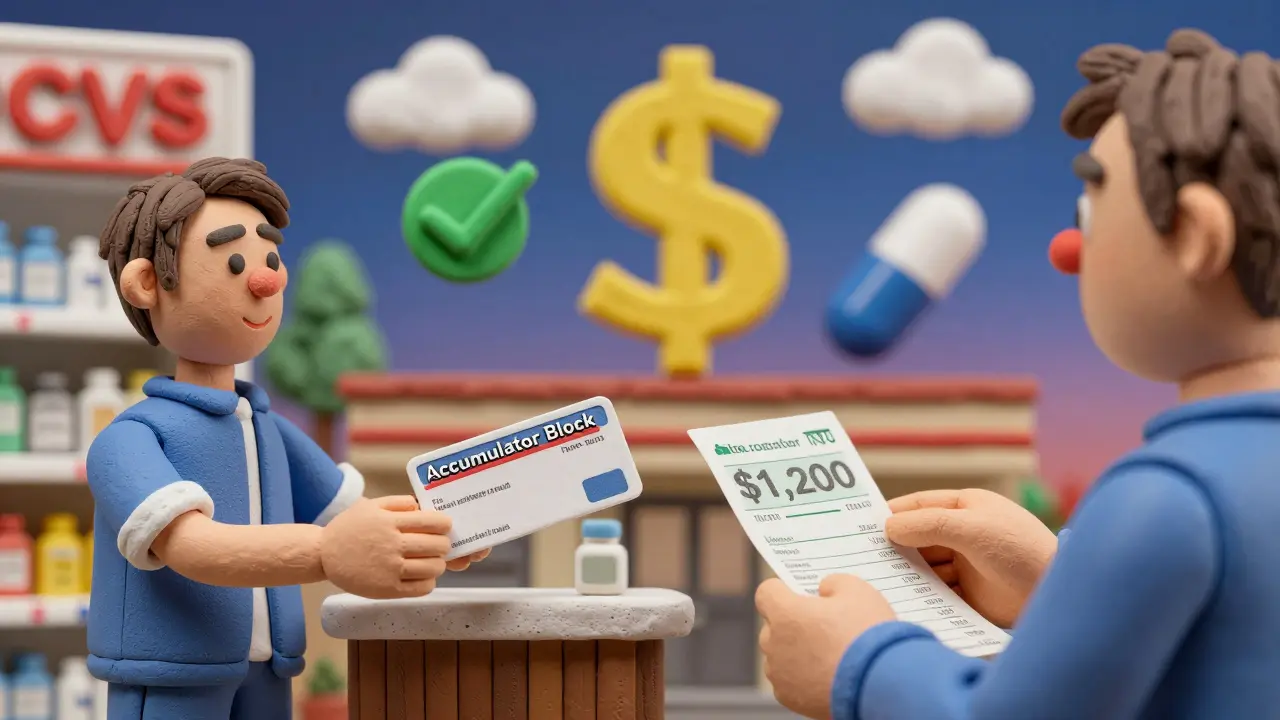
But then there’s the dark side. A 32-year-old on Humira lost her coupon when her employer switched insurers. Her new plan had an accumulator program. She paid $100 per month, but her deductible didn’t move. She hit her out-of-pocket maximum only after paying over $10,000 out of pocket - all because the coupon didn’t count.
What to Do Next
If you’re on a brand-name drug and paying too much:- Check if your drug has a manufacturer savings program. Search the drug name + “copay card” or “patient assistance.”
- Confirm you have private insurance. If you’re on Medicare or Medicaid, skip this - you’re not eligible.
- Call your pharmacy and ask if they process these cards.
- Enroll online. Keep your confirmation email or digital card saved.
- Set a reminder for 11 months in. That’s when most programs expire. Renew early.
- Ask your pharmacist: “Does my insurance count this coupon toward my deductible?”
- Check for alternatives. Is there a generic? A biosimilar? A cheaper drug in the same class?
Don’t assume your doctor or insurance will tell you about these programs. They often don’t. It’s on you to find them.
What’s Changing in 2026?
The government is watching. The Inflation Reduction Act capped insulin at $35 for Medicare users - and that’s already cutting demand for manufacturer coupons. More states are passing laws to ban accumulator programs. And Congress is debating bills that would force manufacturers to let their coupons count toward deductibles.For now, these programs still work. But their future is uncertain. Use them while you can. But don’t rely on them forever. Always have a backup plan.
Can I use a manufacturer savings program if I have Medicare?
No. Federal law prohibits drug manufacturers from offering copay assistance to people on Medicare, Medicaid, or other government health programs. This is to prevent financial incentives that could push patients toward more expensive brand drugs instead of cheaper alternatives. If you’re on Medicare, look into the $35 insulin cap or other Part D cost-saving options.
Do manufacturer coupons count toward my deductible?
It depends on your insurance plan. Many large employers and insurers use “accumulator adjustment programs,” which prevent manufacturer coupons from counting toward your deductible or out-of-pocket maximum. You’ll still pay less at the pharmacy, but you won’t get closer to hitting your limit. Call your insurer to confirm how your plan handles these coupons.
Can I use a manufacturer coupon and a pharmacy discount card together?
No. Pharmacies can only apply one discount at a time. The system will usually pick the one that gives you the lowest price. If you’re unsure, ask the pharmacist to compare both options before processing your prescription.
What happens if my manufacturer coupon expires?
Once your coupon expires, you’ll pay the full price unless you renew. Most programs allow renewal after 12-24 months. You’ll need to reapply online. If you can’t renew, ask your doctor about switching to a generic or biosimilar. Some patients find that even without the coupon, the generic is cheaper than the brand with the expired coupon.
Why do some pharmacies say they don’t accept manufacturer coupons?
Smaller, independent pharmacies often lack the software needed to process these claims. They may not have contracts with the third-party administrators (like ConnectiveRx) that handle the discounts. Chain pharmacies like CVS, Walgreens, and Walmart almost always do. Always call ahead before assuming your pharmacy accepts them.
Are these programs safe and legal?
Yes, they’re legal for people with private insurance. The programs comply with federal regulations as long as they don’t serve Medicare or Medicaid patients. The drug companies are required to follow strict rules to avoid violating anti-kickback laws. Always use the official manufacturer website or trusted aggregator sites like GoodRx - never third-party sites asking for payment or personal data.
Prathamesh Ghodke
March 20, 2026 AT 23:53Sanjana Rajan
March 21, 2026 AT 16:16Kyle Young
March 22, 2026 AT 07:36Linda Olsson
March 23, 2026 AT 23:54Melissa Starks
March 24, 2026 AT 13:00Lauren Volpi
March 25, 2026 AT 20:19Kal Lambert
March 26, 2026 AT 16:13Melissa Stansbury
March 26, 2026 AT 19:24cara s
March 27, 2026 AT 01:43Nilesh Khedekar
March 28, 2026 AT 22:05Robin Hall
March 30, 2026 AT 03:38jared baker
March 30, 2026 AT 16:37David Robinson
March 31, 2026 AT 04:48