
How to Track Medication Effectiveness After a Generic Switch
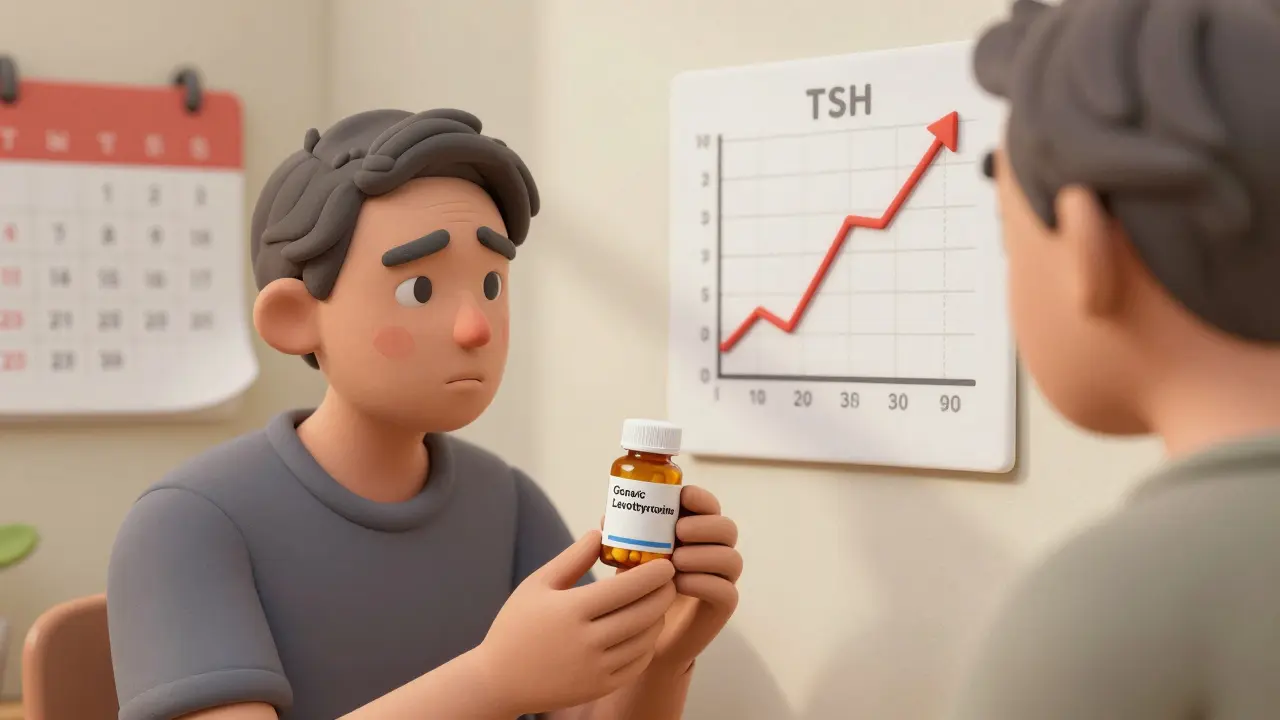
Switching from a brand-name drug to a generic version saves money-sometimes hundreds of dollars a month. But what happens when the generic doesn’t seem to work the same? You might feel worse. Your seizures might return. Your blood pressure might spike. Your thyroid levels could go haywire. This isn’t rare. It happens more often than most people realize.
Why Generic Switches Sometimes Cause Problems
The FDA says generics must be bioequivalent to brand-name drugs. That means their active ingredients must deliver the same amount of medicine into your bloodstream within a specific range-usually 80% to 125% of the brand’s levels. Sounds strict, right? But here’s the catch: that 45% window allows for real differences in how your body reacts. For most drugs-like lisinopril for blood pressure or atorvastatin for cholesterol-this doesn’t matter. Studies show no meaningful difference in outcomes. But for drugs with a narrow therapeutic index (NTI), even small changes can be dangerous. These include warfarin (blood thinner), levothyroxine (thyroid), phenytoin (seizure control), and digoxin (heart rhythm). In these cases, a 10% shift in drug levels can mean the difference between control and crisis. A 2019 study in JAMA Internal Medicine found that patients switched from brand to generic digoxin had a 34.7% higher chance of being hospitalized for toxicity. Another study showed 23.4% of patients switched from brand to generic levothyroxine had abnormal thyroid levels within six months, compared to just 8.2% of those who stayed on the brand. These aren’t flukes. They’re predictable.How to Know If Your Generic Isn’t Working
Don’t wait for a hospital visit to find out something’s wrong. Start tracking early. Here’s what to look for:- Worsening symptoms: If your seizures, anxiety, or chest pain come back after the switch, that’s a red flag.
- New side effects: Headaches, dizziness, nausea, or rashes that didn’t exist before could mean your body can’t handle the new fillers or coatings in the generic.
- Medication gaps: If you stop refilling your prescription because you feel worse, that’s a strong signal. A 2018 study found patients who stopped taking their generic meds for more than 90 days were far more likely to have had a bad reaction.
- Lab value shifts: For NTI drugs, your lab numbers matter more than how you feel. A 15% change in INR (for warfarin), TSH (for thyroid), or serum drug levels (like phenytoin) after a switch is a warning sign.
What to Track-And How
You need a system. Don’t rely on memory. Write it down-or use an app. Here’s what to monitor and when:- Before the switch: Record your baseline. Get your latest lab results (INR, TSH, drug levels, HbA1c, etc.). Note your symptoms on a scale of 1 to 10. Write down your current dose and how long you’ve been stable on it.
- Days 1-7: Pay attention to how you feel. Call your pharmacist if you notice anything unusual. Ask if the generic is from the same manufacturer as your old brand. Sometimes, the same company makes both.
- Days 8-30: For NTI drugs, get lab tests done. If you’re on warfarin, check INR weekly. For thyroid, check TSH every 4-6 weeks. For epilepsy meds, track seizure frequency daily.
- Days 31-90: If your labs are stable and symptoms haven’t returned, you’re likely fine. Keep monitoring monthly. If things are off, talk to your doctor about switching back-or trying a different generic.
- After 90 days: If everything’s stable, you can move to routine monitoring. But stay alert. Some people don’t have problems until months later.
Which Drugs Need the Most Attention
Not all generics are equal. Some carry higher risk. Here’s the breakdown:| Drug Class | Examples | Risk Level | Key Monitoring Metric |
|---|---|---|---|
| Narrow Therapeutic Index (NTI) | Warfarin, Levothyroxine, Phenytoin, Digoxin, Cyclosporine | High | Laboratory values (INR, TSH, serum levels) |
| Psychiatric | Fluoxetine, Sertraline, Lamotrigine, Lithium | Moderate to High | Mood, sleep, seizure frequency, side effects |
| Cardiovascular (non-NTI) | Lisinopril, Amlodipine, Metoprolol | Low | Blood pressure, heart rate |
| Diabetes | Metformin, Glimepiride | Low | HbA1c, fasting glucose |
| Cholesterol | Atorvastatin, Rosuvastatin | Very Low | Lipid panel |
What Your Doctor and Pharmacist Should Be Doing
You shouldn’t have to do all the work. But too often, you’re left alone after the switch. Here’s what should happen:- Pharmacists: Should ask if you’ve switched before and how you reacted. They should offer a follow-up call or MTM (Medication Therapy Management) session. Only 32.7% of independent pharmacies do this consistently.
- Doctors: Should review your labs 30-60 days after a switch for NTI drugs. They should document whether the switch was intentional or forced by insurance. Only 12.4% of doctors routinely record why they didn’t allow a switch.
- Hospitals and clinics: Some use EHR alerts. Epic Systems, for example, flags patients whose lab values change more than 15% after a switch. But only 38.7% of U.S. hospitals have this feature turned on.
What to Do If You Think the Generic Isn’t Working
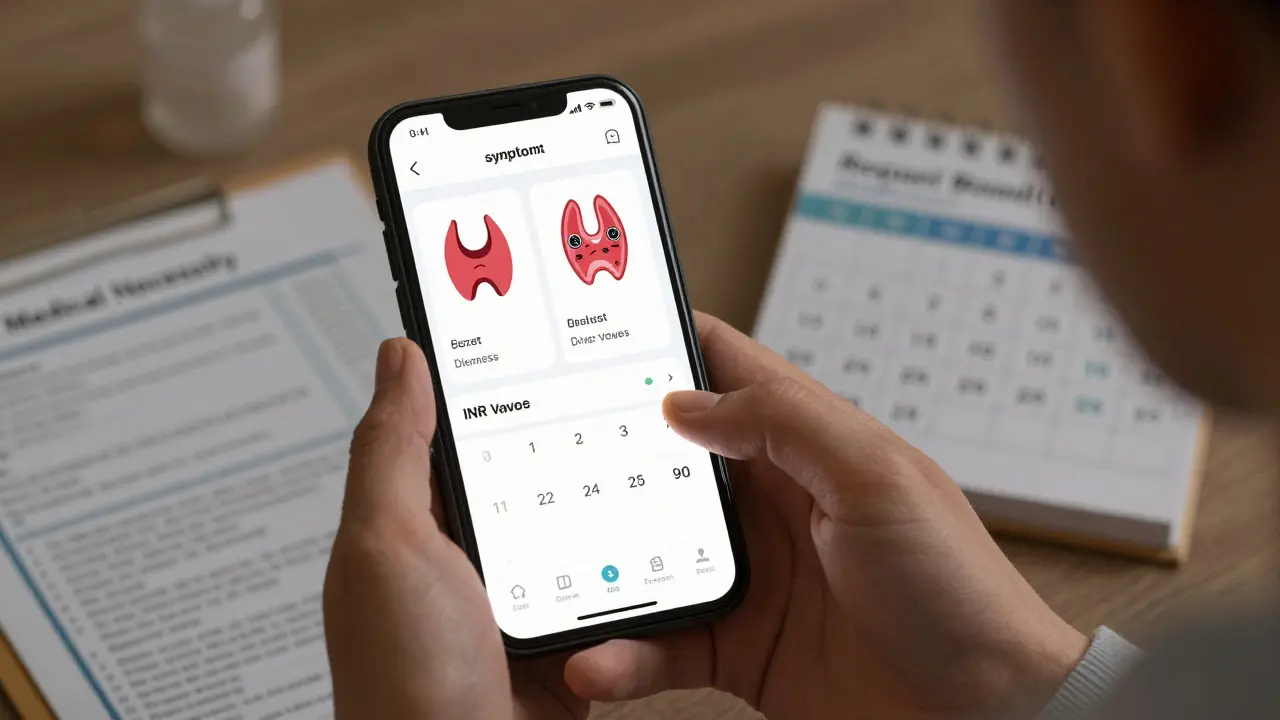
Don’t just quit. Don’t double your dose. Don’t wait. Take action:- Track your symptoms and labs. Write it all down. Dates, numbers, how you felt.
- Call your pharmacist. Ask: "Is this the same manufacturer as before?" Sometimes, the same company makes the brand and generic. That’s your safest bet.
- Ask your doctor for a prescription for the brand. You can request it by name. Insurance may deny it-but you can appeal. Use your tracking data as evidence.
- Try a different generic. Not all generics are made the same. One might work where another failed.
- Check your insurance’s formulary. Some plans cover only one generic. Ask if you can get a different one.
The Bigger Picture: Why This Matters
The U.S. spends over $122 billion a year on generic drugs. That’s 90% of all prescriptions. It’s a huge cost-saver. But if people stop taking their meds because they feel worse, the real cost skyrockets-emergency rooms, hospital stays, lost workdays. New rules are coming. Starting in 2024, the FDA requires post-market studies for every new NTI generic. By 2025, all NTI generics will need real-world outcome data. And AI tools are now being tested to predict who’s at risk-using age, kidney function, other meds, and even how often they refill prescriptions. The goal isn’t to stop generics. It’s to make sure they work for you.Final Advice: Stay in Control
You have the right to know what’s in your pill. You have the right to speak up if it doesn’t feel right. You have the right to ask for your brand back. Most people assume generics are identical. They’re not. Not always. For some drugs, the difference is small. For others, it’s life-changing. Track your numbers. Write down your symptoms. Talk to your pharmacist. Ask your doctor to check your labs. Don’t let cost savings come at the cost of your health.Can a generic drug really be less effective than the brand?
Yes, for certain medications-especially those with a narrow therapeutic index like warfarin, levothyroxine, or phenytoin. While generics must meet FDA bioequivalence standards, small differences in inactive ingredients or how the drug dissolves can affect absorption. Studies show patients switching to generics for these drugs are more likely to have abnormal lab values or worsening symptoms.
How long should I wait before deciding if the generic is working?
For most drugs, give it 30 to 60 days. But for high-risk medications like thyroid or seizure drugs, check lab values within 2 to 4 weeks. If symptoms return or labs change by more than 15%, don’t wait-contact your doctor. Some patients don’t notice issues until months later, so keep monitoring.
What should I do if my insurance won’t cover my brand-name drug?
Ask your doctor to submit a prior authorization request with documentation showing the generic didn’t work-include lab results, symptom logs, and dates. Many insurers will approve the brand if you prove medical necessity. You can also appeal the denial. Some pharmaceutical companies offer patient assistance programs for brand-name drugs if you qualify.
Are all generic manufacturers the same?
No. The same brand-name drug may be made by multiple generic companies, and quality can vary. One generic might work for you while another doesn’t. If you switch generics and feel worse, try going back to the original generic. Your pharmacist can tell you which manufacturer made your previous prescription.
Can I ask my pharmacist to keep me on the same generic?
Yes. You can request a specific generic manufacturer by name. Many pharmacies will honor this, especially if you’ve had issues before. Ask them to note it in your profile. Some states have laws requiring pharmacists to inform you if they’re switching your generic-check your state’s rules.
Is there a tool or app to help track my medication after a switch?
The FDA is launching a mobile app called "Generic Drug Track" in 2024 to let patients report symptoms and side effects directly. Until then, use any health app that lets you log symptoms, labs, and medication changes. Some EHR systems like MyChart let you upload lab results and share them with your doctor. Keep a simple spreadsheet if nothing else-date, dose, symptoms, lab values.
What if I’m on multiple medications and my doctor switches all of them at once?
That’s risky. If you switch several drugs at once, you won’t know which one caused a problem. Always ask for one switch at a time. If your doctor insists on multiple switches, push back. Say: "I need to know which medication caused any change in how I feel." Your safety matters more than convenience.
Riya Katyal
January 18, 2026 AT 07:04So let me get this straight - we’re trusting our lives to pills made in some factory in India or China, and the FDA’s idea of ‘safe’ is a 45% window? That’s not medicine, that’s Russian roulette with a prescription.
I’ve been on levothyroxine for 12 years. Switched generics twice. First time, I gained 18 pounds and couldn’t get out of bed. Second time, my heart started skipping like a broken record. My doctor shrugged and said ‘it’s the same chemical.’
It’s not the same chemical. It’s the same *label*.
And now they want us to track our own INR and TSH like we’re amateur lab techs? Where’s the accountability?
Pharmacies don’t even tell you which manufacturer made your pill. You have to beg for that info like you’re asking for a favor. Meanwhile, Big Pharma is laughing all the way to the bank.
And don’t get me started on insurance forcing switches every 3 months. I swear, someone’s getting paid to make us sicker.
kanchan tiwari
January 18, 2026 AT 07:12THEY KNOW. THEY KNOW WHAT THEY’RE DOING.
It’s not just generics. It’s the *fillers*. The dyes. The coatings. They’re putting *talc* and *lactose* and *food-grade glue* in our pills and calling it medicine.
Remember when the FDA ‘approved’ the generic version of warfarin made by a company that got shut down for selling contaminated insulin? Yeah. That’s the same batch.
I’ve seen people die from this. Not ‘maybe’ die. DEAD.
And now they want us to ‘track our symptoms’ like we’re doing a TikTok challenge?
It’s not a glitch. It’s a cover-up. The FDA, the pharma giants, the insurance companies - they’re all in the same room, laughing, counting cash while we gasp for air.
They’re not trying to save money. They’re trying to kill us quietly.
And if you’re not screaming about this, you’re part of the problem.
evelyn wellding
January 19, 2026 AT 03:32Y’all are stressing too much 😩
I switched from brand to generic levothyroxine last year and felt fine! I just started logging my energy levels and sleep in my Apple Health app and it’s been smooth sailing 🌞
Also, my pharmacist gave me a free pill organizer and a sticker that says ‘I ❤️ My Meds’ 🩷
Maybe try breathing? And a little trust? Not everything’s a conspiracy 😘
Also - if you’re worried, just ask for the same generic brand every time. Easy peasy!
Christina Bilotti
January 19, 2026 AT 04:57Oh wow. A whole 1500-word essay on something that’s been common knowledge since 2010. Congrats, you’ve written a blog post with footnotes.
Let me guess - you’re one of those people who still believes the FDA is some kind of guardian angel?
Let’s be real - if you’re on warfarin or levothyroxine and you didn’t already know generics can be dangerous, you shouldn’t be allowed to own a pill bottle, let alone a smartphone.
And you’re surprised pharmacies don’t tell you the manufacturer? Honey, they don’t even know what’s in their own break room snacks.
Also, ‘track your symptoms’? You mean like a 12-year-old with a journal? You need a lab, not a bullet point list.
And yes, I’ve had my thyroid levels crash after a switch. I didn’t need a study to tell me that. I just called my endocrinologist and asked for my brand back. Done.
Stop acting like this is new information. It’s just the same scam, with more charts.
Nick Cole
January 21, 2026 AT 02:27I’m a nurse practitioner. I’ve seen this firsthand.
Patients on generic phenytoin? Seizures come back. Not because they ‘forgot’ to take it - because the absorption is off. The inactive ingredients change how fast the drug dissolves. It’s not placebo. It’s pharmacokinetics.
And yes - doctors are lazy. Insurance is worse.
But here’s what actually works: When a patient comes in after a switch with new symptoms, I don’t argue. I don’t say ‘it’s probably fine.’ I order labs the same day. If the numbers are off, I write the prescription for the brand - no appeal needed.
And if the patient says ‘my pharmacist switched it without telling me’? I call the pharmacy. Loudly.
You don’t need to track 15 things. You need one good doctor who listens. Find that person. Keep them.
This isn’t about being paranoid. It’s about being smart.
Rob Deneke
January 22, 2026 AT 01:15Man I just want to say you’re not alone
I switched to generic warfarin last year and my INR went from 2.4 to 4.9 in two weeks
My wife made me go to the ER
Turns out the generic was made by a different company than my old one
My doc just wrote me a new script for the brand and I’m good now
Don’t wait until you’re bleeding out
Call your pharmacist ask them what maker it is
If they don’t know they’re not helping you
And if they switch it again without telling you
Go back and say I’m not taking that one again
You got this
And you deserve to feel safe with your meds
Stay strong
Corey Chrisinger
January 22, 2026 AT 06:31It’s funny how we treat medicine like it’s a commodity.
We want it cheap. We want it fast. We want it to be ‘the same.’
But the human body isn’t a spreadsheet. It’s not a widget on a conveyor belt.
Every person absorbs, metabolizes, and reacts differently.
Even the same brand, over time, can behave differently in the same person.
So why are we shocked when a generic - made by a different company, with different binders, different coatings, different manufacturing tolerances - doesn’t behave the same?
It’s not about trust. It’s about humility.
We don’t understand the body. We just think we do.
Maybe the real problem isn’t the generic.
It’s our arrogance.
And our refusal to accept that biology doesn’t care about cost savings.
💊
Bianca Leonhardt
January 22, 2026 AT 15:45Of course you’re having problems. You’re probably taking the generic made by Teva or Mylan. Those are the ones with the worst fillers.
Only the ones made by Par or Sandoz are even remotely safe.
And if you’re using a pharmacy that doesn’t know the difference between manufacturers, you’re basically gambling with your life.
Stop being passive. Stop trusting ‘the system.’
Ask for the name of the manufacturer every single time. Write it down. If they refuse, go to a different pharmacy.
And if your doctor won’t fight for you? Find a new one.
This isn’t complicated. It’s just inconvenient for the people who profit from your ignorance.
You’re not crazy. You’re just not stupid enough to believe the marketing.
Bobbi-Marie Nova
January 24, 2026 AT 09:27Wait - so you’re saying I should’ve been tracking my TSH every 4 weeks after switching levothyroxine? I thought I was just supposed to ‘feel better’ and call it a day 😅
Thanks for the wake-up call. I’m going to my pharmacist tomorrow and asking which maker my pill is from. I’m even gonna write it on my fridge with a Sharpie.
Also - can I get a printable version of your checklist? I’ll print it and laminate it. I’m serious.
And hey - if anyone needs help logging symptoms, I made a cute Google Sheet template. DM me. I’ll share it. 💖