
How to Switch Back from a Generic to a Brand Medication Safely
Switching from a brand-name drug to a generic is common - it saves money, and for most people, it works just fine. But what happens when the generic doesn’t work for you? When you start feeling off, develop a rash, or notice your condition worsening? That’s when switching back to the brand becomes necessary. And it’s not as simple as walking into a pharmacy and asking for it. There are rules, paperwork, and insurance hurdles. But with the right steps, you can make the switch safely and get back to feeling like yourself.
Why Switching Back Might Be Necessary
Generics are required by the FDA to have the same active ingredient, strength, and dosage as the brand. That sounds straightforward - until you realize they can have different fillers, dyes, or coatings. These inactive ingredients don’t affect how the drug works in your body… but they can affect how your body reacts to it. People with sensitive systems often notice the difference. A patient with hypothyroidism might switch from Synthroid to a generic levothyroxine and suddenly feel exhausted, gain weight, or have heart palpitations. Someone on warfarin might see their INR levels swing unpredictably. For those with epilepsy, even small changes in absorption can trigger breakthrough seizures. These aren’t myths - they’re documented in clinical studies and patient reports. The FDA acknowledges this. In a 2022 safety communication, they warned that switching between different versions of narrow therapeutic index drugs - like levothyroxine, warfarin, or certain anti-seizure medications - can lead to loss of effectiveness or serious side effects. That’s why switching back isn’t just a preference. For some, it’s medical necessity.When You Shouldn’t Switch Back
Not every complaint about a generic means you need the brand. Many people assume the brand is stronger or better because it costs more. But studies show that 99.7% of generic switches are clinically equivalent, according to Dr. Jerry Avorn of Brigham and Women’s Hospital. If your blood pressure is stable, your thyroid levels are normal, and you’re not having side effects, switching back is unnecessary - and expensive. The American Pharmacists Association specifically warns against switching back for anti-epileptic drugs unless there’s clear evidence of therapeutic failure. One study found a 27% higher rate of breakthrough seizures in patients who switched between different generic versions or back to brand. That’s not a risk worth taking without solid proof. So before you ask your doctor for the brand, ask yourself: Is this a real problem - or just a feeling? Keep a symptom journal. Note when you started the generic, what changed, and how you felt day by day. That data is your best tool.The 7-Step Safe Switching Process
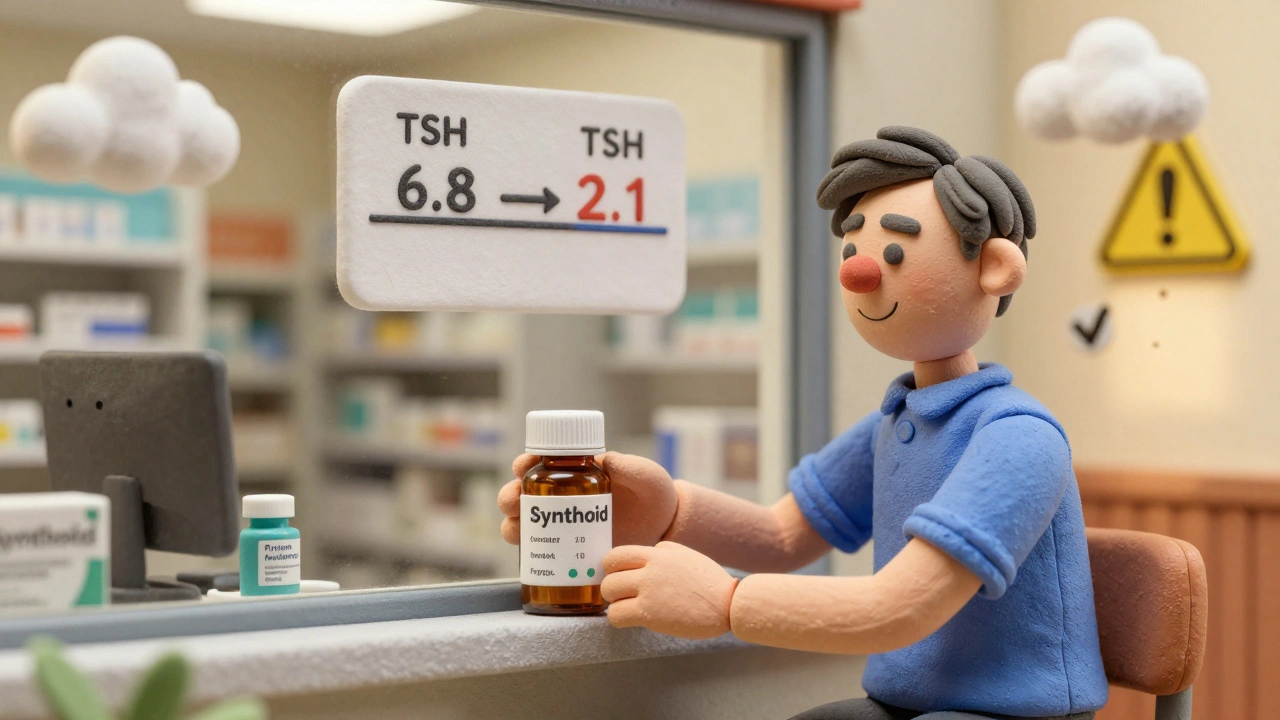
Switching back isn’t a quick fix. It’s a process. Here’s how to do it right, based on guidelines from the American Society of Health-System Pharmacists and the FDA:- Document the problem. Don’t say, “I feel worse.” Write down specifics: “After switching to generic levothyroxine on March 10, my TSH rose from 2.1 to 6.8 over 6 weeks despite no dosage change.” Include lab results, dates, and symptoms.
- See your doctor. Bring your journal. Your doctor needs to confirm the generic isn’t working - not just because you think it isn’t. They’ll rule out other causes and verify the issue is drug-related.
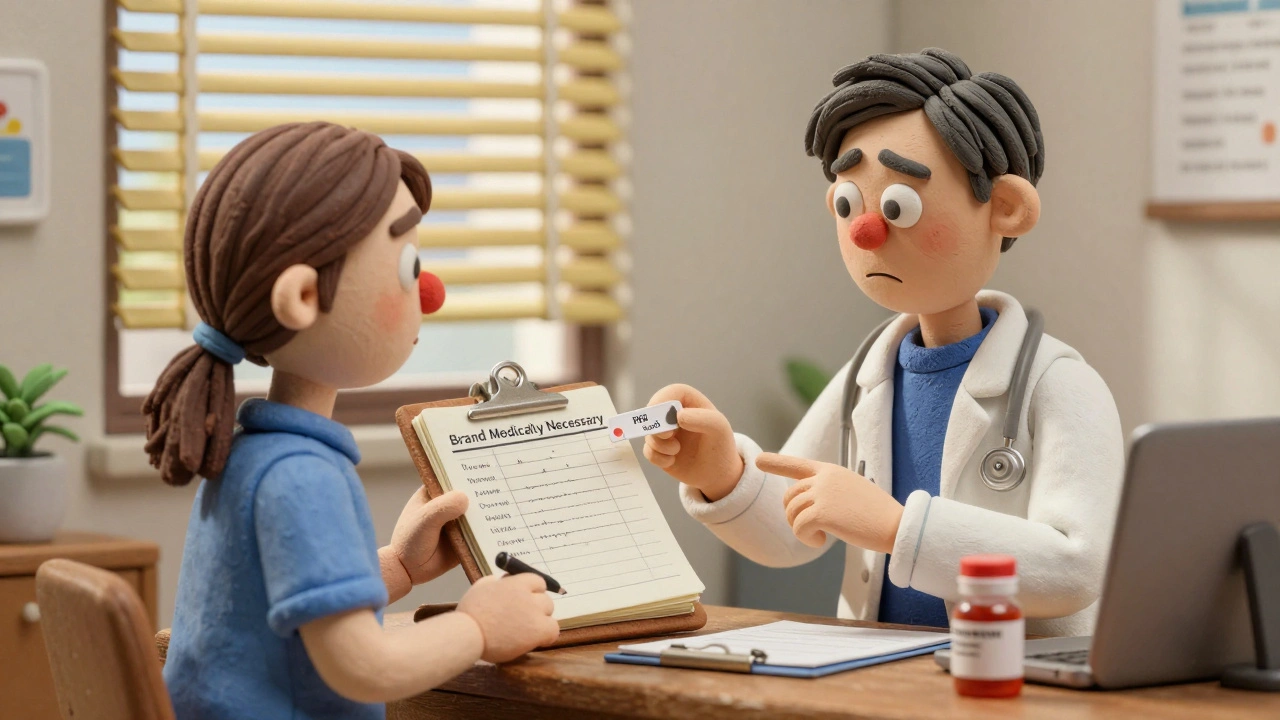
- Ask for a ‘Brand Medically Necessary’ prescription. This isn’t optional. Your doctor must write “Dispense as Written” or “Brand Medically Necessary” on the script. In some states, they must also fill out a CMS Form 1490S. Don’t let them just say “use brand” - it has to be clearly documented.
- Specify the exact brand. Don’t just say “Synthroid.” Write the full name: “Synthroid 50 mcg tablets.” Some generics are made by the same company as the brand (called “authorized generics”) - your doctor needs to know exactly which version you need.
- Prepare for insurance hurdles. Most plans require prior authorization for brand drugs when a generic exists. Your doctor’s office will submit clinical evidence. Be ready to follow up. If denied, appeal immediately - 63.7% of appeals succeed with proper documentation.
- Get therapeutic monitoring. If you’re on warfarin, levothyroxine, or an anti-seizure drug, your doctor should order blood tests 7-10 days after switching back. This confirms your levels are stable.
- Follow up. Schedule a check-in. Don’t assume everything’s fine just because you got the brand. Your body needs time to adjust, and your doctor needs to confirm the switch worked.

Insurance and Cost Challenges
This is where most people get stuck. Medicare Part D and private insurers often deny brand-name requests unless you prove the generic failed. In 2023, 68% of brand-name drug requests required prior authorization. Blue Cross Blue Shield denied 82% of such requests in patient-reported cases. But it’s not hopeless. If your doctor documents therapeutic failure with lab data, you have a strong case. Some patients report success after submitting a letter of medical necessity from their specialist. Others had luck switching to a different plan during open enrollment. There’s also the option of patient assistance programs. Many brand manufacturers offer discounts or free medication for those who qualify. Synthroid’s manufacturer, for example, has a savings card that cuts the cost to $10 per month for eligible patients.What to Do If the Pharmacy Refuses
Sometimes, even with a correct prescription, pharmacies won’t fill the brand. Why? Because they’re paid less for it, or their system doesn’t recognize the “medically necessary” flag. In 2022, 41.7% of patients who requested a brand switch reported pharmacy refusals. If this happens:- Ask the pharmacist to call your doctor for clarification.
- Request a different pharmacy - chain pharmacies are more likely to have systems set up for brand exceptions.
- If you’re on Medicare, ask for a “Medically Necessary Brand Exception” form. Under the 2024 Medicare redesign, these must be processed within 72 hours.
Real Stories, Real Outcomes
One patient, SarahK45 on Drugs.com, switched from a generic levothyroxine to Synthroid after developing a severe rash. Within two weeks, the rash cleared. Her endocrinologist wrote “medically necessary” on the prescription, and her insurance covered it immediately. Another, from a Reddit pharmacy thread, had an allergic reaction to the dye in a generic blood pressure pill. Switching back to the brand fixed it - but it took three weeks of prior auth battles. She had to call her insurer daily and send her doctor’s notes via fax. These aren’t rare cases. They’re part of a growing pattern. The FDA’s 2022 medication error report found that 38.2% of switching errors happened because the prescriber didn’t clearly specify the brand name.What’s Changing in 2025
The FDA’s GDUFA III rules now require manufacturers to disclose formulation changes in generics. That means you’ll see more detailed labeling on packages. If your generic suddenly looks different, check the label - it might have changed ingredients. Medicare’s new 72-hour fast-track for brand exceptions is a big win. And more states are passing laws requiring pharmacists to notify doctors when a patient has an adverse reaction to a generic. But the bottom line hasn’t changed: switching back is possible - but only if you treat it like a medical procedure, not a request.Final Advice
Don’t switch back on your own. Don’t pressure your doctor. Don’t assume the brand is always better. But if you’ve tried the generic, documented the problems, and your doctor agrees - then fight for the brand. Your health isn’t a cost-saving metric. It’s your life. Keep your records. Know your rights. And if you’re on a narrow therapeutic index drug - levothyroxine, warfarin, phenytoin, cyclosporine - be extra careful. One small change can have big consequences.Can I just ask my pharmacist to give me the brand instead of the generic?
No. Pharmacists are legally allowed to substitute a generic unless the prescription says “Dispense as Written” or “Brand Medically Necessary.” Even if you ask, they can’t give you the brand without that notation. You need your doctor to write it on the prescription.
Is it safe to switch back and forth between generic and brand?
It’s not recommended. Each switch - whether from brand to generic or back - can cause your body to adjust. For drugs with a narrow therapeutic index, like levothyroxine or warfarin, repeated switches increase the risk of unstable levels, side effects, or treatment failure. Stick with one version unless there’s a clear medical reason to change.
What if my insurance denies my request for the brand?
Appeal. Most denials are overturned with proper documentation. Ask your doctor to write a letter of medical necessity that includes lab results, symptom logs, and a clear statement that the generic failed. Submit it with your appeal. Many insurers approve after the first appeal - especially if you’re on a high-risk medication.
Do all generics have the same inactive ingredients?
No. Different manufacturers use different fillers, dyes, and coatings. A generic made by Company A might have red dye, while Company B’s version uses yellow. That’s why some people react to one generic but not another. If you’re sensitive, ask your pharmacist which manufacturer’s version you’re getting - and stick with it.
Can I switch back to brand if I’m on Medicaid?
Yes, but the process varies by state. Some Medicaid programs have stricter rules than Medicare. You’ll still need a “Brand Medically Necessary” note from your doctor. Contact your state’s Medicaid office or ask your pharmacist for the correct form. In many cases, if you have a documented adverse reaction, approval is granted.
Wendy Chiridza
December 3, 2025 AT 23:01My cousin switched from generic levothyroxine to Synthroid after her TSH went through the roof and she started having panic attacks. She kept a journal like the post said and her doctor backed her up. Insurance denied it twice but she appealed with lab results and got approved on the third try. Now she’s sleeping, not crying, and actually has energy again. This isn’t just about money-it’s about survival.
Pamela Mae Ibabao
December 5, 2025 AT 03:54Okay but let’s be real-most people who say generics don’t work are just paranoid because they think brand = better. I’ve been on generic metoprolol for 8 years and my BP is perfect. If your thyroid levels are stable, stop being dramatic. The FDA doesn’t lie. You’re not special. Just don’t be that person who demands the expensive version because you read a Reddit post.
Gerald Nauschnegg
December 6, 2025 AT 01:44Bro I switched back to brand warfarin after my INR went from 2.4 to 4.9 in 10 days. I was almost in the ER. My doc wrote ‘Brand Medically Necessary’ and my insurance still said no. So I called them every day for 3 weeks. I sent them my lab reports. I sent them the FDA warning. I sent them the APhA guidelines. I even sent them the Drugs.com story. They finally approved it. Don’t give up. Your life isn’t a spreadsheet.
Erik van Hees
December 8, 2025 AT 01:15Here’s the truth no one wants to admit: generics are often made in the same factories as brands. The only difference is the label. But here’s the kicker-those ‘inactive ingredients’? They’re not always inert. I had a patient with epilepsy who had breakthrough seizures every time they switched from one generic to another. Turns out, one had magnesium stearate from a different source and it messed with absorption. This isn’t placebo. It’s chemistry. And if you’re on a narrow therapeutic index drug? You’re playing Russian roulette every time you get a new batch.
Kevin Estrada
December 8, 2025 AT 13:41YOOOOO I switched to generic cipro and got a full body rash that looked like I got hit by a lava lamp. I went to the ER. They said ‘probably the dye.’ I switched back to brand. Rash gone in 48 hours. My insurance denied it. I cried. I screamed. I posted on Reddit. They finally approved it after I sent them a photo of my arm. This is why I hate the system. You have to fight just to not die. 🤬😭
Katey Korzenietz
December 9, 2025 AT 08:40My mum’s on levothyroxine. Generic version changed the filler last year. She started forgetting names. Walking into rooms and forgetting why. Her neurologist said ‘it’s not dementia, it’s the pill.’ We switched back. Within two weeks she remembered my birthday. I’m not exaggerating. This isn’t anecdotal. It’s science. And if your insurer says no, they’re putting profit over people. That’s not healthcare. That’s cruelty.
Chris Jahmil Ignacio
December 10, 2025 AT 07:21Let me break this down for the clueless: The FDA doesn’t test inactive ingredients. They don’t care if your generic has red dye #40 that triggers your histamine response. They don’t test for bioavailability differences between batches from different manufacturers. And they sure as hell don’t track how many people have seizures or strokes because their insurance forced a switch. This isn’t a ‘cost-saving measure.’ It’s a public health failure disguised as policy. The pharmaceutical industry loves this system. You’re not just paying for the pill-you’re paying for the silence.
Paul Corcoran
December 10, 2025 AT 21:11If you’re reading this and you’re scared to ask for your brand back, you’re not alone. I was too. But I did it. I kept a symptom log. I brought it to my doctor. I didn’t beg-I presented data. And guess what? My doctor was on my side. We fought the insurance together. You have rights. You have a voice. And you deserve to feel like yourself again. Don’t let bureaucracy steal your health. You’re worth the fight.
Stacy Natanielle
December 11, 2025 AT 07:46✅ Documented symptoms? ✅ Lab results? ✅ Doctor’s note? ✅ Prior auth submitted? ✅ Appeal filed? 🚨 Don’t stop at denial. 63.7% of appeals get approved with proper docs. You’ve got this. 💪🩺
kelly mckeown
December 13, 2025 AT 05:51i switched back last year after the generic made me so dizzy i couldnt walk. my doc was like ‘you’re fine’ but i kept track. i wrote everything down. even the days i felt okay. it took 3 months but they finally approved it. i still get nervous when i pick up my pill bottle. what if they switch it again? 🥺
Tom Costello
December 13, 2025 AT 18:47For anyone in the UK or EU: this is a US-specific issue. In the NHS, we rarely have this problem because the system doesn’t force switches based on cost alone. If a patient reacts, they get the original. No paperwork. No appeals. Just care. It’s not perfect, but it’s human. Maybe we need to ask why the US system turns medical necessity into a bureaucratic obstacle course.
Cyndy Gregoria
December 15, 2025 AT 15:37You got this. I know it’s exhausting. But you’re not weak for needing the brand. You’re smart for fighting back. Keep your journal. Call your doctor. Send the appeal. You’re not just taking a pill-you’re taking back your life. And that’s powerful.
Mark Gallagher
December 16, 2025 AT 07:08Anyone who says generics are ‘just as good’ hasn’t had their thyroid levels swing out of control because a pharmacist swapped their pill without telling them. This isn’t about ‘feeling better.’ It’s about survival. And if you think this is just a ‘first-world problem,’ you’ve never had to beg your insurance company for your life.