
How to Handle Prescription Transfers Between Countries: A Practical Guide for Travelers
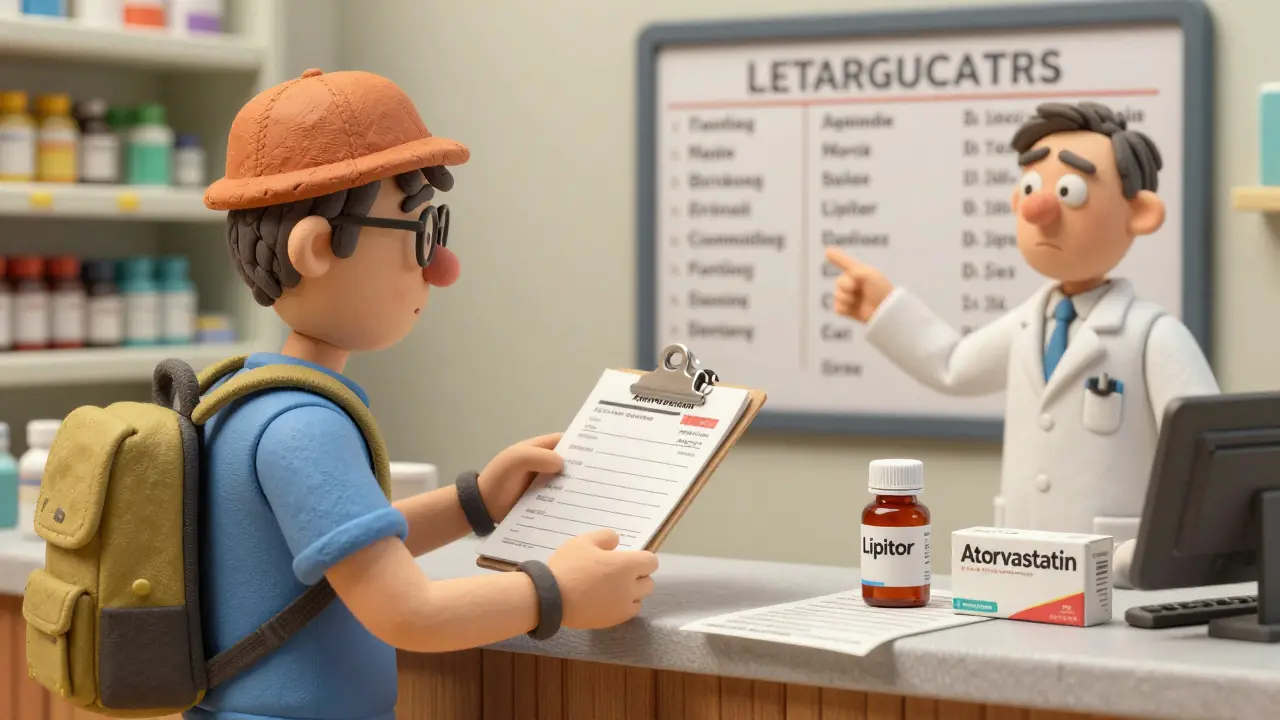
Planning a trip abroad and worried about your meds? You’re not alone. Every year, millions of travelers find themselves stuck when their prescription doesn’t work in another country. Whether you’re retiring in Spain, working in Canada, or just visiting family overseas, international prescription transfer isn’t as simple as showing up at a pharmacy with your bottle. The rules vary wildly - from nearly seamless in the EU to a legal gray zone in the U.S. and Canada. Here’s how to actually get your meds without panic, delays, or fines.
Why Prescription Transfers Don’t Work Like You Think
Most people assume a prescription is just a piece of paper that’s valid everywhere. It’s not. A U.S. prescription for Adderall won’t be filled in Germany. A French prescription for insulin might be rejected in Japan. Why? Because each country treats medications differently - not just in names, but in legality, dosage limits, and who can prescribe them. In the U.S., the DEA strictly controls controlled substances like opioids, stimulants, and sleep aids. Even transferring one between pharmacies within the same state requires electronic records, pharmacist signatures, and exact documentation. Now imagine crossing a border. The DEA’s 2023 rule allows one-time electronic transfers between U.S. pharmacies - but explicitly says no international transfers. That means if you’re moving from New York to London, your U.S. pharmacist can’t just email your script to a pharmacy in the UK. You’re on your own. The European Union is the exception. If you’re traveling from France to Italy, your prescription - as long as it includes the generic drug name, strength, and quantity - is legally valid. Pharmacists across all 27 member states must accept it. But even here, problems pop up. Brand names change. A pill called “Lipitor” in the U.S. might be “Atorvastatin” in Poland. If your doctor wrote “Lipitor 20mg,” the pharmacist in Warsaw might not recognize it. You need the generic name.What You Need to Carry: The Must-Have Documents
Forget relying on your phone. You need paper - and it needs to be detailed. Here’s what every traveler should carry:- Original prescription - not a copy. The pharmacy must see the doctor’s signature, stamp, and pharmacy details.
- Generic drug names - Ask your doctor to write both brand and generic names. Example: “Lisinopril (Zestril) 10mg.”
- Physician-signed letter - This should state: your diagnosis, why you need the medication, dosage, and that it’s for personal use during travel. No fluff. Just facts.
- Medical history summary - Especially for Canada or the Middle East. Include allergies, current conditions, and other prescriptions.
- Medication bottle labels - Keep them in original containers. Customs officers look for these.
Transferring to Canada: The Cosigning Trap
Canada is one of the most common destinations for Americans seeking cheaper meds. But here’s the catch: U.S. pharmacies cannot transfer prescriptions to Canadian ones. It’s against Canadian law. Instead, you need a process called “cosigning.” Here’s how it works: You mail or fax your original U.S. prescription to a Canadian pharmacy. They then contact your doctor - yes, your U.S. doctor - to verify your medical history. Your doctor fills out a form, confirms your condition and dosage, and signs off. The Canadian pharmacy then issues a new Canadian prescription based on your U.S. one. It’s not a transfer. It’s a rewrite. This takes 5-10 business days. If you’re flying in three days, you’re out of luck. Start this process at least two weeks before travel. Use services like PharmacyChecker - they’ve built systems to speed this up. But don’t expect your local Walgreens to help. Most U.S. pharmacists have never done this and will tell you it’s impossible. They’re not wrong - they just don’t know the workaround.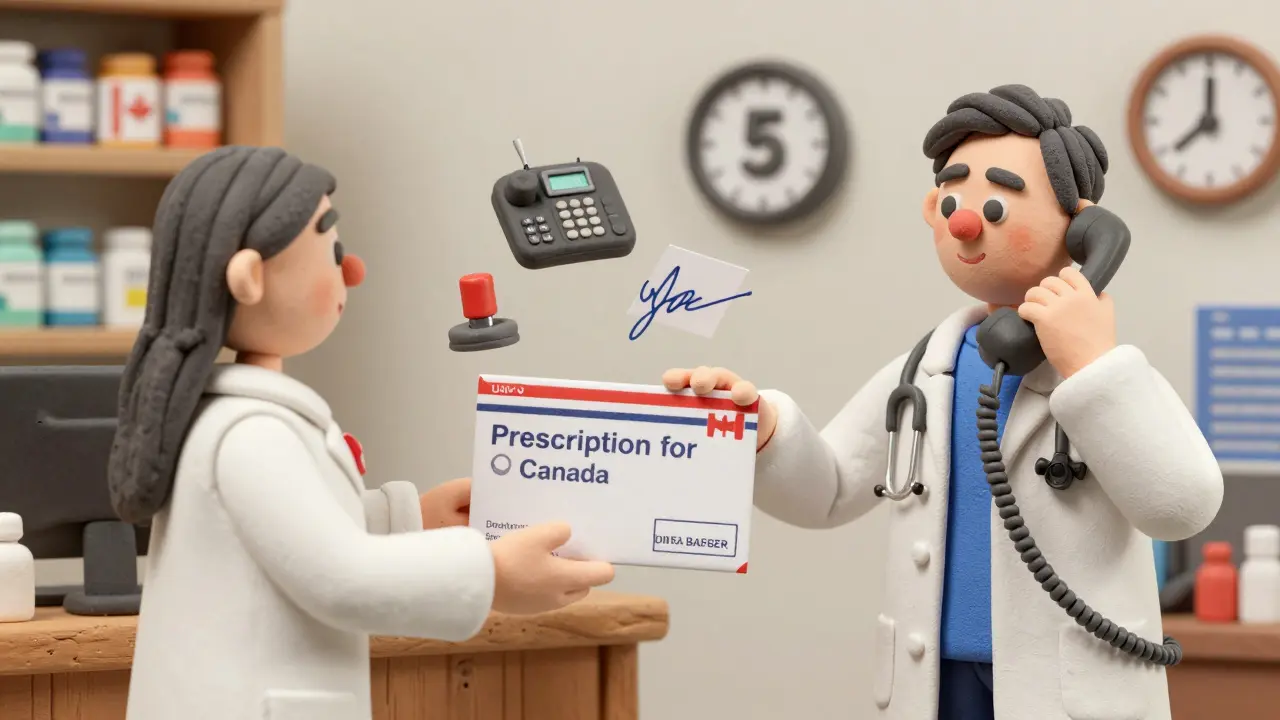
Bringing Meds Into the U.S. From Abroad
What if you’re returning home with meds you bought overseas? The FDA technically bans importing prescription drugs. But here’s the reality: they don’t stop most people. The FDA allows foreign nationals to bring in a 90-day supply for personal use - and U.S. citizens get the same leniency in practice. Border agents rarely question travelers carrying a 90-day supply of blood pressure pills, insulin, or antidepressants - especially if you have the original bottle and doctor’s note. But don’t test it. Don’t try to mail yourself 6 months of Adderall from Mexico. Don’t order 1000 pills from an unverified online pharmacy. If you’re caught with large quantities, especially controlled substances, you could face fines or confiscation. Stick to what you need for the trip. One 90-day supply is your safe zone.What Doesn’t Work - And Why
Some people try to email prescriptions to foreign pharmacies. Others ask their doctor to fax it. Some even try to get a local doctor to “re-prescribe” it without any records. These almost always fail. - Emailing a prescription: Most countries require a physical signature. Electronic signatures from U.S. doctors aren’t recognized abroad. - Faxing: Many pharmacies won’t accept faxes from foreign providers. They need original documents. - Getting a local doctor to write a new script: In many countries, this is illegal unless you’ve been seen for a consultation. A 10-minute “travel visit” won’t cut it. You’ll need a full exam. - Using a travel clinic: These are great for vaccines, but not for chronic meds. They don’t have access to your medical history. The bottom line: If you’re trying to bypass the system, you’re risking your access - and your safety.
Real-World Tips from Travelers Who’ve Been There
- For EU travelers: Always carry your prescription in English and the local language. Even if you’re in Spain, having a Spanish translation of your generic drug name helps. Many pharmacies have translation apps, but don’t rely on them. - For Canadians in the U.S.: Get a Canadian prescription before you leave. U.S. pharmacies won’t refill a Canadian script. If you’re staying long-term, find a U.S. doctor who will take over your care. - For retirees abroad: If you’re living overseas, consider switching to a global pharmacy service like CVS Caremark or Walgreens International. They offer mail-order options to over 100 countries. - For frequent travelers: Keep a digital copy of your prescriptions, doctor’s letter, and medical history on your phone - and in the cloud. Use a password-protected folder. If your bag gets lost, you still have access.What to Do If You’re Denied
If a pharmacy refuses your prescription, don’t argue. Ask for their manager. Say: “I understand you can’t fill this. Can you help me find a pharmacy that can?” Most will give you a referral. In the EU, call the national health authority. In Canada, contact your provincial pharmacy college. In the U.S., call the FDA’s personal importation hotline. You’re not alone. There are resources. For urgent needs, consider a travel health service like MedAire. They work with local clinics worldwide to help travelers get temporary prescriptions. It costs $150, but it’s cheaper than a hospital visit.Final Checklist Before You Leave
- ☑️ Got original prescriptions with generic names?
- ☑️ Doctor signed letter with diagnosis and travel dates?
- ☑️ Medications in original bottles with labels?
- ☑️ Medical history summary on hand?
- ☑️ Contact info for destination pharmacy or clinic?
- ☑️ 90-day supply max? No more.
- ☑️ Digital copies saved and backed up?
Can I transfer my U.S. prescription to a pharmacy in Europe?
No, you cannot directly transfer a U.S. prescription to a pharmacy in Europe. The U.S. has no system for international transfers. However, if you’re traveling within the European Union, you can use your prescription as long as it includes the generic drug name, strength, and quantity. European pharmacists are required to accept prescriptions from other EU countries under mutual recognition rules. Just make sure your doctor writes the generic name - not just the brand name.
Can I get my prescription refilled in Canada if I’m from the U.S.?
You can’t have your U.S. prescription directly transferred to a Canadian pharmacy. Instead, you need to go through a process called “cosigning.” You send your original prescription and medical history to a Canadian pharmacy. They contact your U.S. doctor to verify your condition and dosage. Once confirmed, the Canadian pharmacy issues a new Canadian prescription. This process takes 5-10 business days, so start early. Services like PharmacyChecker can help streamline it.
Is it legal to bring prescription drugs into the U.S. from another country?
Under U.S. federal law, importing prescription drugs for personal use is technically illegal. However, the FDA exercises enforcement discretion and typically allows travelers to bring in a 90-day supply for personal use, especially if it’s for a chronic condition like diabetes or hypertension. You must have the original prescription or doctor’s note. Do not try to mail yourself medication or bring more than a 90-day supply - you risk confiscation or fines.
What if my medication has a different name abroad?
Many medications have different brand names in other countries. For example, “Lipitor” in the U.S. is “Atorvastatin” in Germany. Always ask your doctor to write the generic name on your prescription. If you’re unsure, look up the drug’s international names using resources like the WHO’s International Nonproprietary Names list. Carry a printed list of both brand and generic names to show pharmacists.
Do I need a letter from my doctor for international travel?
Yes, especially for controlled substances or long-term medications. A doctor’s letter should include your diagnosis, the medication name (generic and brand), dosage, reason for use, and that it’s for personal use during travel. Some countries - like China, Saudi Arabia, and the UAE - require this letter to be notarized. Even if not required, carrying one reduces delays and questions at customs.
Charity Hanson
February 28, 2026 AT 03:04OMG this post saved my life last year when I moved from Lagos to Dublin! I had my diabetes meds and thought I was fine with just the bottle-until the pharmacist stared at me like I was smuggling cocaine. Had to run to the clinic, get a doctor’s letter, and translate everything into Irish (yes, they asked for it). Now I carry a laminated card with my generic names. Pro tip: Google Translate works if you screenshot the bottle label. 🙌
Noah Cline
February 28, 2026 AT 16:29Let’s be clear: the DEA’s stance isn’t ‘inconvenient’-it’s legally sound. International prescription reciprocity is a regulatory chimera. You cannot circumvent the Controlled Substances Act through bureaucratic arbitrage. The EU’s mutual recognition framework is an outlier, not a precedent. U.S. pharmacists are not obligated to engage in extraterritorial compliance. Period.
Eimear Gilroy
February 28, 2026 AT 20:17Interesting. So if I’m an Irish citizen living in Canada with a U.S. prescription for sertraline, and I fly back to Dublin for a month, do I need to get a new script from a GP there? Or does the EU rule apply since I’m an EU citizen? The post mentions EU acceptance but doesn’t clarify citizenship vs. residency. Just wondering if anyone’s navigated this.
Ajay Krishna
February 28, 2026 AT 21:00As someone who’s lived in 5 countries and managed chronic meds through all of them, I want to say-this guide is gold. But let’s add one thing: always ask for a digital QR code version of your prescription if your doctor uses e-prescribing. Some countries like India and Thailand now accept scanned QR codes from verified U.S. pharmacy systems. It’s not official policy everywhere, but I’ve used it successfully in Mumbai and Jakarta. Just make sure the QR links to a legitimate pharmacy portal.
Lisa Fremder
March 1, 2026 AT 01:38Why do we even let foreigners bring in meds? This is why America’s healthcare system is crumbling. If you can’t afford your pills here, that’s your problem. Stop importing cheap drugs from Mexico and acting like it’s a right. The FDA should be confiscating everything. We don’t need your foreign prescriptions clogging up our borders.
Sumit Mohan Saxena
March 2, 2026 AT 15:39While the post provides a comprehensive overview, it omits a critical regulatory nuance: the WHO’s Model List of Essential Medicines. Many countries align their formularies with this list, meaning even if a brand name differs, the generic substance is recognized under international health guidelines. For instance, metformin is universally accepted, whereas brand-specific formulations like Glucophage may trigger additional scrutiny. Always prioritize the WHO-recognized INN (International Nonproprietary Name) on documentation.
Sneha Mahapatra
March 2, 2026 AT 18:11I’ve been thinking about this a lot lately-how we treat health as something that should be tied to borders. We carry passports, visas, currencies… but our bodies don’t recognize those lines. A pill that keeps someone alive doesn’t care if it was prescribed in Texas or Tbilisi. Maybe the real issue isn’t the law-it’s that we’ve built systems that forget people are human first, and travelers second.
Angel Wolfe
March 4, 2026 AT 15:16EVERYTHING IN THIS POST IS A GOVERNMENT LIE. They want you to think you need all these documents so they can track you. Your meds? They’re nanotech. They’re implanted. The ‘doctor’s letter’? It’s a backdoor to your biometrics. I know a guy who got his insulin from a pharmacy in Prague and now his smart fridge is sending data to the CDC. Don’t trust any of this. Just carry your pills in a tin can and hope for the best. #DeepStatePharma
Sophia Rafiq
March 5, 2026 AT 11:31Been doing this for 12 years. EU? Easy. Canada? Pain in the ass. U.S. returning from abroad? Don’t even think about bringing back more than 30 days unless you want a visit from CBP. My rule: if it’s not on the FDA’s approved list, don’t risk it. And yes, I’ve had my Adderall confiscated once. Lesson learned. Always have the generic name printed out. Also, never say ‘I’m going to sell this.’ That’s how you end up in federal court.
bill cook
March 5, 2026 AT 20:20Why are you even traveling if you need meds that don’t transfer? Just stay home. You’re a burden on the system. Everyone else manages. Why can’t you? This whole post feels like a cry for help wrapped in a ‘guide.’
Byron Duvall
March 6, 2026 AT 18:21They don’t want you to know this but the real reason prescriptions don’t transfer is because Big Pharma doesn’t want you buying cheaper meds abroad. They’re lobbying hard to keep you dependent. I got my blood pressure med from India for $5. In the U.S.? $400. This whole system is rigged. Don’t fall for the paperwork trap. Just bring your own stash. No one’s gonna check.
Katherine Farmer
March 8, 2026 AT 03:50While the advice here is technically accurate, it is profoundly naive. The notion that a ‘doctor’s letter’ is sufficient for entry into Saudi Arabia is laughable. You require a Ministry of Health pre-authorization, a notarized Arabic translation, and a letter from your home country’s embassy. This post reads like a travel blog written by someone who’s never left an airport. If you’re serious about international mobility, you must engage with the regulatory architecture-not just carry a laminated card.
Full Scale Webmaster
March 9, 2026 AT 21:45You think this is bad? Try being a veteran with PTSD and trying to get your benzodiazepines into Japan. I flew into Osaka with 90 days of clonazepam. They took my bag. They interrogated me for six hours. They called my VA doctor. They demanded a psychiatric evaluation. I had to fly back to the U.S. and get a new prescription from a Japanese-licensed psychiatrist. All because I didn’t know the ‘personal use’ rule doesn’t apply to controlled psychotropics. This isn’t a guide-it’s a minefield. And now I can’t travel anywhere without my therapist’s permission. Thanks, bureaucracy.