
How to Ask Your Doctor About Generic Alternatives: Save Money Without Sacrificing Care
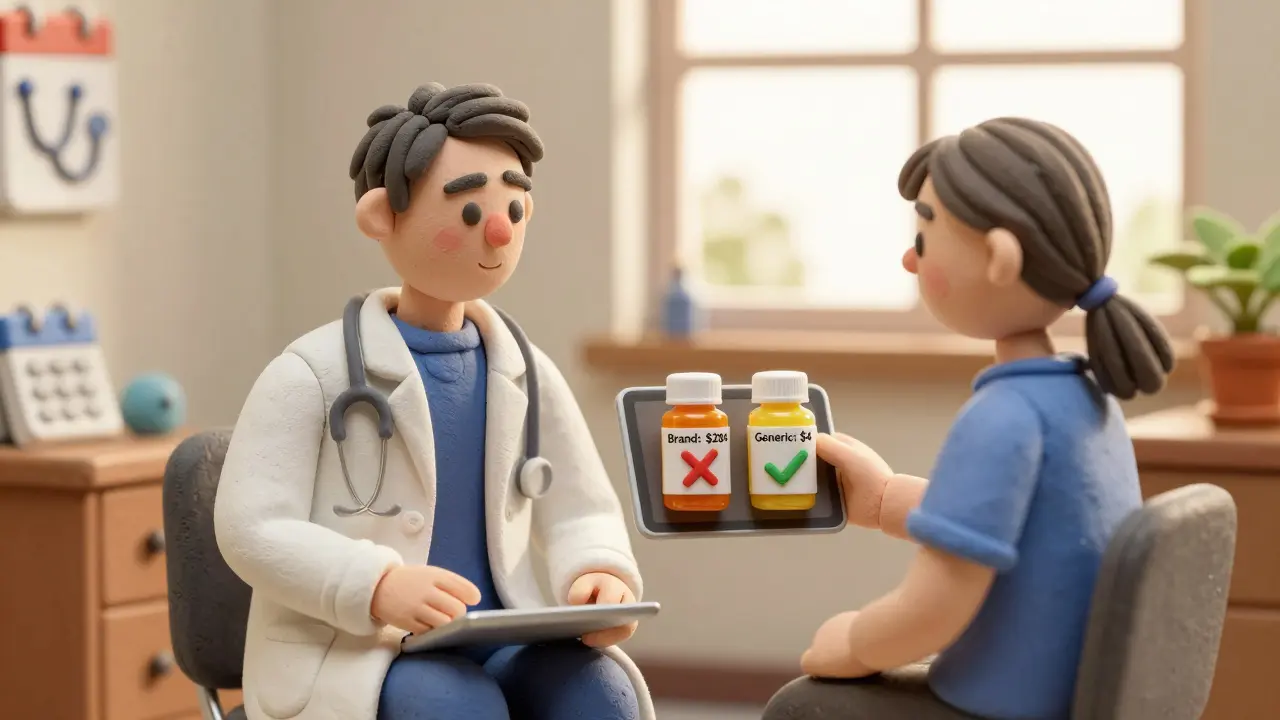
Most people don’t realize that the pill they’re paying $300 for could be replaced with a version that costs $4 - and works just as well. Generic drugs aren’t second-rate. They’re the exact same medicine, approved by the FDA, with the same active ingredients, same dosage, same effects. The only difference? Price. And yet, many patients never ask their doctors about switching because they assume it’s not an option, or they’re afraid the doctor will think they’re being cheap. The truth? Doctors are more open to generics than you think. The real challenge is knowing how to bring it up - the right way.
Why Generics Are Just as Good
Generic drugs aren’t knockoffs. They’re legally required to match brand-name drugs in every way that matters: the active ingredient, how fast it enters your bloodstream, how long it lasts, and how well it works. The FDA demands proof. Before a generic can be sold, manufacturers must show their version delivers the same amount of medicine into your blood within the same time frame as the brand-name drug. That’s called bioequivalence. The acceptable range? Between 80% and 125% of the brand’s performance. In plain terms: if your brand drug gives you 100 units of medicine in your blood, the generic can give you anywhere from 80 to 125 - and still be considered identical in effect.
For 95% of medications, this means zero difference in how you feel or how your condition is managed. A 2022 FDA analysis found that patients using generics for high blood pressure, diabetes, depression, and cholesterol had the same outcomes as those on brand-name versions. Even major medical centers like Mayo Clinic and Cedars-Sinai confirm this. Dr. Preeti N. Malani, a top infectious disease specialist, put it bluntly: “The evidence is overwhelming that generic medications are therapeutically equivalent to their brand-name counterparts for most drugs.”
So why do some people swear their generic “doesn’t work”? Often, it’s not the active ingredient. It’s the inactive ones - the fillers, dyes, or coatings. These don’t affect how the drug works, but they can change how it feels. A different shape, color, or even the time it takes to dissolve might cause minor side effects like stomach upset or a weird taste. That’s not the drug failing. It’s your body adjusting. For most people, this passes within days.
When Generics Might Not Be the Best Choice
There’s one big exception: narrow therapeutic index (NTI) drugs. These are medications where even tiny changes in blood levels can cause serious problems. Think blood thinners like warfarin, thyroid meds like levothyroxine, or certain seizure drugs. For these, consistency matters. Switching between different generic brands - or even from brand to generic - can cause small fluctuations in how the drug works. That’s why some doctors prefer to keep patients on the same version long-term.
But here’s the catch: this applies to only about 5% of all prescriptions. The FDA says most NTI drugs still have generic versions available - and they’re safe if you stick with one manufacturer. The problem isn’t generics themselves. It’s switching back and forth between different ones. If you’re on one generic and it’s working fine? Stay on it. If you’re on a brand and want to switch? Ask your doctor if you can pick one generic manufacturer and stick with it.
How to Bring It Up Without Sounding Like You’re Just Trying to Save Money
Don’t say: “Can I get the generic?”
Say this instead: “I want the most effective drug at the best price, and I want prescriptions for generic drugs when possible.”
That shift in language changes everything. You’re not asking for a discount. You’re asking for smart, evidence-based care. Doctors hear “I can’t afford this” all the time. But when you frame it as a shared goal - effectiveness + affordability - they’re far more likely to help.
Here’s how to prepare:
- Know your meds. Write down the names of all your prescriptions. Use a free app like GoodRx or check your pharmacy’s price list. Bring it with you.
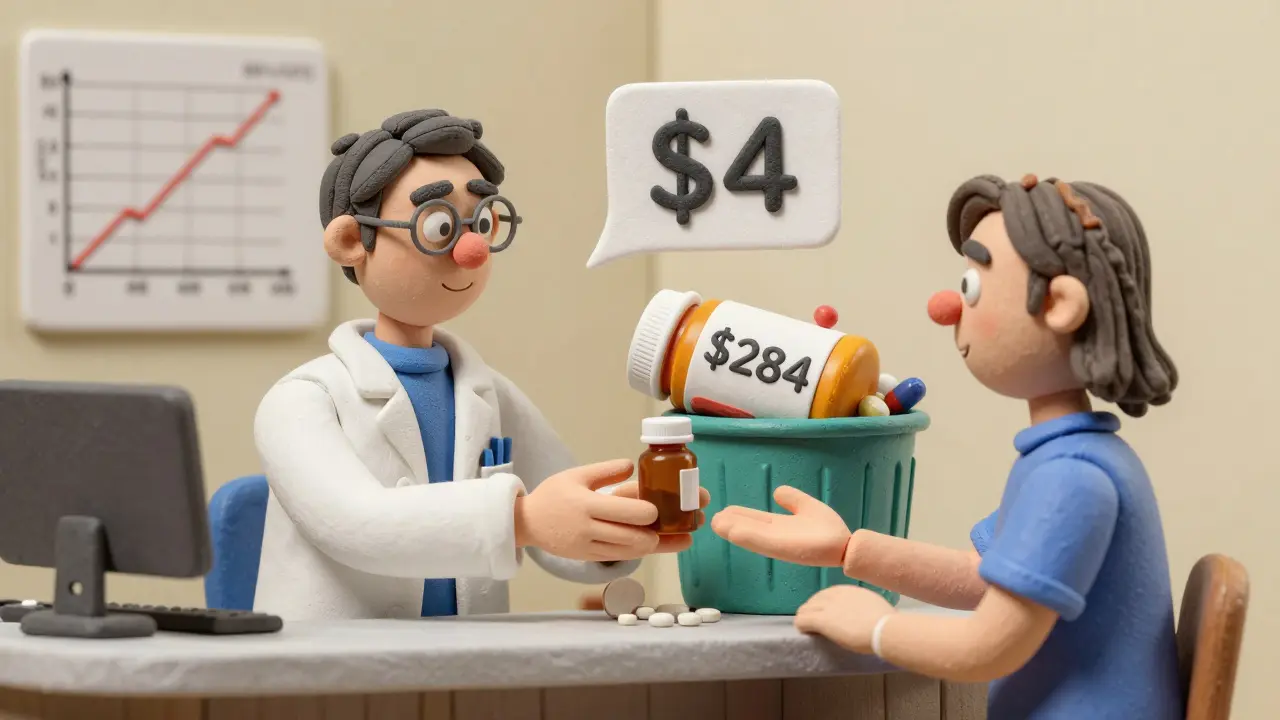
- Compare prices. Example: Brand-name Nexium costs $284 for a 30-day supply. Generic omeprazole? $4. That’s not a typo. That’s real.
- Ask specific questions.
- “Is there a generic version of this medication?”
- “Would it be safe and effective for me to use the generic?”
- “Are there any reasons I should stay on the brand?”
- “If a generic isn’t available now, when might one be?”
Timing matters. Bring this up during your initial appointment - not when you’re at the pharmacy and the price shocks you. If you wait, you risk delays, missed doses, or even having to refill the expensive version just because you didn’t plan ahead.
What If Your Doctor Says No?
Don’t take “no” as final. Ask why. If they say, “It’s just better,” ask for proof. If they say, “I don’t know,” ask them to check. Many doctors simply don’t track when new generics hit the market. A 2023 survey found that over half couldn’t reliably say which generics were covered by insurance plans.
If they mention NTI drugs, ask: “Is this one of them?” Only 5% of prescriptions fall into this category. If it’s not, push gently. Say: “I’ve read that for most drugs, generics work just as well. Can we try it and see how I respond?”
Some doctors will say, “I prescribe this brand because I’ve seen better results.” That’s anecdotal. Ask if they’ve seen studies. If they can’t point to one, it’s likely just habit.
Insurance and Pharmacy Tricks
Your insurance plan might already be pushing you toward generics - without telling you. Medicare Part D fills 89% of eligible prescriptions with generics. Commercial plans? Only 72%. That means if you’re on Medicare, you’re already saving more than most.
Pharmacists have a secret power: substitution. In 48 states, they can swap a brand for a generic without asking - unless your doctor writes “Do Not Substitute” on the prescription. So if you show up and the pill looks different? That’s normal. Ask the pharmacist: “Is this the generic?” They’ll tell you. And if you’re on a narrow therapeutic index drug, they’ll usually check with your doctor before switching.
Pro tip: Ask your pharmacist to notify you if a cheaper generic becomes available. Many will do it for free. You can also ask them to contact your doctor to suggest a switch. Pharmacists often have better, up-to-date info on pricing and availability than doctors do.
Real Savings, Real Stories
One patient in Michigan switched from brand-name Humira to its generic, adalimumab. Her monthly cost dropped from $6,300 to $4,480 - saving over $1,800 every month. Her disease control stayed the same.
An Australian man on levothyroxine saved $1,200 a year by switching from brand to generic. He didn’t feel any different. His TSH levels? Perfect.
According to AARP, seniors who asked their doctors about generics saved an average of $427 a year. And 68% of them got the switch approved.
These aren’t outliers. They’re the rule.
What to Do Next
Start today. Look at your last prescription. Go to a price checker like GoodRx or your pharmacy’s website. Type in the name. See what the generic costs. If it’s under $20, it’s almost certainly worth switching.
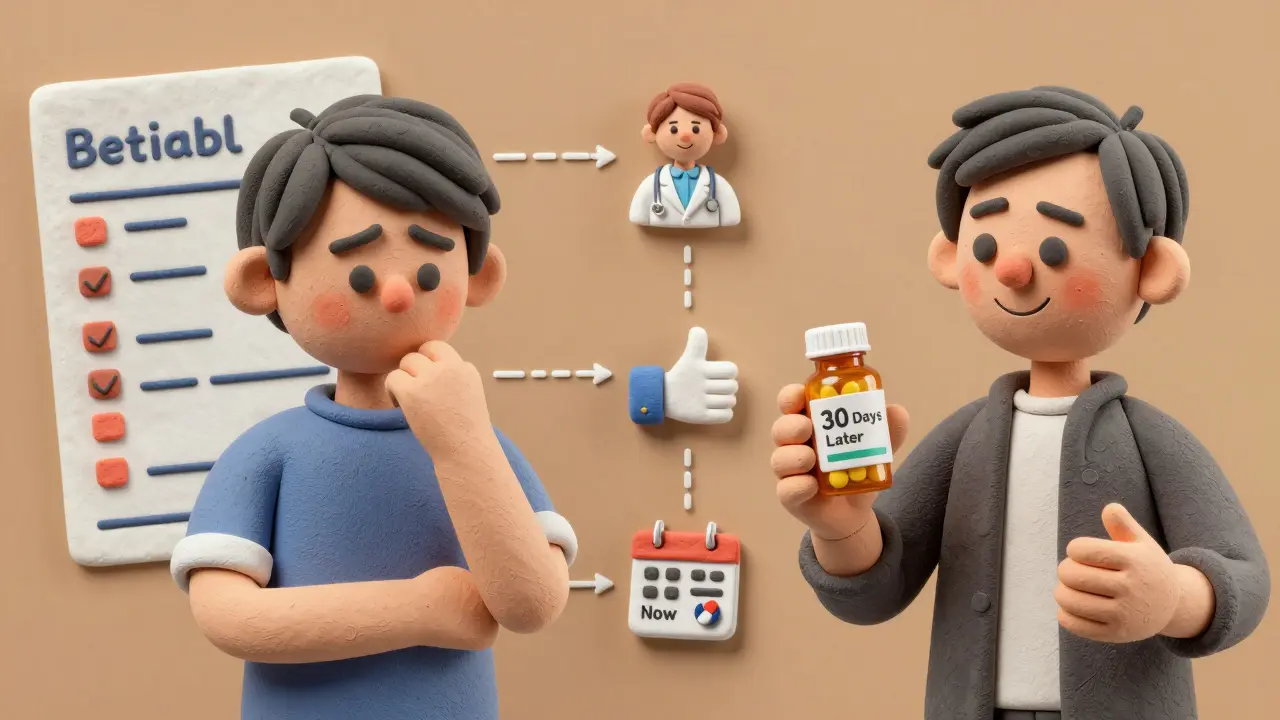
Next appointment? Bring the price sheet. Ask the three key questions. If your doctor hesitates, ask: “Can we try it for 30 days? I’ll let you know how I feel.”
Most doctors will say yes. And if they don’t? You’ve still done the right thing. You’ve taken control of your care. You’ve asked for evidence. You’ve refused to pay more than you need to.
Generics aren’t a compromise. They’re the smart choice. And you deserve to make it.
Are generic drugs really as effective as brand-name drugs?
Yes, for the vast majority of medications - about 95% - generics are just as effective. The FDA requires them to have the same active ingredients, strength, dosage form, and bioequivalence as the brand-name version. That means they work the same way in your body. Studies from Mayo Clinic, the FDA, and the American Medical Association confirm this. Differences in shape, color, or inactive ingredients don’t affect how well the drug works.
Why do some people say generics don’t work for them?
Most of the time, it’s not the drug itself. It’s the inactive ingredients - like dyes, fillers, or coatings - that can cause minor side effects like stomach upset or a different taste. Some people are sensitive to these. Also, switching between different generic manufacturers can cause small changes in how the drug is absorbed. This is rare and usually temporary. If you notice a change, talk to your pharmacist or doctor. Sticking with one generic brand often solves the problem.
Can my pharmacist switch my brand-name drug to a generic without asking me?
In 48 states, yes - unless your doctor writes “Do Not Substitute” on the prescription. Pharmacists are allowed to substitute generics automatically because they’re proven equivalent. But if you’re on a narrow therapeutic index drug (like warfarin or levothyroxine), pharmacists usually check with your doctor first. If you’re unsure, ask your pharmacist: “Is this the generic version?” They’ll tell you.
What if my doctor refuses to prescribe a generic?
Ask why. If they say “It’s better,” ask for evidence. If they say “I don’t know,” ask them to check. Most doctors aren’t aware of the latest generics. Only about 5% of prescriptions require brand-name drugs due to narrow therapeutic index. For everything else, generics are safe. If they still refuse, ask: “Can we try a 30-day trial with the generic? I’ll let you know how I feel.” Many will agree.
How much can I really save by switching to generics?
A lot. On average, generics cost 80-85% less than brand-name drugs. For example, brand-name Nexium costs $284 for a 30-day supply. The generic omeprazole? Just $4. Patients on Medicare save an average of $427 a year by switching. For expensive drugs like Humira, switching to generic adalimumab can save over $1,800 a month. Even if you don’t have insurance, cash prices for generics are often lower than co-pays for brand-name drugs.
Are there any drugs that don’t have generics?
Yes - but not many. About 65% of brand-name drugs have generic versions available. Newer drugs, especially biologics (like injectables for rheumatoid arthritis or cancer), may not have generics yet because their patents haven’t expired. But many of these now have “biosimilars,” which are very similar and often cheaper. Check with your pharmacist or use a tool like GoodRx to see if a generic or biosimilar exists for your medication.
Can I switch from one generic to another?
For most drugs, yes. But if you’re on a narrow therapeutic index drug - like warfarin, levothyroxine, or certain seizure meds - it’s best to stick with one manufacturer. Switching between different generic brands can cause small changes in how the drug works. If you notice symptoms changing after a switch, talk to your doctor. They may recommend sticking with one brand of generic for consistency.
Camille Hall
February 10, 2026 AT 05:05Love this breakdown. I switched my mom from brand-name Lipitor to generic atorvastatin last year-her co-pay went from $58 to $3. She didn’t feel a thing different, and her cholesterol’s never been better. Doctors act like generics are some kind of compromise, but they’re literally the same molecule. Why we pay extra for branding is beyond me.
Also, side note: if your pharmacist gives you a different-looking pill, don’t panic. It’s probably just a different manufacturer. Same active ingredient. Same results. Just looks weird because Big Pharma wants you to think color matters.
Ritteka Goyal
February 11, 2026 AT 10:47OMG I SOOOO AGREE!! I live in India and generics here are like 10x cheaper than US prices, like my dad takes metformin for diabetes and it costs like 20 rupees a month?? Like $0.25?? And in US they charge like $300?? This is just capitalism being evil!! I mean, the science is the same, the FDA says so, the WHO says so, but American pharma just wants to milk you dry!! I’m so mad I could cry!! Why can’t they just make it affordable??
Frank Baumann
February 11, 2026 AT 11:38Let me tell you what happened to me last month. I was on brand-name Cymbalta-$290/month. I asked my doc about generics. He looked at me like I’d asked for a unicorn. Said, ‘I’ve seen patients crash when they switch.’ I said, ‘Prove it.’ He didn’t. So I went to the pharmacy, asked the pharmacist, and she said, ‘Yeah, it’s fine, we’ve done this 200 times.’ I switched. Same day, same mood, same sleep, same everything. Cost? $7. I sent my doctor a screenshot of the receipt. He never mentioned it again.
But here’s the kicker: my insurance now automatically switches me to generic for EVERYTHING. No questions. Because they saw the savings. So if you’re on insurance? You’re already getting the generic. You just don’t know it. Stop paying for the label.
Ken Cooper
February 11, 2026 AT 18:24So I’m a pharmacist’s assistant, and let me tell you-this whole ‘generics don’t work’ thing? Total myth. I’ve seen people freak out because their new generic pill is blue instead of yellow. They swear it ‘doesn’t feel right.’ But here’s the thing: the active ingredient is identical. What changed? The filler. Maybe it’s cornstarch instead of lactose. Maybe the coating’s different. So they get a weird taste or slight stomach upset. It’s not the drug failing-it’s their brain screaming ‘this isn’t the same!’
And honestly? Most people adjust in 3–5 days. I’ve had patients come back saying, ‘I didn’t even notice I switched.’ That’s the real win. Also, pharmacists can swap generics without asking unless the doc says ‘do not substitute.’ So if your pill looks weird? Ask. Don’t assume it’s broken.
MANI V
February 12, 2026 AT 07:10People are so naive. You think generics are safe? Let me tell you about my cousin. She switched from brand-name Synthroid to generic levothyroxine. Her TSH went from 2.1 to 7.8. She gained 18 pounds. She was exhausted. She cried every day. She had to go back to the brand. Why? Because the generic wasn’t consistent. The FDA allows 80–125% bioequivalence? That’s a 45% swing! That’s not medicine-that’s Russian roulette. And now you’re telling people to gamble with their thyroid? Unbelievable.
Some drugs are too sensitive. You don’t play around with hormones. You stick with what works. If you can afford the brand? Do it. Your health isn’t a budget spreadsheet.
Random Guy
February 13, 2026 AT 08:57Bro. I switched from $400/month Brand X to $5 generic. I felt fine. My doctor was like, ‘Wow, that’s a big change.’ I said, ‘Yeah, I saved $4,000 this year.’ He said, ‘I guess you’re one of those people who can afford to be cheap.’
I didn’t say anything. Just smiled. Then I went to the pharmacy and asked for a different generic brand. Same pill. Different color. Same price.
Turns out, he didn’t even know generics existed until I showed him the receipt. Classic.
Ryan Vargas
February 15, 2026 AT 00:39Let’s not pretend this is about medicine. This is about corporate capture. The FDA’s 80–125% bioequivalence window? That’s not science. That’s a political compromise. Big Pharma lobbied for it. Why? Because they knew generics would eat their lunch. So they set the bar just low enough to allow cheap copies, but high enough to keep the narrative of ‘maybe it’s not the same.’
And don’t get me started on the ‘inactive ingredients’ excuse. That’s a distraction. The active ingredient is the same. The rest? Fillers. Dyes. Sugar. You don’t need a PhD to know that doesn’t change how a drug works. But the narrative persists because it protects profits. This isn’t about safety. It’s about who gets to control your access to medicine. And that’s not a question of science-it’s a question of power.
Tasha Lake
February 16, 2026 AT 18:28As a clinical pharmacist, I’ll add this: the bioequivalence range (80–125%) is statistically robust for 95% of drugs. But for NTI drugs, we use tighter thresholds-like 90–111%-and require additional studies. That’s why levothyroxine and warfarin have stricter substitution rules. But here’s the nuance: switching between generics from the same manufacturer? Usually fine. Switching between manufacturers? Riskier. So if you’re on a generic and it’s working? Don’t switch unless you have to.
Also, pharmacists can and do initiate substitutions. In 48 states, it’s legal. But many don’t because they’re afraid of liability. So if you want the generic? Ask. Don’t wait. And if your doc says ‘no,’ ask for the specific reason. Most times, it’s habit, not evidence.
Sam Dickison
February 17, 2026 AT 07:00Real talk: I work in a rural clinic. We see patients who choose between insulin and groceries. We push generics hard. And you know what? The outcomes are identical. We’ve tracked it. HbA1c levels? Same. BP? Same. Cholesterol? Same.
But here’s the hidden thing: insurance formularies. Most plans don’t even let you choose the brand. They auto-substitute. So if you’re paying $300 for a brand-name drug? You’re probably paying for nothing. Your insurance already switched you. You just didn’t know.
Next time you get a prescription? Ask your pharmacist: ‘Is this the generic?’ If they say yes, you’re already saving. If they say no, ask why. Chances are, it’s just legacy prescribing.
Brett Pouser
February 17, 2026 AT 13:10I’m from Kenya, and we’ve been using generics for decades. Our health system? Built on them. I’ve never seen a patient suffer because they took a generic. In fact, our HIV meds? All generics. Survival rates? Better than the US. Why? Because we don’t waste money on branding.
Here’s what I’ve learned: if you can afford brand, fine. But if you can’t? Don’t feel guilty. The medicine works. The science doesn’t care what the bottle looks like. Your body doesn’t know the difference. And honestly? The fact that we even have this debate in the US? That’s the real tragedy.
Tom Forwood
February 19, 2026 AT 10:10My grandma took the same generic for 12 years. Switched from brand to generic in 2012. Never had an issue. Last year, her pharmacy switched manufacturers. She got a different color pill. She called me crying. Said, ‘This one doesn’t work.’ I took her to the pharmacy. The pharmacist said, ‘It’s the same exact drug. Just different coating.’ She took it for 3 days. Said, ‘Oh. I feel fine.’
So yeah, sometimes people panic because the pill looks different. But the drug? Same. The science? Same. The outcome? Same.
Just don’t overthink it. Your body doesn’t care about marketing.
John McDonald
February 20, 2026 AT 19:24This is the kind of info that changes lives. I’m a single dad. I was paying $350/month for my son’s ADHD med. Found the generic-$12. Switched. His focus didn’t change. His mood? Better. Because now we can afford groceries, rent, and his soccer gear.
Doctors need to stop acting like generics are a last resort. They’re the default. The brand? The luxury upgrade. And if you’re not asking about it? You’re leaving money on the table. And your health doesn’t care about your credit score.
Chelsea Cook
February 21, 2026 AT 21:48Oh my god. I just told my doctor I wanted to switch to generic and he said, ‘I prescribe this because I’ve seen better outcomes.’ I said, ‘Can you show me the study?’ He stared at me. Then said, ‘I don’t keep those.’
So I pulled up the FDA’s 2022 analysis on my phone and read it out loud. He sighed. Then wrote the script for the generic.
He didn’t say sorry. But he didn’t say no either. Progress?
Jacob den Hollander
February 22, 2026 AT 07:30I’m a nurse. I’ve seen this play out a thousand times. Patient comes in, stressed about cost. Doctor says, ‘I don’t know if the generic will work.’ Patient leaves, pays $400, feels guilty.
Here’s what no one tells you: the FDA requires generics to be tested on thousands of patients before approval. The brand? Maybe tested on 500. So generics have MORE data.
And here’s the kicker: the same company that makes the brand? Usually makes the generic too. They just put a different label on it. So if you’re worried about quality? You’re worrying about the wrong thing.
Ask for the generic. You’re not being cheap. You’re being smart.
Joseph Charles Colin
February 22, 2026 AT 19:28NTI drugs are a legitimate concern, but let’s be clear: the issue isn’t generics. It’s switching. The FDA allows multiple generic manufacturers for levothyroxine. But if you switch between them? TSH can fluctuate. That’s why we recommend sticking with one manufacturer. If you’re on a generic that works? Don’t change. If you’re on a brand? Ask for a specific generic brand-not just ‘generic.’
Also, pharmacists can help. They track manufacturer changes. Ask them: ‘Can you recommend a consistent generic?’ They’ll tell you. Most have that info. Doctors? Not so much.