
Government Response to Drug Shortages: Federal Actions in 2025-2026
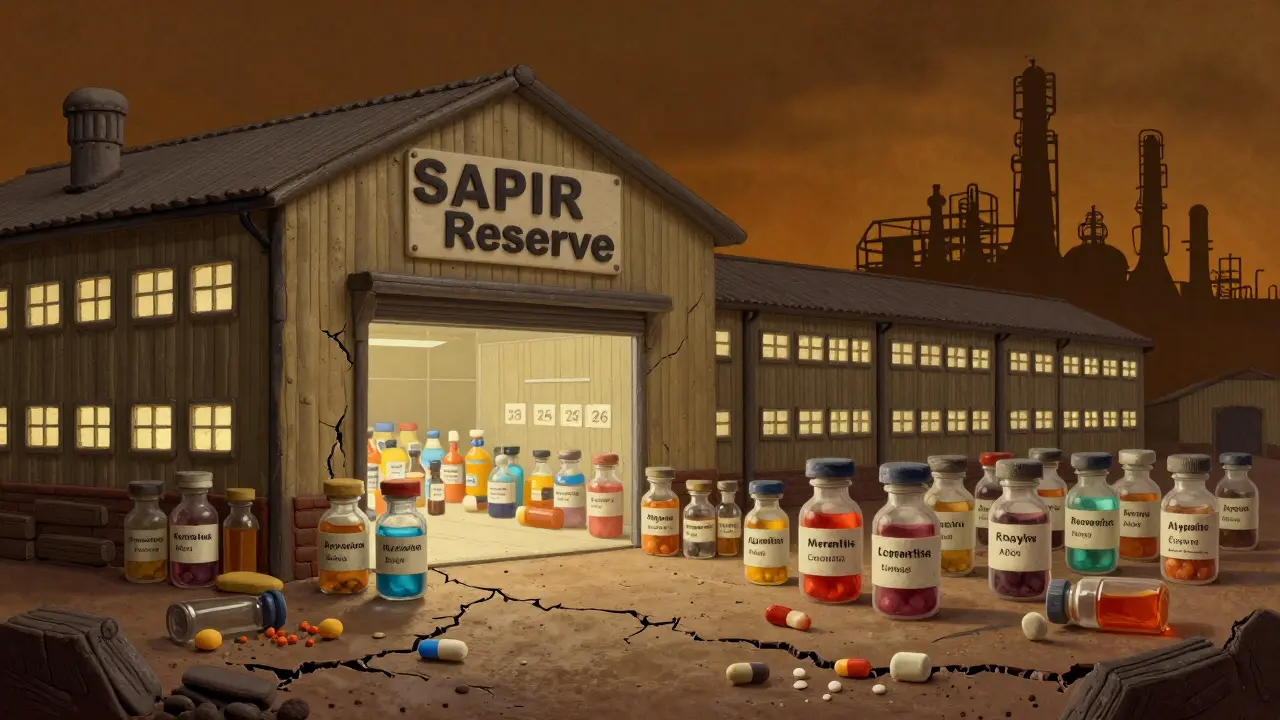
The U.S. is facing its worst drug shortage crisis in history. As of late 2025, more than 277 drugs remain in short supply, according to Global Biodefense, with hospitals forced to scramble for alternatives, delay treatments, and even risk patient safety. Behind these numbers is a broken system - one where a handful of overseas factories produce most of the nation’s essential medicines, and where federal action has been patchy, inconsistent, and often too late. But in 2025, the federal government rolled out a sweeping set of new policies aimed at fixing this. Here’s what’s actually happening - and whether it’s enough.
The Strategic Active Pharmaceutical Ingredients Reserve (SAPIR)
The centerpiece of the federal response is the Strategic Active Pharmaceutical Ingredients Reserve (a federal stockpile of raw drug components, not finished pills). Launched in 2020 and expanded by Executive Order 14178 in August 2025, SAPIR targets 26 critical medicines, including antibiotics, anesthetics, and cancer drugs. The logic is simple: stockpile the raw ingredients - active pharmaceutical ingredients (APIs) - instead of finished products. APIs cost 40-60% less to store, last 3-5 years longer, and are easier to transport than vials of insulin or chemotherapy drugs. More importantly, they reduce dependence on foreign suppliers, especially China, which supplies roughly 80% of the U.S. API supply.
By late 2025, the Department of Health and Human Services (HHS) had begun stockpiling APIs for 19 of the 26 targeted drugs. But here’s the catch: 98% of all drug shortages involve medications outside this list. Oncology drugs alone account for 31% of all shortages, yet make up only 4% of SAPIR’s targets. Critics argue this is like building a firebreak around one house while the whole neighborhood burns down.
FDA’s Role: Fixing Shortages One Manufacturer at a Time
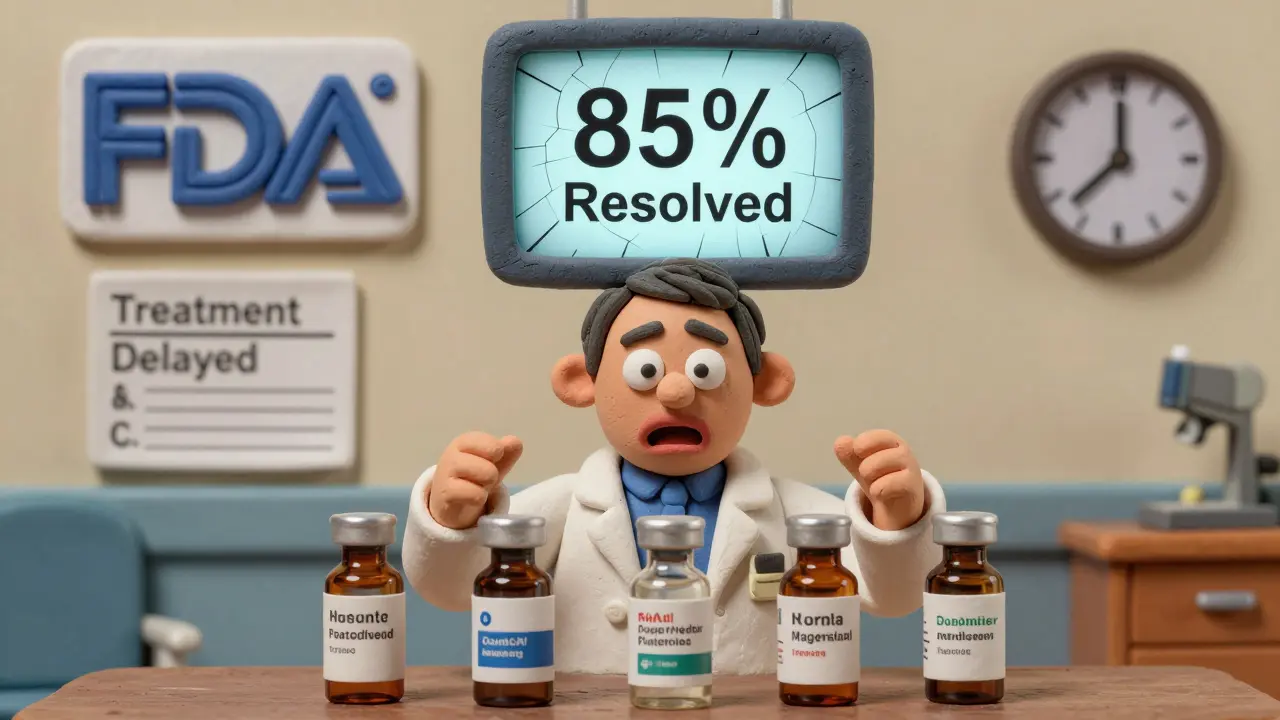
The Food and Drug Administration (FDA) is the primary agency responsible for monitoring and resolving drug shortages has a different strategy: work directly with manufacturers. When a shortage looms, the FDA doesn’t wait - it steps in. In 2024, the agency resolved 85% of reported shortages by using its regulatory flexibility: speeding up inspections, approving temporary imports, and even allowing manufacturers to switch suppliers mid-production.
A major success story? The saline shortage of 2018-2020. At its peak, 90% of U.S. hospitals ran low on IV saline. The FDA worked with five manufacturers to ramp up production, approved alternate sources, and within 14 months, the shortage was fully resolved. That’s the kind of agility the system needs - but it’s not scalable. Most shortages aren’t caused by a single plant going offline. They’re caused by systemic problems: thin profit margins, lack of competition, and regulatory bottlenecks.
The 2025-2028 HHS Draft Action Plan: Four Goals, One Big Problem
In September 2025, HHS released its long-term plan: COORDINATE, ASSESS, RESPOND, PREVENT. Sounds solid. But look closer.
- COORDINATE: The plan calls for better communication between FDA, ASPR, CDC, and the Department of Defense. But a September 2025 GAO report found only 35% of ASPR’s recommended interventions had been implemented across agencies.
- ASSESS: A new National Medical Countermeasures Inventory dashboard is supposed to give real-time visibility into drug supplies. But as of November 2025, only 28 of 50 states had set up the required supply chain mapping systems.
- RESPOND: Emergency protocols exist - but they’re rarely tested. Hospitals report they’re left to improvise during crises, often using unapproved substitutes.
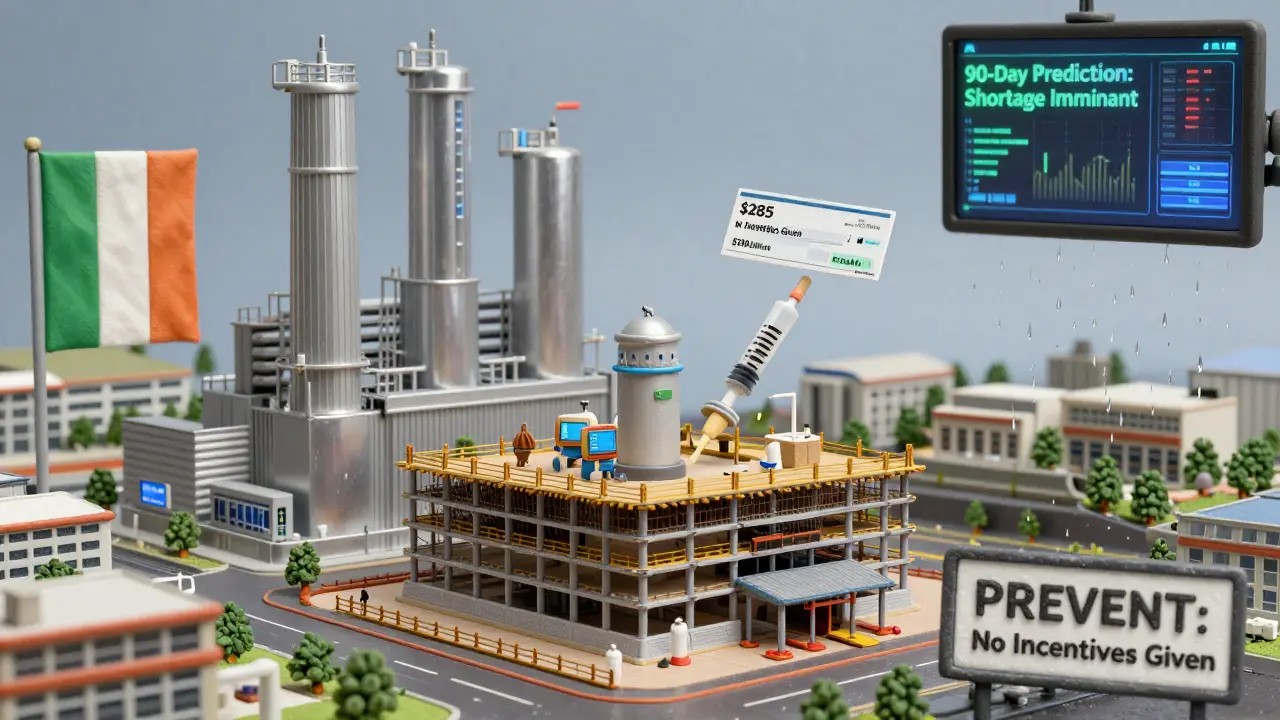
- PREVENT: This is the most important goal - and the most neglected. The plan encourages domestic manufacturing, but offers no real financial incentives. Companies won’t build expensive sterile injectable plants if they can’t make a profit.
Why Domestic Manufacturing Isn’t Happening
The U.S. needs more drug factories. But building them is slow and expensive. It takes 28-36 months to get FDA approval for a new domestic API facility. In the EU, the same process takes 18-24 months. And even when facilities are approved, they’re often built overseas. In 2024, the FDA approved 56 new manufacturing sites - but 42% were in Ireland and Singapore.
Why? Profit. Sterile injectables - the most commonly shorted drugs - have razor-thin margins. A single vial of generic doxycycline might sell for $0.50. The cost to build, certify, and run a sterile production line? $200 million. No company will invest unless the government pays them to. The CHIPS Act a federal program originally designed for semiconductor manufacturing recently allocated $285 million for pharmaceutical facilities. That sounds big - until you realize it’s less than 5% of what experts say is needed to make a real difference.
The Hidden Costs: Hospitals, Pharmacists, and Patients
The real impact of drug shortages isn’t in government reports - it’s in hospitals, pharmacies, and patient rooms.
- Hospitals spend an average of $1.2 million per year just managing shortages, according to the American Hospital Association.
- Pharmacists spend 10+ hours per week tracking down alternatives - time they could spend counseling patients.
- 68% of hospitals report treatment delays. 42% report medication errors caused by last-minute substitutions.
- 29% of Americans have skipped doses because a drug wasn’t available - not because they couldn’t afford it, but because it simply didn’t exist on shelves.
One pharmacist on Reddit described having to compound cisplatin - a chemotherapy drug - from raw powder because the pre-made vials were gone. Another said her hospital used five different manufacturers for the same antibiotic in a single week. That’s not just inconvenient. It’s dangerous.
What’s Missing: Real Incentives and Real Data
The biggest flaw in the federal response? It ignores the root cause: economics. There’s no profit in making low-margin, high-demand drugs. So companies don’t make them - or they make them overseas where labor and regulation are cheaper.
Two proposals could change that:
- H.R.5316, the Drug Shortage Act: Would allow hospitals to use urgently needed compounded drugs during shortages. It passed committee but still needs full House approval.
- Medicare incentive payments: The AHA proposed paying hospitals extra for maintaining backup supply chains. Simple. Effective. Never adopted.
Meanwhile, the FDA’s own data shows compliance with mandatory shortage reporting is just 58%. Small manufacturers - the ones most likely to fail - have an 82% non-compliance rate. And the FDA issued only 17 warning letters for non-reporting between 2020 and 2024. In the EU, under similar rules, they issued 142.
Comparing the U.S. to the EU
While the U.S. is still debating whether to stockpile APIs, the European Union has been ahead for years. The European Medicines Agency (EMA) runs a centralized, mandatory shortage reporting system. Member states must maintain minimum stockpiles of essential drugs. Between 2022 and 2024, the EU cut its shortage rate by 37%.
The difference? Europe treats drug access as a public health right. The U.S. treats it as a market problem. One approach is proactive. The other is reactive.
The Future: AI, Predictions, and a Fragile System
There’s one bright spot: the FDA’s Enhanced Shortage Monitoring System an AI-driven tool launched in November 2025. It uses 17 data streams - shipping logs, hospital orders, production batches - to predict shortages 90 days in advance with 82% accuracy. Early results are promising. Hospitals using it report 28% shorter shortage durations.
But AI can’t fix a broken system. If manufacturers still face no penalty for not reporting, if domestic production remains unprofitable, and if only 12% of API production has been brought back to the U.S. despite seven years of effort - then prediction tools are just fancy alarms on a sinking ship.
The truth? The federal government is reacting to symptoms, not causes. Stockpiling APIs helps in a crisis. But it won’t stop the next shortage. To do that, you need to fix the market. You need to pay manufacturers to make the drugs we can’t live without. You need to enforce reporting. You need to cut red tape. And you need to stop treating drug access like a supply chain puzzle - and start treating it like a matter of life and death.
Ken Cooper
February 7, 2026 AT 13:14So let me get this straight… we’re stockpiling raw ingredients for 26 drugs, but 98% of shortages are for stuff NOT on that list? That’s like buying a fire extinguisher for your kitchen but ignoring the fact your whole house is made of drywall and gasoline. I work in ER. We’re using saline bags from 2022 that smell like plastic and taste like regret. This isn’t policy-it’s performance art.
Sam Dickison
February 9, 2026 AT 02:39From a supply chain ops perspective, the SAPIR initiative is technically sound but strategically misaligned. APIs are non-stationary assets-storage isn’t the bottleneck, throughput is. You can’t just warehouse precursors and expect manufacturers to magically activate them during a crisis. You need pre-negotiated contract manufacturing agreements with ramp-up protocols. The FDA’s reactive model works for single-point failures, but not systemic market collapse. We need structural incentives, not inventory.
Tom Forwood
February 9, 2026 AT 20:19Man, I just talked to my cousin who’s a pharmacist in rural Ohio. She said last week they had to switch between five different brands of amoxicillin in one day because the supply chain was literally spinning like a roulette wheel. One batch had a weird taste-turns out it was made in a plant that switched solvents mid-run because the original supplier got hit by a flood in India. This isn’t a government problem. It’s a global capitalism problem. We outsourced our health to profit margins. Now we’re paying with lives.
John McDonald
February 11, 2026 AT 02:04Look, I get the frustration. But we’re talking about a $200M facility for a drug that sells for 50 cents a vial. No private company is gonna risk that unless the government says, ‘Here’s a 10-year guarantee you’ll get paid even if demand drops.’ The CHIPS Act was a start, but $285M is a drop in the ocean. We need a national drug manufacturing fund-like the space program, but for antibiotics. Otherwise, we’re just rearranging deck chairs on the Titanic.
Jacob den Hollander
February 12, 2026 AT 23:34I’ve been a nurse for 18 years. I’ve seen kids wait 3 hours because we couldn’t find a single vial of epinephrine. I’ve watched families cry because their chemo was ‘on backorder.’ This isn’t about politics. It’s about dignity. The AI system sounds cool, but if we don’t fix the human side-the burnout, the underpaid pharmacists, the hospitals forced to play drug roulette-then we’re just building a fancy dashboard to watch people die. We need to treat this like a war. Because it is.
Andrew Jackson
February 13, 2026 AT 01:55It is an absolute national disgrace that the United States of America, the most technologically advanced nation on Earth, has allowed its pharmaceutical supply chain to be held hostage by foreign entities. We have the capacity, the talent, and the resources to produce every single essential medicine domestically. The fact that we do not is a betrayal of every soldier, every child, every grandmother who depends on these drugs. The solution is not more reports, not more dashboards, not more AI. It is sovereignty. It is patriotism. It is the will to build, to invest, to prioritize life over profit. If you are not demanding mandatory domestic production of all critical APIs, you are complicit.
John Sonnenberg
February 13, 2026 AT 04:40They’re using AI to predict shortages… while hospitals are using duct tape and hope to keep people alive. The FDA approved 56 new facilities last year… 42% were in Ireland and Singapore. Do you see the irony? We’re outsourcing our survival to countries that don’t even speak English as a first language. And we wonder why people are dying? This isn’t a policy failure. It’s a moral collapse. I’m not mad. I’m just… done.
Kathryn Lenn
February 14, 2026 AT 11:30Oh wow, the government finally noticed drug shortages? Who saw this coming? The same people who thought the 2020 mask shortage was ‘just a glitch.’ Now they’re stockpiling APIs like it’s a prepper’s bunker. Meanwhile, the same corporations that lobbied against domestic manufacturing are now sitting on $30B in profits. This isn’t a fix. It’s a PR stunt. And the AI system? Probably runs on the same code that predicted the 2023 rail crisis… right before the trains stopped moving.
Jonah Mann
February 16, 2026 AT 03:08Just read the GAO report again. Only 35% of ASPR’s recommendations implemented? That’s not incompetence. That’s intentional sabotage. The FDA can’t even get 60% of manufacturers to report shortages. Meanwhile, the EU has mandatory stockpiles and a 37% drop in shortages. We’re not broken. We’re being deliberately kept broken. Why? Because the system makes money off chaos. Shortages = price gouging = emergency premiums = more profits. This isn’t about policy. It’s about power.