
Generic Medications: How They Save Patients Money Without Compromising Care
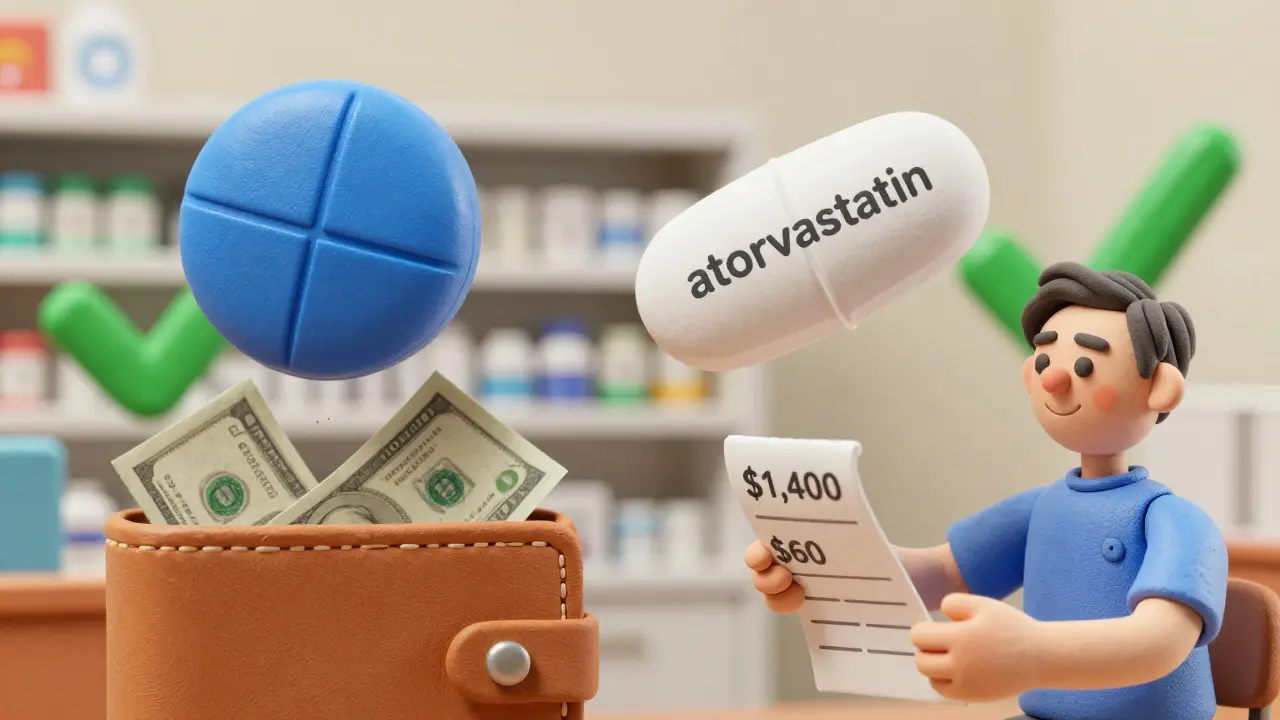
Switching to generic medications isn’t just a smart move for your wallet-it’s a proven way to get the exact same treatment at a fraction of the price. If you’re paying hundreds a month for prescriptions, you’re not alone. Millions of people in the U.S. and Australia are saving big by choosing generics, and the science behind it is rock solid. The active ingredient? Identical. The effect on your body? The same. The cost? Often 85% less.
What Exactly Is a Generic Medication?
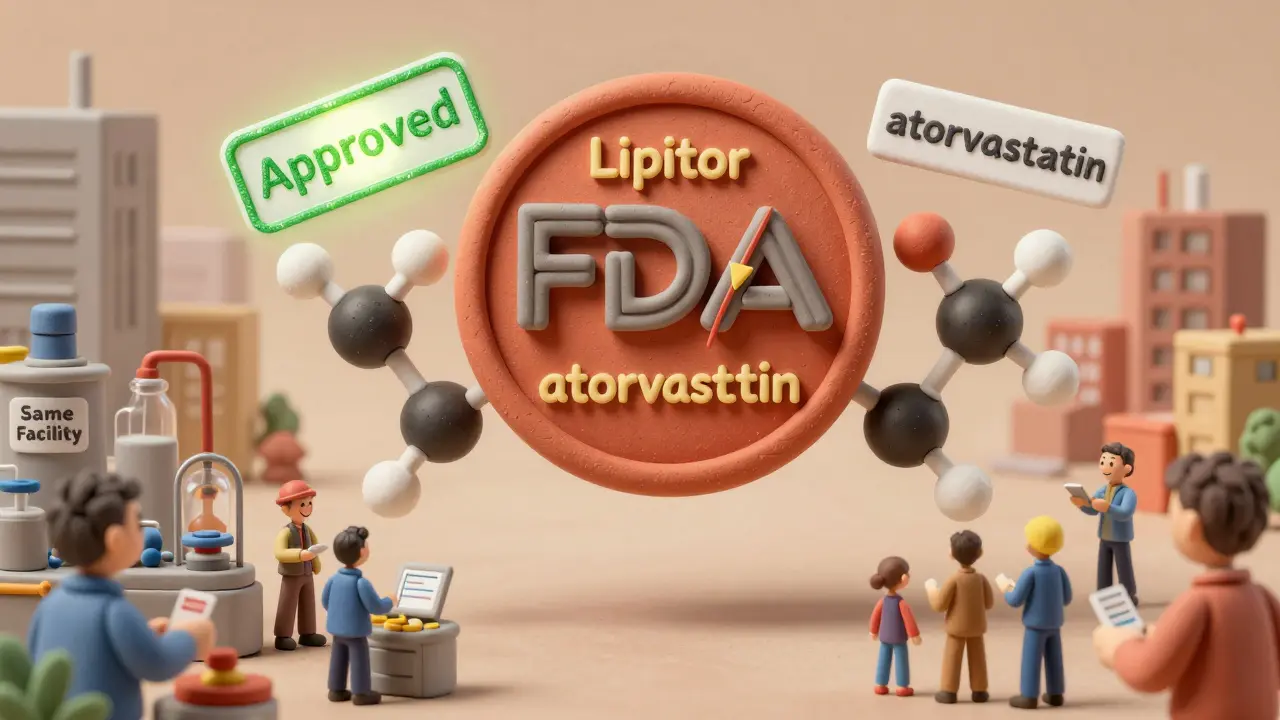
A generic medication is a copy of a brand-name drug that contains the same active ingredient, in the same strength, and works the same way in your body. It’s not a weaker version. It’s not a substitute. It’s the same medicine, just without the marketing budget. The U.S. Food and Drug Administration (FDA) requires generics to match brand-name drugs in dosage, safety, effectiveness, strength, stability, and how they’re taken-whether it’s a pill, injection, or liquid.What’s different? The color, shape, flavor, or inactive ingredients like fillers or dyes. That’s why a generic version of a blue pill might be white and oval. The brand name might be “Lipitor,” but the generic is “atorvastatin.” The FDA doesn’t allow generics to be marketed under the same name, so you’ll see the chemical name instead.
And here’s the kicker: the same factories that make brand-name drugs often make generics. The FDA inspects them all the same way. If a facility fails inspection for a brand-name drug, it fails for generics too. There’s no second-tier standard.
How Much Money Can You Actually Save?
The numbers don’t lie. On average, generic drugs cost 85% less than their brand-name equivalents. Over the last decade, this has saved U.S. patients more than $2.2 trillion. That’s not a guess. That’s official data from the FDA and the Alliance for Patient Access.Let’s break it down with real examples:
- A 30-day supply of a brand-name drug that cost $1,400 dropped to under $60 after a generic version hit the market.
- A medication priced at $88 per milliliter fell to under $10 per milliliter-cutting the monthly cost from $3,800 to $500.
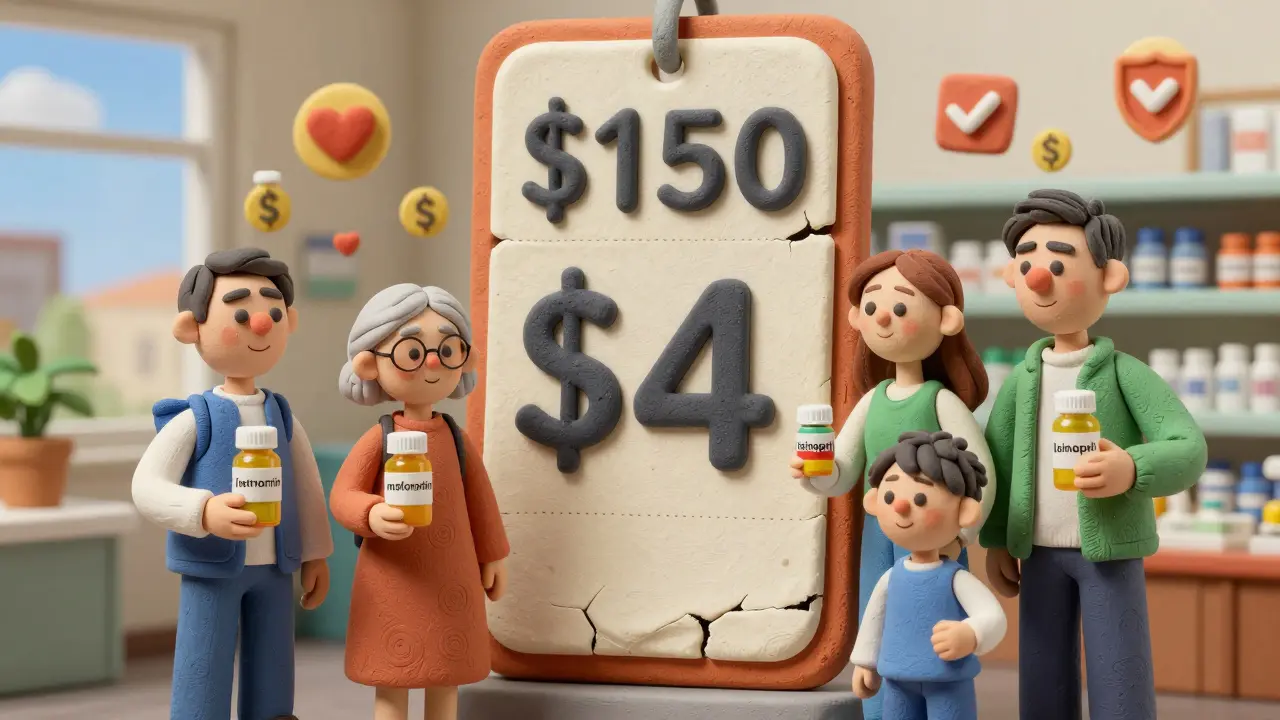
- One popular blood pressure pill went from $150 per month to $4.
For Medicare Part D users, 90% of the 184 most common generic drugs cost less than $20 for a 30-day supply at Costco. Even without insurance, you can often get common generics like metformin, lisinopril, or levothyroxine for under $10 at Walmart, Target, or Costco’s cash pharmacy.
And it’s not just U.S. data. In Australia, the Pharmaceutical Benefits Scheme (PBS) lists hundreds of generic drugs with co-payments as low as $7.40 for concession card holders-far below the $30+ many pay for brand names. If you’re paying more than $20 a month for a common generic, you’re likely overpaying.
Do Generics Work as Well as Brand Names?
Yes. Absolutely. And the evidence is overwhelming.The FDA requires generics to prove bioequivalence-meaning they deliver the same amount of active ingredient into your bloodstream at the same rate as the brand-name version. The allowed variation is tight: between 80% and 125% of the brand’s absorption. That’s not a loophole. That’s a scientifically accepted range that ensures no meaningful difference in effect.
Dr. Aaron Kesselheim from Harvard Medical School calls generics “one of the most successful public health interventions in modern history.” Why? Because they make life-saving drugs accessible to people who otherwise couldn’t afford them.
Some patients report feeling different on generics-especially with drugs like levothyroxine (for thyroid) or seizure medications. But studies show these differences are rarely due to the active ingredient. More often, it’s because of changes in inactive ingredients, or because switching meds creates a psychological shift. If you notice a real change after switching, talk to your doctor. But don’t assume the generic doesn’t work. It almost certainly does.
How Do You Actually Switch to Generics?
It’s easier than you think. In most cases, your pharmacist will automatically substitute a generic when it’s available and allowed by law. That’s called “therapeutic substitution.”But you can take control:
- Ask your doctor if a generic is available for your prescription. Most will say yes.
- When you pick up your prescription, ask the pharmacist: “Is there a generic version?”
- Check your insurance formulary. Most plans have lower copays for generics-sometimes $5 vs. $50.
- Compare cash prices. Sometimes paying cash at Costco or Walmart is cheaper than your insurance copay.
- Use discount programs like GoodRx or the Mark Cuban Cost Plus Drug Company (MCCPDC), which launched in 2022 and offers transparent pricing with no middlemen.
Some prescriptions can’t be switched automatically-like those with a “Do Not Substitute” note from your doctor. That’s rare, and usually only for drugs with a narrow therapeutic index, where tiny changes in blood levels matter. Even then, many of those have generic versions now.
What About Biosimilars? Are They the Same?
Biosimilars are the next wave of cost-saving drugs, but they’re not exactly like traditional generics. They’re copies of complex biological drugs-like those used for cancer, rheumatoid arthritis, or diabetes. Unlike small-molecule drugs (like statins or antibiotics), biologics are made from living cells, so exact copies aren’t possible. But biosimilars are designed to be “highly similar” with no clinically meaningful differences.They’re still much cheaper. For example, a biosimilar to the brand-name drug Humira can cost 60-70% less. The FDA has approved dozens, and more are coming. They’re not yet as widespread as traditional generics, but they’re growing fast.
Why Aren’t More People Using Generics?
Confusion. Misinformation. And sometimes, inertia.Many people think “generic” means “cheap and inferior.” That’s a myth. Others don’t know they can ask for it. Some doctors don’t bring it up. And insurance companies sometimes make it harder by requiring prior authorizations or step therapy-even when a generic is available.
Reddit threads like “Generic vs Brand Name: Real Cost Differences” are full of stories from people saving $200-$300 a month. One user switched his daughter’s ADHD meds from brand to generic and saved $1,200 a year. Another cut her diabetes medication cost from $180 to $8. These aren’t outliers. They’re the norm.
What’s the Big Picture?
Generic drugs aren’t just a personal savings trick-they’re a system-wide solution. In 2023, 90% of all prescriptions filled in the U.S. were generics. That’s up from 78% in 2010. More competition means lower prices. More people can afford treatment. And pharmaceutical companies can focus on developing new drugs instead of just extending patents.The FDA approved over 1,000 new generic drugs in 2022 alone. That’s more than three per day. Each one opens the door for more savings. Analysts predict that expanded generic use could save the U.S. healthcare system $100-$200 billion annually in the next few years.
And it’s not just about money. It’s about adherence. People who can’t afford their meds skip doses, delay refills, or stop taking them entirely. Generics change that. Studies show patients are more likely to stick with their treatment when the cost is low. That means fewer hospital visits, fewer complications, and better health outcomes.
What You Should Do Right Now
If you’re on any long-term medication-blood pressure, cholesterol, diabetes, thyroid, depression, or even antibiotics-ask one simple question: “Is there a generic version?”Don’t wait for your doctor to mention it. Don’t assume your insurance will cover it cheaply. Check GoodRx. Call your local pharmacy. Compare cash prices. You might be surprised how much you’re overpaying.
And if you’re on Medicare or have a concession card, you’re already in a good position. But don’t assume your current pharmacy is giving you the best deal. Costco, Walmart, and online services like MCCPDC often undercut even Medicare prices.
There’s no downside to trying a generic. The science says it’s the same. The data says it’s cheaper. And the people who’ve switched say it’s life-changing.
Are generic medications safe?
Yes. Generic medications must meet the same strict standards as brand-name drugs for quality, strength, purity, and stability. The FDA inspects manufacturing facilities for both types equally. There is no difference in safety when the generic is approved.
Can I trust generics for chronic conditions like high blood pressure or diabetes?
Absolutely. Generics for high blood pressure (like lisinopril), diabetes (like metformin), and cholesterol (like atorvastatin) are used by millions every day with the same results as brand names. Studies show no meaningful difference in outcomes. If you notice a change after switching, talk to your doctor-but don’t assume the generic is the problem.
Why do some generics look different from the brand name?
By law, generics can’t look identical to brand-name drugs. That means different colors, shapes, or markings. These changes are only in inactive ingredients like dyes or fillers. The active ingredient-the part that treats your condition-is exactly the same.
Is it cheaper to buy generics with insurance or cash?
It depends. Sometimes your insurance copay is lower. But for many common generics, cash prices at pharmacies like Walmart or Costco are under $10-cheaper than your $15 copay. Always check GoodRx or similar apps before paying. You might be surprised.
Do all medications have generic versions?
No, not yet. Brand-name drugs are protected by patents, which typically last 20 years. Once the patent expires, generics can be made. Many blockbuster drugs have lost patent protection in recent years, so the number of available generics is growing fast. But some complex drugs, like biologics, only have biosimilars-which are similar but not identical.
MARILYN ONEILL
January 20, 2026 AT 10:54Oh wow, another one of those "generics are just as good" lectures. I mean, sure, if you want to take a pill that looks like a baby’s first crayon drawing and hope it doesn’t make you hallucinate or turn your urine neon green. My cousin took generic Adderall and spent three days crying in a Walmart parking lot. But hey, $4 is cheap for a mental breakdown, right?
Glenda Marínez Granados
January 21, 2026 AT 08:04Generics: the capitalist’s answer to dignity. We don’t need better drugs-we need cheaper ones so the 99% can keep working while their kidneys fail slowly. 😔💊
Gerard Jordan
January 21, 2026 AT 10:26Hey everyone, just wanted to say I switched my blood pressure med to generic last year and my BP actually improved. I think it’s because I felt more in control knowing I wasn’t paying for a fancy logo. Also, I bought a new plant. 🌱✨
michelle Brownsea
January 23, 2026 AT 00:44Let’s be crystal-clear: the FDA’s bioequivalence standards are not a suggestion-they are a legally binding, statistically validated, peer-reviewed protocol that has been upheld in over 1,200 court cases. The notion that generics are "inferior" is not just incorrect-it is dangerously irresponsible. And yes, I’ve read the full 47-page FDA guidance document. You’re welcome.
Roisin Kelly
January 23, 2026 AT 13:58Yeah right, and I’m sure the same factory makes both. You know who else said that? The guy who told me my iPhone battery was "just like the original" after I paid $15 for a "genuine" one off Amazon. Three weeks later my phone turned into a very expensive brick. This is corporate propaganda.
Samuel Mendoza
January 25, 2026 AT 05:59Generics don’t work for everyone. End of story.
shubham rathee
January 27, 2026 AT 02:40in india we get generics for 20 rupees and they work fine but sometimes the color changes and i think i am taking something else so i stop for a week then remember and start again
Ashok Sakra
January 28, 2026 AT 09:57my uncle died from a generic heart med he said it tasted wrong and the pills were too small but no one listened now he's gone
lokesh prasanth
January 29, 2026 AT 01:02the math is off 85% less on $1400 is $210 not $60 so either the post is lying or the math is broken
Steve Hesketh
January 29, 2026 AT 15:00Bro this is beautiful. I’ve been on generic metformin for 5 years and my A1C is lower than ever. I used to cry about the cost-now I buy coffee for strangers. Generics aren’t just medicine-they’re dignity. Thank you for this post.
Philip Williams
January 31, 2026 AT 03:48Could you clarify the statistical methodology used to calculate the $2.2 trillion in savings? Is this based on wholesale acquisition cost, average manufacturer price, or retail cash price? Additionally, what percentage of the savings were realized by patients versus insurers or government programs?
Ben McKibbin
February 1, 2026 AT 03:26Let’s be real-this isn’t about science, it’s about power. The pharma giants built a whole system where they make you believe the blue pill is sacred. But the truth? The active ingredient doesn’t care what color it is. And neither should you. Break the branding spell. Save your money. Stay alive.
Melanie Pearson
February 2, 2026 AT 04:13While the data presented is statistically compelling, one must consider the geopolitical implications of domestic pharmaceutical manufacturing decline. The U.S. now imports over 80% of its active pharmaceutical ingredients from China and India. This poses a national security risk. Generics may save money, but at what cost to sovereignty?
Rod Wheatley
February 2, 2026 AT 07:24Just want to say-I’ve been a pharmacist for 22 years. I’ve filled thousands of generics. I’ve seen patients cry because they can finally afford their insulin. I’ve watched people get their lives back. This isn’t theory. This is real. If you’re on a brand-name drug and you can afford a generic? Switch. Don’t overthink it. Your body won’t know the difference. But your bank account will.