
Generic Drug Safety in Older Adults: What You Need to Know
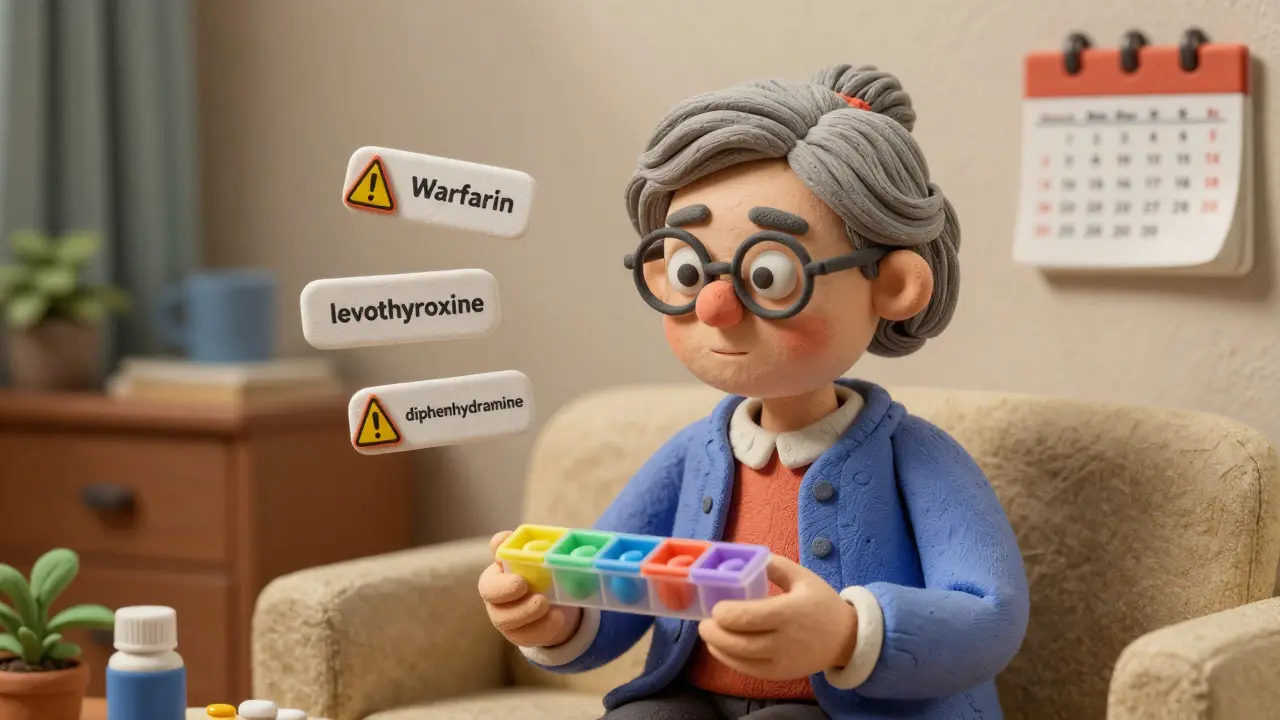
When you're over 65, taking medication isn't just about popping a pill-it's about staying safe. About 90% of prescriptions for older adults are filled with generic drugs. They're cheaper, widely available, and approved by the FDA to work just like brand-name versions. But here's the thing: generic drug safety in older adults isn't just about equivalence-it's about how aging changes your body's response to those drugs.
Why Age Changes How Drugs Work
Your body doesn't process medicine the same way at 75 as it did at 45. As you age, your liver and kidneys slow down. That means drugs stick around longer. A normal dose can become an overdose. Studies show metabolism can drop by up to 30% in people over 75. Your body also holds more fat and less water. That changes how drugs spread through your system. Some medications build up in fat tissue. Others don't dissolve properly in less fluid. The result? Higher risk of side effects, confusion, falls, and hospital visits.Polypharmacy: The Silent Danger
Taking five or more medications? You're not alone. The average Medicare beneficiary fills 48 prescriptions a year-89% of them generics. But here's the danger: the risk of a bad reaction jumps from 13% with two drugs to 58% with five, and 82% with seven or more. It's not the generic label that's the problem. It's the pile-up. A blood pressure pill, a sleep aid, an antidepressant, a painkiller, and a stomach med-each one fine alone. Together, they can crash your system. This is called polypharmacy, and it's the leading cause of preventable hospitalizations in older adults.Drugs to Watch: The Beers Criteria 2023
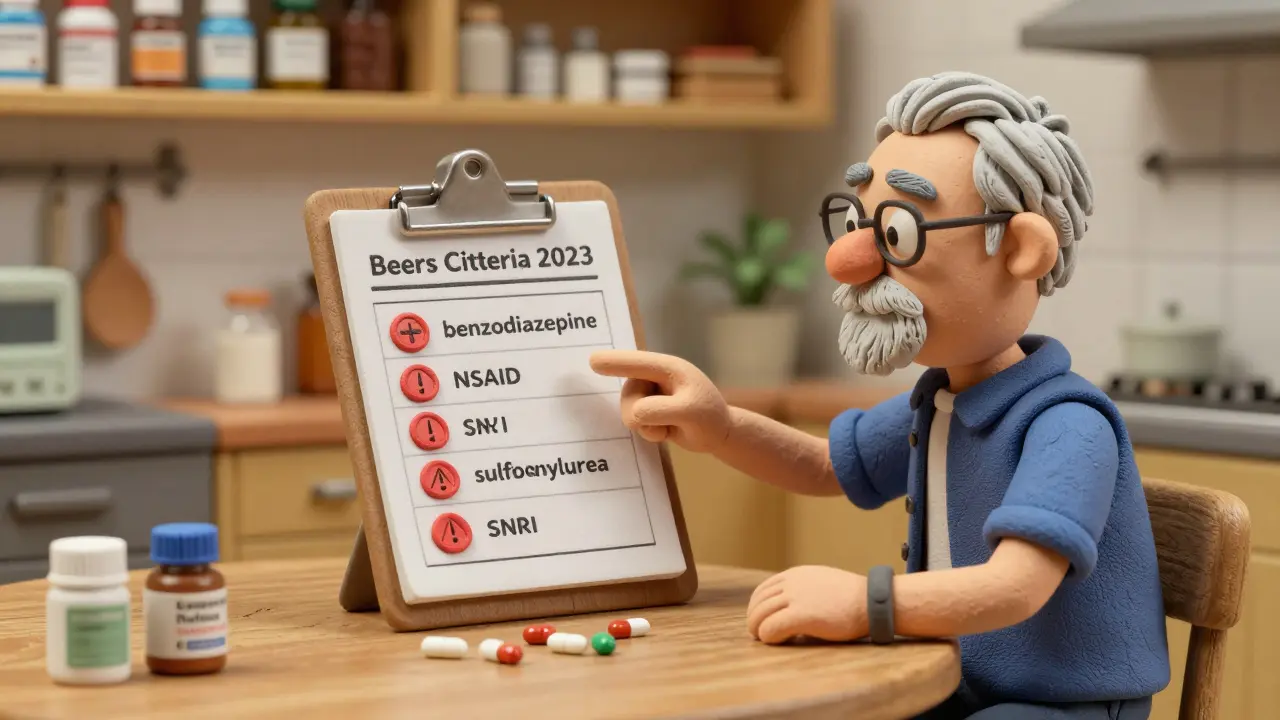
The American Geriatrics Society updates the Beers Criteria every few years to list medications that are risky for older adults. The 2023 version didn’t just update a few drugs-it rewrote the rules. Here are key red flags:- Anticholinergics (like diphenhydramine in Benadryl): Can cause memory fog, constipation, and urinary retention. Avoid entirely if possible.
- Benzodiazepines (like lorazepam): Increase fall risk by 40%. Linked to dementia with long-term use.
- NSAIDs (like ibuprofen): Raise risk of stomach bleeding and kidney failure. Use only for short-term pain.
- Sulfonylureas (like glyburide): Cause dangerous low blood sugar. Newer diabetes drugs are safer.
- SNRIs (like venlafaxine): Increase fall risk by 37% due to dizziness and low blood pressure.
The Beers Criteria doesn't care if it's generic or brand. It cares if it's appropriate for your age and health. Just because a drug is available over the counter doesn't mean it's safe for you.
Generic vs. Brand: Is There a Real Difference?
The FDA says generics must be within 80-125% of the brand-name drug’s absorption rate. For most drugs, that’s fine. But for drugs with a narrow therapeutic index-where tiny changes matter-it gets tricky. Warfarin is the classic example. A 5% difference in blood levels can mean a clot or a bleed. Some seniors report instability after switching from Coumadin to generic warfarin. Studies show 98.7% equivalence, but real-world reports tell a different story. One patient’s TSH levels went haywire after switching from brand Synthroid to generic levothyroxine. She needed three dosage changes over six months.That doesn’t mean generics are unsafe. It means some people are more sensitive. If you’ve been stable on a brand-name drug for years, switching to generic might not be worth the risk. Talk to your pharmacist. Ask: “Is this a drug where small changes could hurt me?”
What About Painkillers, Antidepressants, and Sleep Aids?
Opioids and benzodiazepines together? That combo increases overdose risk by 154%. Gabapentin with an opioid? Respiratory depression risk jumps 70%. These aren’t brand-name issues-they’re age-related dangers. The same goes for antidepressants. SSRIs and SNRIs can cause low sodium, dizziness, and falls. Sleep meds like zolpidem? They double your risk of breaking a hip. And don’t forget muscle relaxants like cyclobenzaprine (Flexeril). They cause drowsiness and confusion. One 88-year-old woman fell and broke her pelvis after taking a generic muscle relaxant. The pill was fine. The problem? Her body couldn’t handle it anymore.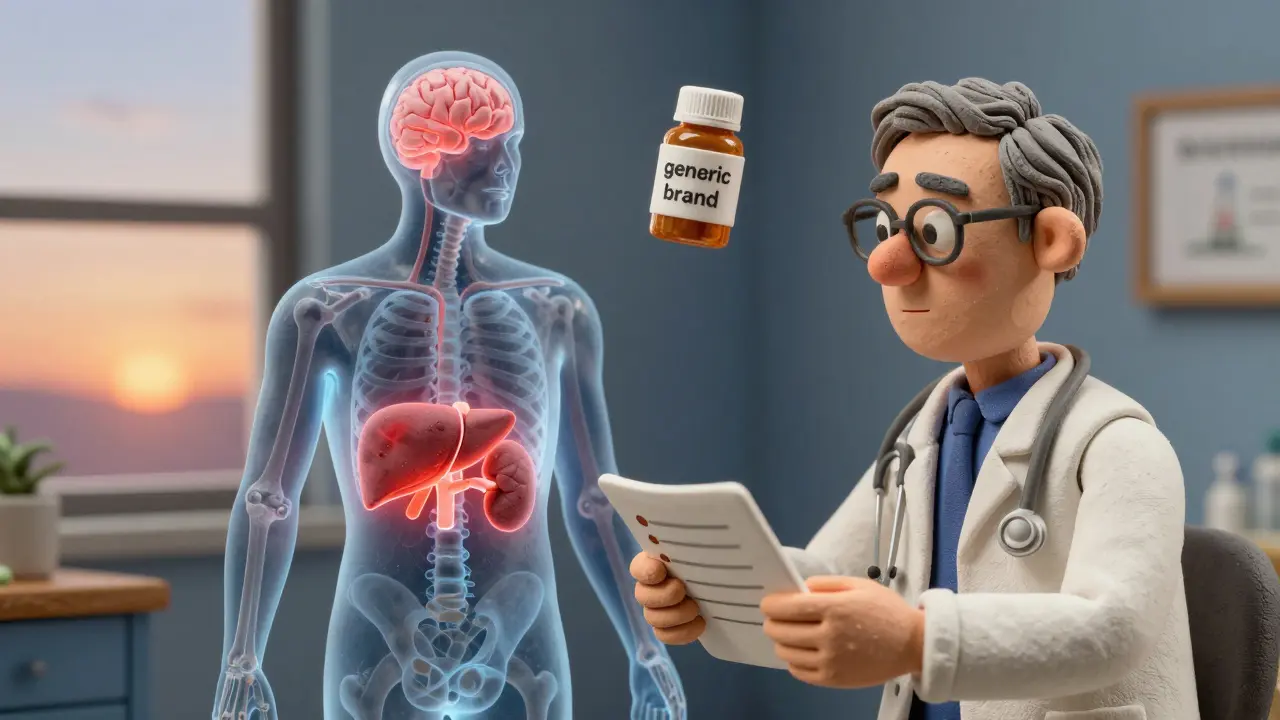
How to Stay Safe: 5 Practical Steps
1. Keep a current medication list-including vitamins, supplements, and over-the-counter drugs. Update it every time you see a doctor. This cuts duplicate prescriptions by 41%. 2. Ask for a medication review every three to six months. Pharmacists can spot dangerous interactions. Studies show quarterly reviews reduce adverse events by 27%. 3. Use pill organizers. Color-coded containers or automated dispensers reduce errors by 34%. If you can’t read the label, ask for large-print or audio instructions. 4. Watch for new symptoms. If you feel more tired, confused, dizzy, or unsteady after starting or switching a drug, don’t wait. Call your doctor. That’s not normal aging-it’s a red flag. 5. Don’t assume generics are always better. If you’re stable on a brand-name drug, stay on it. If you switch, monitor closely. Track your symptoms, blood pressure, lab values. Bring your results to your next appointment.What You Can Do Right Now
- Check your medicine cabinet for expired pills. 22% of medication errors in seniors come from old or improperly stored drugs. - Ask your pharmacist: “Is this drug on the Beers Criteria list?” - If you take more than five drugs, request a comprehensive medication review. - Never stop or change a dose without talking to your doctor-even if it’s a “harmless” OTC pill. - If you’re worried about cost, ask: “Is there a safer generic alternative?” Not all generics are equal in safety.Final Thought: It’s Not About Brand or Generic-It’s About Fit
The real issue isn’t whether your pill is generic or brand-name. It’s whether it’s right for your body right now. Your kidneys aren’t what they were. Your liver moves slower. Your brain is more sensitive. A drug that worked at 60 might be dangerous at 80. The goal isn’t to avoid generics. It’s to use the right drug, at the right dose, for your age and health. That’s the only way to stay safe-and stay independent.Are generic drugs really as safe as brand-name drugs for older adults?
Yes, for most medications, generic drugs are just as safe and effective as brand-name versions. The FDA requires them to meet strict standards for bioequivalence. But for drugs with a narrow therapeutic index-like warfarin, levothyroxine, or phenytoin-small differences in absorption can matter. Older adults are more sensitive to these changes due to slower metabolism and reduced kidney function. If you’ve been stable on a brand-name drug, switching to generic may require close monitoring.
What are the most dangerous drugs for seniors?
According to the 2023 Beers Criteria, the most dangerous drugs for older adults include benzodiazepines (like lorazepam), anticholinergics (like diphenhydramine), NSAIDs (like ibuprofen), sulfonylureas (like glyburide), and muscle relaxants (like cyclobenzaprine). These increase risks of falls, confusion, kidney damage, low blood sugar, and bleeding. Even over-the-counter versions can be harmful. Always check if a drug is on the Beers list before taking it.
Why do older adults have more side effects from medications?
As we age, our bodies change. The liver and kidneys process drugs more slowly, so medications stay in the system longer. Body fat increases and water decreases, altering how drugs are absorbed and distributed. The brain also becomes more sensitive to central nervous system drugs like sleep aids and antidepressants. A dose that was safe at 50 can become toxic at 80. That’s why “normal” doses often need to be lowered for seniors.
Can I switch from a brand-name drug to a generic safely?
You can, but not always. For most drugs like statins or blood pressure pills, switching is safe and common. For drugs with a narrow therapeutic window-like warfarin, levothyroxine, or seizure medications-switching can cause instability. Always talk to your doctor or pharmacist before switching. If you do switch, monitor for new symptoms and ask for lab tests to check drug levels if needed.
How can I avoid dangerous drug interactions?
Keep a complete list of every medication you take-including vitamins, supplements, and OTC drugs. Bring this list to every doctor visit. Ask your pharmacist for a medication review every 3-6 months. Avoid combining drugs like opioids with benzodiazepines or gabapentin, which can cause deadly breathing problems. Use one pharmacy for all your prescriptions so they can check for interactions.
What should I do if I think a generic drug isn’t working?
Don’t assume it’s the generic. First, check if you’re taking it correctly-timing, food, other meds. Then, track symptoms: Are you more tired? Confused? Unsteady? Get lab tests done if it’s a drug like warfarin or thyroid medication. If problems started after switching, tell your doctor. They may switch you back or adjust the dose. Never stop taking a medication without medical advice.
Is it safe to take multiple generics at once?
Taking multiple generics is common-but risky if you’re on five or more drugs. The risk of a bad reaction jumps from 13% with two drugs to over 80% with seven. The issue isn’t that they’re generic-it’s that they’re too many. Work with your doctor to simplify your regimen. Ask: “Can any of these be stopped? Is there a safer alternative?” Many older adults can safely reduce their pill count by 30-50% with proper review.
Craig Wright
January 13, 2026 AT 12:14It's alarming how the FDA greenlights generics without accounting for real-world pharmacokinetic variability in elderly populations. The 80-125% bioequivalence window is a legal fiction, not a medical safeguard. In the UK, we've seen this play out with warfarin switches leading to strokes and bleeds. This isn't about cost-it's about systemic negligence masked as efficiency.
Lelia Battle
January 13, 2026 AT 13:14There’s something deeply human in how we treat aging bodies like machines that just need tuning. We don’t ask if a 90-year-old’s liver still 'works like it used to'-we just prescribe. The real question isn’t whether generics are safe-it’s whether we’ve stopped seeing older adults as people with unique physiologies, and started seeing them as cost centers.
Rinky Tandon
January 15, 2026 AT 10:58Let me be crystal clear: the Beers Criteria 2023 is a godsend, but the pharmaceutical-industrial complex is actively circumventing it through generic substitution mandates. Diphenhydramine? Still in every OTC sleep aid. Glyburide? Still prescribed like candy. This isn't oversight failure-it's corporate malfeasance dressed up as 'affordability.' And don't get me started on pharmacy benefit managers forcing switches without clinician input. It's a public health scandal.
Windie Wilson
January 15, 2026 AT 21:39Oh wow, so generics are fine… unless they’re not. Thanks for the 2000-word essay on how the system is broken. I’m just here for the 3am Benadryl and the 7am ibuprofen. What’s the point of having a pill organizer if the pills themselves are a Russian roulette game? 🤡
Daniel Pate
January 17, 2026 AT 04:35There’s a deeper issue here: we treat drug metabolism like a static equation. But aging isn’t linear-it’s chaotic. One patient’s 30% metabolic decline might be stable for months, then suddenly crash after a minor infection. We need real-time pharmacokinetic monitoring, not just annual reviews. And yes, the narrow therapeutic index drugs? They demand personalized dosing, not batch-switching policies.
Amanda Eichstaedt
January 17, 2026 AT 22:42I’m 78 and I switched from brand Synthroid to generic last year. My TSH went from 2.1 to 8.9 in six weeks. I felt like a zombie. My doctor said, ‘It’s fine, the numbers are still in range.’ But range doesn’t feel like living. I switched back. My energy returned. The cost difference? $4 a month. Is my clarity worth $48 a year? You bet it is.
Jose Mecanico
January 18, 2026 AT 18:09I’ve been a pharmacist for 28 years. I’ve seen the same pattern: elderly patient on five meds, gets a new script from a different doctor, no coordination. We catch it 80% of the time-but not always. The real solution? Integrated EHRs with automatic Beers Criteria flags. And pharmacists need to be paid for medication therapy management. We’re not just dispensers-we’re safety nets.
Alex Fortwengler
January 19, 2026 AT 14:27They’re all rigged. The FDA’s ‘equivalence’ standards? A joke. The generic manufacturers? They’re owned by the same Big Pharma conglomerates that make the brand names. You think they’d risk their profits by making generics that are too different? Nah. They tweak the fillers, the coating, the pH-just enough to pass the test, but enough to make your grandma dizzy. It’s a controlled scam.
jordan shiyangeni
January 21, 2026 AT 08:12It is both tragic and morally indefensible that we, as a society, have normalized the chemical sedation of our elderly. The overprescription of anticholinergics, benzodiazepines, and NSAIDs is not a medical issue-it is a cultural failure. We have replaced human care with pharmacological convenience. We do not honor our elders by drugging them into quiet compliance. We honor them by listening-to their symptoms, their fears, their lived experience-and by refusing to accept the corporate narrative that ‘it’s just a pill.’
Abner San Diego
January 23, 2026 AT 06:15Generic drugs? Sure, they work. But the real problem is the system that forces seniors to switch just to save $5. My aunt broke her hip on a generic muscle relaxant. The doctor said, ‘It’s the same thing.’ No, it’s not. Her body’s not the same. And now she’s in a wheelchair. So yeah, I’m pissed. And no, I’m not gonna stop talking about it.
Eileen Reilly
January 24, 2026 AT 05:10omg i just realized i’ve been taking diphenhydramine for 5 years… like… every night? 😳 my doc never said nothin. i thought it was just for allergies. now i’m scared i’m gonna forget my own name. also, who made these labels so tiny??