
Fracture Prevention: Calcium, Vitamin D, and Bone-Building Medications That Actually Work
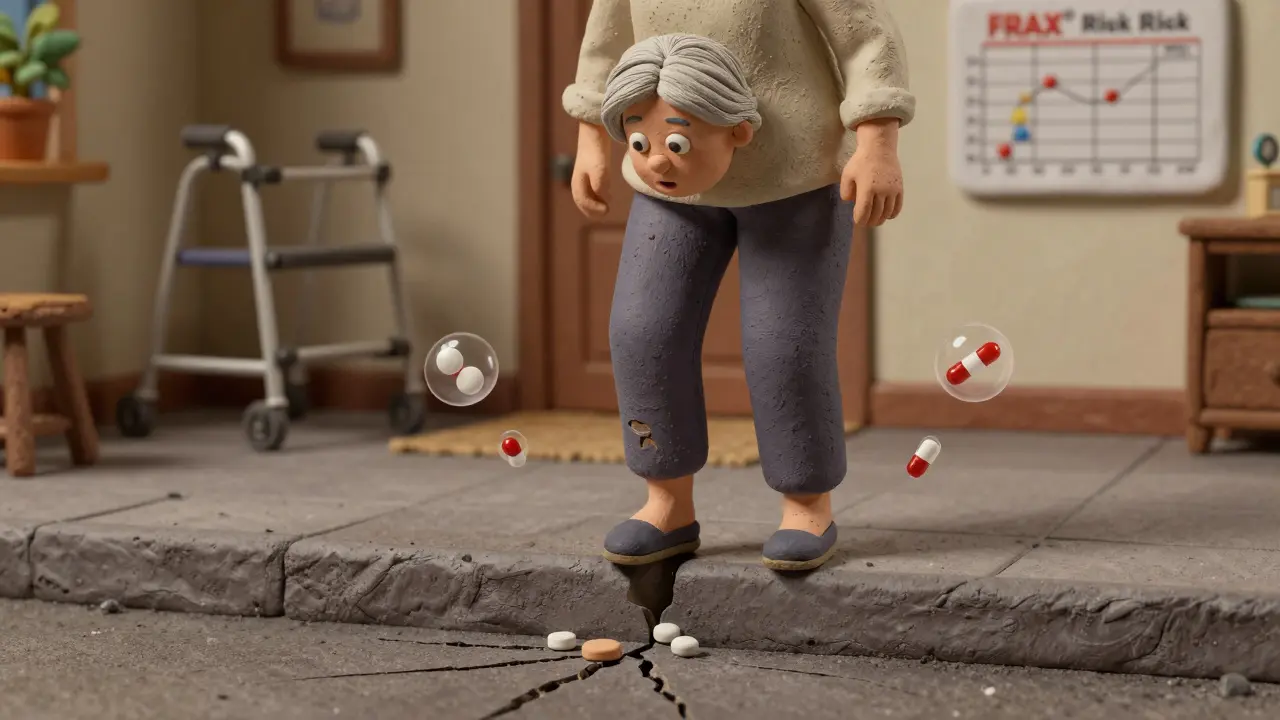
Why Fracture Prevention Isn’t Just About Taking Supplements
Every year, over 2 million people in the U.S. break a bone because their bones have become too weak. Most of these fractures happen in people over 50, and they’re not from falls on the ice or sports accidents-they’re from stepping off a curb or even just rolling over in bed. This is osteoporosis in action. And while many people think popping a calcium pill and a vitamin D capsule is enough to stop it, the science says otherwise. The truth is, most over-the-counter supplements don’t prevent fractures unless you’re severely deficient. And even then, they’re only part of the story.
Calcium and Vitamin D: The Real Story Behind the Hype
Let’s start with calcium. It’s easy to assume that more calcium = stronger bones. But taking 1,200 mg of calcium daily doesn’t automatically make your bones tougher. In fact, the Women’s Health Initiative study tracked nearly 36,000 postmenopausal women and found that taking 1,000 mg of calcium with 400 IU of vitamin D made zero difference in fracture rates. Not a single fewer hip fracture. Not a single less spine break. The same result showed up in multiple other trials. So why do so many doctors still recommend it?
The answer lies in who’s taking it. If your blood vitamin D level is below 20 ng/mL-meaning you’re clinically deficient-and you’re not getting enough calcium from food, then adding 800 IU of vitamin D3 and 1,200 mg of calcium can cut your hip fracture risk by 16%. That’s not a small win. But if you’re eating dairy, leafy greens, and getting sunlight, or even just taking a daily multivitamin, extra supplements won’t help. In fact, they might hurt you. The WHI study also found a 17% higher risk of kidney stones and a 17% higher risk of heart problems with high-dose calcium supplements.
And vitamin D alone? It doesn’t work. A 2019 analysis of over 34,000 people showed vitamin D supplements by themselves didn’t lower fracture risk at all. Not even close. The only time it helps is when it’s paired with enough calcium-and only if your body was running on empty to begin with.
When Bone-Building Medications Are the Only Real Choice
If you’ve already broken a bone after age 50, or your FRAX® score says you have a 20% or higher chance of breaking another one in the next decade, then supplements aren’t going to cut it. You need medication. And there are five main types doctors use: bisphosphonates, denosumab, teriparatide, romosozumab, and abaloparatide.
Bisphosphonates like alendronate (Fosamax) and zoledronic acid (Reclast) are the most common. They work by slowing down the cells that break down bone. In the Fracture Intervention Trial, alendronate cut vertebral fractures by 44%. Zoledronic acid, given as a yearly IV drip, cut hip fractures by 41% over just 18 months. That’s not just statistically significant-it’s life-changing. But here’s the catch: half the people who start these pills stop taking them within a year. Why? Stomach pain, heartburn, or just forgetting. And yes, there are rare but serious risks: atypical femur fractures after 5+ years of use, and osteonecrosis of the jaw (jawbone death), which happens in about 1 in 10,000 people.
Denosumab (Prolia) is an injectable that works differently. It’s given every six months and can reduce spine fractures by up to 68%. But if you miss a dose, bone loss can speed up fast. That’s why it’s not for people who can’t keep appointments.
Then there are the anabolic drugs-teriparatide (Forteo), abaloparatide (Tymlos), and romosozumab (Evenity). These don’t just slow bone loss. They actually build new bone. Teriparatide, for example, increases bone density by 9-13% over two years. Romosozumab, approved in 2019, does even more: it builds bone while also reducing breakdown. In one trial, it cut spine fractures by 73% compared to placebo. But they’re expensive, require daily or monthly injections, and are usually only used for 1-2 years before switching to a maintenance drug.
Who Actually Needs This Stuff?
Not everyone over 50 needs medication. But some people absolutely do. The key is knowing your risk. The FRAX® tool-used by doctors worldwide-calculates your 10-year chance of breaking a hip or major bone based on age, sex, weight, previous fractures, smoking, steroid use, and family history. In the U.S., if your risk is over 20%, you’re a candidate for treatment. In the UK, it’s 15%.
Here’s who should be talking to their doctor about meds:
- You’ve had a fragility fracture (a break from a fall from standing height or less)
- You’re over 65 and have low bone density (T-score below -2.5)
- You’re on long-term steroids (like prednisone for more than 3 months)
- You have a parent who broke a hip
- You’re a woman who went through early menopause (before 45)
If you’re not in one of these groups, supplements won’t help. And if you’re in one of them, supplements alone won’t cut it.
The Hidden Problem: People Are Taking Too Much
Here’s something most people don’t realize: more than 35% of U.S. adults over 50 are taking vitamin D supplements. And nearly 18% are taking more than the upper safe limit of 4,000 IU per day. Why? Because they think it’s harmless. It’s not. High doses can raise calcium levels in the blood, which can lead to kidney damage, heart rhythm problems, and even calcification of arteries. The FDA issued a warning about this in 2021.
And calcium? People think they need 1,500 mg a day. But most Americans already get 800-1,000 mg from food. Adding supplements pushes them over the edge. The RECORD trial showed that community-dwelling older adults with normal vitamin D levels saw no benefit from supplements-and a higher risk of kidney stones.
The real problem isn’t that people aren’t taking enough. It’s that they’re taking the wrong kind, at the wrong dose, for the wrong reason.
What You Should Do Right Now
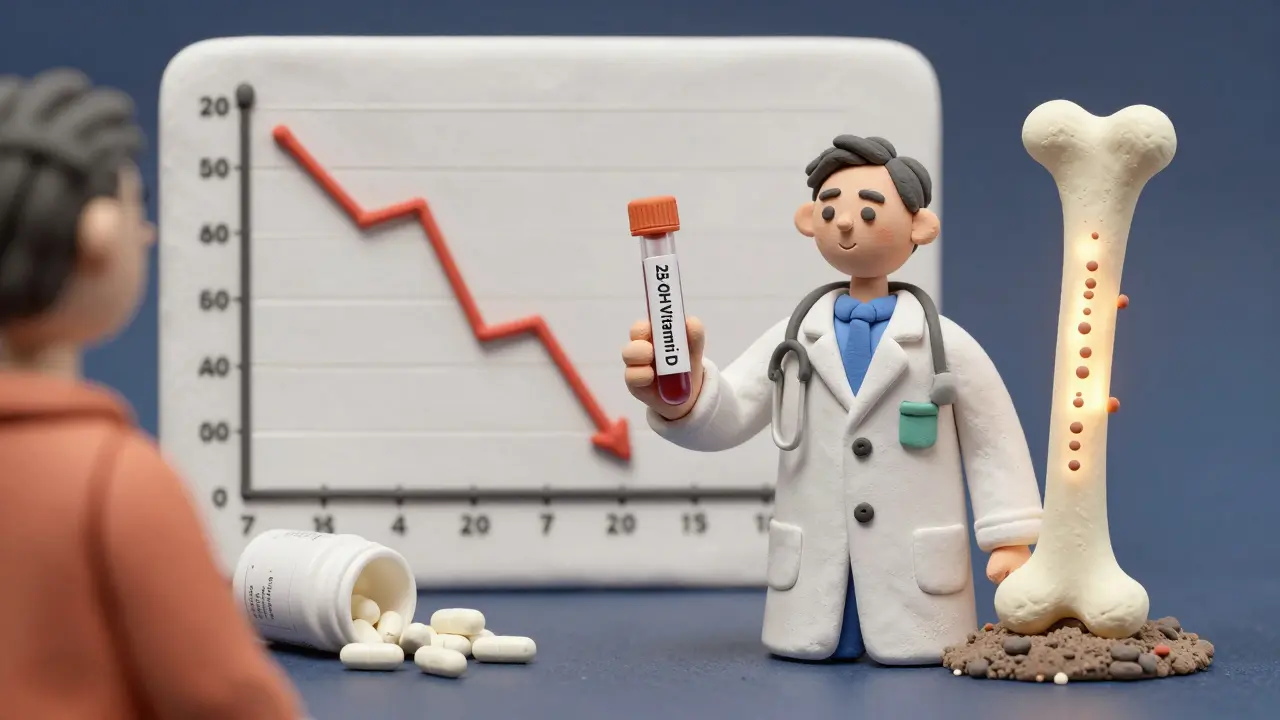
Step one: Get your vitamin D level checked. Don’t guess. Don’t rely on how you feel. A simple blood test for 25-hydroxyvitamin D tells you if you’re deficient. If it’s under 20 ng/mL, your doctor may prescribe a short course of high-dose vitamin D2 (50,000 IU weekly for 8-12 weeks), then switch you to 800-2,000 IU daily. If it’s above 30 ng/mL, you don’t need more.
Step two: Check your calcium intake. Track your food for three days. Milk, yogurt, cheese, sardines, tofu, kale, and fortified orange juice all count. If you’re already hitting 700-1,000 mg a day, skip the pill. If you’re below 700 mg, add 500 mg of calcium carbonate with meals.
Step three: Talk to your doctor about your fracture risk. If you’ve broken a bone after 50, or you’re on steroids, or you have a family history, ask for a FRAX® assessment. If your risk is high, don’t wait. Start a bone-building medication. Don’t delay because you’re scared of side effects. The risk of another fracture is far greater.
Step four: Move your body. No supplement or drug works without muscle and weight-bearing activity. Walking 30 minutes a day, doing light resistance training, or even tai chi reduces fall risk and improves bone density. It’s not optional. It’s essential.
What Works, What Doesn’t, and What to Avoid
| Intervention | Reduces Hip Fracture? | Reduces Spine Fracture? | Best For |
|---|---|---|---|
| Calcium + Vitamin D (800 IU + 1,200 mg) | Yes (16% reduction) | Yes (6% reduction) | Deficient elderly, institutionalized |
| Vitamin D alone (800 IU) | No | No | Not recommended |
| Alendronate (Fosamax) | Yes (20-50% reduction) | Yes (44% reduction) | Postmenopausal women, low bone density |
| Zoledronic acid (Reclast) | Yes (41% reduction) | Yes (70% reduction) | People who can’t take pills |
| Teriparatide (Forteo) | Yes (up to 50% reduction) | Yes (up to 65% reduction) | Severe osteoporosis, prior fractures |
| Calcium supplement alone | No | No | Avoid unless dietary intake is low |
Common Questions About Bone Health and Fracture Prevention
Do I need to take calcium supplements if I drink milk every day?
If you’re drinking three glasses of milk or eating equivalent dairy or fortified foods daily, you’re likely getting enough calcium-around 1,000 mg. Adding a supplement isn’t necessary and could raise your risk of kidney stones. Skip the pill unless your diet is low in calcium-rich foods.
Can vitamin D fix osteoporosis?
No. Vitamin D helps your body absorb calcium, but it doesn’t rebuild bone. If you have osteoporosis, vitamin D alone won’t reduce your fracture risk. You need a bone-building medication like a bisphosphonate or an anabolic agent. Vitamin D is a supporting player, not the star.
I’m scared of side effects from osteoporosis drugs. Should I just take supplements instead?
If you’ve already broken a bone, supplements won’t protect you. The risk of another fracture is real-and far more dangerous than the rare side effects of medications. For example, the chance of a serious jaw problem from bisphosphonates is less than 1 in 10,000. The chance of breaking your hip next year if you’re untreated? As high as 1 in 5. Talk to your doctor about your specific risks. Most side effects can be managed or avoided with proper monitoring.
How long do I need to take bone-building medication?
It depends. Bisphosphonates are often taken for 3-5 years, then paused for a "drug holiday" if your bone density has improved. Anabolic drugs like teriparatide are limited to 2 years because they’re designed to stimulate new growth, not maintain it. After that, you switch to a maintenance drug. Your doctor will monitor your bone density and adjust your plan.
Is it too late to start prevention if I’m already 70?
It’s never too late. Even at 70, starting the right medication can cut your fracture risk in half. The goal isn’t to get your bones back to 25-year-old strength-it’s to prevent the next break. One fracture leads to another, and another. Stopping that chain is possible at any age.
What’s Next for Fracture Prevention?
The future of bone health is moving beyond pills and shots. New drugs like romosozumab and abaloparatide are showing promise for building bone faster and safer. Clinical trials are now testing whether combining anabolic drugs with antiresorptives-like starting with teriparatide and switching to denosumab-can reduce fractures even more. The DATA-Switch trial showed this approach cut spine fractures by 73% compared to bisphosphonates alone.
And the VITAL-DEP trial, currently enrolling participants, is exploring whether high-dose vitamin D (2,000 IU/day) helps people with both depression and low vitamin D levels prevent fractures. Results won’t be out until late 2025, but it’s a sign that researchers are looking at the whole picture-not just bones, but mental health, mobility, and falls too.
For now, the message is clear: stop guessing. Get tested. Know your risk. And if you need medication, don’t delay. Your next step shouldn’t be a hospital bed. It should be a conversation with your doctor.
Shawn Peck
January 31, 2026 AT 18:28Beth Beltway
February 1, 2026 AT 09:38Kelly Weinhold
February 2, 2026 AT 07:43Also, if you're on prednisone, talk to your doc. I was and didn't. Bad call.
Sarah Blevins
February 2, 2026 AT 18:33Sheila Garfield
February 4, 2026 AT 03:03Jason Xin
February 5, 2026 AT 17:12Kathleen Riley
February 6, 2026 AT 01:21Sazzy De
February 7, 2026 AT 20:36Carolyn Whitehead
February 9, 2026 AT 06:12Kimberly Reker
February 9, 2026 AT 06:15Donna Fleetwood
February 9, 2026 AT 19:56Amy Insalaco
February 10, 2026 AT 02:48Diksha Srivastava
February 11, 2026 AT 18:01Melissa Cogswell
February 12, 2026 AT 05:44Adarsh Uttral
February 12, 2026 AT 10:46