
Fertility Preservation Options Before Chemotherapy: What You Need to Know
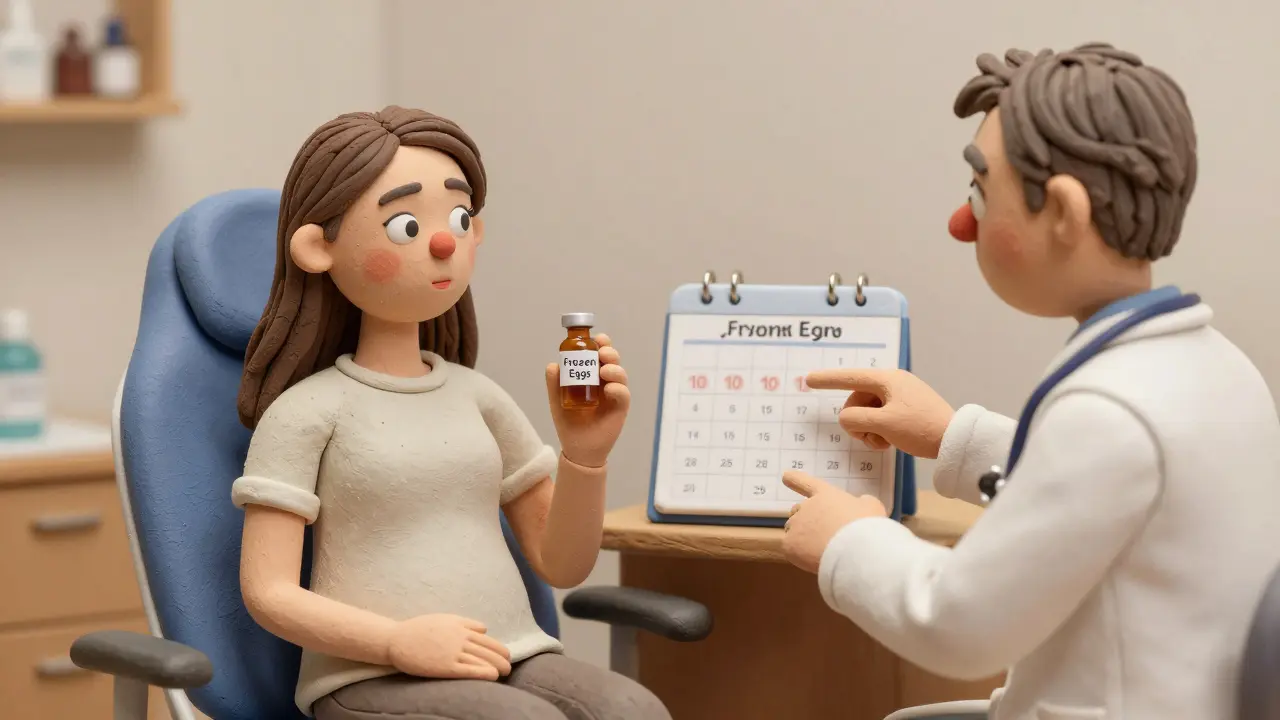
When you’re diagnosed with cancer, your mind races through treatment plans, side effects, and survival odds. But one question that often gets buried under the noise is: fertility preservation. If you’re someone who might want to have children one day - whether you’re 22 or 38 - chemotherapy can permanently change that possibility. The good news? There are real, proven ways to protect your future fertility before treatment starts. The bad news? Many people don’t hear about them until it’s too late.
Why Chemotherapy Threatens Fertility
Chemotherapy doesn’t just target cancer cells. It attacks any fast-growing cells in your body - including the ones that make eggs and sperm. Some drugs, especially alkylating agents like cyclophosphamide, are especially harsh on reproductive tissue. Studies show that 30% to 80% of premenopausal women who get these drugs end up with premature ovarian insufficiency, meaning their ovaries stop working years or decades earlier than normal. For men, sperm counts can drop to zero after just one cycle of treatment. And unlike menopause, this damage is often permanent.What You Can Do Before Treatment Starts
There are six main options for protecting fertility before chemotherapy begins. Each has different time needs, success rates, and requirements. The key is acting fast - most options require starting before treatment begins, and some need weeks to complete.1. Egg Freezing (Oocyte Cryopreservation)
This is the most common option for women who aren’t in a relationship or don’t want to use donor sperm. It works like IVF without fertilization. You take hormone injections for 10 to 14 days to stimulate your ovaries to produce multiple eggs. Then, under light sedation, a doctor retrieves them through a thin needle guided by ultrasound. The eggs are immediately frozen using a method called vitrification, which prevents ice crystals from forming and damaging them. Survival rates after thawing are 90-95%. Success depends on age and how many eggs you freeze. For women under 35, each frozen egg has about a 4-6% chance of leading to a live birth. That means most women aim to freeze 15-20 eggs to have a reasonable shot at one child. It’s expensive - $8,000 to $15,000 per cycle - and not always covered by insurance. But if you’re diagnosed early and your cancer type allows a short delay, this is your best bet.2. Embryo Freezing
If you have a partner or are open to using donor sperm, embryo freezing gives you the highest chance of pregnancy. After egg retrieval, the eggs are fertilized with sperm in the lab. The resulting embryos are frozen and stored. Success rates are better than egg freezing alone - about 50-60% of embryos transferred result in live births for women under 35. The catch? You need sperm. That can be emotionally complicated if you’re single, newly diagnosed, or unsure about your relationship. Also, if you later separate from your partner, legal questions about who controls the embryos can arise. But if you’re ready to use sperm, this is the most reliable method.3. Ovarian Tissue Freezing
This is the only option for girls who haven’t reached puberty, or for women who can’t wait 10-14 days for hormone stimulation. A surgeon removes one ovary (or part of it) through a small laparoscopic procedure. The outer layer - where immature eggs live - is cut into thin strips and frozen. Later, when you’re cancer-free and ready to have a child, the tissue is thawed and re-implanted near your remaining ovary or in your abdomen. It’s still considered experimental by the FDA, but over 200 live births have been reported worldwide. Success rates for restoring ovarian function are 65-75%. It’s also the only way for prepubertal girls to preserve fertility. The downside? You’re not guaranteed to get pregnant after transplant - it just brings back hormone production. But for many, that’s enough to start trying naturally.4. Ovarian Suppression with GnRHa
This isn’t a way to store eggs or embryos. Instead, it tries to put your ovaries into temporary hibernation during chemo. You get monthly injections of drugs like goserelin (Zoladex) starting 10 days before chemotherapy and continuing through treatment. The idea is that by shutting down hormone signals, the ovaries become less active and less likely to be damaged. Studies show it reduces the risk of premature ovarian failure by 15-20%. It’s not a guarantee, but it’s low-risk and doesn’t delay treatment. It’s often used alongside egg freezing, not instead of it. Side effects? Think menopause: hot flashes, night sweats, mood swings, vaginal dryness. About one in three women quit the treatment because it’s too uncomfortable. But for some, it’s better than losing fertility entirely.5. Sperm Banking
For men, this is simple and highly effective. You provide a semen sample - usually after 2-3 days of abstinence - and it’s frozen and stored. No hormones. No surgery. Just a cup and a freezer. Post-thaw, 40-60% of sperm remain motile, which is more than enough for IVF or IUI. The cost? Around $500 to store for a year, then $100-$300 annually after that. It’s quick: you can do it in a clinic within 72 hours of diagnosis. Even men with low sperm counts can bank enough for future use. The biggest barrier? Embarrassment or shock. Many men don’t think about it until it’s too late. If you’re male and facing chemo, this is the easiest thing you can do to protect your future.6. Radiation Shielding
If your cancer treatment includes radiation to the pelvis or abdomen, shielding can help protect your reproductive organs. A custom lead shield is placed over your testicles or ovaries during each session. It can reduce radiation exposure by 50-90%. But here’s the catch: it only works for radiation, not chemotherapy. If you’re getting both, shielding alone won’t save your fertility. Still, if you’re getting pelvic radiation, ask your radiation oncologist about it. It’s free and painless.Timing Is Everything
The biggest reason people lose the chance to preserve fertility? Delayed referrals. Most cancer centers don’t automatically bring up fertility. You have to ask. And you have to ask fast. For women: if you’re starting chemo soon, you need to see a fertility specialist within 14 days of diagnosis. Egg freezing takes 10-14 days. If you’re diagnosed with leukemia or another fast-moving cancer, you might only have 48-72 hours before treatment starts. That’s why some clinics now use “random-start” protocols - you can begin hormone stimulation at any point in your cycle, cutting the wait time to just 11 days on average. For men: sperm banking can be done in a single day. Do it as soon as possible. Even if you’re not sure about future parenthood, bank it. You can always discard it later.
Who’s Left Out?
Not everyone has equal access. Rural patients travel an average of 178 miles to reach a fertility clinic. Urban patients? About 22 miles. Medicaid covers fertility preservation in only 12 U.S. states. Insurance often denies egg freezing as “elective,” even when it’s medically necessary. And for LGBTQ+ individuals, single women, or those without partners, options can feel limited or expensive. A 2022 study found that 68% of women aged 18-35 who didn’t pursue fertility preservation later regretted it - especially when treatment delays pushed them past the window. One woman on Reddit shared: “I cried for two weeks because I didn’t know I could freeze my eggs. Now I’m in remission, but I’ll never have a biological child.”What’s New in 2025?
The field is moving fast. In 2023, the FDA approved a closed-system vitrification device that cuts contamination risk by 92%. Researchers are testing “artificial ovaries” - lab-grown structures that can support egg development - with promising results in primates. One breakthrough in 2022 showed it’s possible to activate frozen ovarian tissue in the lab, so you might not need surgery to transplant it back. That could be a game-changer for BRCA+ patients who want to avoid re-implanting tissue that might carry cancer risk. The ASCO guidelines are expected to update in mid-2025, likely strengthening support for GnRHa use. More states are passing laws to require insurance coverage. But until then, you can’t wait for the system to catch up.
What to Do Right Now
If you’ve been diagnosed with cancer and want to keep the option of having children:- Ask your oncologist: “Can you refer me to a reproductive specialist immediately?”
- Call a fertility clinic within 48 hours. Don’t wait for your oncologist to bring it up.
- If you’re male: bank sperm today. It takes less than an hour.
- If you’re female and have time: ask about egg or embryo freezing.
- If you’re under 18 or can’t wait: ask about ovarian tissue freezing.
- If you’re getting radiation: ask about shielding.
- If you’re unsure: ask about GnRHa. It’s low-risk and doesn’t delay treatment.
Frequently Asked Questions
Can I still have a baby after chemotherapy if I didn’t preserve my fertility?
It’s possible, but much less likely. Some women resume normal periods after chemo and conceive naturally. But for many, especially those over 30 or who received high-dose alkylating agents, fertility doesn’t return. If you didn’t preserve your eggs or sperm, options like donor eggs, donor sperm, or adoption are still available - but they’re not the same as having a biological child. That’s why acting before treatment matters.
Does freezing eggs or sperm affect cancer treatment or increase recurrence risk?
No. Multiple studies, including one in the New England Journal of Medicine, show that delaying treatment by two weeks for egg freezing doesn’t increase cancer recurrence or reduce survival rates - as long as your cancer isn’t aggressive like acute leukemia. For those cancers, doctors prioritize chemo. But for breast, lymphoma, or colorectal cancer, a short delay is safe and often recommended.
Is fertility preservation covered by insurance?
It depends. Twenty-four U.S. states require insurers to cover fertility preservation for cancer patients. But many plans still classify it as “elective.” Medicaid covers it in only 12 states. Always check with your insurer and ask your clinic for help appealing denials. Some clinics offer payment plans or discounts for cancer patients.
Can I freeze my eggs if I have hormone-sensitive cancer like breast cancer?
Yes. In the past, doctors worried estrogen from stimulation could fuel cancer growth. Now, we use medications like letrozole or tamoxifen alongside stimulation to keep estrogen levels low. Many breast cancer patients have successfully frozen eggs and gone on to have healthy pregnancies. Always work with a specialist experienced in oncofertility.
What happens to my frozen eggs or sperm if I don’t use them?
You decide. You can donate them to someone else, donate them to research, or pay to keep them stored indefinitely. Most clinics require you to update your plans every few years. If you don’t respond, they may destroy them after a set period - usually 5-10 years. Make sure your partner or family knows your wishes.
Next Steps
If you’re facing chemotherapy and want to protect your future fertility:- Write down your questions and bring them to your next appointment.
- Call a local fertility clinic - even if you’re not sure you’ll use it. Ask what they offer and how fast they can start.
- Ask your oncologist for a referral to a reproductive specialist.
- Don’t assume you’re too young or too old - fertility preservation works for people from 13 to 40.
- If you’re male: go to the clinic and bank sperm. Do it now.
- If you’re female and have time: schedule an egg freezing consultation. Even if you’re not ready to commit, get the facts.
Dan Gaytan
December 23, 2025 AT 16:57This hit me right in the feels. I watched my sister go through this last year - she froze her eggs just 10 days before chemo started. Now she’s in remission and just had her first baby. 🥹 Don’t wait. Even if you’re not sure about kids, do it. You can always throw the vials away later, but you can’t un-burn your ovaries. I’m crying typing this. Thank you for writing this.
Usha Sundar
December 25, 2025 AT 03:05So many options. So little time.
suhani mathur
December 26, 2025 AT 19:49Let’s be real - if you’re a woman under 35 and you’re not asking about egg freezing before chemo, you’re not fighting hard enough. Your oncologist isn’t trained to save your future, they’re trained to save your life. That’s fine. But you? You need to be the one screaming for the fertility specialist. I’ve seen too many women cry years later because they trusted the system. Don’t be one of them.
Adarsh Dubey
December 27, 2025 AT 10:06The data presented here is accurate and well-sourced. Ovarian tissue freezing, while still considered experimental by the FDA, has demonstrated consistent success in clinical trials across Europe and Asia. The 200+ live births reported are corroborated by the European Society of Human Reproduction and Embryology. It is not a last resort - it is a valid option for prepubertal patients and those with time-sensitive malignancies.
Bartholomew Henry Allen
December 28, 2025 AT 19:09Why are we spending millions on this when we can’t even fix the healthcare system? This is a luxury for the rich. My cousin died of lymphoma because she couldn’t afford to delay treatment. Fertility is a privilege. Not a right. Stop pretending this is about choice. It’s about money.
bharath vinay
December 30, 2025 AT 16:01They want you to freeze your eggs so the pharmaceutical companies can charge you $15K for it. Then they’ll sell you IVF later. Then they’ll charge you $10K a year to store it. Meanwhile, the FDA approved a new device that cuts contamination risk by 92% - but only after 12 years of research funded by Big Pharma. Coincidence? I think not. They’re selling you hope so you don’t ask why your chemo costs $200K.
Chris Buchanan
January 1, 2026 AT 12:06Bro. If you’re a dude and you’re reading this and you haven’t banked sperm yet - stop. Put your phone down. Go to the nearest clinic. Do it. Now. It’s not embarrassing. It’s not weird. It’s the most badass thing you can do for your future self. You’re not just preserving DNA - you’re preserving your legacy. Do it. I’m proud of you already.
Wilton Holliday
January 3, 2026 AT 05:43I work in oncology nursing. I’ve seen the faces of people who found out too late. I’ve held the hands of women who sobbed because they didn’t know they could freeze their eggs. Please. If you’re reading this - take action. Even if you’re scared. Even if you’re broke. Call a clinic. Ask for a payment plan. Ask for a charity program. There are people who will help. You are not alone. 💪
Ajay Sangani
January 3, 2026 AT 06:19isnt it strange how we think of fertility as something we can just... store? like a jar of pickles? we freeze eggs, embryos, tissue... but what are we really preserving? the cells? or the idea of a future that might never come? i wonder if the weight of that choice - to freeze or not - is heavier than the cancer itself.
Pankaj Chaudhary IPS
January 3, 2026 AT 20:32As an officer serving in rural India, I have seen patients travel 200 kilometers for a single chemo session - let alone fertility preservation. This article is vital, but it speaks to a privileged audience. We need mobile clinics, government subsidies, and community health workers trained to deliver this message in local languages. Knowledge without access is a cruel joke. Let’s not just inform - let’s equip.
Steven Mayer
January 5, 2026 AT 14:33While the biological mechanisms of cryopreservation are well-documented, the psychological sequelae of gamete storage remain underexplored in the literature. The existential burden of maintaining viable biological material - coupled with the latent anxiety of future reproductive decision-making - constitutes a significant comorbidity in oncology survivors. The clinical imperative to preserve fertility may inadvertently exacerbate post-treatment trauma through the perpetuation of unfulfilled reproductive expectations.
Charles Barry
January 7, 2026 AT 02:18Of course they want you to freeze your eggs. It’s the perfect distraction. While you’re worrying about your ovaries, they’re busy approving the next chemo drug that kills 40% of patients in 5 years. They don’t care if you have kids. They care if you keep coming back for more treatments. This whole fertility thing? It’s a money trap. Don’t be fooled.
Rosemary O'Shea
January 7, 2026 AT 23:43How adorable. Freezing eggs like they’re artisanal jam. Meanwhile, in the real world, people are dying because they can’t afford insulin. This is what happens when you let wealthy white women dictate medical priorities. We need to talk about universal healthcare, not egg vials.
Joe Jeter
January 8, 2026 AT 16:33They say ‘act fast’ - but what if you’re diagnosed on a Friday night and your oncologist doesn’t return calls until Monday? What if you’re in a state that doesn’t cover it? What if you’re trans and your body doesn’t fit the ‘standard’ protocol? This article feels like a glossy brochure from a clinic that doesn’t serve people like me.