
Fentanyl Patch Side Effects: Overdose and Withdrawal Risks You Must Know
Fentanyl Patch Safety Checker
Fentanyl Patch Safety Assessment
Check if you're following proper safety guidelines for fentanyl patch use. This tool helps identify potential risks based on your current practices.
Using a fentanyl patch might seem simple - stick it on your skin, wait a few hours, and pain fades. But this isn’t like taking a painkiller you grab off the shelf. Fentanyl patches are fentanyl, a synthetic opioid 50 to 100 times stronger than morphine. They’re meant for people with severe, long-term pain who’ve already tried other treatments and still can’t get relief. But if you don’t understand how they work - or what can go wrong - the risks can be deadly.
How Fentanyl Patches Work (and Why That’s Dangerous)
Fentanyl patches deliver medication slowly through your skin over 72 hours. That’s the whole point: steady pain control without the spikes and crashes you get with pills. But that same slow release becomes a trap if something changes.
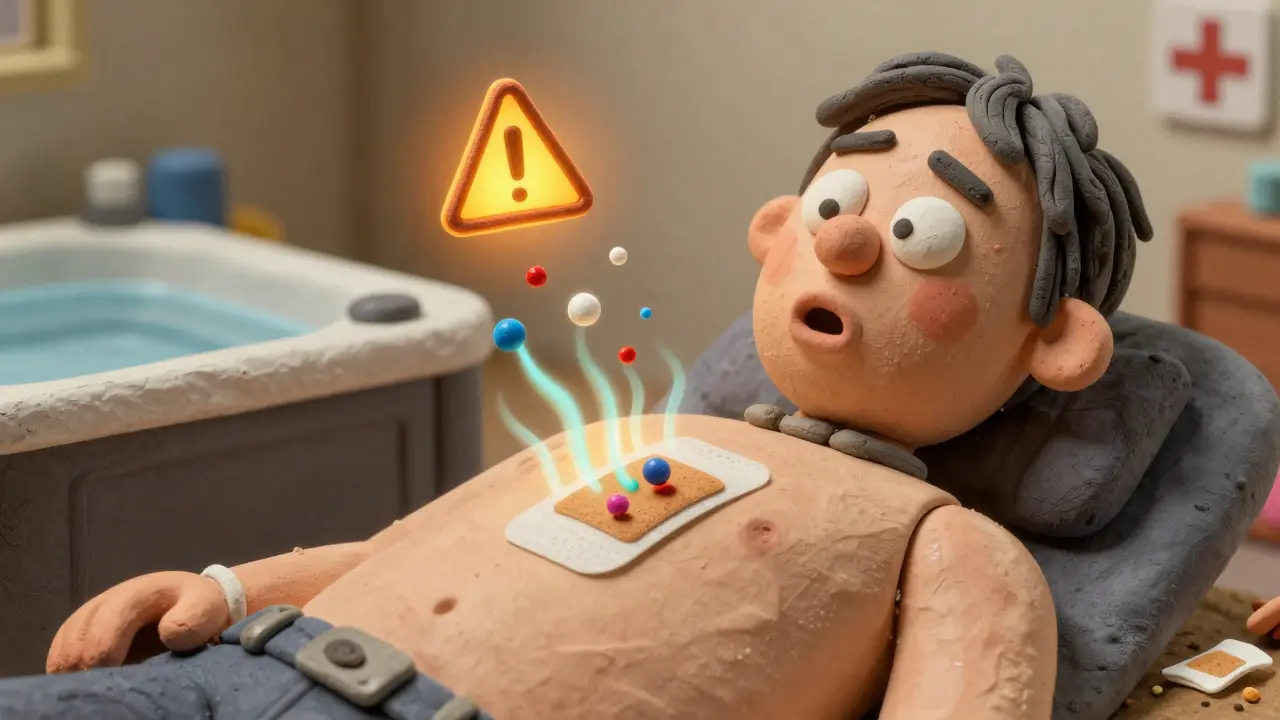
Heat turns the patch into a time bomb. A hot shower, a heating pad, even a fever can make your body absorb fentanyl faster. One study showed skin temperature rising just 2°C could double the amount of drug entering your bloodstream. That’s why people on fentanyl patches have overdosed after sitting in a hot tub or wearing a heating blanket. The patch didn’t fail. Your body absorbed too much too fast.
And here’s the kicker: fentanyl patches are never for beginners. The FDA says you must already be tolerant to opioids - meaning you’ve been taking at least 60 mg of morphine daily for a week or more. If you’ve never used opioids before, even one patch can stop your breathing. There have been cases where children found discarded patches and died from touching them. That’s why the FDA reports 32 pediatric deaths between 1997 and 2012 from accidental exposure.
Fentanyl Overdose: What to Look For
An overdose doesn’t always look like someone collapsing. Sometimes, it starts quietly.
- Slow, shallow, or irregular breathing
- Unusual snoring or gurgling sounds
- Extreme drowsiness - you can’t wake the person up
- Cold, clammy, or blue skin, especially lips and fingernails
- Pupils that are pinpoint small
- Limp muscles, weak pulse, or no response
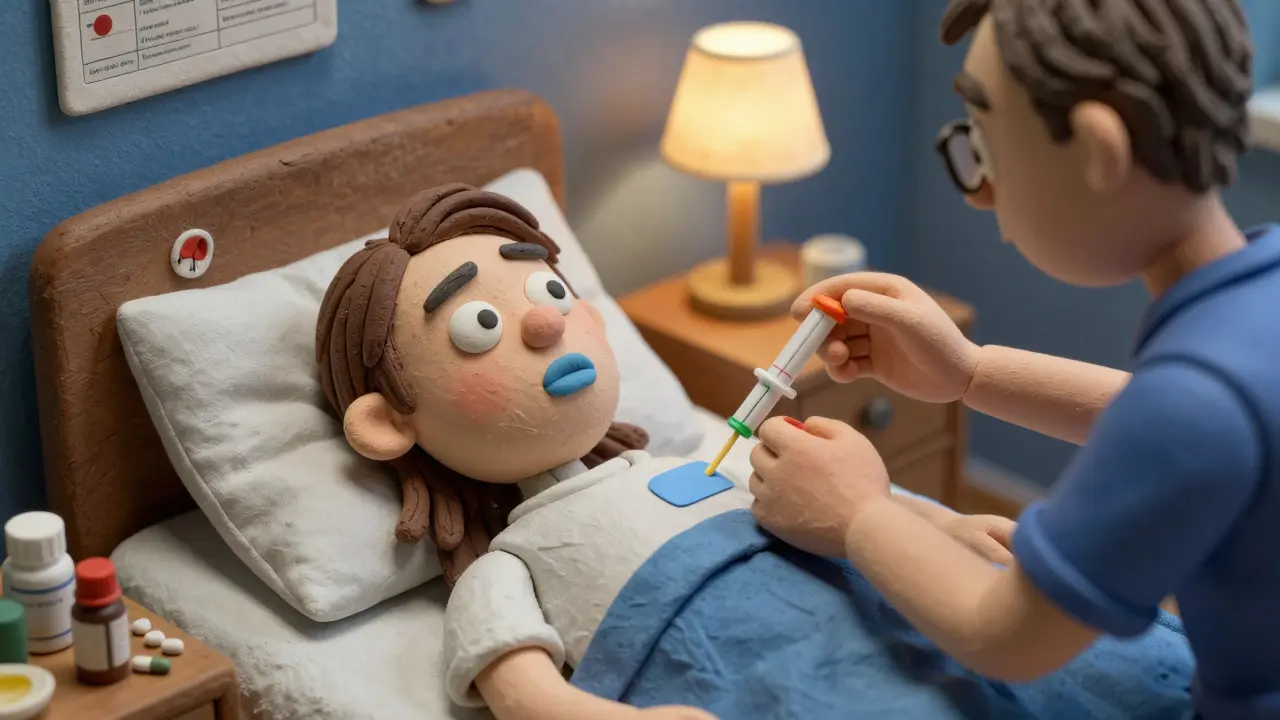
If you see any of these signs, act immediately. Remove the patch. Call emergency services. If you have naloxone (Narcan), use it. Naloxone reverses opioid overdoses. The FDA now recommends that anyone prescribed a fentanyl patch also get naloxone on hand - not just for yourself, but for someone who might be around you.
It’s not just about misuse. Even people taking their patch exactly as prescribed can overdose if they’re not monitored. That’s why doctors now require regular check-ins. No refills. No skipping appointments. You’re not just managing pain - you’re managing a high-risk medication.
Withdrawal: When Stopping Isn’t Easy
Stopping fentanyl patches cold turkey is one of the most dangerous mistakes people make. You don’t just feel bad - your body goes into shock.
Withdrawal symptoms start within 8 to 24 hours after your last patch. They peak at 36 to 72 hours and can last over a week. Here’s what it feels like:
- Intense anxiety, restlessness, and irritability
- Profuse sweating, chills, and goosebumps
- Stomach cramps, vomiting, diarrhea
- Fast heartbeat, high blood pressure
- Insomnia - you can’t sleep even if you’re exhausted
- Severe muscle aches and bone pain
And it’s not just physical. The emotional toll is brutal. People report feeling hopeless, suicidal, or like they’re losing control. The FDA has documented 148 serious cases of harm from sudden opioid withdrawal between 2012 and 2017. Some patients ended up in the ER with dehydration from vomiting and diarrhea. Others had heart complications.
There’s no safe way to quit on your own. The American Society of Addiction Medicine warns that detoxing at home without medical help can lead to life-threatening dehydration or electrolyte imbalances. Even if you feel okay, your body is still adjusting. That’s why tapering is non-negotiable.
How to Stop Fentanyl Patches Safely
Your doctor doesn’t just say “cut the dose in half.” Tapering is a slow, personalized process.
For someone on a high dose (like 100 mcg/hour), reducing by 10% to 25% every 1 to 3 weeks is typical. That could mean months of gradual cuts. Rushing it triggers withdrawal. Too slow, and pain comes back. It’s a tightrope walk.
Here’s what works:
- Never change your dose without talking to your doctor.
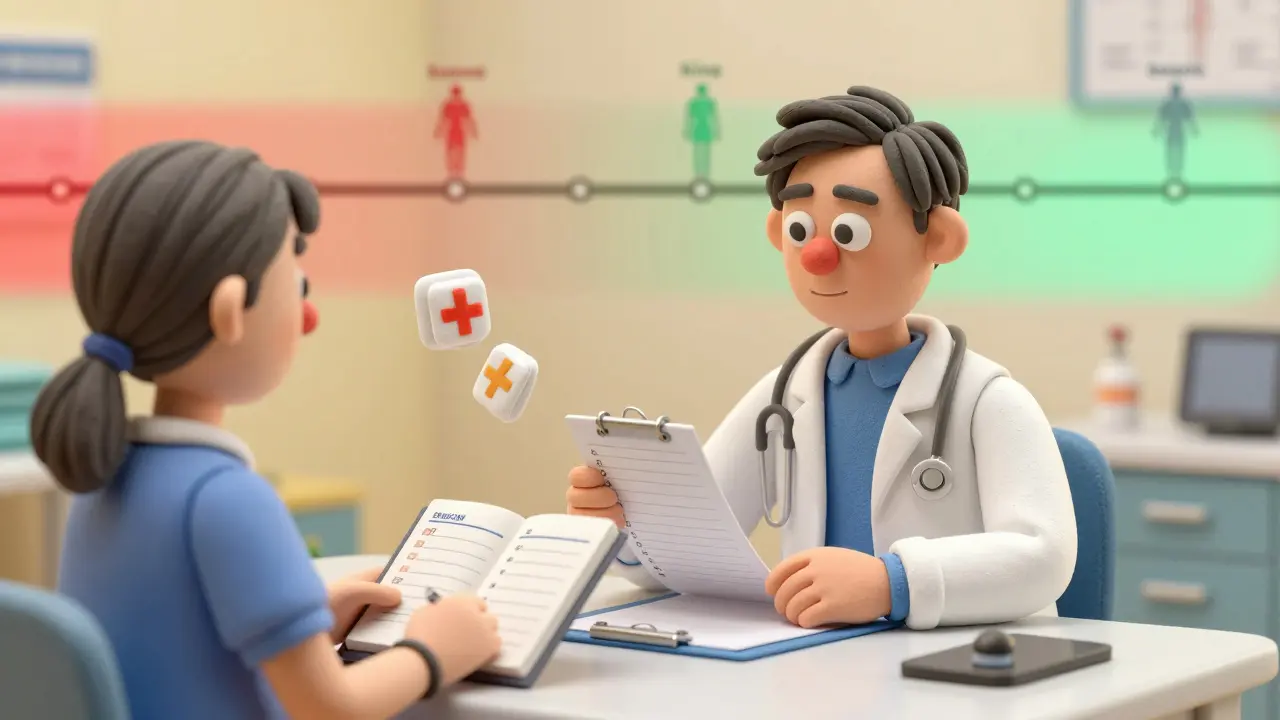
- Keep a symptom journal - note sleep, pain levels, mood, and physical reactions.
- Use non-opioid pain tools: physical therapy, heat/cold packs, nerve blocks, or acupuncture.
- Stay hydrated and eat small, frequent meals to avoid vomiting-related dehydration.
- Have support - family, friends, or a counselor. Withdrawal is lonely.
Some people need medications to help manage withdrawal - clonidine for anxiety and blood pressure, or anti-nausea drugs. Others benefit from outpatient addiction treatment programs. The key is planning ahead. Don’t wait until you’re out of patches to think about quitting.
What You Must Do Every Day
If you’re on a fentanyl patch, your daily routine needs safety built in.
- Apply the patch only to clean, dry, intact skin - never on cuts, burns, or irritated areas.
- Avoid heat sources: no saunas, hot tubs, electric blankets, or direct sunlight on the patch.
- Keep patches out of reach of children and pets. Even a used patch still has enough fentanyl to kill.
- Dispose of used patches safely: fold them sticky-side together and flush them down the toilet (or return them to your pharmacy if local rules allow).
- Tell every doctor, dentist, or surgeon you’re on a fentanyl patch before any procedure. Even minor surgery can trigger overdose if anesthesia interacts with it.
- Carry naloxone. Know how to use it. Teach someone else how to use it too.
And remember: this isn’t a medication you take “as needed.” It’s for continuous, around-the-clock pain. If you’re using it for sudden pain spikes, you’re using it wrong - and you’re risking overdose.
Why Prescriptions Are Dropping - And Why That Matters
Fentanyl patch prescriptions in the U.S. dropped 42% between 2016 and 2022. Why? Because doctors are learning the hard way.
A 2023 survey found 78% of physicians now only consider fentanyl patches after every other option has failed. That’s up from 52% in 2016. The CDC, FDA, and EMA all agree: fentanyl patches should be a last resort, not a first choice.
There are safer alternatives for chronic pain: physical therapy, nerve stimulation, low-dose antidepressants, or non-opioid pain relievers. Even cognitive behavioral therapy can help retrain how your brain processes pain.
If your doctor pushes fentanyl patches as the easiest solution, ask: “What else have I tried? What are the risks if I don’t improve?” You have the right to explore options before accepting a drug this powerful.
What Happens After You Stop
Even after you’ve safely tapered off, your risk doesn’t vanish.
Studies show that people who stop using fentanyl and later resume - even after months or years - are at higher risk of overdose. Why? Because your tolerance drops fast. Your body forgets how to handle the drug. A dose you used to take without issue can now kill you.
That’s why Johns Hopkins found 37% of fatal overdoses among former opioid users happened after a period of abstinence. It’s not relapse that kills - it’s underestimating how little it takes to overdose after time away.
If you’ve stopped fentanyl patches, never use them again unless under strict medical supervision. And if you’re ever tempted to use other opioids, talk to your doctor first. Your body isn’t the same.
Can you overdose from just touching a fentanyl patch?
Yes. Fentanyl can absorb through the skin. Accidental exposure - especially in children - has caused fatal overdoses. Always store patches out of reach and fold used patches sticky-side together before disposal. Even a used patch contains enough drug to be lethal.
How long do fentanyl patch withdrawal symptoms last?
Symptoms usually start within 8-24 hours after the last patch, peak at 36-72 hours, and last 7-10 days. Some symptoms like anxiety or sleep issues can linger for weeks. Tapering slowly reduces severity and duration.
Is it safe to cut a fentanyl patch to lower the dose?
Never cut or alter a fentanyl patch. Doing so destroys the controlled-release mechanism. This causes a dangerous surge of drug into your body, leading to overdose. Always use the exact strength prescribed. If you need a lower dose, your doctor will switch you to a different patch strength.
Can you drink alcohol while using a fentanyl patch?
No. Alcohol combined with fentanyl can slow your breathing to dangerous levels - even if you’ve used both before. This mix has caused many fatal overdoses. Avoid all alcohol, sedatives, sleep aids, and anti-anxiety medications unless your doctor says it’s safe.
Why do doctors now prescribe naloxone with fentanyl patches?
Because overdose risk is high, even in people taking the patch exactly as directed. Naloxone can reverse an opioid overdose in minutes. The FDA now recommends it for all patients on long-acting opioids. Having it on hand saves lives - your own or someone else’s.
What should I do if I miss a patch change?
If you miss changing your patch by a few hours, apply the new one as soon as you remember. Don’t double up. If you’re more than 12 hours late, call your doctor. Missing doses can trigger withdrawal. Going too long without medication can cause pain to return sharply - and make tapering harder later.
Final Thought: This Is Not a Simple Prescription
Fentanyl patches aren’t like aspirin. They’re powerful, unpredictable, and demand respect. Every patch you use carries risk - not just for you, but for anyone who might come into contact with it. If you’re on one, you’re not just treating pain. You’re managing a life-threatening drug.
Ask questions. Know the signs of overdose. Have naloxone. Never stop cold turkey. Don’t let convenience override safety. Your life depends on the choices you make every day - not just when you apply the patch, but when you store it, dispose of it, and talk to your doctor about what comes next.
Tatiana Bandurina
January 22, 2026 AT 15:26Fentanyl patches are a death sentence waiting to happen. I’ve seen three people in my town die from them - all prescribed by doctors who swore they were "safe." The system is broken, and the FDA’s warnings are just lip service. People don’t die from pain - they die from bureaucracy that treats opioids like candy.
Philip House
January 23, 2026 AT 10:47Let’s be real - if you’re on a fentanyl patch, you probably should’ve never gotten here. The US healthcare system pushes these things like they’re aspirin. Meanwhile, countries like Germany and Sweden treat chronic pain with physical rehab and psychological support first. We’re not just overmedicating - we’re outsourcing responsibility to a chemical.
Jasmine Bryant
January 24, 2026 AT 08:38I’m a nurse and I’ve had to administer naloxone to two patients who overdosed from patches they didn’t even think were dangerous. One guy used a heating pad because his back hurt - didn’t realize the patch was still active. Another was a grandma who left a used patch on the counter and her grandkid touched it. These aren’t horror stories - they’re weekly occurrences.
Always fold the patch sticky-side in. Always flush it. Always tell your family. This isn’t paranoia - it’s survival.
Sarvesh CK
January 25, 2026 AT 19:20It is an undeniable truth that the pharmacological management of chronic pain has become a moral and clinical conundrum of unprecedented complexity. The fentanyl patch, while scientifically ingenious in its transdermal delivery mechanism, represents a paradox: a tool designed for dignity and sustained relief that, in practice, often becomes a vector of vulnerability, especially in populations lacking adequate oversight or education. The cultural normalization of potent opioids in the United States reflects a deeper societal failure to invest in holistic, non-pharmacological modalities - a failure that transcends medicine and enters the realm of public policy, economic disparity, and systemic neglect.
One cannot discuss fentanyl without acknowledging the socioeconomic stratification of its users: those with access to specialists, tapering protocols, and mental health support fare better than those who receive the patch as a quick fix from an overburdened clinic. The solution, therefore, lies not merely in cautionary labels, but in structural reform.
Brenda King
January 26, 2026 AT 17:50My mom was on a fentanyl patch for 3 years after her spine surgery. She never missed a checkup, never used heat, always flushed the patches. But when she tried to quit cold turkey after her doctor retired, she ended up in the ER with seizures. No one told her how bad withdrawal could be. Please - if you’re on this, don’t wait until you’re out of patches to plan your exit. Talk to your doctor NOW.
Neil Ellis
January 28, 2026 AT 03:18People act like fentanyl patches are some kind of magic bullet, but they’re more like a loaded gun with a hair trigger. And the worst part? You’re supposed to trust your body won’t betray you. But heat, stress, even a cold that spikes your fever - it all turns your pain relief into a silent killer. I’ve seen it. I’ve lived it. Don’t be the next statistic. Keep naloxone in your glovebox. Teach your kids how to use it. This isn’t fearmongering - it’s love.
arun mehta
January 30, 2026 AT 01:19As someone who has worked in pain management for over 15 years, I can confirm that tapering fentanyl requires extreme precision. I once had a patient reduce too fast and went into cardiac arrhythmia. The body doesn’t forget tolerance - it just hides it. And when it comes back, it comes back hard. Always use a calendar. Track every symptom. And never, ever skip a follow-up. Your life is not a trial.
Also - please, for the love of God, stop cutting patches. It’s like modifying a bomb to make it "safer." It doesn’t work. Ever.
Lauren Wall
January 30, 2026 AT 22:11Don’t use these unless you’re dying. And even then, maybe don’t.
shivani acharya
February 1, 2026 AT 09:46Yeah sure, the FDA says "don’t use heat" - but have you seen how many people live in trailer parks with no AC? Or how many elderly folks use heating pads because their insurance won’t cover a new mattress? This isn’t about negligence - it’s about poverty. The real danger isn’t the patch. It’s a system that gives you a death sentence and calls it "treatment." And don’t even get me started on how they want you to flush the patches but won’t give you free naloxone. It’s all a scam.
They don’t want you to quit. They want you to stay dependent. That’s why they don’t fund rehab. That’s why they don’t pay for physical therapy. Fentanyl isn’t the problem - capitalism is.
Patrick Roth
February 2, 2026 AT 10:37Actually, fentanyl patches are safer than most people think. The real danger is people who don’t follow instructions - like those who take them with alcohol or cut them open. That’s not the patch’s fault, that’s human stupidity. And let’s not forget, millions use them safely every day. The media turns every accident into a horror story to scare people. Wake up.
Kenji Gaerlan
February 3, 2026 AT 14:35my doc gave me a patch and i didnt even know what it was for. i just thought it was a new kind of pain relief thing. then i got dizzy and threw up. now i’m scared to even touch one. why do they just hand these out like gum?
Oren Prettyman
February 4, 2026 AT 22:54It is imperative to underscore that the regulatory framework governing the prescription of transdermal fentanyl is not merely inadequate - it is fundamentally negligent in its failure to mandate comprehensive patient education, mandatory third-party notification protocols, and standardized disposal procedures across all prescriptive jurisdictions. The current paradigm places undue burden upon the individual patient, who, often lacking medical literacy, is expected to navigate a pharmacological minefield with no instruction manual. This constitutes a dereliction of professional duty.
Furthermore, the FDA’s recommendation to flush patches is environmentally indefensible and contradicts the principles of sustainable healthcare. A more rational approach would involve pharmaceutical take-back programs - yet these remain underfunded and inaccessible in rural communities. The disconnect between policy and practicality is not accidental; it is systemic.
Rob Sims
February 6, 2026 AT 14:54Oh wow, another "fentanyl is a silent killer" article. Let me guess - you’re also gonna tell me oxygen is dangerous because people have died from breathing too much? Newsflash: if you don’t follow directions, you’re gonna die. That’s not a flaw in the drug - it’s a flaw in the user. Stop acting like every patient is a child who needs to be babysat. People have been using these safely for decades. The real problem is the culture of fear-mongering.
Mike P
February 7, 2026 AT 14:00They say don’t use heat with these patches? Bro, I had a fever of 103 and I still wore mine. I didn’t die. I’m still here. Maybe the real issue is doctors scare people too much. I’ve seen people quit cold turkey and go crazy - worse than the pain. You need to chill. This isn’t a horror movie.