
FDA Inspection of Generic Manufacturing Facilities: What to Expect in 2026
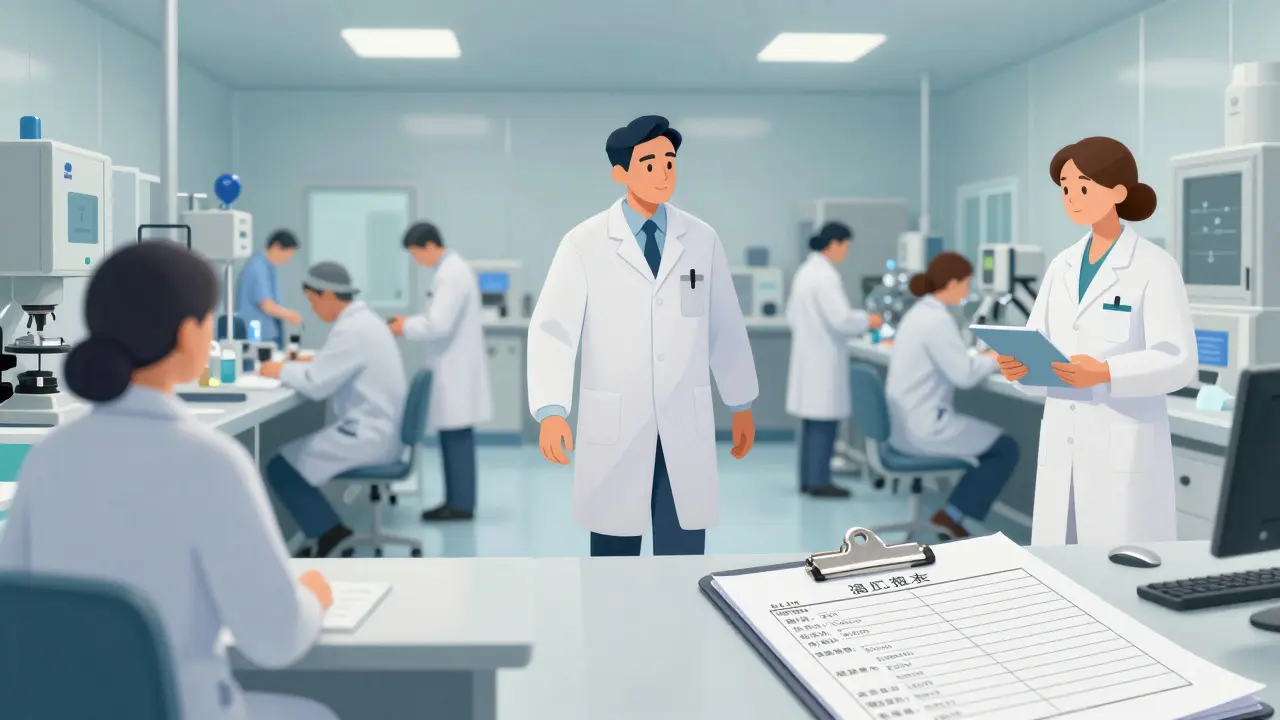
When the FDA shows up at your generic drug facility, it’s not a surprise visit-it’s the result of years of paperwork, process design, and daily decisions that either build trust or raise red flags. You don’t prepare for an FDA inspection. You live it. Every shift, every batch, every logbook entry matters. And if you’re asking what to expect, the answer isn’t just about forms or checklists. It’s about whether your facility tells a consistent, honest story-through its equipment, its people, and its records.
How the FDA Chooses Who to Inspect
The FDA doesn’t randomly pick generic drug plants. Their site selection uses a multi-criteria model that weighs risk like a scale. A facility making high-risk drugs-like injectables or those with narrow therapeutic windows-gets more attention. So does a site with past violations, unexplained spikes in customer complaints, or tips from whistleblowers. Even a single complaint about a tablet breaking apart can trigger a closer look.
Inspections aren’t scheduled like a dentist appointment. While some are planned, many are unannounced. The FDA’s goal isn’t to catch you off guard-it’s to see your facility as it really operates, not how you clean up for a visit. If your quality system only works when someone’s watching, you’re already behind.
The Six Systems the FDA Looks At
Every inspection follows a structured approach built around six core systems. The FDA doesn’t check them all every time, but one system is always examined: Quality. Why? Because if the Quality unit isn’t truly independent and empowered, nothing else matters.
- Quality System: This is the backbone. The FDA checks if your Quality Unit has real authority-can they stop a batch? Can they reject a supplier? Are they trained, resourced, and free from production pressure? They’ll dig into your deviation logs, change controls, and CAPA records. If your CAPAs are just paperwork with no follow-up, you’ll see an FDA 483.
- Facilities & Equipment: Is your cleanroom maintained? Are your equipment logs complete? Do you have qualification records for every piece of machinery that touches the product? The FDA doesn’t care if your HVAC system looks fancy-they care if it’s validated, monitored, and documented. A missing humidity log from six months ago can become a major observation.
- Materials: Every raw material, from active ingredients to packaging, must be approved and tested. The FDA will ask for Certificates of Analysis, supplier audits, and storage records. If your supplier was changed without a full qualification, that’s a red flag.
- Production: They’ll walk through your manufacturing line. Can you show batch records that match what actually happened? Are your in-process controls defined and followed? Did you document why a tablet weight was off by 2%? If your operators are improvising because the SOP is unclear, the FDA will notice.
- Packaging & Labeling: A mislabeled pill can kill. The FDA checks label control procedures, barcode scanning, and segregation of different products. If you’ve ever had a labeling mix-up, even once, you need to show how you fixed it-and how you prevented it from happening again.
- Laboratory Control: This is where many facilities stumble. Are your analytical methods validated? Are your reference standards traceable? Do you have stability data for every product? The FDA will pull samples from your stability chamber and compare them to your records. If your data doesn’t match your storage conditions, you’re in trouble.
What Happens During the Inspection
The inspection team usually arrives with two or three investigators. One leads, one takes notes, and sometimes a third is there to observe. They’ll start with an opening meeting-short, professional, no fluff. Then they’ll ask for documents: SOPs, batch records, validation reports, training logs.
They’ll walk the floor. They’ll watch operators. They’ll ask questions like: “Why did you rerun this test?” or “Who approved this change?” If you hesitate, they’ll write it down. If you say, “I don’t know,” they’ll write that too. The best answers are simple: “Here’s the SOP. Here’s the approval. Here’s the training record.”
They’ll check your data integrity. Are your electronic records protected? Are there audit trails? Can you prove no one deleted a failed test? The FDA now trains inspectors to spot data manipulation-not just missing entries, but oddly perfect results, timestamps that don’t make sense, or users who never log out.
They’ll visit your lab. They’ll ask to see your HPLC logs, your balance calibration records, your method validation reports. If your lab uses manual calculations, they’ll check the math. If your stability samples are stored at 25°C but your protocol says 20°C, they’ll flag it.

The FDA 483: What It Means and What to Do
If they find issues, they’ll give you Form FDA 483. It’s not a warning letter. It’s a list of observations-usually 3 to 10 items. Each one references a specific regulation, like 21 CFR 211.22(a) for lack of quality unit authority.
Don’t panic. A 483 doesn’t mean you’re shut down. But it does mean you have 15 business days to respond. Your response must be detailed, factual, and backed by evidence. Don’t say, “We’ll fix it.” Say: “We updated SOP 7.4 on March 5, 2026. Training was completed on March 10. We added a second review step for batch release. Attached are the training sign-offs and revised procedure.”
They’re not looking for perfection. They’re looking for control. If you can show that you understand the problem, fixed it, and prevented it from happening again, you’ll likely pass.
Pre-Approval Inspections: The Make-or-Break Moment
If you’re applying to sell a new generic drug, you’ll get a Pre-Approval Inspection (PAI). This is the most critical inspection you’ll ever face. The team isn’t just checking compliance-they’re verifying if your application is real.
They’ll compare your submitted data with what’s happening on the floor. If your application says your tablet press runs at 80 rpm, but your logbook shows 72 rpm, they’ll question everything. If your stability protocol says samples are stored at 40°C/75% RH, but your chamber logs show 38°C, they’ll assume your data isn’t trustworthy.
They’ll also check three things: Is your facility ready for commercial production? Is your application accurate? Is your process consistent? If the answer to any of these is no, your drug won’t get approved-even if it’s safe and effective.
The PreCheck Program: A Game Changer
In 2024, the FDA launched PreCheck-a program that lets manufacturers get feedback before they even start production. If you’re building a new facility or redesigning a line, you can submit a Type V Drug Master File with your layout, equipment specs, and quality system design.
The FDA reviews it and gives you feedback: “Your cleaning validation protocol is missing rinse water testing,” or “Your change control form doesn’t require quality approval.” This isn’t optional-it’s a chance to fix issues before you spend millions on equipment that might not pass inspection.
Companies using PreCheck report smoother PAIs and fewer 483s. It’s not a shortcut-it’s a safety net.
How to Get Ready-For Real
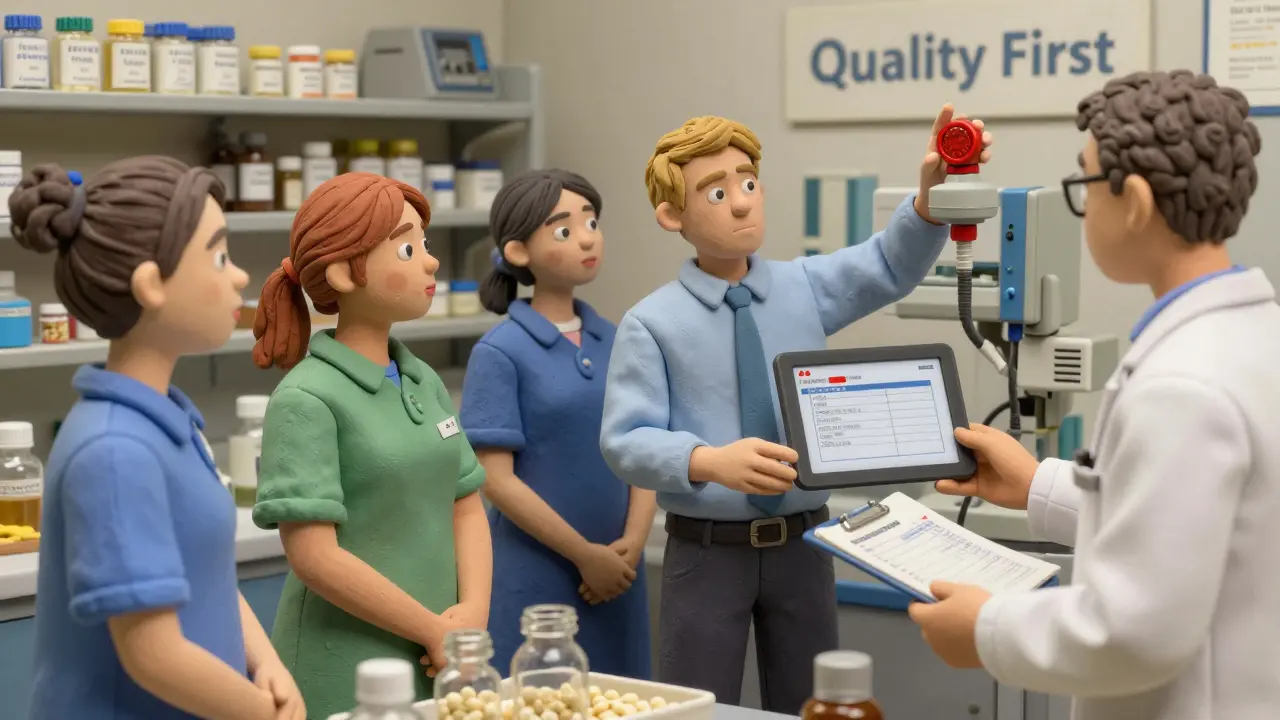
You can’t fake an FDA inspection. You can’t hire a consultant to train your staff the night before. Real readiness means:
- Every SOP is live, used, and followed-not just filed away.
- Every deviation is investigated, not just recorded.
- Every employee knows why their job matters to patient safety.
- Your Quality Unit has real power-not just a title.
- Your data is clean, complete, and traceable.
- You simulate inspections monthly-not just when you hear the FDA is coming.
Some facilities run mock inspections every quarter. They bring in outside auditors. They shut down production for a day to walk through every system. They ask: “What would the FDA ask about this?” Then they fix it before anyone shows up.
What Happens After the Inspection
The FDA writes an Establishment Inspection Report (EIR). It’s not public, but it’s archived. If your facility is deemed “in a state of control,” you’re good. If not, you might get a warning letter. That’s serious. It means you’re in violation of federal law.
After a warning letter, you’ll need to submit a detailed corrective plan. The FDA may do a follow-up inspection. In 2025, they finalized guidance for Post-Warning Letter Meetings (PWLMs), where you can talk directly to the agency about your fixes. It’s not a negotiation-it’s a chance to show you’ve changed.
And if you keep failing? The FDA can refuse to approve your drugs, block imports, or even shut you down.
The Bigger Picture: Quality Culture
The best facilities don’t just comply. They have a culture where quality is built into every decision. The night shift operator stops the line because a sensor is off. The lab tech reports a failed test-even if it delays shipment. The manager approves a budget for better equipment, even if it cuts into profit.
The FDA doesn’t inspect just to enforce rules. They inspect to protect patients. If your facility is built on that principle, you won’t just pass inspections-you’ll earn trust. And in the generic drug world, trust is your most valuable asset.
Can the FDA inspect a facility without notice?
Yes. While some inspections are scheduled, the FDA can and does conduct unannounced inspections, especially for facilities with higher risk profiles or past compliance issues. This is standard practice to ensure facilities maintain compliance at all times, not just when they know they’re being watched.
What happens if I don’t respond to an FDA 483 within 15 days?
Failing to respond within 15 business days can lead to a warning letter, which is a formal notice of violation. The FDA may also delay approval of new drug applications, refuse imports, or initiate regulatory action. A timely, detailed, and evidence-based response is critical to avoid escalation.
Are all generic drug manufacturers inspected equally?
No. The FDA uses a risk-based model that prioritizes inspections based on product risk, history of compliance, supplier reliability, and consumer complaint trends. Facilities making high-risk products like injectables or those with past violations are inspected more frequently than low-risk, consistently compliant sites.
How often does the FDA inspect generic drug facilities?
There’s no fixed schedule. Most facilities are inspected every 2 to 5 years, but high-risk sites may be inspected annually. The FDA’s risk-based model means inspection frequency is tied to compliance history, product type, and other risk factors-not a calendar.
What’s the difference between an FDA 483 and a warning letter?
An FDA 483 is a list of observations made during an inspection-it’s not a formal violation. A warning letter is a legal notice that the facility is in violation of federal regulations. A 483 can lead to a warning letter if the response is inadequate or if issues are severe and unaddressed.
Can a facility be approved for a generic drug if it has an open 483?
Generally, no. The FDA will not approve a new generic drug application if there are unresolved observations from a Pre-Approval Inspection. The issues must be addressed and verified before approval is granted, even if the drug itself is safe and effective.
What is the PreCheck program, and how does it help manufacturers?
The PreCheck program, launched in 2024, allows manufacturers to submit detailed facility plans-including design, equipment, and quality systems-to the FDA before construction or production begins. The FDA reviews the plan and provides feedback to help avoid compliance issues early. This reduces the chance of costly delays or rejection during the formal inspection process.
Is data integrity really that important during an FDA inspection?
Yes. The FDA now trains inspectors specifically to detect data manipulation. This includes falsified test results, missing audit trails, deleted records, or timestamps that don’t match physical events. Facilities with poor data integrity-even if their processes are otherwise compliant-face high risk of regulatory action.
Do I need to have all my documents printed out for the inspection?
No. The FDA accepts electronic records as long as they’re secure, backed up, and accessible. You must be able to retrieve and print any document on demand. The key is not the format-it’s whether the records are complete, accurate, and available when requested.
What’s the biggest mistake companies make before an FDA inspection?
The biggest mistake is treating the inspection as a one-time event. Many companies clean up their facility, rush to fix obvious issues, and train staff on what to say. But the FDA looks for consistency over time. If your daily operations don’t match your paperwork, you’ll be found out. Real preparation means living in a state of inspection readiness every day.
Generic drug manufacturing isn’t about cutting corners-it’s about delivering safe, affordable medicine to millions. The FDA’s inspection system exists to ensure that promise is kept. The companies that thrive aren’t the ones who avoid scrutiny-they’re the ones who welcome it as proof they’re doing it right.
cara s
March 19, 2026 AT 12:19It's fascinating how the FDA's approach has evolved from reactive enforcement to proactive partnership, especially with PreCheck. I've worked in three different generic manufacturing facilities over the last decade, and the shift from 'gotcha' inspections to collaborative risk mitigation has been profound. What used to be a week of panic and last-minute document scrambling is now a routine audit trail review-because we live compliance every day, not just when the inspectors show up. The real win isn't avoiding a 483-it's building a culture where the night shift operator feels empowered to halt production because a sensor glitched, not because they're afraid of getting written up.
And honestly? The most underrated part of this whole system is how the Quality Unit's independence is non-negotiable. If they don't have the authority to say no-even to the VP of Production-then nothing else matters. I've seen too many companies give Quality a title and a corner office but strip them of real power. That’s not compliance. That’s theater.
The data integrity piece is also huge. I remember one site where every HPLC run had perfect results-no outliers, no re-runs, no deviations. Turns out, they were manually editing the raw data. The FDA caught it because the audit trail showed a user logged in at 3:17 AM for 12 seconds and then deleted a failed test. That’s not incompetence. That’s intent. And they shut the line down for six months.
Bottom line: You can’t fake integrity. You can’t train it the night before. It’s either baked into your DNA, or it’s going to unravel the moment someone with a clipboard asks a simple question: 'Why did you rerun this?'
Robin Hall
March 21, 2026 AT 12:13Let’s be real-the entire FDA inspection regime is a sham. It’s not about patient safety. It’s about control. The agency uses the guise of ‘risk-based’ inspections to justify endless bureaucracy while ignoring the real issue: global supply chains are collapsing under the weight of U.S. regulatory overreach. Why do we assume every facility in India or China is inherently untrustworthy? Because the FDA says so. But here’s the truth: the same inspectors who demand 12 layers of documentation for a simple tablet press are ignoring the fact that 80% of active pharmaceutical ingredients come from overseas labs with zero oversight.
PreCheck? That’s not a safety net-it’s a pay-to-play system. Only big pharma can afford to submit Type V DMFs and wait months for feedback. Small manufacturers? They get blindsided by unannounced visits and then hemorrhage cash trying to respond to 483s they never saw coming.
And don’t get me started on data integrity. The FDA trains inspectors to look for ‘oddly perfect’ results. But what if the process is just that good? What if the operators are trained, the equipment is calibrated, and the environment is controlled? Are we penalizing excellence because it doesn’t match their expectation of chaos?
This isn’t regulation. It’s performance art for bureaucrats who’ve never held a pipette.
Michelle Jackson
March 21, 2026 AT 14:08I’ve read this whole thing and honestly? It’s all just corporate fluff wrapped in regulatory jargon. Every single facility that gets inspected has a ‘culture of quality’ on their website. But walk into any plant during shift change and you’ll see the same thing: tired people rushing through SOPs they don’t understand, managers ignoring deviations because ‘it’s just one batch,’ and labs where the HPLC is older than the technician running it.
The FDA doesn’t care about your ‘trust.’ They care about their budget. They care about headlines. They care about looking tough in front of Congress. Meanwhile, patients are still getting pills made in facilities where the air conditioning broke last year and no one fixed it because the budget got cut.
And PreCheck? Please. That’s just a fancy way of saying ‘pay us more money before we tell you how to build your factory.’ It’s not a safety net. It’s a toll booth.
Real change? Fire the inspectors who don’t know how to use a clipboard. Stop pretending this is about safety. It’s about control. And nobody’s willing to admit it.
Suchi G.
March 22, 2026 AT 23:41I come from a country where generic medicines are the only lifeline for millions. In India, we don’t have luxury of fancy audit trails or automated HPLC systems. We have people-hardworking, underpaid, brilliant people-who make sure that a diabetic in rural Bihar gets their insulin, even if the power went out for three hours last night.
The FDA’s model is beautiful in theory. But it’s built for a world that doesn’t exist. A missing humidity log? A 2% weight deviation? These aren’t crimes. They’re symptoms of a system stretched thin. The real tragedy isn’t the 483-it’s that the FDA doesn’t see the human cost of their rigidity.
I’ve worked in a facility where we hand-wrote batch records because the server crashed. We didn’t have a backup. We didn’t have a consultant. We had a team that stayed 14 hours past shift to hand-deliver the medicine to the nearest clinic.
Do we deserve an inspection? Yes. Do we deserve to be shut down because a log was handwritten? No.
Regulation should protect. It shouldn’t punish the poor for being resourceful.
becca roberts
March 23, 2026 AT 14:31Wow. So let me get this straight-the FDA is now the corporate compliance police, and we’re supposed to be impressed that they’re ‘not just catching you off guard’? That’s the bar now? Not ‘did this save lives’? Not ‘did this reduce cost’? But ‘did you document your coffee break?’
I work in a lab where we make 200 million tablets a year. We’ve never had a single adverse event. But according to this, if my operator didn’t sign a form that says they checked the temperature at 2:13 PM, we’re ‘in violation.’
And yet, the same FDA that’s obsessed with a missing logbook is letting tons of contaminated products slip through because they’re too busy chasing paperwork to look at the actual medicine.
So… we’re supposed to be proud of this? The system that rewards perfection in documentation but ignores imperfection in product? That’s not quality. That’s performance art with a clipboard.
Andrew Muchmore
March 25, 2026 AT 10:15Quality unit must have authority. That’s it. Everything else follows. If they can’t stop a batch, you’re already losing.
Stop overcomplicating. Read 21 CFR 211.22. Do it. Live it. Don’t hire consultants. Train your people. Document your actions. That’s all.
The rest is noise.
Paul Ratliff
March 26, 2026 AT 09:16Been there. Done that. The FDA doesn’t want perfection. They want consistency.
One time, we had a temp spike in the cleanroom. We didn’t panic. We documented it. We investigated it. We trained the team on it. We updated the SOP. We sent the report.
They gave us a thumbs up.
Not because we were perfect. Because we owned it.
SNEHA GUPTA
March 28, 2026 AT 04:51There’s a deeper philosophical question here that no one seems to be asking: What does it mean for a system to be ‘in control’? Is control the absence of deviation? Or is it the presence of a responsive, adaptive, and accountable culture?
The FDA’s model treats compliance like a machine-input the right procedures, output the right audit trail. But human systems don’t work that way. A facility where everyone is afraid to speak up because they might trigger a 483 is not in control. It’s in fear.
True control isn’t in the logs. It’s in the silence between the lines-the unspoken understanding that if something is wrong, someone will say something, and it will be heard.
We’ve optimized for documentation because it’s measurable. But the most important things in quality-trust, courage, humility-are not quantifiable. And yet, they’re the only things that keep patients alive.
Gaurav Kumar
March 30, 2026 AT 03:11USA thinks it owns quality. LOL. 🤡
You write 100-page SOPs. We make 10x more pills with 1/10th the paperwork. Our factories run 24/7. Your inspectors fly in, take pictures of our floor, and write 483s because we don’t have a fancy HVAC logbook.
Meanwhile, your own drug shortages? Blame your own bureaucracy. We don’t need your ‘PreCheck.’ We need your market. And we’re taking it.
Stop pretending your way is better. Your system is slow. Expensive. Broken.
India doesn’t need your approval. We already save millions of lives. 🇮🇳
David Robinson
March 31, 2026 AT 10:48Everyone’s talking about the 483s and the PreCheck and the audit trails. But nobody’s talking about the real problem: the FDA doesn’t have enough inspectors. And the ones they do have? Half of them are fresh out of grad school with zero field experience.
I’ve been on both sides of this. I’ve been an inspector. I’ve been the facility manager.
The biggest issue? The inspectors don’t know what they’re looking at. They see a missing logbook and flag it as a ‘data integrity violation.’ Meanwhile, the real risk is a corroded valve in the sterilization chamber that no one’s monitoring because the budget was cut two years ago.
They’re trained to find paperwork errors. Not safety hazards.
So we’re spending millions on electronic records to satisfy a guy who can’t tell the difference between a pressure gauge and a thermometer.
This isn’t safety. It’s theater.
Jeremy Van Veelen
April 1, 2026 AT 11:11Let me tell you about the day I watched an FDA inspector cry.
Not because of a 483. Not because of a failed audit.
Because a night shift operator handed her a handwritten note: ‘I stopped the line. The tablet hardness was 12% off. I didn’t know if I should. I’m scared. But I did it anyway.’
She took the note. She didn’t write it down. She didn’t photograph it.
She put it in her pocket.
And then she looked at me and said: ‘This is why I do this job.’
That’s the moment the system worked.
Not because of SOPs. Not because of audit trails.
Because someone cared enough to stop.
That’s the culture the FDA doesn’t inspect.
But they feel it.
Laura Gabel
April 3, 2026 AT 10:47Stop pretending this is about patients.
This is about lawyers.
This is about liability.
This is about covering the FDA’s butt so they don’t get sued when some kid in Ohio dies because a pill was mislabeled.
So they make us do 17 layers of documentation for a 10-cent tablet.
Meanwhile, the real problem-poor distribution, bad pharmacy storage, patients not taking their meds-is ignored.
We’re not saving lives here.
We’re just building a fortress of paperwork.
jerome Reverdy
April 3, 2026 AT 18:41Let’s cut through the noise. The FDA’s six systems framework? Brilliant. Not because it’s perfect-but because it’s practical. It’s a checklist that forces you to ask: ‘Is this thing actually working, or are we just pretending?’
Quality? If the unit can’t stop a batch, you’re not compliant. You’re delusional.
Facilities? If your HVAC log is empty, you’re not ‘busy’-you’re negligent.
Data integrity? If you can’t prove a test result wasn’t edited, you don’t get to sell medicine.
Here’s the secret: You don’t need to be perfect. You need to be honest. And consistent.
The best facilities I’ve seen? They don’t have the fanciest equipment. They don’t have the most training. They have one thing: a team that owns their work. They don’t wait for an inspector to tell them something’s wrong. They tell each other.
That’s the culture. Not the SOPs.
And yeah-PreCheck? It’s not a gimmick. It’s the first time the FDA has acted like a partner instead of a cop. If you’re building something new? Use it. Don’t wait for the hammer to fall.
cara s
April 5, 2026 AT 17:24Jeremy Van Veelen’s comment about the inspector crying? That’s the heart of it. We’ve turned compliance into a checklist game. But the moment someone stops the line because they care-that’s when the system becomes human. I’ve seen that moment. It doesn’t happen because of training. It happens because someone was taught that their voice matters. And that’s the only thing the FDA can’t audit.
But it’s the only thing that saves lives.