
Fasted vs Fed State Testing: Why Both Conditions Matter for Health and Pharma
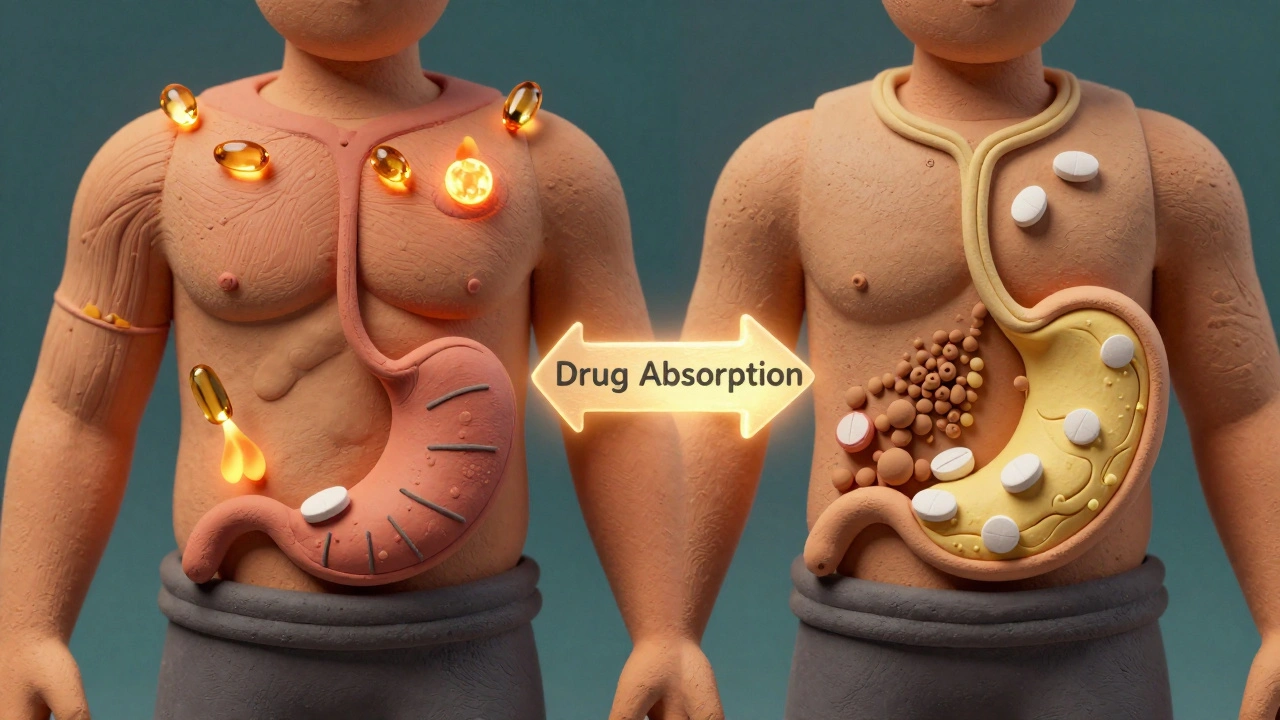
When you take a pill, does it matter if you’ve eaten or not? The answer isn’t just common sense-it’s science. And it’s the same question athletes, researchers, and drug regulators ask every day: fasted vs fed state testing. These two conditions aren’t just different meals-they’re different worlds inside your body. One can make a drug work better, worse, or not at all. The other can turn a workout into a fat-burning machine-or leave you dragging.
What Exactly Are Fasted and Fed States?
Fasted state means you haven’t eaten for at least 8 to 12 hours. Water? Fine. Coffee without sugar? Usually okay. But no food, no snacks, no supplements that contain calories. Your body’s running on stored energy-fat and glycogen. This is the default state for most drug trials and many morning workouts.
Fed state is the opposite. You’ve eaten. Not just a bite, but a full, standardized meal-usually around 800 to 1,000 calories, with half or more coming from fat. That’s not a banana and a handful of nuts. That’s a burger with fries, a milkshake, or a heavy breakfast. Your digestive system is now active: stomach acid is high, blood flow to your gut is up, and your body is busy processing nutrients.
These aren’t just labels. They’re biological switches. And they change how your body handles everything from caffeine to chemotherapy.
Why Drug Companies Can’t Ignore Fed State Testing
Back in the 1990s, the FDA realized something scary: many drugs behaved totally differently depending on whether patients took them on an empty stomach or after a meal. Some drugs, like fenofibrate (used for cholesterol), absorb up to 300% better when taken with food. Others, like griseofulvin (an antifungal), get absorbed 50-70% less when food is present.
That’s not a small difference. That’s the difference between a drug working and failing. Or worse-between safe dosing and toxic overdose.
Today, if you’re developing a new oral drug, the FDA and EMA require you to test it in both states. Why? Because real people don’t take pills on an empty stomach every time. They eat breakfast, skip lunch, grab snacks, or take meds with dinner. If your drug’s absorption changes by more than 20% because of food, regulators won’t approve it without clear dosing instructions.
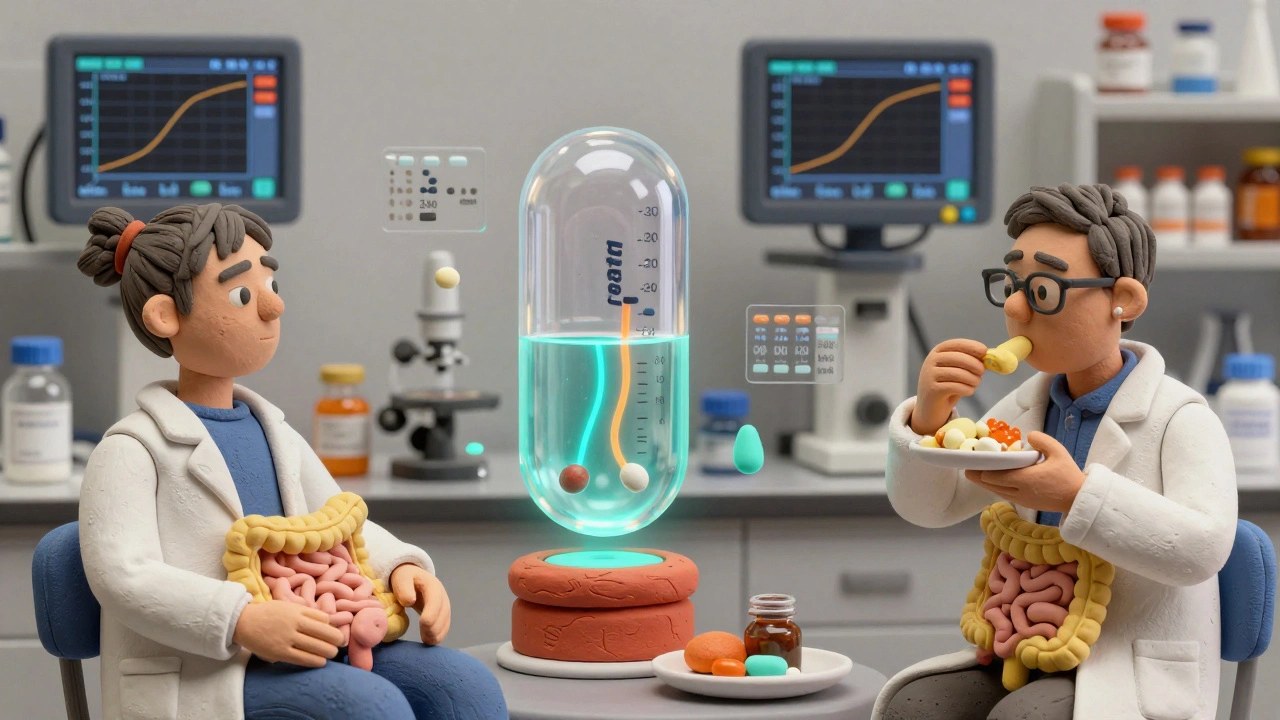
And it’s not just about absorption. The gut itself changes. In a fasted state, your stomach empties in about 14 minutes. In a fed state? It takes over an hour. pH drops lower, pressure rises, and bile flow increases-all of which affect how drugs dissolve and get absorbed. A 2016 study using SmartPill capsules showed gastric pressure during digestion jumped from 30-304 mbar in fasted to consistently above 240 mbar in fed. That’s a massive mechanical shift.
Now, the latest twist? Ethnic differences. A 2022 study found Asian populations empty their stomachs 18-22% slower than Caucasians in fed conditions. That’s why the FDA’s 2023 draft guidance now demands testing across diverse groups. One-size-fits-all dosing is dead.
Exercise Science: Fasted Workouts for Fat Loss-or Just for Show?
Turn the same question to a gym-goer, and you’ll hear a different story. “I train fasted to burn more fat.” “I need carbs to crush my workout.” Both are true-depending on the goal.
Studies show that in a fasted state, your body releases 30-50% more free fatty acids into the bloodstream. That’s fuel from fat stores. Your muscles also turn on key genes like PGC-1α by 40-50%, which helps build mitochondria-the energy factories in your cells. That’s why fasted training is linked to better long-term metabolic health, especially for people with insulin resistance.
But here’s the catch: you can’t go all-out. High-intensity intervals, heavy lifting, or long endurance sessions? Performance drops by 12-15% without carbs. Your muscles are running on fumes. A 2018 meta-analysis of 46 studies found fed-state exercise improved aerobic performance by 8.3% over longer sessions-but had zero benefit for workouts under 60 minutes.
So if you’re training for a race, a competition, or even just trying to lift heavier, eat first. If you’re trying to improve fat metabolism, insulin sensitivity, or just want to burn more fat during a steady-state jog? Fasted might help.
But don’t believe the hype. A 2021 study in the Journal of the International Society of Sports Nutrition found no difference in body composition changes after six weeks between fasted and fed groups-even though fat burning during the workout was higher in the fasted group. Your body adapts. What happens in the gym doesn’t always translate to long-term fat loss.
Who Should Train Fasted? Who Should Eat First?
There’s no universal rule. But here’s how to decide:
- If you’re sedentary, overweight, or managing prediabetes: Try fasted morning walks or light cardio. Studies show 5-7% better insulin sensitivity after weeks of this.
- If you’re an athlete, powerlifter, or HIIT enthusiast: Eat a carb-rich meal 1-4 hours before. Aim for 1-4 grams of carbs per kg of body weight. You’ll train harder, recover faster.
- If you’re doing long endurance events: Fed state wins. Ultramarathoner Scott Jurek swears by eating before training to sustain intensity.
- If you’re into fat loss and low-carb diets: Fasted training might help. CrossFit champ Rich Froning does most of his metabolic workouts fasted to boost fat-burning efficiency.
And don’t ignore the red flags. In a 2022 Reddit survey of over 1,200 people, 31% reported dizziness during fasted workouts. 22% said their intensity dropped. That’s not “pushing through”-that’s your body warning you.
The Real Conflict: Science vs. Lifestyle
Here’s the problem no one talks about: real life doesn’t follow protocols.
Drug trials use exact meals: 800 calories, 500 from fat, within 10% precision. But people? They eat pizza, then take their blood pressure pill. They skip breakfast, then drink a protein shake before a workout. They take meds with tea instead of water.
That’s why the FDA now requires testing in “real-world” conditions-not just lab-perfect ones. And why exercise scientists are moving toward personalized approaches. A 2022 study found that genetic variants in the PPARGC1A gene explain 33% of why some people respond to fasted training and others don’t.
One size doesn’t fit all. Not in the lab. Not in the gym. Not in your kitchen.
What’s Next? Precision Testing Is Here
The future isn’t about choosing fasted OR fed. It’s about knowing which one your body needs-when.
Pharmaceutical companies are now using continuous glucose monitors during fed-state trials to track how food affects drug absorption in real time. That’s huge. It means dosing could one day be adjusted based on your personal metabolic response.
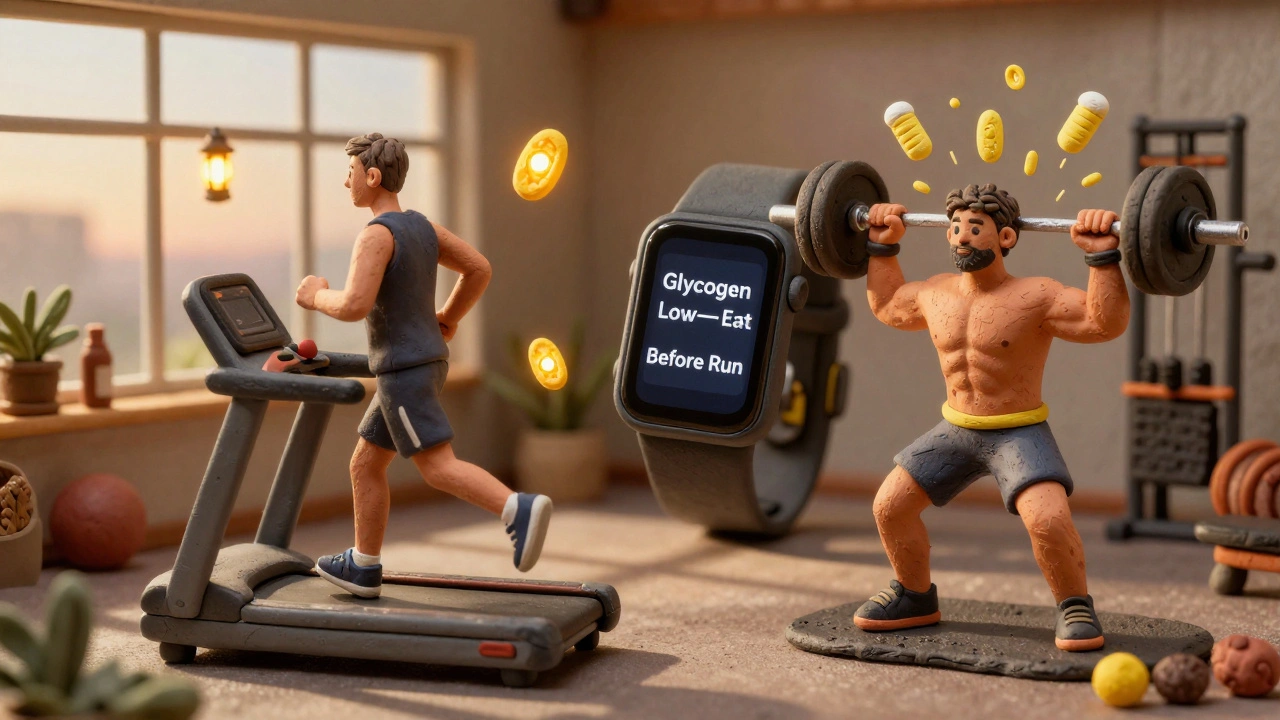
In fitness, wearable tech is starting to suggest whether you should train fasted or fed based on your sleep, stress, and recent carb intake. Your Apple Watch or Oura Ring might soon tell you: “Your glycogen is low. Eat before your run.”
And the market is responding. The global bioequivalence testing industry hit $2.7 billion in 2022. The sports nutrition market, fueled by fed-state performance products, is projected to hit $50 billion by 2030.
This isn’t a trend. It’s a standard. And it’s here to stay.
Bottom Line: Both States Matter
Fasted and fed states aren’t opposites. They’re tools. Each reveals something the other hides.
For drugs: Fed state testing prevents underdosing, overdosing, and dangerous interactions. Skipping it is reckless.
For training: Fasted state improves fat metabolism. Fed state improves performance. Pick based on your goal-not your Instagram feed.
And if you’re trying to optimize your health? Don’t just follow rules. Test yourself. Try both. Track how you feel. Monitor your energy, your recovery, your mood. Your body’s response is the only protocol that truly matters.
Is it better to take medication fasted or fed?
It depends on the drug. Some, like fenofibrate, absorb much better with food-up to 300% more. Others, like griseofulvin, absorb less when taken with meals. Always check the label or ask your pharmacist. Drug manufacturers test both conditions because food can change how well the medicine works-or if it’s safe.
Can I do high-intensity workouts fasted?
You can, but you won’t perform at your best. Studies show high-intensity efforts drop by 12-15% without carbs. Your muscles need quick energy, and without food, you’re burning through limited glycogen stores. If you’re doing sprints, heavy lifts, or HIIT, eat something 1-2 hours before. Save fasted training for steady-state cardio or recovery days.
Does fasted training burn more fat long-term?
During the workout, yes-fasted training increases fat burning by 27.6%. But over weeks or months, studies show no difference in body fat loss compared to fed training. Your body adapts. What matters more is total calorie balance and consistency. Don’t fast just to burn fat-do it if you feel better doing it.
Why do drug trials use such a high-fat meal?
Because fat slows digestion and triggers the strongest food effect on drug absorption. A high-fat meal (800-1,000 calories, half from fat) is the worst-case scenario for absorption. If a drug works fine under those conditions, it’ll work fine with most meals. It’s a safety test.
Should I eat before my morning workout?
If you’re training for performance-running a race, lifting heavy, competing-yes. Eat a light meal with carbs 1-2 hours before. If you’re doing light cardio for general health, fasted is fine. But if you feel dizzy, weak, or can’t finish your session, eat something. Listen to your body more than any trend.
Are there risks to fasted training?
Yes. Fasted training can cause low blood sugar, dizziness, nausea, or muscle breakdown if done too often or too intensely. People with diabetes, eating disorders, or those who are pregnant should avoid it. Always hydrate well and stop if you feel unwell. It’s not for everyone.
John Biesecker
December 2, 2025 AT 16:54man i just took my statin with a donut this morning and now i’m wondering if i just sabotaged my cholesterol levels 😅
Genesis Rubi
December 4, 2025 AT 11:17of course the FDA cares about food-because americans eat like garbage. if you took your meds with a salad like a civilized human, we wouldn’t need 12 studies on ‘food effects.’ 🇺🇸
Doug Hawk
December 5, 2025 AT 12:58the gastric pressure shift from 30-304 mbar to >240 mbar in fed state is wild. that’s not just digestion-that’s a full-on biomechanical remodel. and the ethnic variation in gastric emptying? 18-22% slower in asian populations? this is why blanket dosing is a relic. we’re moving into pharmacokinetic personalization, and it’s long overdue.
the real kicker? we still treat ‘fed’ as one state when in reality, a greasy burger vs. a smoothie vs. a curry creates three entirely different absorption profiles. we need granularity, not binary labels.
Michael Campbell
December 7, 2025 AT 04:58they’re hiding something. why do all the trials use ‘standardized meals’ but never test with fast food? because the pharma giants make more money when you take it wrong. they want you confused. don’t trust the system.
Saravanan Sathyanandha
December 8, 2025 AT 16:36in india, we’ve always known this-taking medicine after roti and dal isn’t a suggestion, it’s tradition. my grandmother would scold me if i swallowed pills with tea. now science confirms: fat and fiber are silent partners in drug absorption. perhaps the west should learn from ancient practices before inventing new terms like ‘fed-state bioequivalence.’ 🙏
alaa ismail
December 8, 2025 AT 23:50i’ve been doing fasted runs for years and honestly? i feel lighter. but i also don’t lift heavy. so maybe it’s just my vibe. 🤷♂️
ruiqing Jane
December 10, 2025 AT 18:34the fact that 31% of people reported dizziness during fasted workouts isn’t ‘pushing through’-it’s your body screaming. if you’re not fueling properly, you’re not training-you’re surviving. please stop glorifying martyrdom in fitness. your mitochondria deserve better.
Fern Marder
December 11, 2025 AT 14:53so let me get this straight: if i take my thyroid med with coffee, i’m basically doing a fed-state trial on myself? 😬
also, why does everyone act like fasted training is a moral victory? it’s just a metabolic hack. not a cult. 🙄
Carolyn Woodard
December 12, 2025 AT 05:58the 2022 study on PPARGC1A variants explaining 33% of response variability to fasted training is the most compelling part. this isn’t about discipline-it’s about epigenetics. we’re not all built the same. the idea that one protocol fits all is not just outdated-it’s biologically ignorant.
and yet, the supplement industry still markets ‘fasted fat-burning’ as a universal truth. it’s predatory. we need population-specific guidelines, not influencer dogma.
Allan maniero
December 13, 2025 AT 07:22you know, it’s funny-back in the 80s, we just took pills with water and hoped for the best. now we’ve got whole labs analyzing bile flow, gastric pressure gradients, and ethnic metabolic differences. it’s impressive, really. but also… exhausting? i mean, do i really need to know the exact mbar of pressure in my stomach before i take my blood pressure med? or can i just… eat dinner and take it? 🤔
the science is fascinating, but the anxiety it breeds? not so much. maybe the goal should be simplicity, not complexity.
Saket Modi
December 14, 2025 AT 23:00lol why are we even talking about this? just take your pill whenever. it’s not that big of a deal. 🤷♂️
Anthony Breakspear
December 15, 2025 AT 01:13my buddy took his fenofibrate with a milkshake and his triglycerides dropped 40% in a month. i was skeptical-but now i’m convinced. food isn’t the enemy. it’s the co-pilot.
also, if your wearable tells you to eat before your run? listen. your body knows more than your instagram feed. no cap. 🚀