
Elderly Dehydration and Diuretics: How to Prevent Kidney Damage
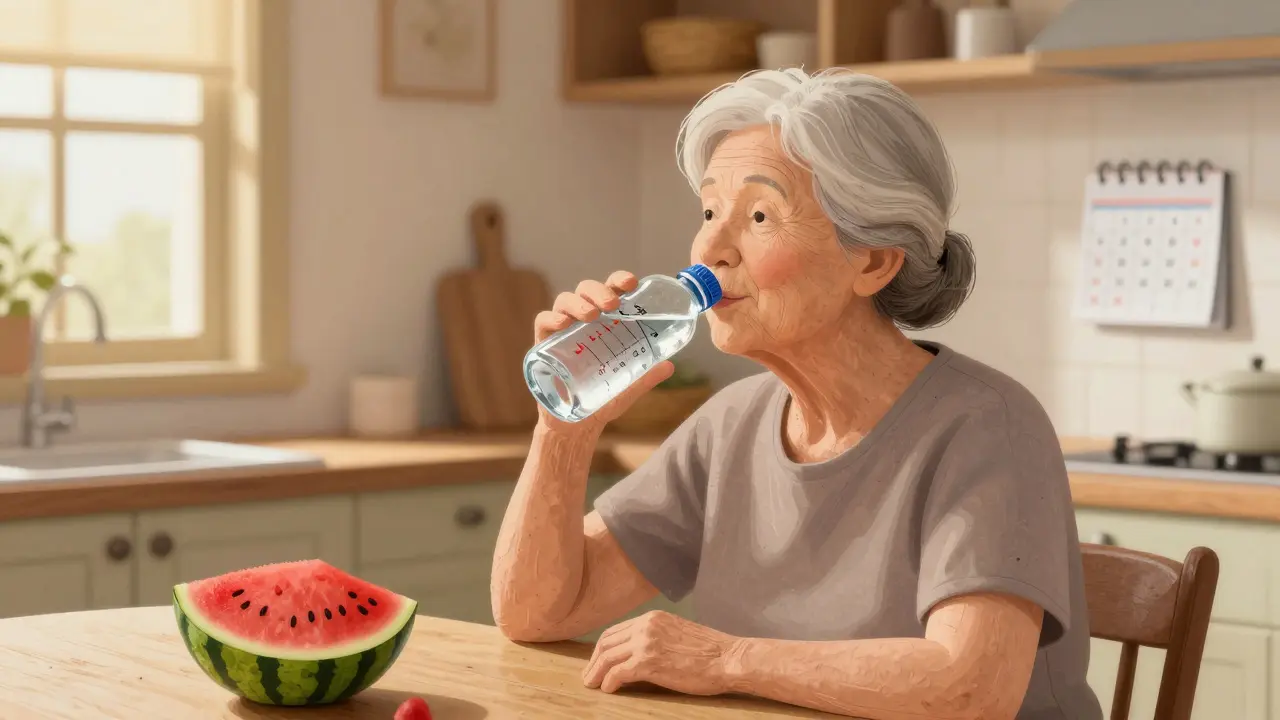
Personalized Hydration Calculator for Seniors on Diuretics
Hydration Assessment
Hydration Plan
Recommended Daily Fluid Intake:
Optimal Schedule:
Dehydration Risk:
Important: This calculator adjusts for diuretic type and kidney function. Always follow your doctor's specific recommendations.
When older adults take diuretics for heart failure or high blood pressure, their bodies become more fragile. These medications help remove excess fluid, but they also make it easier to become dangerously dehydrated. And when dehydration hits, the kidneys-already weakened by age-can shut down in just hours. This isn’t rare. About 20% of hospitalizations for people over 65 involve dehydration, and those on diuretics are over three times more likely to suffer acute kidney injury than those not taking them.
Why Older Bodies Handle Fluid Differently
As we age, the body’s ability to hold onto water drops sharply. The kidneys lose their power to concentrate urine. In young adults, maximum urine concentration can reach 1,200 mOsm/kg. By age 65, that number falls to 500-700 mOsm/kg. This means older kidneys can’t save water as efficiently. Even small fluid losses become hard to recover from. Thirst also fades. Adults over 65 feel 40% less thirsty than younger people. That’s not just inconvenient-it’s dangerous. Many seniors don’t drink enough because they don’t feel the need. Combine that with diuretics like furosemide or hydrochlorothiazide, and the risk skyrockets. Add in other medications. Nearly 75% of seniors take at least two drugs that affect fluid balance. Blood pressure pills, pain relievers like ibuprofen, even some antidepressants can interfere with kidney function. A single missed drink or a hot day can push someone into crisis.How Diuretics Work-And Why They’re Risky for Seniors
Not all diuretics are the same. Loop diuretics like furosemide are strong. They make the kidneys dump 20-25% of sodium into urine. That’s great for reducing swelling in heart failure, but it also means more water leaves the body. Thiazide diuretics, like hydrochlorothiazide, are milder-only 5-10% sodium loss-but they last longer and can cause low sodium levels (hyponatremia) in 14% of elderly users. Potassium-sparing diuretics like spironolactone are often added to prevent low potassium, but they carry their own risk: high potassium (hyperkalemia). About 37% of elderly diuretic users have stage 3 or worse chronic kidney disease, making them especially vulnerable to this. Even alternatives aren’t perfect. ACE inhibitors like lisinopril lower blood pressure without strong diuretic effects, but they increase the risk of kidney injury during dehydration by 22%. SGLT2 inhibitors like empagliflozin are newer and cause 24% less dehydration, but they cost $550 a month versus $8 for hydrochlorothiazide. For many seniors, cost limits options.The Hidden Signs of Dehydration in Seniors
Dry mouth? That’s the classic sign-but only 32% of seniors recognize it as a warning. Most don’t notice until it’s too late. More subtle signs include:- Confusion or dizziness (reported in 78% of severe cases)
- Urine output under 400 mL per day
- Sudden drop in blood pressure when standing (over 20 mmHg)
- Weight loss of more than 2 kg in a week
- Dark yellow urine or strong odor
How Much Water Do Seniors on Diuretics Really Need?
There’s no one-size-fits-all answer. But research points to a sweet spot: 1.5 to 2.0 liters per day. Too little (<1L) increases acute kidney injury risk by 4.7 times. Too much (>3L) can also harm kidneys in people with chronic disease, speeding up decline by 23%. The key isn’t just volume-it’s timing. A 2023 study from UCSF showed that concentrating 70% of fluid intake between 8 a.m. and 6 p.m. cuts nighttime urination by 41%. That means fewer bathroom trips at night, better sleep, and less risk of falls. A 2022 trial in assisted living facilities proved that a simple routine-150 mL of water every two waking hours-reduced kidney injury by 34%. No fancy tools. Just scheduled sips.Practical Steps to Prevent Kidney Damage
Here’s what actually works, based on real-world data:- Reduce diuretic doses. The American Geriatrics Society recommends cutting standard doses by 30-50% for seniors over 75 with reduced kidney function.
- Track daily weight. A drop of more than 2 kg in a week means fluid loss is too fast. Call the doctor.
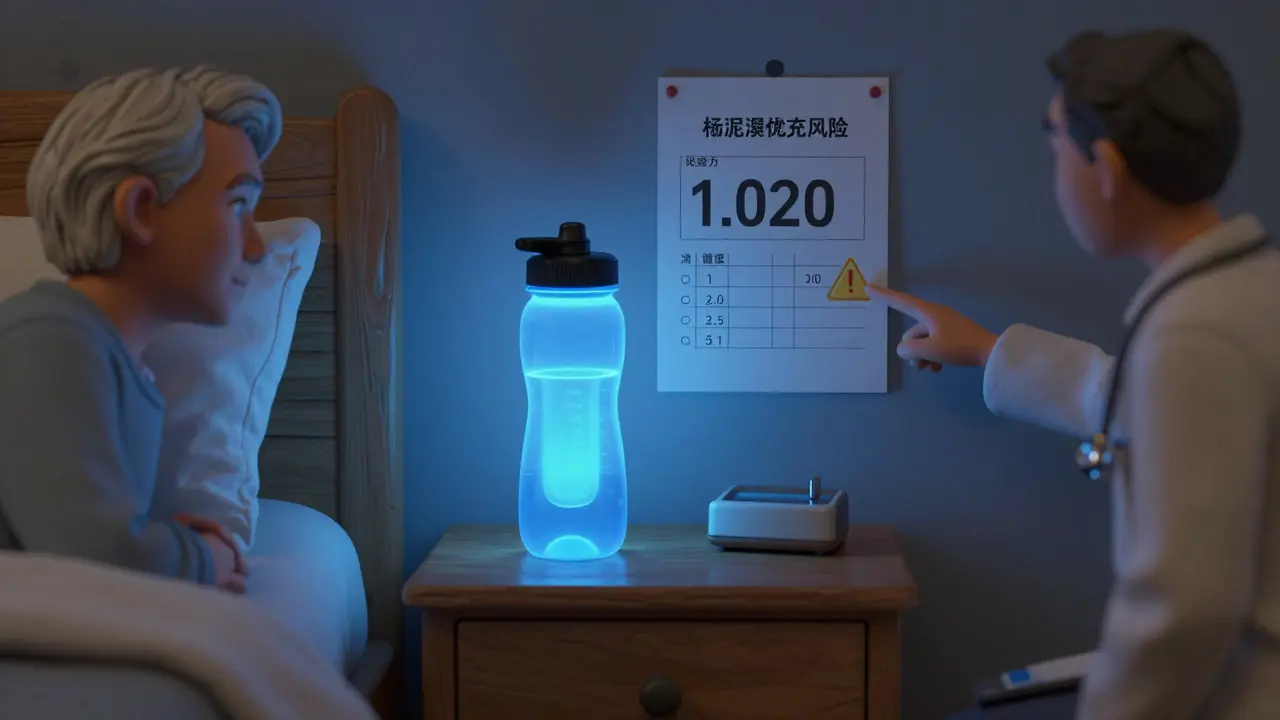
- Use marked water bottles. Caregivers who used bottles with time-based markings saw 45% better hydration adherence.
- Set phone reminders. 63% of users stuck to hydration schedules when they had alerts every 2 hours.
- Include hydrating foods. Watermelon, cucumbers, oranges, and broth-based soups add fluid without forcing drinks.
- Avoid NSAIDs. Ibuprofen and naproxen increase kidney injury risk by 300% in diuretic users. Use acetaminophen instead.
- Check electrolytes. Get blood tests every 3-6 months. Sodium and potassium levels can swing dangerously fast.
What Not to Do
Don’t try to “catch up” by chugging water after a long day. Rapid fluid intake can cause hyponatremia-dangerously low sodium. In 19% of improperly managed cases, sodium dropped over 10 mmol/L in 24 hours, leading to seizures or coma. Don’t assume more water is always better. For seniors with advanced kidney disease (stages 4-5), too much fluid can cause fluid buildup in the lungs. Fluid restriction may be necessary. Always follow your doctor’s guidance.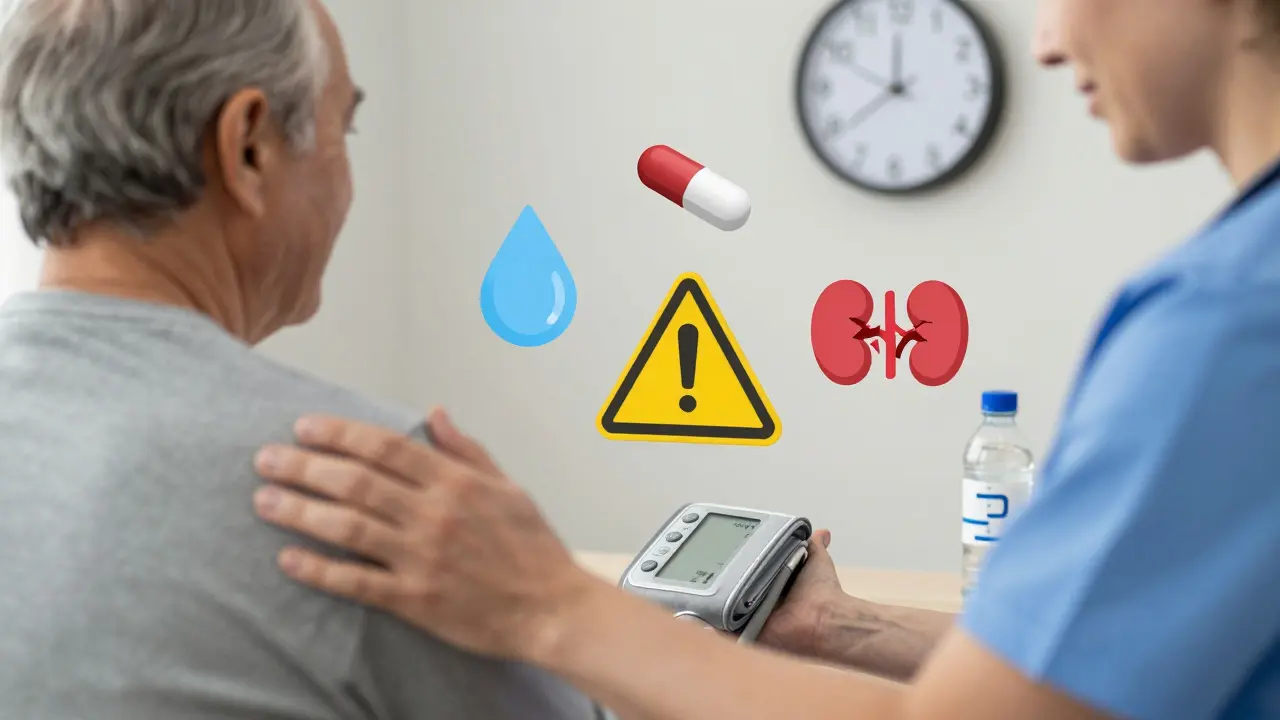
Technology Is Helping-But It’s Not a Fix
Smart water bottles like HidrateSpark PRO sync with apps and send alerts to caregivers. Wearable monitors like GYMGUYZ’s Hidrate track hydration in real time and flag risks before symptoms appear. Early data shows a 33% drop in emergency visits when these are used. But tech alone won’t solve the problem. Only 37% of seniors use them consistently. The real solution is simple: structure. Routine. Consistent habits.When to Call for Help
If a senior on diuretics shows any of these signs, get medical help immediately:- Urine output drops below 400 mL/day
- Confusion or disorientation appears suddenly
- Standing blood pressure drops more than 20 mmHg
- Weight loss exceeds 2 kg in a week
- Urine specific gravity stays above 1.020 for more than two days
rebecca klady
March 24, 2026 AT 12:09I’ve seen this play out with my mom. She’s 79, on furosemide, and somehow convinced herself she doesn’t need to drink unless she’s ‘thirsty.’ We started putting a marked bottle next to her TV and setting phone alerts for 150 mL every two hours. No more confusion, no more ER trips. Simple. Cheap. Life-changing.
Also, ditch the ibuprofen. Acetaminophen is her new BFF. She didn’t even notice the switch - but her kidneys did.
Namrata Goyal
March 24, 2026 AT 19:32lol at all this ‘science.’ You think seniors just need to drink more water like it’s a magic potion? Nah. The real issue is that modern medicine keeps people alive longer than their bodies can handle. Diuretics? Maybe we shouldn’t be giving them to people whose kidneys are already done. Let nature take its course. Or better yet - stop treating old age like a disease to be managed with pills.
Also, ‘1.5 to 2L’? That’s not a recommendation, that’s a fantasy. My aunt in Delhi drinks 800ml a day and still walks 5km. You’re overcomplicating biology.
Jefferson Moratin
March 26, 2026 AT 04:49The underlying assumption here - that hydration is a matter of volume - is deeply flawed. The body does not regulate fluid balance through conscious intake, but through osmotic and hormonal signaling. The decline in thirst perception is not a failure of will, but an evolutionary adaptation to reduced metabolic demand in later life.
What we’re observing is not dehydration per se, but a dysregulation of the renin-angiotensin-aldosterone system compounded by polypharmacy. The 20% hospitalization statistic is alarming, but it reflects systemic failure - not individual negligence.
Furthermore, the notion that ‘structured hydration’ is a panacea ignores the fact that many elderly patients have comorbid heart failure where fluid restriction is medically necessary. One-size-fits-all advice is not just unhelpful - it’s dangerous.
What’s needed is not more water bottles, but more nuanced clinical assessment: plasma osmolality, urinary sodium, BUN/Cr ratios. We’ve replaced clinical judgment with behavioral nudges. That’s not progress. It’s commodification of care.
Seth Eugenne
March 27, 2026 AT 00:52This is so important 💙 I’m so glad someone laid this out clearly. My dad was on hydrochlorothiazide and we didn’t realize how fast he was slipping until he got dizzy and fell. Now we use the marked bottle, set alarms, and he eats watermelon like it’s his job 😄
Also - NO NSAIDs. Seriously. Switched him to Tylenol and his creatinine dropped in 2 weeks. Tiny changes. Huge difference. You’re not overthinking this - you’re saving lives.
Blessing Ogboso
March 28, 2026 AT 21:54As someone from Nigeria who’s seen elders in both rural and urban settings navigate chronic illness, I want to say this: hydration isn’t just about water - it’s about culture, access, and dignity.
In many African homes, elders drink herbal teas, soups, and fermented drinks - not bottled water. The advice here is rooted in Western medical models, but in places where refrigeration is unreliable or clean water is scarce, the ‘ideal’ 1.5L isn’t feasible - and that’s not failure, that’s adaptation.
Also, the idea that a ‘marked bottle’ is the solution ignores that many seniors don’t live alone. They live with grandchildren who are working, or with caregivers who are underpaid and overworked. The real fix isn’t tech - it’s social support.
Let’s not pathologize aging. Let’s build systems that honor how people actually live. The data is good - but context is everything. We need policies, not just posters.
And yes - I’ve seen a grandmother in Lagos who drinks 1L a day, eats okra stew, and walks to market every morning. Her kidneys? Fine. Because she’s not isolated. She’s loved. That’s the real diuretic - community.
Caroline Dennis
March 29, 2026 AT 15:03Urine specific gravity >1.020 = intravascular volume depletion. Direct correlation with AKI. The 34% reduction in injury via scheduled intake is statistically significant (p<0.01). This isn’t anecdotal - it’s clinical epidemiology.
Also, SGLT2i cost is irrelevant. Medicare Part D covers them. If patients can’t access them, it’s a systemic access issue - not a pharmacoeconomic one.
Stop framing this as ‘lifestyle.’ It’s nephrotoxic polypharmacy. Diuretic-induced hyponatremia + NSAID + ACEi = triple threat. You need a pharmacist review, not a water bottle.
Zola Parker
March 31, 2026 AT 10:04Okay but what if… we just let people die? 😏
I mean, really. Why are we even trying to extend life at 85? We’re just delaying the inevitable with plastic bottles and phone alerts. Nature has a way. Maybe dehydration isn’t a problem - maybe it’s a *gift*. A quiet exit. Why do we fear it so much?
Also, I read a book once called ‘The Wisdom of Letting Go.’ You should too. 💭
florence matthews
March 31, 2026 AT 10:16I love how this post bridges science and humanity. I’m from the South, and in my community, we don’t talk about ‘urine specific gravity’ - we say, ‘Auntie, you look dry. Here, have some sweet tea.’
But you know what? The sweet tea works. And the marked bottle? It works too. And the fact that we’re even talking about this - that we’re seeing elders as people who need care, not problems to fix - that’s the real breakthrough.
Let’s not lose the warmth in the data. We need both: the science, and the spoonful of sugar.