
Desloratadine vs Loratadine: Side Effects, Dosing, and Which One Works Better
Allergy Medication Comparison Tool
Your Allergy Profile
Your Recommendation
Select your allergy profile to see personalized recommendation
Why This Recommendation?
Select your profile to see evidence-based reasons for this recommendation
Desloratadine and loratadine are both second-generation antihistamines used to treat allergies - think sneezing, itchy eyes, runny nose, and hives. They’re not the same drug, even though one turns into the other inside your body. If you’ve tried loratadine and it stopped working, or you’re dealing with stubborn symptoms, you might be wondering: should I switch to desloratadine?
Let’s cut through the noise. Both are non-sedating, both are taken once a day, and both are available as generics. But when you look at the science, real-world results, and how your body handles them, the differences matter - especially if your allergies are more than just a minor annoyance.
How They Work: One Is the Active Version of the Other
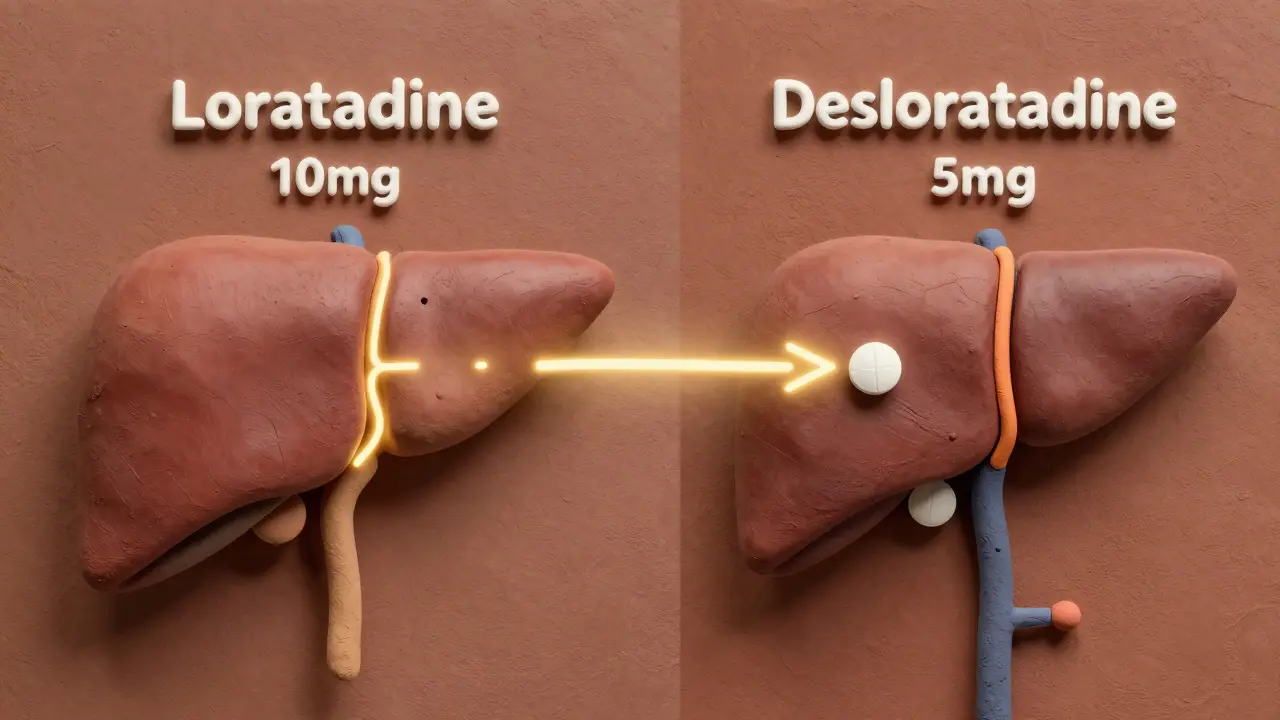
Loratadine is the older drug, first approved in the 1990s. When you take it, your liver breaks it down into desloratadine - the active form that actually blocks histamine. That’s why desloratadine is called a metabolite. You’re essentially skipping the middleman. Taking desloratadine directly means your body doesn’t have to convert it. This leads to more consistent levels in your blood and faster relief for some people.
Studies show desloratadine is significantly more potent. It binds more tightly to H1 receptors, the ones that trigger allergy symptoms. But it doesn’t stop there. Desloratadine also reduces inflammation by calming down immune cells like eosinophils and blocking the release of cytokines like IL-4 and IL-13. These are the same chemicals that make your nose swell and your skin itch. Loratadine doesn’t do this to the same extent. For people with chronic hives or moderate-to-severe allergic rhinitis, that extra anti-inflammatory effect can mean the difference between barely managing symptoms and actually feeling better.
Dosing: Same Frequency, Different Strength
Both are taken once a day. That’s simple. But the doses are different:
- Loratadine: 10 mg per day
- Desloratadine: 5 mg per day
Don’t be fooled by the numbers. 5 mg of desloratadine isn’t weaker - it’s stronger. Because it’s the active form, you need less of it to get the same or better effect. Studies confirm that 5 mg of desloratadine provides more consistent 24-hour symptom control than 10 mg of loratadine. Why? Half-life. Desloratadine stays in your system for about 27 hours. Loratadine? Only around 8 to 10 hours. That means even though you take both once a day, desloratadine maintains steady levels longer. If you’re the type who wakes up with puffy eyes or a stuffy nose by midday, this matters.
Food doesn’t affect either drug’s absorption. You can take them with or without meals. No special timing needed.
Who Can Take Them? Age Limits Matter
If you’re treating a child, this is critical:
- Desloratadine: Approved for children as young as 1 year old
- Loratadine: Only approved for children 2 years and older
For toddlers, that one-year difference can be the deciding factor. Pediatric studies show desloratadine is well tolerated in kids. One trial found that children aged 2-5 years had an average plasma concentration of 7.8 ng/mL after taking 5 mg daily - a level linked to strong symptom control. No major safety red flags emerged. For parents of young kids with allergies, desloratadine gives you a proven option earlier.
Side Effects: Which One Is Gentler?
Both are called non-sedating because they barely cross the blood-brain barrier - only about 20% of brain H1 receptors get touched, compared to 100% with old-school antihistamines like diphenhydramine. So you won’t feel like you’re drugged.
But side effects still happen. Here’s what the data says:
| Side Effect | Desloratadine | Loratadine |
|---|---|---|
| Headache | ~5-7% | ~4-6% |
| Dry Mouth | ~4-6% | ~5-7% |
| Drowsiness | ~2-3% | ~3-5% |
| Diarrhea (in children) | 6.1% | 2.4% |
| Irritability (in children) | 6.9% | 5.6% |
Desloratadine has a slightly lower chance of causing drowsiness. But it’s not perfectly clean. Some users report headaches - more than with loratadine. In kids, diarrhea and irritability were more common with desloratadine, though still mild and temporary. For adults, these side effects are rare and usually fade after a few days.
One big safety win for desloratadine: it doesn’t affect heart rhythms. Studies show no impact on QRS or QTc intervals - meaning no increased risk of dangerous arrhythmias, even when taken with other medications. Loratadine has a small theoretical risk in people with existing heart conditions or when combined with certain antibiotics or antifungals. Desloratadine doesn’t interact much with CYP3A4 enzymes, making it safer for people on multiple drugs.
Real People, Real Results
Numbers tell one story. Real users tell another.
On Drugs.com, desloratadine has a 7.2/10 rating from over 800 reviews. Loratadine sits at 6.3/10 from nearly 1,250 reviews. The trend? More people report desloratadine works better - especially for itchy eyes and nasal congestion. One user wrote: “Switched from loratadine after three years. My eyes stopped watering within two days. I didn’t even know I was still struggling until it was gone.”
But it’s not perfect. Some users say desloratadine gave them headaches loratadine never did. Others say loratadine “just worked” and they don’t want to pay more for a drug that feels like the same thing.
On Reddit’s r/Allergies, 68% of 142 commenters preferred desloratadine for severe symptoms. The rest stuck with loratadine - mostly because it’s cheaper.
Cost: The Practical Factor
Price matters. A 30-day supply of generic loratadine costs $10-$25. Desloratadine? $25-$40. That’s a big gap. Insurance often covers both, but out-of-pocket, many people choose loratadine.
But here’s the thing: if loratadine isn’t controlling your symptoms, you’re not saving money - you’re just paying for ineffective treatment. If you’re using tissues, eye drops, or nasal sprays on top of loratadine, you might be spending more than you think. Desloratadine’s stronger effect could reduce your need for add-ons.
For bariatric patients, desloratadine has a clear edge. After weight-loss surgery, some drugs don’t absorb well. Loratadine’s solubility drops significantly in post-surgery conditions. Desloratadine? It dissolves completely. If you’ve had gastric bypass and still have allergies, this isn’t just a preference - it’s a medical necessity.

When to Choose Which One
Here’s how to decide:
- Choose desloratadine if: Your allergies are moderate to severe, you need better nasal congestion control, you’re treating a child aged 1-2, you’re on other medications, or you’ve tried loratadine and it stopped working.
- Choose loratadine if: Your allergies are mild, you’re on a tight budget, you’ve never had issues with it, and you don’t need that extra anti-inflammatory punch.
The American Academy of Allergy, Asthma & Immunology (AAAAI) and the European Academy of Allergy and Clinical Immunology (EAACI) both say desloratadine has better efficacy scores - 4.7 out of 5 versus 4.2. But Dr. Robert Naclerio from the University of Chicago puts it plainly: “For mild seasonal allergies, the extra cost of desloratadine may not be worth it.”
Switching Between Them
Can you switch? Absolutely. The American College of Allergy, Asthma, and Immunology (ACAAI) recommends trying desloratadine if you’ve been on loratadine for 2-4 weeks with no improvement. No tapering needed. Just swap 10 mg of loratadine for 5 mg of desloratadine. You might notice a difference in 24-48 hours.
And if you’re worried about side effects? Start with the lowest effective dose. Both are safe for long-term use. No evidence shows they lose effectiveness over time - unlike some nasal sprays.
What’s New in 2026?
Recent updates cleared up confusion. The FDA now says neither drug needs a dose change for kidney or liver problems - a big relief for older adults or those with chronic conditions. Research is also showing desloratadine might help with atopic dermatitis by lowering IL-4 and IL-13 levels. That’s not official yet, but it’s promising.
Prescriptions for desloratadine are growing faster than loratadine’s - 4.2% yearly growth versus 1.8%. More doctors are starting to see it as the superior option for patients who need more than basic relief.
Bottom line: Desloratadine isn’t just a fancier version of loratadine. It’s a more powerful, longer-lasting, and more broadly effective tool. But if your allergies are mild and your wallet is tight, loratadine still does the job. It’s not about which is better - it’s about which is better for you.
Can I take desloratadine and loratadine together?
No. Desloratadine is the active metabolite of loratadine. Taking both at the same time doesn’t give you double the effect - it just increases your risk of side effects like headache or dry mouth. Stick to one or the other.
Does desloratadine cause weight gain?
No. Unlike some older antihistamines, neither desloratadine nor loratadine is linked to weight gain. Studies show no significant change in body weight over months of use. If you’ve gained weight while on allergy meds, it’s likely due to other factors like reduced activity from allergies or other medications.
Is desloratadine safe during pregnancy?
Both desloratadine and loratadine are classified as Category B by the FDA, meaning animal studies show no risk and human data don’t indicate harm. Many OB-GYNs consider them among the safest antihistamines to use during pregnancy, especially for moderate-to-severe allergies. Still, always check with your doctor before starting or switching.
How long does it take for desloratadine to work?
Most people notice symptom relief within 1-3 hours. Peak levels hit around 3 hours after taking it. That’s slower than loratadine (which peaks in 1-1.5 hours), but because desloratadine lasts longer, the relief is steadier. You won’t feel a sudden spike - just consistent comfort all day.
Can I drink alcohol with desloratadine?
It’s not dangerous, but it’s not smart. Alcohol can increase drowsiness, and while desloratadine is non-sedating, it’s not zero-risk. If you’re sensitive to medications or have liver issues, combining alcohol with either antihistamine can make you feel more tired than usual. Best to avoid it, especially when you’re just starting the medication.
Sheila Garfield
January 29, 2026 AT 15:00Shawn Peck
January 31, 2026 AT 00:25April Allen
January 31, 2026 AT 17:26Diana Dougan
February 2, 2026 AT 06:32Melissa Cogswell
February 2, 2026 AT 20:39Kathleen Riley
February 3, 2026 AT 01:12Yanaton Whittaker
February 4, 2026 AT 08:27Beth Cooper
February 5, 2026 AT 10:05Holly Robin
February 5, 2026 AT 11:13Blair Kelly
February 6, 2026 AT 16:00Shubham Dixit
February 8, 2026 AT 03:52Sarah Blevins
February 9, 2026 AT 14:26