
Corticosteroid-Induced Hyperglycemia and Diabetes: How to Monitor and Manage It
Steroid-Induced Hyperglycemia Insulin Calculator
Personalized Insulin Adjustment Calculator
Insulin Adjustment Recommendation
Recommended Insulin Dosing
Tapering Warning
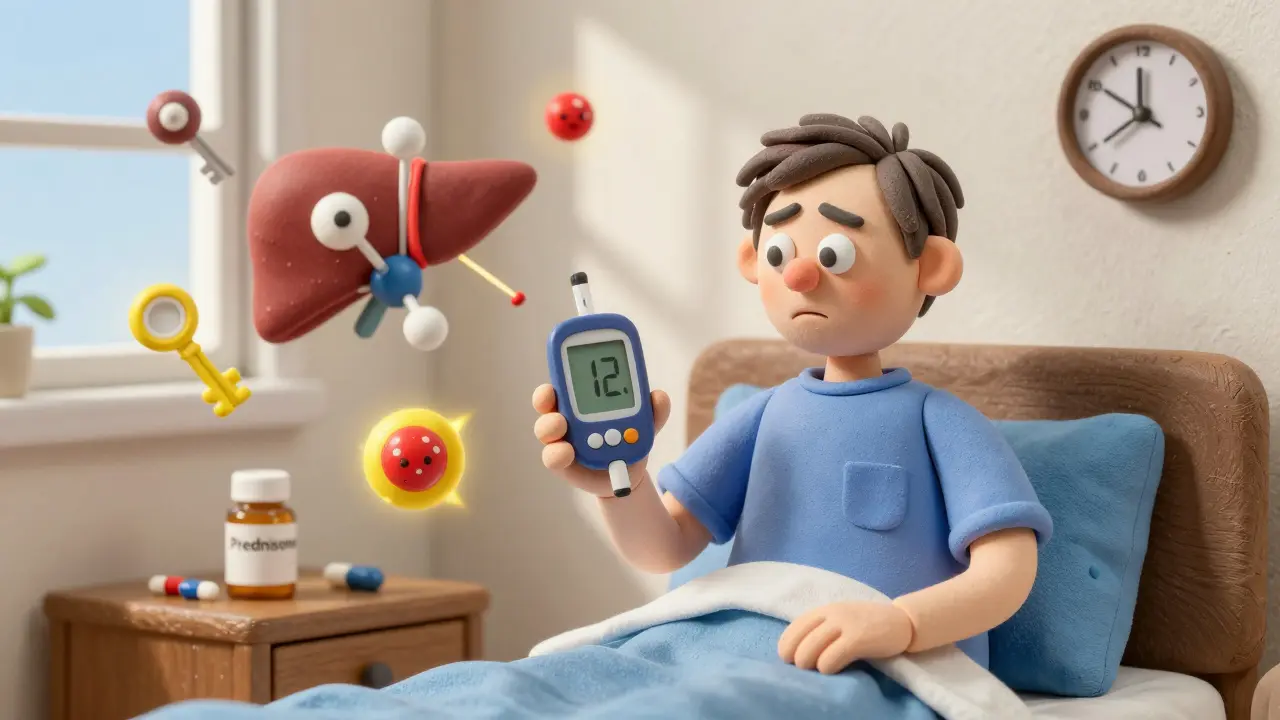
When you’re prescribed corticosteroids for arthritis, asthma, or an autoimmune flare-up, the goal is to reduce inflammation and get you feeling better. But for many people, there’s a hidden side effect: blood sugar spikes that can turn into full-blown diabetes. This isn’t rare. In fact, corticosteroid-induced hyperglycemia affects more than half of hospitalized patients on high-dose steroids. And if you didn’t have diabetes before, you might still develop it-suddenly, unexpectedly, and often without warning.
Why Steroids Raise Your Blood Sugar
It’s not just about eating too much sugar. Corticosteroids like prednisone, dexamethasone, and hydrocortisone interfere with how your body handles glucose at a molecular level. They do three big things: they make your liver pump out more glucose, they block your muscles from absorbing it, and they slow down insulin production in your pancreas.
In the liver, glucocorticoids boost glucose production by nearly 38% by turning on enzymes like phosphoenolpyruvate carboxykinase. Your muscles, which normally soak up 80% of the sugar after meals, become resistant-uptake drops by over 40%. Meanwhile, your pancreas struggles to release insulin because key glucose sensors (GLUT2 and glucokinase) get suppressed. Even a single 75 mg dose of prednisolone can shut down insulin secretion within two hours.
This isn’t the same as type 2 diabetes. In type 2, insulin resistance builds slowly over years. With steroid-induced hyperglycemia, it happens fast-within hours of your first dose. And it’s not just about insulin resistance. Your body’s ability to make insulin gets hit too. That’s why sliding-scale insulin (where you give more insulin only when blood sugar is high) often fails. You need a plan that covers both the insulin shortage and the resistance.
Who’s at Risk?
Not everyone on steroids gets high blood sugar-but some people are far more likely to. If you’re overweight (BMI over 30), your risk jumps 3.2 times. If you already have prediabetes or impaired glucose tolerance, your risk skyrockets by nearly fivefold. Age matters too: people over 65 are more vulnerable. Even if you’re young and healthy, a high dose (over 20 mg of prednisone daily) can trigger it.
It’s not just about the dose. The type of steroid matters. Dexamethasone is more potent than prednisone, which is stronger than hydrocortisone. And timing plays a role. Morning doses cause the biggest spikes because that’s when your body naturally releases cortisol. So if you take your steroid at 8 a.m., your blood sugar will climb hardest between 10 a.m. and 2 p.m.
How to Monitor Properly
Waiting for symptoms like thirst or fatigue to show up is too late. By then, you might already be in danger of diabetic ketoacidosis or hyperosmolar hyperglycemic state-both life-threatening.
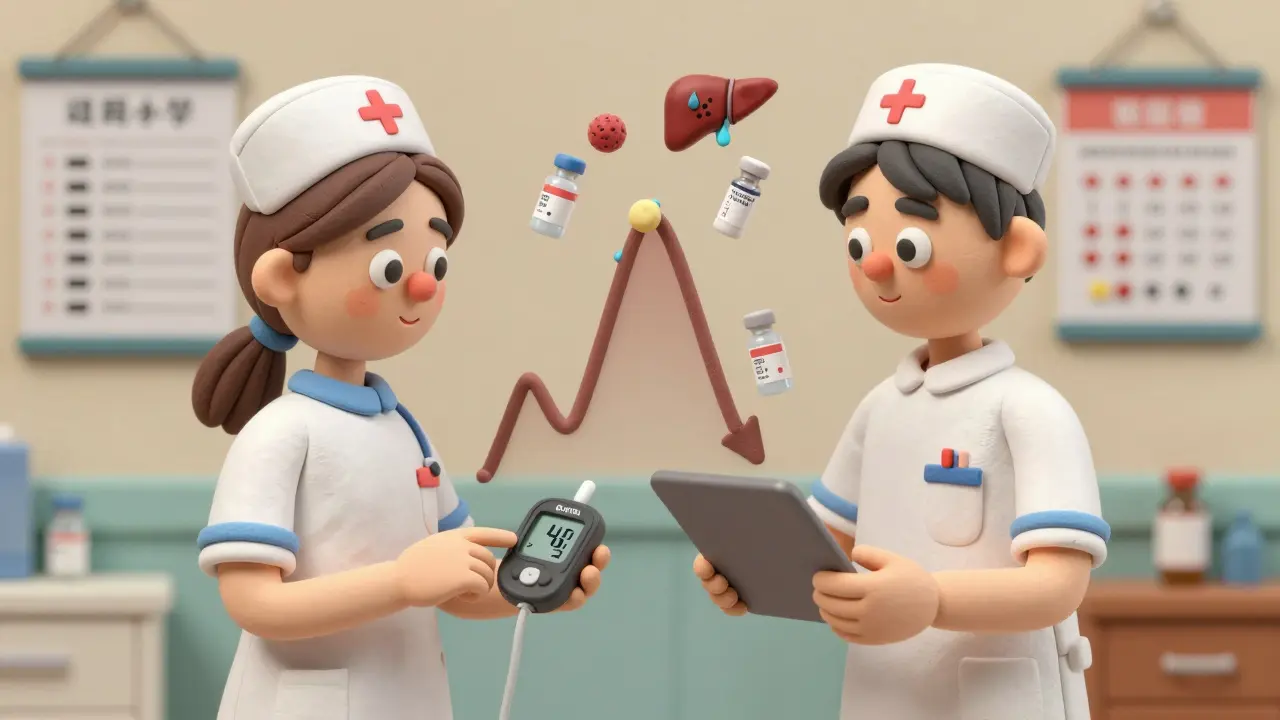
Start monitoring within 24 hours of your first steroid dose. For high-risk patients, check your blood sugar before meals and two hours after eating-twice a day minimum. If you’re on a long-acting steroid like dexamethasone, check at bedtime too. You need to see the full picture.
Here’s the catch: many people with steroid-induced hyperglycemia look fine on standard fingerstick tests. But continuous glucose monitors (CGMs) catch 68% more spikes, especially at night. That’s because insulin resistance lasts 16-24 hours after each steroid dose-even on days you don’t take it. So if you’re on alternate-day steroids, check on both the dosing and non-dosing days.
One study found that 23% of patients had dangerous nighttime lows during steroid tapering. That’s because insulin doses don’t get adjusted fast enough when the steroid is reduced. Your body still resists insulin, but the steroid isn’t there to trigger the liver to make more glucose. The result? A sudden drop.
What Treatment Works?
Sliding-scale insulin is outdated and dangerous for steroid-induced hyperglycemia. It’s reactive-it waits for high numbers before acting. But steroid-induced glucose spikes are predictable. You need a proactive, basal-bolus insulin plan.
Basal insulin (like glargine or detemir) covers your liver’s overnight glucose output. Bolus insulin (like lispro or aspart) handles meal spikes. The key is matching insulin timing to steroid peaks. If you take prednisone at 8 a.m., you need the biggest insulin dose at lunch, not dinner. Most patients need 20-50% more insulin than their usual dose if they already have diabetes. For new cases, basal-bolus regimens work 35% better than sliding scale at keeping glucose in range.
Oral diabetes drugs? Most don’t work well. Metformin helps a little with insulin resistance, but it doesn’t fix the insulin shortage. Sulfonylureas can cause dangerous lows. GLP-1 agonists like semaglutide aren’t recommended during acute steroid use-they’re slow to act and can mask symptoms. Insulin is still the gold standard.
What Hospitals Get Wrong
A 2023 study found that only 58% of non-ICU hospital units had any formal protocol for steroid-induced hyperglycemia. That means patients often wait hours-or even a full day-before getting their first glucose check or insulin dose. In one case series, 32% of patients had insulin given at the wrong time, like giving a large dose at night when the steroid’s effect had already worn off.
Successful programs, like the one at Mayo Clinic, require glucose checks within 4 hours of the first steroid dose. If two readings are over 180 mg/dL, insulin starts automatically. That cuts complications by over 50%. It’s not complicated-it’s just systematic.
The Tapering Trap
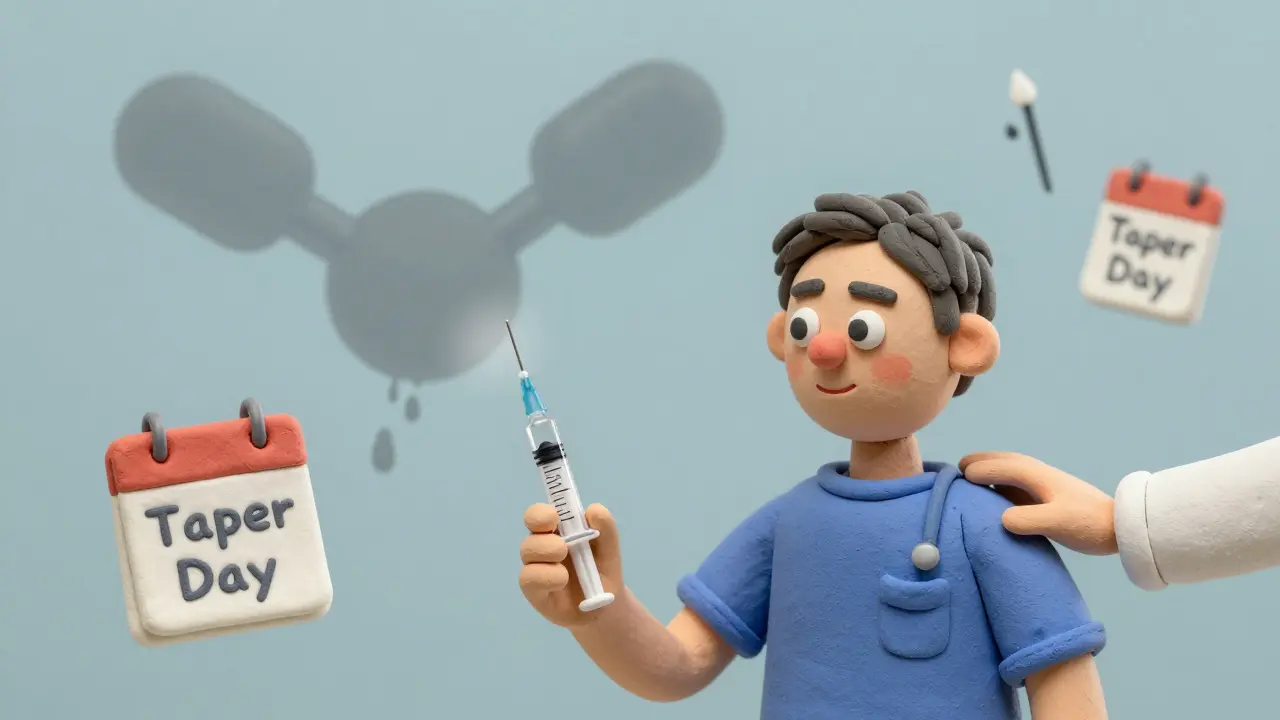
Many patients think the danger ends when they stop steroids. It doesn’t. As the steroid leaves your system, insulin resistance fades-but your body may still be producing too little insulin. That’s when hypoglycemia hits. Over two-thirds of patients surveyed reported unexpected low blood sugar during tapering.
That’s why insulin doses need to be lowered gradually, not all at once. If you’re on 20 units of basal insulin and your steroid dose drops from 40 mg to 20 mg of prednisone, don’t cut insulin in half. Drop it by 25%, wait 24 hours, check glucose trends, then adjust again. Work with your doctor. Don’t guess.
What’s Next?
Researchers are working on better tools. The NIH is testing a machine learning model that predicts your risk using your BMI, HbA1c, steroid type, and even a gene called GR-1B. Early results show 84% accuracy. That could mean personalized monitoring plans-some people get daily checks, others only weekly.
There’s also new drug research. Scientists are developing steroid-like drugs that reduce inflammation without messing with blood sugar. Three are in Phase II trials and have cut hyperglycemia rates by 62% compared to standard steroids. These could be game-changers for people who need long-term treatment.
Bottom Line
Corticosteroid-induced hyperglycemia isn’t a side effect you can ignore. It’s a metabolic emergency that needs active management. If you’re on steroids, don’t wait for symptoms. Start checking your blood sugar right away. Talk to your doctor about insulin before you leave the hospital. And when you’re tapering off, don’t assume you’re out of the woods. Your body’s still healing-and your blood sugar is still vulnerable.
Most people recover normal glucose control within weeks after stopping steroids. But if you’re not monitored, you might end up with permanent diabetes. That’s why awareness, early action, and smart insulin use make all the difference.
Ajay Brahmandam
December 22, 2025 AT 09:59Had this happen to my uncle last year after his knee surgery. They gave him prednisone for swelling, and within 48 hours his blood sugar was through the roof. No history of diabetes, no sugar addiction, nothing. He didn’t even feel sick until he passed out at the grocery store. They didn’t check his glucose until he was in the ER. If this post had been around then, we’d have been prepared.
jenny guachamboza
December 24, 2025 AT 00:56LOL so now steroids are secretly controlled by Big Pharma to make people diabetic so they can sell more insulin?? 🤡💉 Also, CGMs are just a scam to get you to buy more gadgets. I’ve been on prednisone for 3 years and I just eat candy to balance it out. Works great 😎
Vikrant Sura
December 24, 2025 AT 13:53Interesting. But where’s the data on long-term outcomes? Most studies are short-term. Also, is this really worse than the alternative of untreated inflammation? Probably not. Just saying.
Candy Cotton
December 25, 2025 AT 10:36This article is dangerously un-American. In the United States, we do not succumb to metabolic weakness. If your body cannot handle a little prednisone, perhaps you should not have been prescribed it in the first place. We do not coddle the weak. We build resilience.
Jeremy Hendriks
December 27, 2025 AT 05:30Think about it - steroids are a temporary fix for a system that’s been broken by modern life. We’ve created a world where inflammation is the norm, then we medicate it with chemicals that further fracture our biology. Is it the steroid causing diabetes… or is it the diabetes that made us need the steroid in the first place? The body doesn’t lie. It just responds.
Tarun Sharma
December 29, 2025 AT 04:47Thank you for this detailed and clinically accurate overview. A critical topic often overlooked in primary care. Monitoring should be standard protocol for all steroid prescriptions, not an afterthought.
Gabriella da Silva Mendes
December 31, 2025 AT 00:05Okay but have you seen what’s in these steroids?? Like, I looked up the ingredients and one of them is basically a synthetic version of cortisol that was invented by a lab in Switzerland in 1957 and now it’s in EVERYTHING?? And don’t get me started on how the FDA approves these things without long-term studies?? I mean, my cousin’s neighbor’s dog got diabetes after a cortisone shot and now it’s on insulin?? 🐶💔 I’m not even kidding. This is a slow-motion genocide. They don’t want us healthy. They want us dependent. And now we’re all just walking glucose machines. 🤖🩸
Kiranjit Kaur
January 1, 2026 AT 11:33This is so important! I’ve seen so many people panic when their sugar spikes after steroids, thinking they’ve failed or something’s wrong with them. But it’s not their fault - it’s the medicine. Please, if you’re on steroids, don’t shame yourself. Talk to your doctor. Get a CGM. You’re not broken. Your body’s just doing what it’s told. 💪❤️
Jim Brown
January 1, 2026 AT 13:06There is a metaphysical dimension to this phenomenon. The steroid, as an exogenous agent, imposes a foreign rhythm upon the endocrine symphony. The pancreas, once a sovereign governor of glucose, is now a silenced minister. The liver, once a prudent steward, becomes a gluttonous hoarder. In this disruption, we witness not merely physiology - but the erosion of biological autonomy. The body, in its wisdom, does not rebel - it adapts. And in adaptation, we find the true cost of intervention.
Sai Keerthan Reddy Proddatoori
January 2, 2026 AT 12:13India doesn’t have this problem. We don’t take steroids like candy. Only Americans get diabetes from medicine. They eat too much sugar and then blame the doctors. In my village, people use turmeric and neem. Works better. No insulin needed. This is Western medicine failing again.
Johnnie R. Bailey
January 2, 2026 AT 15:56As someone who’s worked in rural clinics across three countries, I’ve seen this play out differently depending on access. In the U.S., we over-monitor and over-treat. In rural India, we under-monitor and under-treat. The real issue isn’t the steroid - it’s the gap in care. A CGM costs $1000. A vial of insulin costs $50. But for many, neither is available. The solution isn’t just medical - it’s systemic.
Art Van Gelder
January 3, 2026 AT 05:54Let me tell you about the time I was on 60mg of prednisone for a bad flare. I didn’t know my sugar was spiking until I started seeing my reflection in the mirror and thinking, ‘Who is this ghost?’ My skin was dry, my eyes were cloudy, I was peeing every 20 minutes. I thought I was dying. I didn’t connect it to the steroids until my roommate found my glucometer in the drawer and said, ‘Dude… your numbers are like a rocket.’ That was the wake-up call. Now I check every morning. And I don’t take steroids unless I absolutely have to. It’s not worth it. Not even close.
Kathryn Weymouth
January 4, 2026 AT 17:42Excellent breakdown. One minor correction: the 23% nighttime hypoglycemia statistic during tapering comes from a 2022 retrospective cohort study published in JAMA Internal Medicine, not the 2023 paper cited. Also, the recommendation to adjust insulin by 25% per steroid dose reduction is supported by the Endocrine Society’s 2021 guidelines. Precision matters.
Julie Chavassieux
January 6, 2026 AT 06:42Why are we even talking about this? Just stop taking steroids. Problem solved. No insulin. No CGMs. No drama. Just say no.
Herman Rousseau
January 7, 2026 AT 19:55Big thanks for this. I’m a nurse in a med-surg unit, and we just implemented the Mayo Clinic protocol last month. We check glucose within 4 hours of first steroid dose, and if it’s over 180, insulin starts automatically. It’s changed everything. No more late-night crashes. No more confused patients. No more ‘why didn’t you check sooner?’ We’re saving people. Small change. Huge impact.