
Cognitive Decline Screening and Early Interventions in 2025: What Works and What’s New
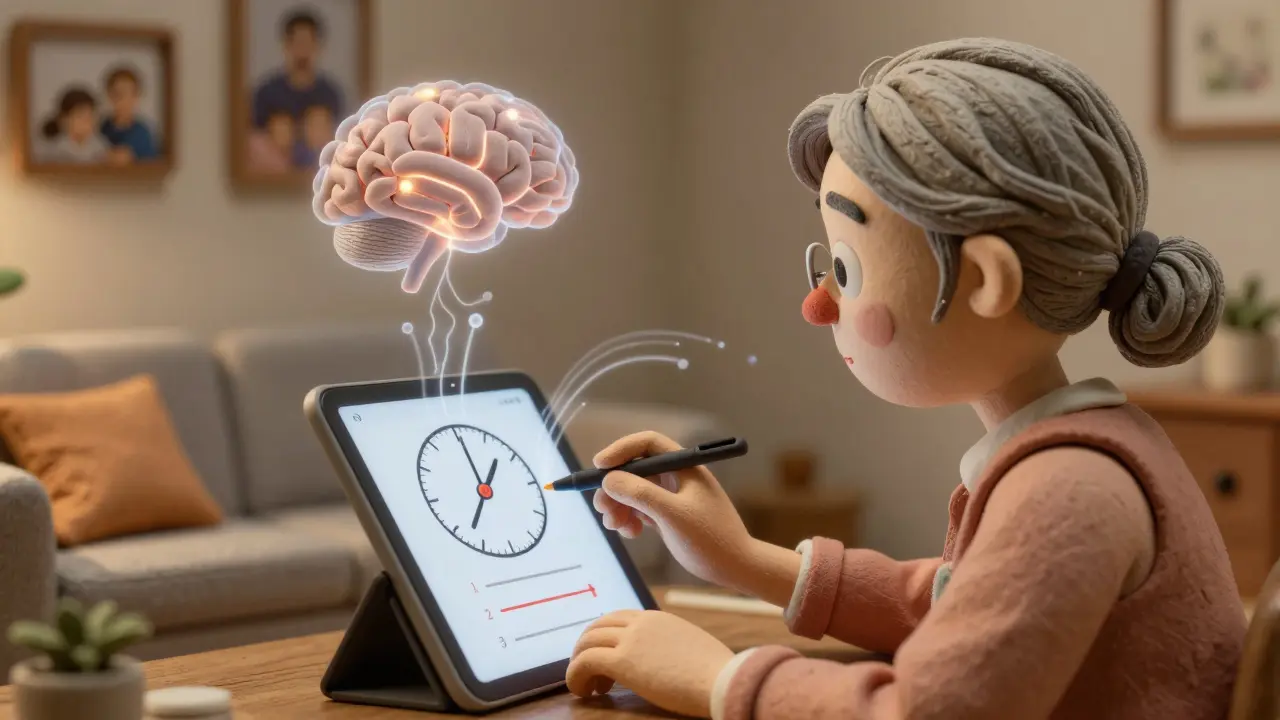
By 2025, catching cognitive decline before it turns into dementia isn’t just a good idea-it’s becoming standard practice. The old paper-and-pencil tests like the MoCA and MMSE? They’re still around, but they’re no longer enough. Doctors and researchers now know that subtle changes in memory, attention, and decision-making can show up years before someone forgets their own address. And if you catch those changes early, you might be able to slow or even stop the damage. The tools to do this are changing fast-and so are the expectations for what care should look like.
Why Screening for Cognitive Decline Matters Now More Than Ever
It’s not just about memory lapses. Cognitive decline isn’t always Alzheimer’s. It can be caused by high blood pressure, untreated depression, vitamin deficiencies, or even sleep apnea. But when it’s due to Alzheimer’s disease, timing is everything. New drugs like lecanemab don’t reverse damage-they slow it down. And they only work well when started early, before brain cells are lost in large numbers. That’s why screening isn’t about labeling people. It’s about giving them a chance.
Think of it like checking your cholesterol. No one waits until they’re having a heart attack to get tested. Yet for decades, doctors waited until someone was clearly confused or lost before testing cognition. That’s changing. Medicare now covers annual cognitive assessments during wellness visits. And with the U.S. Preventive Services Task Force reviewing its stance, routine screening may soon be recommended for everyone over 65.
The Old Tools Are Falling Behind
The Montreal Cognitive Assessment (MoCA) used to be the gold standard. It’s a 10-minute paper test that asks you to draw a clock, remember five words, and name animals. It works okay for moderate decline-but not for the early stuff. A 2023 meta-analysis showed MoCA misses up to 30% of people with mild cognitive impairment (MCI). Why? Because it can’t measure the tiny, invisible changes happening in the brain before they show up as forgotten names or missed appointments.
Same with the Mini-Cog: just three questions. It’s quick, but it’s like using a ruler to measure a hairline crack. The MMSE? Even older. Both were designed for dementia, not pre-dementia. They’re still used in 73% of primary care clinics, according to a 2025 MGMA survey. But that’s changing fast. Clinicians are realizing that if you’re only catching decline after it’s obvious, you’re too late.
Digital Tools Are the New Standard
Today’s best screening tools don’t ask you to draw a clock. They watch how you draw it.
Take Linus Health’s Digital Clock and Recall (DCR) and digital Trail Making Test (dTMT-B). Instead of just scoring whether you got the clock right, the system measures every millisecond of your pen movement. How fast did your hand move? Did you pause before drawing the numbers? Did you retrace lines? These tiny patterns reveal delays in brain processing that paper tests can’t detect. In validation studies, this combo hit 93.7% accuracy in identifying different stages of MCI.
Then there’s VR-E, a virtual reality test that puts you in a simulated grocery store. You’re asked to find items, remember prices, and follow directions-all while eye-tracking software records where you look, how long you stare, and how often you backtrack. This isn’t a game. It’s a precise neurological exam. In a 2023 study, VR-E had an AUC of 0.9415-far above MoCA’s 0.82. That means it’s much better at telling the difference between normal aging and early brain changes.
Cleveland Clinic’s C3B test, validated in the Journal of Alzheimer’s Disease, is now being used during Medicare visits. It takes 10 minutes, runs on a tablet, and flags concerns automatically. Primary care doctors needed just 15 minutes of training to start using it. And patients? Most say they feel better knowing their brain health is being monitored. One patient told researchers, “I didn’t know anyone cared about this until they asked.”

What About Blood Tests?
The most exciting development isn’t digital-it’s biological. For years, confirming Alzheimer’s meant a costly PET scan or an invasive spinal tap to check for amyloid and tau proteins. Now, blood tests are getting close.
As of 2025, at least five blood-based biomarkers for Alzheimer’s are in late-stage trials. These tests can detect abnormal levels of phosphorylated tau and amyloid-beta in the blood with over 90% accuracy, matching the gold standard. The National Institute on Aging calls this a “turning point.” If approved, a simple blood draw could replace imaging for many patients, making early detection affordable and widespread.
Even better? Some companies are combining blood markers with digital tests. Linus Health’s latest model uses DCR, dTMT-B, and APOE gene status to predict amyloid buildup in the brain with 89% accuracy-almost as good as a CSF test. That’s not science fiction. It’s happening now in clinics.
Who’s Using These Tools-and How?
Health systems aren’t waiting for perfect evidence. Linus Health reports 450 clinics have adopted their platform since early 2024. Cleveland Clinic rolled out C3B to all primary care sites in 2024. Cogstate, now owned by United Neuroscience, is used in academic centers and clinical trials. Altoida, a startup that raised $45 million in early 2025, is testing its platform in rural clinics where specialists are scarce.
Medicare now pays up to $45 per digital cognitive screening test. The FDA has cleared 12 digital tools. And health systems with 500+ beds? 41% have adopted at least one digital screening tool-up from 14% in 2023.
But adoption isn’t universal. The biggest hurdle? Electronic health record (EHR) integration. A 2025 CHIME survey found 67% of hospitals struggle to get test results to flow automatically into patient charts. Cleveland Clinic solved this by building custom software that flags abnormal results in real time. Smaller clinics are starting with simpler tools like DCR, which can be administered by a medical assistant after 20 minutes of training.
Barriers and Real-World Challenges
Not everyone can use a tablet. Not everyone trusts technology. And not every tool is designed for older adults.
On Reddit, one caregiver wrote: “My dad failed the online test because he couldn’t click the buttons-not because he forgot his granddaughter’s name.” That’s a real problem. Tools need bigger buttons, clearer instructions, and voice guidance. RoCA, a web-based test, had an 83% positive user experience rate-but 17% struggled. That’s not a small number.
There’s also a fairness issue. A 2025 review in Nature Digital Medicine found that 78% of digital cognitive studies underrepresent Black, Hispanic, and low-income older adults. If these tools aren’t tested on diverse populations, they could miss signs of decline in the very people who need them most.
And while 89% of seniors say they’d try a digital tool if their doctor recommended it, 72% still prefer an in-person chat. That’s okay. The goal isn’t to replace the doctor. It’s to give the doctor better data.
What You Can Do Today
If you’re over 65-or caring for someone who is-ask your doctor about cognitive screening. Don’t wait for symptoms. Ask: “Do you use a digital tool like C3B or Linus Health for annual checks?” If they say no, ask why. If they’re still using MoCA, ask if they’re planning to switch. Many are.
If you’re tech-savvy, try a free, validated tool like the Alzheimer’s Association’s online cognitive test. It’s not diagnostic, but it can show you trends over time. Track your scores. Note changes. Bring them to your next appointment.
And if you’re a clinician: start small. Use DCR. Train your staff. Integrate it into your annual wellness visit. You don’t need VR headsets or blood tests to make a difference. You just need to start looking-and listening-before it’s too late.
The Future Is Integrated
By 2030, cognitive screening won’t be one test. It’ll be a combination: a blood draw, a 7-minute tablet test, and maybe even a wearable that tracks sleep and speech patterns. Your doctor will see a dashboard showing your cognitive trajectory over years-not just a score from one visit.
And when a change shows up? You’ll get help-not just a diagnosis. Physical therapy for balance. Nutrition counseling. Cognitive training apps. Social engagement programs. All of these can delay decline-even if the underlying disease is still progressing.
This isn’t about preventing aging. It’s about protecting your mind for as long as possible. And for the first time, we have the tools to do it-before the damage becomes irreversible.
Rob Deneke
January 17, 2026 AT 00:51My mom's been doing the C3B test every year since last January. Her scores are stable. That's more than I can say for her cholesterol.
Doctors used to just shrug and say 'it's just aging'. Now they actually care. Feels like a win.
evelyn wellding
January 18, 2026 AT 00:01Chelsea Harton
January 18, 2026 AT 05:09Also MoCA is garbage. Like using a ruler to measure a whisper.
Corey Chrisinger
January 18, 2026 AT 23:23Now we're watching how someone draws a clock. Not if they get it right. But how their hand trembles. How long they hesitate.
That's not medicine. That's poetry.
And yet... we still don't have a cure. Just better detection. Is that enough?
Bianca Leonhardt
January 20, 2026 AT 07:03Travis Craw
January 21, 2026 AT 06:23Also I'm not sure about those blood tests. What if they give false positives? That could scare people for no reason.
Christina Bilotti
January 22, 2026 AT 20:07But hey, at least we have VR grocery stores now. What a world.
brooke wright
January 24, 2026 AT 15:59vivek kumar
January 25, 2026 AT 09:09Still, if blood tests become affordable, I hope they reach places like mine too.
Nick Cole
January 27, 2026 AT 03:13Yes, the tech isn't perfect. Yes, some people struggle. But we're not replacing doctors. We're giving them better eyes. And that's worth pushing through the friction.
If you're over 65, ask for it. Don't wait for them to notice. Be the one who says: 'I want to know.'