
Calcineurin Inhibitors: Cyclosporine and Tacrolimus Side Effects Explained
Calcineurin Inhibitor Side Effect Calculator
Select your medication type and treatment duration to see the most likely side effects based on clinical data from transplant studies.
Medication Selection
Side Effect Summary
Your Side Effect Risk Profile
Based on clinical studies of for treatment
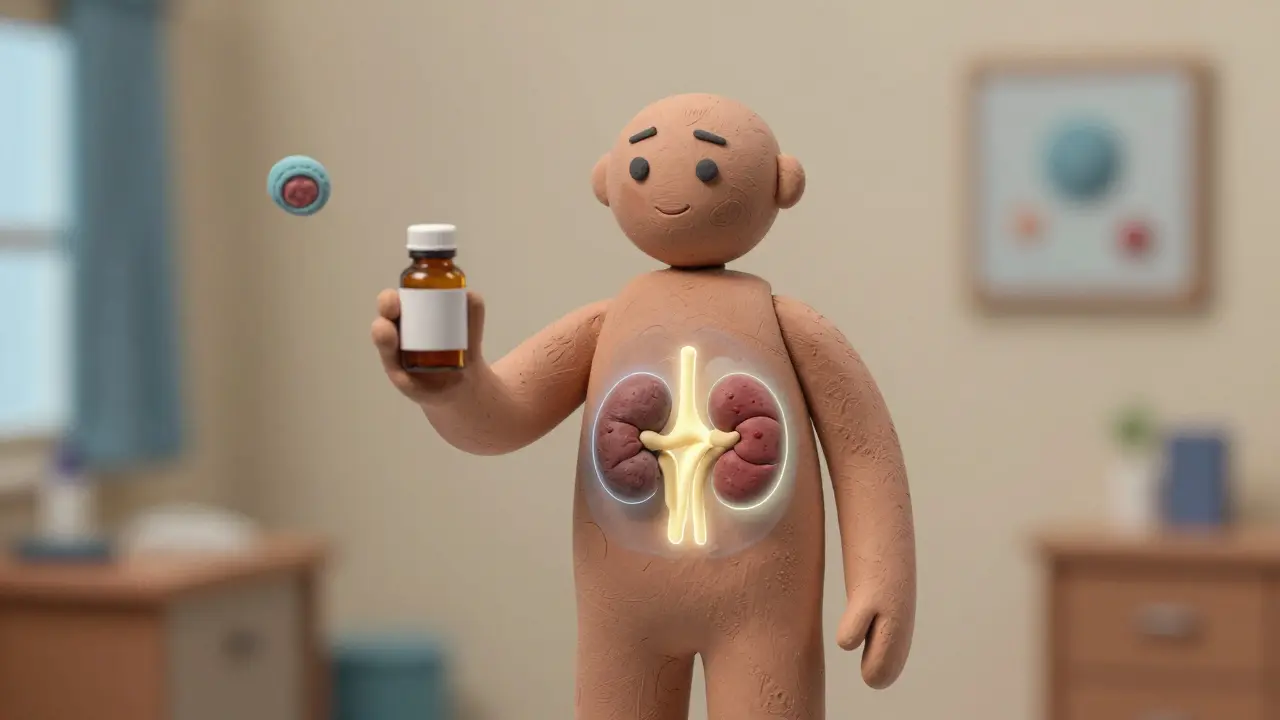
Imagine receiving a life-saving organ transplant. It is a miracle, but it comes with a heavy price tag in the form of daily medication. These drugs keep your immune system from attacking the new organ, but they can wreak havoc on your body in other ways. Two of the most common drugs used are Cyclosporine and Tacrolimus. They belong to a class known as Calcineurin Inhibitors, and understanding their side effects is crucial for anyone living with a transplant.
You might wonder why doctors keep prescribing these if the risks are so high. The answer lies in the balance between preventing organ rejection and managing health complications. While newer options exist, these medications remain the gold standard for many patients. However, knowing what to watch for can make a massive difference in your long-term quality of life.
What Are Calcineurin Inhibitors?
At their core, these drugs stop your immune system from working too hard. Specifically, they target T-lymphocytes, which are the white blood cells responsible for identifying and attacking foreign invaders. By blocking a protein called calcineurin, these medications prevent the release of interleukin-2, a signal that tells your immune cells to multiply.
Cyclosporine is a cyclic undecapeptide discovered from Tolypocladium inflatum in 1970. It was the first of its kind, approved by the FDA in 1983. Tacrolimus is a macrolide compound isolated from Streptomyces tsukubaensis in 1984, receiving approval in 1994. Both are essential in solid organ transplantation, with nearly all kidney transplants requiring them according to recent data from the Organ Procurement and Transplantation Network.
Despite their importance, the American Society of Transplantation notes in their 2022 guidelines that these drugs have a significant adverse effect profile. This means they are powerful, but they are not harmless. You need to know exactly how they might affect you.
The Risk to Your Kidneys
The most serious concern with these medications is damage to the kidneys themselves, a condition known as nephrotoxicity. It sounds counterintuitive to take a drug for a kidney transplant that harms the kidney, but it is a reality doctors manage daily. A 2021 systematic review found that nephrotoxicity occurs in 25-75% of patients.
There are two types of kidney damage to understand. Acute nephrotoxicity is temporary. It shows up as a rise in plasma creatinine levels, usually 20-50% above your baseline. This happens because the drug causes the small blood vessels in the kidney to constrict. Chronic nephrotoxicity is the long-term worry. It develops in 10-30% of long-term users and can lead to irreversible scarring and tubular atrophy.
Research by Naesens et al. in 2009 highlighted that chronic exposure to these inhibitors accounted for 38% of late graft losses in kidney transplant recipients. This is why doctors monitor your blood work so closely. They are trying to keep the dose low enough to protect your kidneys while high enough to stop rejection.
Neurological Side Effects
Your brain and nervous system are also on the front lines. Neurotoxicity affects 15-40% of patients, and Tacrolimus tends to be worse than Cyclosporine in this area. The most common symptom is a tremor, often in the hands. A 2020 meta-analysis showed that postural tremor occurs in 30-70% of Tacrolimus users compared to 10-25% with Cyclosporine.
It is not just shaking hands. Some patients experience headaches, confusion, or sleep disturbances. In severe cases, it can mimic Parkinson's disease. A case report from 2022 documented a kidney transplant recipient who developed severe parkinsonism within two weeks of starting Tacrolimus. The symptoms improved when they switched to Cyclosporine, but they returned later. This highlights that neurological issues can be complex and may require switching medications.
Because of this, the University of California San Francisco Transplant Center now includes formal neurocognitive screening at baseline and three months for all Tacrolimus recipients. They found a 15-20% incidence of subtle cognitive impairment that patients might not even notice themselves.
Metabolic Changes and Diabetes
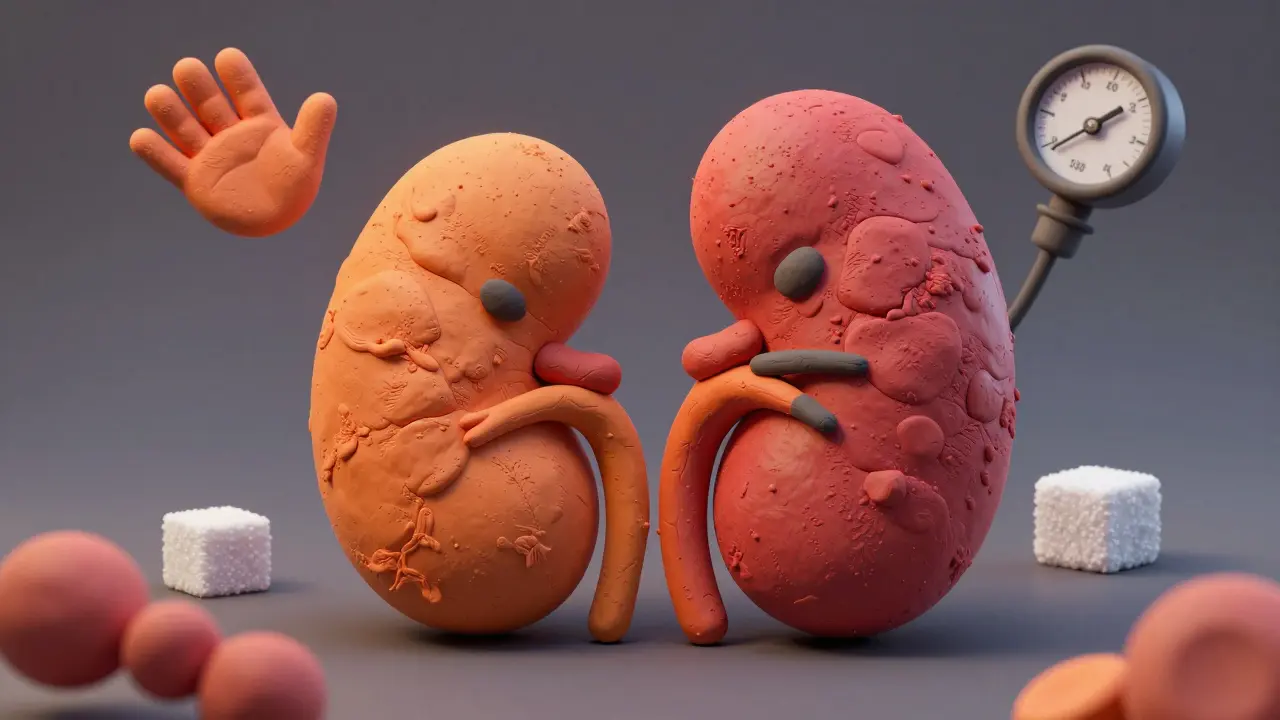
One of the most frustrating side effects is the development of diabetes after the transplant. This is called Post-Transplant Diabetes Mellitus. Tacrolimus is consistently more diabetogenic than Cyclosporine. The 2021 International Consensus Guidelines state that new-onset diabetes occurs in 15-30% of Tacrolimus users versus 5-15% of Cyclosporine users.
This happens because the drug impairs the beta cells in your pancreas from secreting insulin. It is a direct result of how the medication works at a cellular level. If you have risk factors for diabetes, like family history or obesity, your doctor might be extra cautious. They may start you on SGLT2 inhibitors at the first sign of high blood sugar, which has been shown to reduce diabetes progression by 38% in recent trials.
Beyond sugar, these drugs mess with your blood pressure and electrolytes. Hypertension affects 50-70% of users. You will also likely see high potassium levels (hyperkalemia) in 20-35% of cases and low magnesium levels (hypomagnesemia) in 40-60%. Magnesium supplementation is often required to keep levels above 1.8 mg/dL.
Physical Appearance and Stomach Issues
While kidney and nerve damage are serious, other side effects impact your daily comfort and appearance. Cyclosporine is notorious for cosmetic changes. Hirsutism, or excessive hair growth, is reported in 20-30% of users. Gingival hyperplasia, which is swollen gums, affects 15-25% of users. These are unique to Cyclosporine and are rarely seen with Tacrolimus.
On the flip side, Tacrolimus is harder on the stomach. A 2022 Cochrane Review documented higher rates of gastrointestinal disturbances with Tacrolimus. Nausea occurs in 30-45% of users compared to 15-25% with Cyclosporine. Diarrhea is also more common, hitting 25-40% of Tacrolimus users versus 10-20% for Cyclosporine. This is a major factor when doctors decide which drug to start you on.
| Side Effect | Cyclosporine Rate | Tacrolimus Rate |
|---|---|---|
| Tremors | 10-25% | 30-70% |
| New-Onset Diabetes | 5-15% | 15-30% |
| Hirsutism (Hair Growth) | 20-30% | <1% |
| Nausea | 15-25% | 30-45% |
| High Blood Pressure | 50-70% | 50-70% |

Monitoring and Management Strategies
Living with these drugs means living with a schedule. The 2022 American Society of Transplantation guidelines mandate twice-weekly serum creatinine monitoring when you first start the medication. Once you are stable, this drops to monthly checks. You also need trough level monitoring at least weekly during dose adjustments to ensure the drug concentration is in the safe zone.
For Tacrolimus, the target is usually 5-10 ng/mL in the maintenance phase. For Cyclosporine, it is higher, around 100-200 ng/mL. Staying within these ranges is vital. If your levels get too high, you risk toxicity. Too low, and you risk rejection. Dr. Jayme Locke from UCLA emphasizes that the 8-12% reduction in acute rejection with Tacrolimus must be weighed against the increase in diabetes risk.
Management isn't just about pills. It involves lifestyle changes. If you are on Tacrolimus, reducing trough levels from 8-10 ng/mL to 3-5 ng/mL can resolve tremors in 78% of patients within four weeks. This is a strategy known as CNI minimization. Dr. Allan Kirk noted that we have moved from maximum tolerated dose to minimum effective dose strategies. CNI-sparing protocols are now standard for 30% of low-immunological-risk recipients.
Looking at Future Alternatives
The medical community knows these drugs are not perfect. There is a push to find ways to reduce toxicity while keeping the organ safe. The FDA approved voclosporin in 2021 for lupus nephritis. It is a novel CNI with a 30% lower incidence of hypertension compared to Cyclosporine.
Another option is Belatacept. The 2023 CONVERT trial showed that Belatacept-based regimens achieved equivalent graft survival but with significantly better renal function and fewer metabolic complications. Dr. Peter Stock's team at UCSF is leading a trial testing interleukin-2 receptor antibody induction with early CNI withdrawal. Preliminary data shows an 89% graft survival with a 40% reduction in side effects.
The goal is shifting. It is no longer just about preventing rejection; it is about optimizing long-term health outcomes. The European Medicines Agency encourages CNI minimization strategies for 50% of maintenance patients by 2025. This means more patients might get to switch to these newer, gentler options in the near future.
What are the most common side effects of Calcineurin Inhibitors?
The most common side effects include kidney damage (nephrotoxicity), high blood pressure, tremors, and high blood sugar. Nausea and diarrhea are also frequent, especially with Tacrolimus.
Which drug causes more diabetes, Cyclosporine or Tacrolimus?
Tacrolimus is more likely to cause new-onset diabetes. Studies show it occurs in 15-30% of Tacrolimus users compared to 5-15% of Cyclosporine users.
Can Calcineurin Inhibitors cause kidney failure?
Yes, chronic use can lead to irreversible kidney damage in 10-30% of long-term users. This is why regular blood tests are mandatory to monitor kidney function.
How do doctors manage tremors caused by these medications?
Doctors often lower the drug dosage to the minimum effective level. Reducing Tacrolimus trough levels from 8-10 ng/mL to 3-5 ng/mL has resolved tremors in 78% of patients.
Are there alternatives to Cyclosporine and Tacrolimus?
Yes, alternatives include Belatacept and voclosporin. Belatacept is a CNI-free option that has shown better renal function in recent trials.
Caroline Dennis
March 26, 2026 AT 22:11The nephrotoxicity profile is wild given the calcineurin binding affinity. T-cell suppression is necessary but the tubular atrophy risk remains high. Optimizing the therapeutic drug monitoring protocols is key for the patient.
Zola Parker
March 28, 2026 AT 16:05Honestly people are scared of nothing if you read the actual studies. :P The body heals itself better than any pill.
Aaron Sims
March 30, 2026 AT 10:33They tell you it's for your kidneys but no one knows what the pharma giants are hiding!!! The magnesium levels are just a cover up...!! You should be asking why they don't just fix the immune system naturally!!!
Caroline Bonner
March 30, 2026 AT 19:31It is so important that we stay positive about the transplant journey because every single day is a victory in itself!!! The side effects are real but we can manage them with the right mindset and support system!!! You have to remember that the doctors are working hard to keep you safe and healthy!!! There are so many resources available now that we didn't have ten years ago!!! I know someone who took Tacrolimus for years and they are still thriving today!!! The tremors might be annoying but they are manageable with the right supplements!!! You should never give up hope because the human spirit is incredibly resilient!!! Keep tracking your blood work and communicate openly with your medical team!!! It is amazing how far medical science has come since the 1980s!!! We are living in an era of miracles even if the path is difficult!!! Stay strong and keep fighting for your health every single day!!! The community here is here to support you through all of the ups and downs!!! Don't let the statistics scare you away from the possibility of a new life!!! You are stronger than you think and you can overcome these challenges!!! Let's celebrate every small win along the way!!!
florence matthews
March 31, 2026 AT 23:06I get where you are coming from but let's try to be kind to those struggling with the meds. :) Everyone's experience is different and we should respect that. Peace and love to all the warriors here.
Rachele Tycksen
April 2, 2026 AT 06:35lol you sound kinda crazy but im sure its all true or whatever. i dont really read the whole thing but yeah kidneys are important i guess. hope you feel better soon.
Chris Farley
April 3, 2026 AT 11:17Americans should be proud of our medical advancements not cowering over side effects. Stop whining about your own biology.
Katie Putbrese
April 4, 2026 AT 12:23You need to watch your tone because people are actually suffering here. It is not about pride it is about survival. You clearly do not understand the gravity of the situation.
Danielle Arnold
April 5, 2026 AT 07:31Another list of reasons why living is a hassle.