
Bioequivalence Testing for Generic Drugs: What It Really Proves
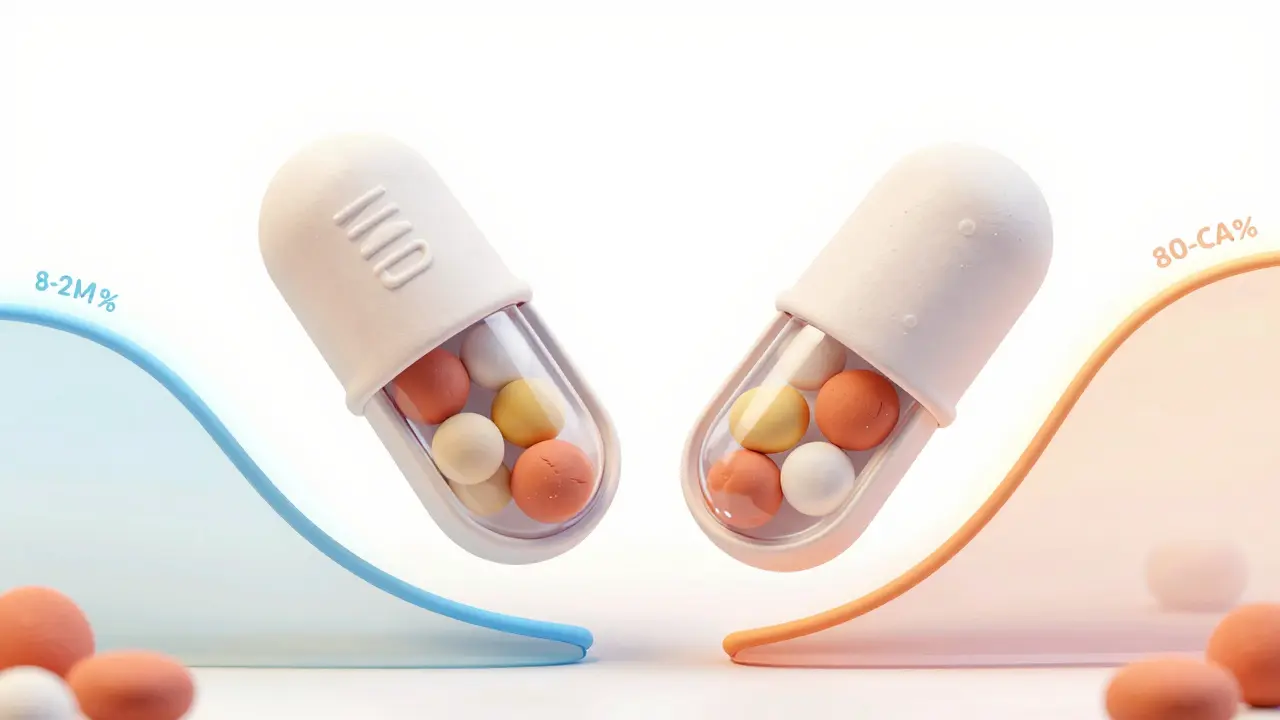
When you pick up a prescription at the pharmacy, you might see two options: the familiar brand-name pill, or a cheaper generic version with a different color and shape. You’ve probably wondered - is the generic just as good? The answer lies in bioequivalence testing, a rigorous scientific process that doesn’t just promise equivalence - it proves it.
What Bioequivalence Testing Actually Measures
Bioequivalence testing doesn’t check if a generic drug looks the same or tastes the same. It checks whether your body absorbs and uses the active ingredient in the same way as the brand-name version. The goal is simple: if your body gets the same amount of medicine into your bloodstream at the same speed, it will work the same way.The U.S. Food and Drug Administration (FDA) requires that generic drugs meet strict standards. For most oral medications, the test looks at two key numbers: AUC (area under the curve) and Cmax (maximum concentration in the blood). These numbers measure how much of the drug enters your system and how quickly it gets there.
The FDA says a generic is bioequivalent if the 90% confidence interval for the ratio of the generic to the brand-name drug falls between 80% and 125% for both AUC and Cmax. That means the generic can’t be more than 25% stronger or weaker in absorption than the brand. This isn’t a guess - it’s based on decades of clinical data showing that within this range, patients experience the same therapeutic effect and safety profile.
How the Testing Is Done
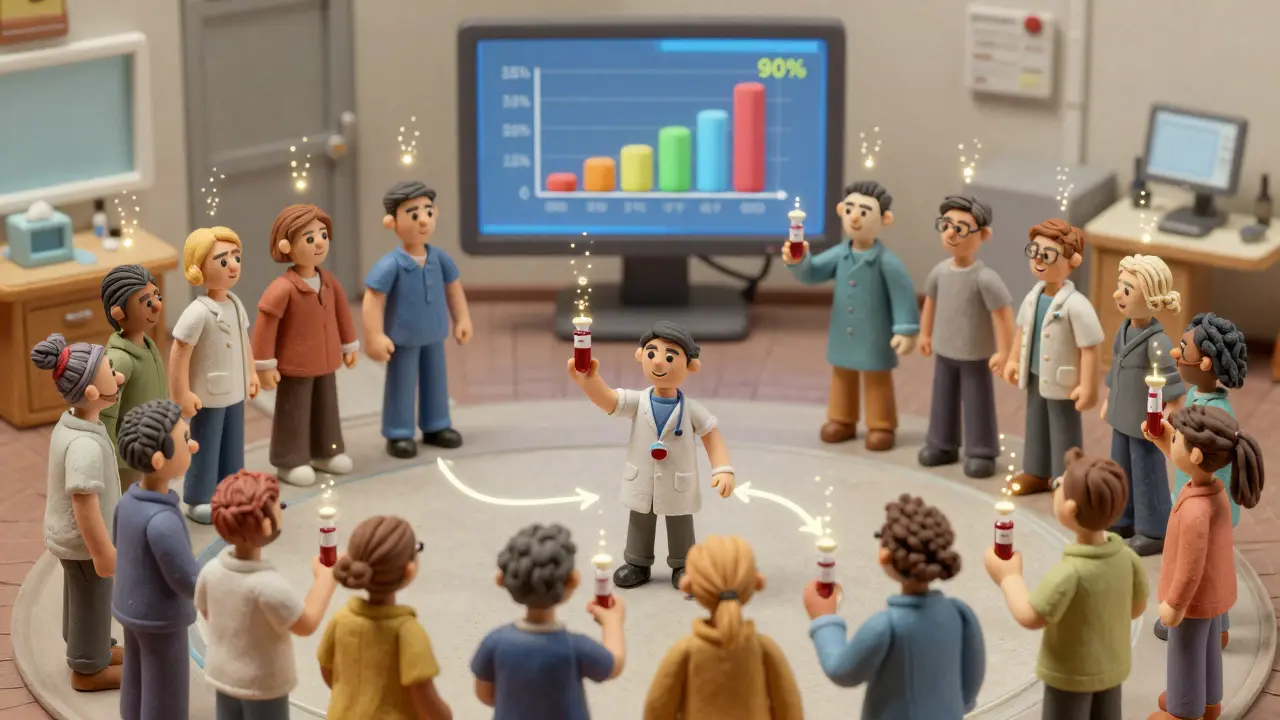
A typical bioequivalence study involves 24 to 36 healthy adults. They don’t have the condition the drug treats - they’re used just to track how the body handles the medicine. Each participant takes both the brand-name drug and the generic version, sometimes in different orders, with a washout period in between. Blood samples are drawn over several hours to map out how the drug moves through the body.This is called a crossover design. It removes individual differences - if someone metabolizes drugs slowly, they’ll do it the same way for both versions. That makes the comparison fair. The studies are done under fasting conditions to eliminate food interference, which can change how a drug is absorbed.
For immediate-release pills - the most common type - this method works perfectly. But it’s not one-size-fits-all. Inhalers, eye drops, creams, and long-acting injectables can’t be measured the same way because the drug doesn’t enter the bloodstream the same way. For those, regulators use other methods: clinical outcomes, pharmacodynamic studies, or specialized tests that measure effects at the site of action, like lung function for inhalers or skin absorption for topical creams.
Why This Matters for Safety and Cost
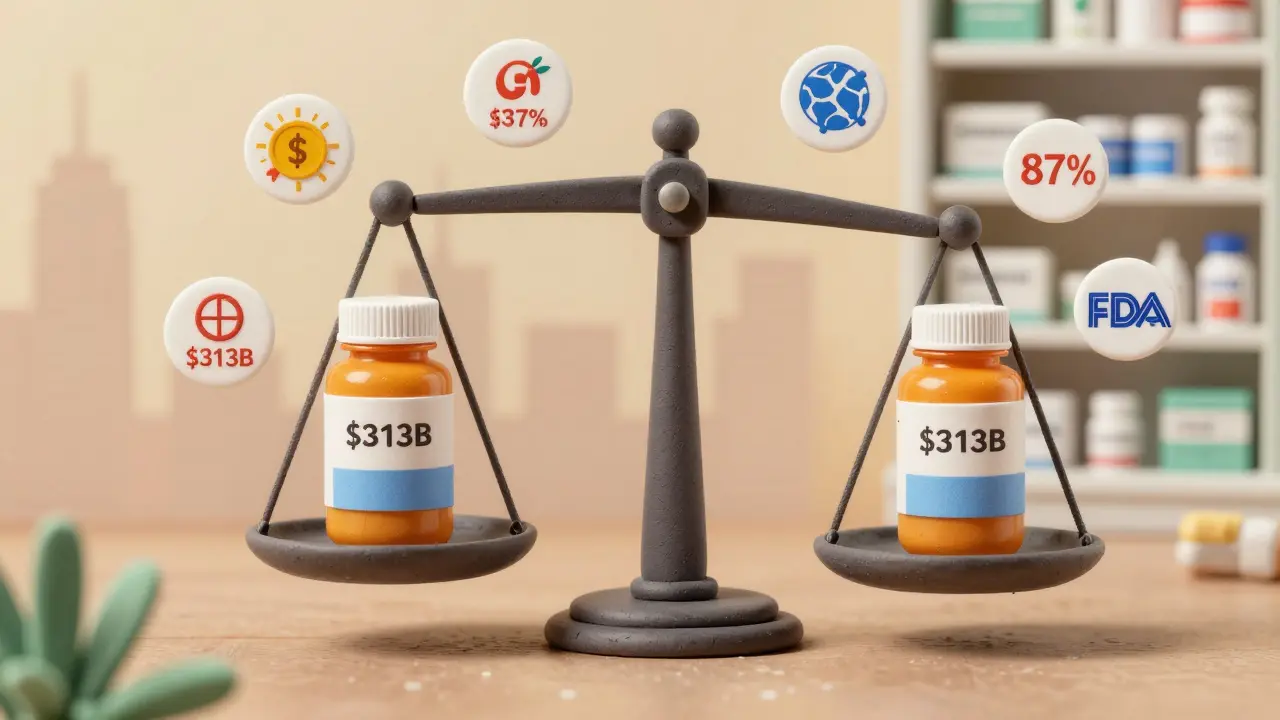
Brand-name drugs go through years of clinical trials with thousands of patients to prove they’re safe and effective. Generic manufacturers don’t repeat those trials. Instead, they rely on the brand’s data - but only after proving bioequivalence. This is the heart of the Hatch-Waxman Act of 1984, which created the pathway for generics to enter the market without duplicating expensive research.The result? Generics make up about 90% of all prescriptions in the U.S. but cost only 23% of what brand-name drugs do. In 2020 alone, generics saved the U.S. healthcare system $313 billion. That’s not a marketing claim - it’s an estimate from the Association for Accessible Medicines based on real prescription and pricing data.
Without bioequivalence testing, this cost savings wouldn’t be possible. Without it, doctors and patients couldn’t trust that switching to a generic wouldn’t cause a drop in effectiveness or a spike in side effects.
What Bioequivalence Doesn’t Prove
It’s important to know what bioequivalence testing doesn’t cover. It doesn’t test long-term side effects - that’s already covered by the brand-name drug’s history. It doesn’t test how the drug works in children, pregnant women, or people with liver or kidney disease - those populations are studied later, after approval.It also doesn’t guarantee identical inactive ingredients. Generics can have different fillers, dyes, or coatings. That’s why some people report minor differences - like a stomach upset or a change in pill size - but not a change in how well the medicine works. A 2023 Reddit thread with over 1,400 comments from patients showed that 78% saw no difference between brand and generic. The few who did notice changes often pointed to inactive ingredients, not the active drug.
And for drugs with a narrow therapeutic index - where even small changes in blood levels can cause harm, like warfarin or lithium - regulators apply tighter standards. Sometimes, the acceptable range is narrowed to 90-111%. The FDA reviews these cases individually and may require additional studies.
What Experts Say
Dr. Lawrence Yu, former deputy director of the FDA’s Office of Pharmaceutical Quality, said the agency’s bioequivalence standards are “among the most rigorous in the world.” The American Medical Association’s Council on Science and Public Health confirmed in 2019 that bioequivalence studies provide “sufficient evidence” for therapeutic equivalence in nearly all cases.Still, some experts push for improvements. Dr. Jerry Avorn from Harvard Medical School pointed out in a 2020 JAMA editorial that complex formulations - like extended-release tablets or inhaled steroids - need better testing tools. The FDA has responded with new guidance for topical and inhaled products, and is exploring computer modeling to predict how a drug behaves without always needing human trials.
The European Medicines Agency (EMA) and other global regulators follow similar standards, thanks to international agreements under the ICH. This means a generic approved in the U.S. is likely to meet the same standards in Europe or Japan.
Real-World Patient Experience
A 2022 Consumer Reports survey of 1,200 people who used both brand and generic versions found that 87% saw no difference in effectiveness. Nine percent even said the generic worked better - possibly because they took it more consistently due to lower cost. Only 4% reported the generic didn’t work as well.That’s not to say concerns don’t exist. A 2021 study found that 32% of patients still believe generics are less effective. This myth persists despite decades of data showing otherwise. It’s often tied to unfamiliar packaging, lower price tags, or stories passed down from others. But science doesn’t care about perception - it cares about measurable outcomes. And the numbers don’t lie.
The Bigger Picture
The global generic drug market is growing fast - projected to hit $781 billion by 2030. As more brand-name drugs lose patent protection, bioequivalence testing becomes even more critical. In 2023, over $100 billion in brand-name sales are expected to open up to generic competition over the next few years.Every generic approved by the FDA has passed bioequivalence testing. Every one. And every one is held to the same manufacturing standards - Good Manufacturing Practices (GMP) - as brand-name drugs. The FDA inspects over 1,200 generic manufacturing facilities each year, both in the U.S. and abroad.
The bottom line? Bioequivalence testing isn’t a shortcut. It’s a scientifically validated, tightly controlled process that ensures generic drugs deliver the same clinical results as their brand-name counterparts. The only real difference is the price - and the savings that help millions of people afford the medicines they need.
Do generic drugs take longer to work than brand-name drugs?
No. Bioequivalence testing requires that the generic drug reaches the same peak concentration in the blood (Cmax) at the same time as the brand-name version - within the allowed 80-125% range. If it absorbed slower, it wouldn’t pass. Any delay people notice is usually due to differences in inactive ingredients, not the active drug.
Are all generic drugs required to be bioequivalent?
Yes. Every generic drug approved by the FDA must prove bioequivalence to its brand-name reference drug before it can be sold. There are no exceptions. If a product doesn’t meet the 80-125% bioequivalence range for AUC and Cmax, it is not approved.
Can I trust a generic drug if it looks different from the brand?
Absolutely. The law requires generics to look different - different color, shape, or imprint - to avoid confusion with the brand. But the active ingredient, strength, dosage form, and route of administration must be identical. Bioequivalence testing confirms that these differences don’t affect how the drug works in your body.
Why do some people say generics don’t work as well?
Most reports of reduced effectiveness are anecdotal and often tied to changes in inactive ingredients, which can cause minor side effects like stomach upset or a different pill size. A 2022 Consumer Reports survey found only 4% of users reported generics working less effectively - and even then, it was rare. The vast majority of clinical and real-world data supports that generics perform just as well.
Are there any drugs where bioequivalence testing isn’t enough?
Yes - for complex products like inhalers, topical creams, or certain injectables, traditional blood-level testing doesn’t capture how the drug works at the site of action. For these, regulators require additional studies - such as clinical endpoints (like lung function for asthma inhalers) or specialized absorption tests. The FDA has issued specific guidelines for these cases to ensure safety and effectiveness.
What to Do Next
If you’re considering switching to a generic drug, talk to your pharmacist. They can confirm whether the generic you’re being offered has been approved as bioequivalent. Check the FDA’s Orange Book online - it lists every approved generic and its therapeutic equivalence rating. If you’ve had a bad experience with a generic, don’t assume it’s the drug itself - talk to your doctor. Sometimes switching to a different generic manufacturer (since multiple companies can make the same drug) can solve minor issues.Remember: the goal isn’t to choose the cheapest option. It’s to choose the right one - and bioequivalence testing ensures that generic drugs meet the same standard of quality, safety, and effectiveness as their brand-name counterparts. You’re not sacrificing anything by choosing a generic - you’re just saving money, safely and scientifically.
Rulich Pretorius
December 16, 2025 AT 17:56Bioequivalence testing is one of those quiet miracles of modern medicine. We take it for granted, but the fact that a pill that costs a dollar can do the exact same job as one that costs thirty is a triumph of regulatory science, not luck. It’s not magic-it’s math, replication, and discipline. The 80-125% range? That’s not arbitrary. It’s based on decades of pharmacokinetic data showing that within that window, clinical outcomes are statistically indistinguishable. The real wonder isn’t that generics work-it’s that we ever doubted they could.
Edward Stevens
December 18, 2025 AT 06:52So let me get this straight-we spend billions on brand-name drugs, then let some guy in a lab in India prove they’re basically the same, and suddenly we’re all supposed to be thrilled? The only thing bioequivalence proves is that pharma companies are brilliant at marketing and we’re brilliant at paying for it.
Thomas Anderson
December 19, 2025 AT 18:00Simple truth: if your blood absorbs the same amount of medicine at the same rate, it’s the same drug. The color, shape, or price doesn’t change that. Generics save lives because people can actually afford them. Stop overthinking it.
Daniel Thompson
December 21, 2025 AT 06:44Actually, the bioequivalence thresholds are not universally applied across all drug classes. For example, in the case of transdermal patches and nasal sprays, the FDA has explicitly acknowledged that plasma concentration metrics are insufficient, and therapeutic equivalence must be demonstrated via clinical endpoints. This is why many experts argue that the current framework is outdated for complex drug delivery systems. The regulatory lag is real, and the public is being sold a simplified narrative.
Natalie Koeber
December 22, 2025 AT 13:06Wait… so you’re telling me the FDA lets some factory in China make my antidepressant and calls it ‘equivalent’? And we’re supposed to trust that? I’ve read that 70% of generic pills are made in countries with zero FDA inspections. This is a scam. They’re swapping out the active ingredient for chalk and sugar and calling it ‘bioequivalent.’ They just don’t want you to know.
Dwayne hiers
December 22, 2025 AT 20:49It’s worth noting that the 90% CI of 80–125% for AUC and Cmax is derived from the logarithmic transformation of pharmacokinetic parameters, which assumes log-normal distribution-a well-established model in bioequivalence literature since the 1980s. The FDA’s guidance (2001, revised 2013) explicitly references the EMA and ICH guidelines, which are harmonized globally. This isn’t a U.S.-only standard; it’s the international gold standard. Any deviation would invalidate the statistical power of the study design.
Sarthak Jain
December 24, 2025 AT 04:56bro i switched to generic lisinopril last year and my bp is better than ever. i used to skip doses cause it cost 80 bucks. now i take it every day. no side effects. no weird dreams. just cheaper and works. why is this even a debate?
Tim Bartik
December 24, 2025 AT 20:20Let me tell you something, folks. America built the greatest pharmaceutical system on Earth. And now we’re letting foreign labs make our meds and calling it ‘bioequivalent’? That’s not science-that’s surrender. If you want your pills to be made by people who speak English and follow FDA rules, pay the extra bucks. Don’t let your health become a global supply chain experiment.
Sinéad Griffin
December 25, 2025 AT 02:58GENERIC DRUGS = LITERALLY THE SAME 💯💯💯 I’ve been on them for 10 years and my anxiety hasn’t changed. Also, I’m saving $200/month. 💸💊❤️
jeremy carroll
December 26, 2025 AT 22:06just wanted to say-i used to be scared of generics too. thought they were fake or weak. but after switching to generic metformin, my sugar’s stable and i’m not broke. thanks for the clear breakdown. you guys are awesome. keep sharing stuff like this 😊
Wade Mercer
December 27, 2025 AT 03:22It’s not about whether generics work-it’s about the moral decay of replacing trust with cost-cutting. If you’re willing to take a pill made by a faceless corporation in a country with no accountability, you’ve already surrendered your right to complain when something goes wrong. There’s a reason the original manufacturers invested in clinical trials. You’re not saving money-you’re gambling with your health.
Alexis Wright
December 28, 2025 AT 22:54Let’s be brutally honest: bioequivalence testing is a mathematical illusion. The 80–125% window is a statistical loophole that allows for a 25% variation in absorption-which means a patient could theoretically get a drug that’s 25% stronger one day and 25% weaker the next. That’s not equivalence-that’s chaos. And the FDA calls this ‘safe’? I’ve seen patients on warfarin with INR levels swing wildly after switching generics. This isn’t science. It’s corporate theater dressed in lab coats. The only thing proven here is that regulators are more interested in cost savings than patient outcomes.