
Beers Criteria: Potentially Inappropriate Drugs in Older Adults
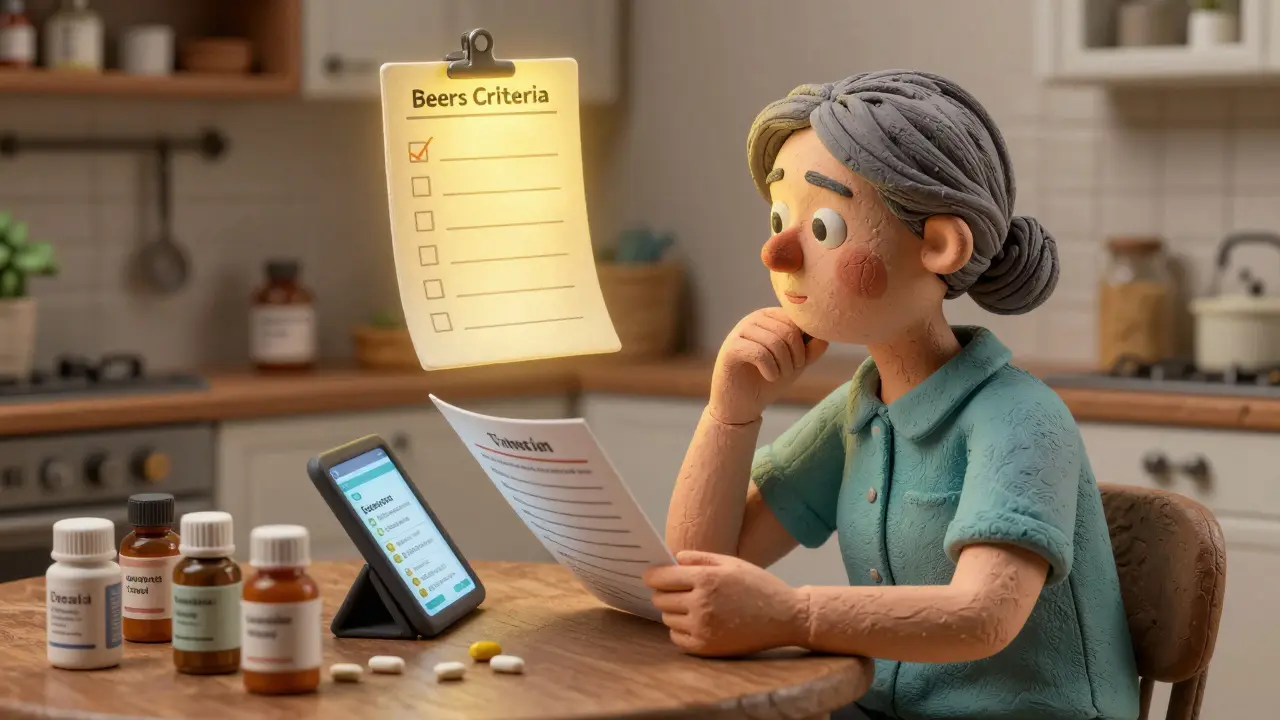
Every year, thousands of older adults end up in the hospital because of a medication that shouldn’t have been prescribed in the first place. It’s not always a mistake - sometimes it’s just the way things have always been done. But there’s a tool that’s changing how doctors think about prescribing for people over 65. It’s called the Beers Criteria.
What Exactly Are the Beers Criteria?
The Beers Criteria are a list of medications that doctors should avoid or use with extreme caution in adults aged 65 and older. They’re not a law. They’re not a blacklist. They’re a warning system - built by experts, updated regularly, and based on real-world data about what drugs cause more harm than good in aging bodies.
First created in 1991 by Dr. Mark Beers, the list has been maintained and expanded since 2011 by the American Geriatrics Society. The latest version came out in 2023, after reviewing over 1,500 new studies. It now includes 131 specific medication rules. That’s not just one or two dangerous drugs - it’s a full map of the hidden risks in common prescriptions.
These aren’t just random guesses. Each rule is backed by evidence showing higher rates of falls, confusion, kidney damage, bleeding, or even death when these drugs are used in older people. For example, antipsychotics like haloperidol or risperidone are flagged because they increase stroke risk in dementia patients. Benzodiazepines like diazepam or lorazepam are listed because they make seniors much more likely to fall and break a hip. Even common painkillers like ibuprofen or naproxen can cause serious stomach bleeding or kidney failure in older adults.
How the Criteria Are Organized
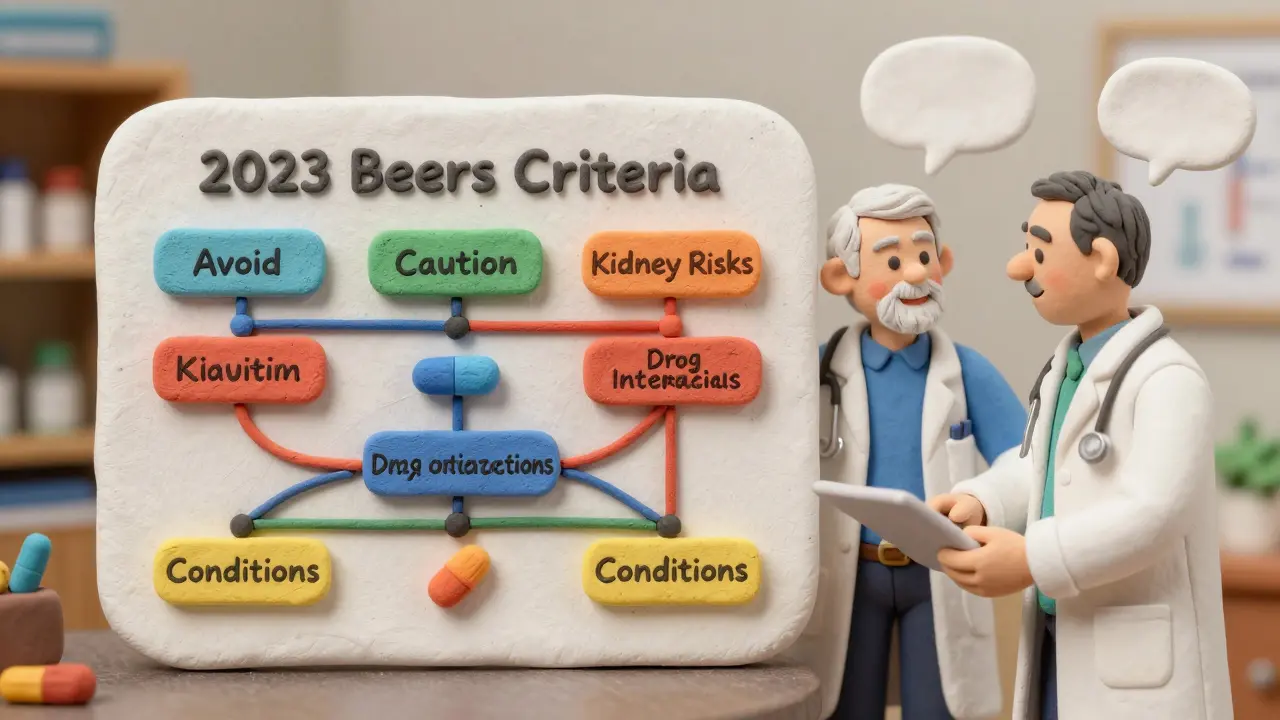
The 2023 Beers Criteria don’t just say “don’t use this drug.” They break it down into five clear categories so doctors can make smarter choices:
- Medications to avoid in most older adults - These are drugs with high risk and little benefit for nearly everyone over 65. Examples include diphenhydramine (Benadryl) for sleep, certain anticholinergics for overactive bladder, and long-acting sulfonylureas like chlorpropamide for diabetes.
- Medications to avoid with specific conditions - Some drugs are okay for most people but dangerous if you have heart failure, kidney disease, or dementia. For example, non-dihydropyridine calcium channel blockers like verapamil can worsen heart failure. Anticholinergics can make dementia symptoms worse.
- Medications to use with caution - These aren’t banned, but they need close monitoring. Examples include opioids for chronic pain, proton pump inhibitors (PPIs) like omeprazole used long-term, and certain antidepressants like amitriptyline.
- Medications to avoid with kidney problems - As kidneys slow down with age, drugs that are cleared through them build up. Metformin, for instance, is usually safe - but only if kidney function is normal. If it’s not, the risk of lactic acidosis goes up.
- Drug interactions to avoid - Some combinations are deadly. For example, mixing NSAIDs with blood thinners like warfarin or apixaban increases bleeding risk. Taking multiple sedatives together - like a sleep pill plus an anxiety med - can cause dangerous drowsiness or breathing problems.
Each of these categories is tied to real outcomes. A 2014 study found that nearly half of older adults in long-term care were taking at least one drug on the Beers list. That’s not rare - it’s common. And it’s not just about pills. It’s about quality of life: confusion, falls, hospital stays, and loss of independence.
Why These Rules Matter More Than You Think
Most older adults take five or more medications. That’s called polypharmacy. And with each added drug, the risk of side effects grows. One in five older adults is prescribed at least one medication on the Beers list - even though safer alternatives exist.
Think about it: A senior takes a sleep aid (diphenhydramine) because they can’t fall asleep. It makes them drowsy the next day, so they stumble getting to the bathroom. They break their hip. Then they’re put on opioids for pain, which causes constipation, so they get a laxative. That leads to electrolyte imbalance, which triggers confusion. Suddenly, they’re in the hospital - all because of a chain reaction started by a single, outdated prescription.
Studies show that when hospitals and nursing homes use the Beers Criteria to review medications, hospital admissions drop by up to 30%. That’s not just a number - it’s people staying out of the ER, keeping their independence, and avoiding long recovery times.
Medicare and Medicaid use the Beers Criteria to measure how well nursing homes and pharmacies are doing. It’s part of their official quality ratings. That means if a facility has too many patients on high-risk drugs, it can lose funding. That’s why the criteria aren’t just clinical - they’re financial.
They’re Not Perfect - And That’s the Point
Some doctors say the Beers Criteria are too rigid. “What if my patient has no other option?” they ask. And that’s valid.
The American Geriatrics Society is clear: these are guidelines, not rules. They’re meant to start conversations - not end them. A 90-year-old with severe arthritis and no other pain relief might need an NSAID, even if it’s on the list. A person with chronic insomnia might need a low-dose sedative if they’ve tried everything else. The key is intention. Not just defaulting to what’s easy, but asking: “Is this really helping, or just making things worse?”
That’s why the best use of the Beers Criteria isn’t checking boxes. It’s asking questions:
- Why was this drug prescribed?
- Has it been reviewed in the last 6 months?
- Is there a safer alternative?
- What happens if we stop it?
Pharmacists play a huge role here. In VA hospitals and geriatric clinics, pharmacists regularly review all medications and flag Beers-listed drugs. Often, they work with the doctor to switch to something safer - like replacing diphenhydramine with melatonin, or swapping out an anticholinergic bladder pill for mirabegron.
What You Can Do
If you or someone you care for is over 65 and taking multiple medications, don’t wait for a doctor to bring it up. Ask for a full medication review. Bring a list of everything - including over-the-counter pills, vitamins, and supplements. Many people forget that even aspirin or herbal teas can interact with prescription drugs.
You can also use free tools. The American Geriatrics Society offers a mobile app and a printable pocket card with the full 2023 Beers Criteria. You can download it from GeriatricsCareOnline.org. There’s also a simplified version for families at HealthinAging.org.
And if your doctor dismisses your concerns - “It’s fine, I’ve been prescribing this for years” - ask for evidence. Ask if they’ve checked the latest Beers list. Ask if there’s a safer option. You’re not being difficult. You’re being smart.
What’s Next for the Beers Criteria
The 2023 update added new warnings about medications that increase fall risk - like certain blood pressure drugs and diuretics. It also tightened restrictions on antipsychotics in dementia and gave clearer guidance on when to stop benzodiazepines.
Future versions may include genetic data - like whether someone metabolizes drugs slowly due to their DNA. That could make the list even more personal. But for now, the strength of the Beers Criteria is their simplicity. They give doctors a clear starting point. They give families a way to speak up. And they give older adults a better shot at staying healthy, safe, and independent.
Medication safety isn’t about avoiding drugs altogether. It’s about using the right ones, at the right dose, for the right reason. The Beers Criteria don’t take away choice. They help make better ones possible.
Are the Beers Criteria mandatory for doctors?
No, the Beers Criteria are not mandatory. They are evidence-based guidelines meant to support clinical judgment, not replace it. Doctors are encouraged to use them as a tool to reduce harm, but they should always consider the individual patient’s health, preferences, and other medications. The American Geriatrics Society explicitly warns against using the list to deny care or restrict insurance coverage.
Can I stop a medication just because it’s on the Beers list?
Never stop a medication without talking to your doctor or pharmacist. Being on the Beers list means the drug carries higher risks for older adults - but it doesn’t mean it’s always unsafe. For example, someone with severe pain or advanced dementia might still need a drug on the list if no safer option works. The goal is to review it carefully, not to stop it automatically.
How often are the Beers Criteria updated?
The Beers Criteria are updated every three to four years by a panel of geriatric experts. The most recent version was published in 2023, and it included 131 medication recommendations based on over 1,500 new research studies. The next update is expected around 2026-2027.
Are there alternatives to the Beers Criteria?
Yes. The STOPP-START criteria are another widely used tool that looks at both inappropriate prescriptions (STOPP) and missed opportunities for beneficial drugs (START). While Beers focuses only on risky medications, STOPP-START also checks for drugs that should be added. Many clinicians use both together for a fuller picture.
Why do nursing homes get penalized for using Beers-listed drugs?
Medicare and Medicaid use the Beers Criteria as part of their quality measures for nursing homes. If too many residents are on high-risk medications, the facility can be rated lower, which affects funding and reputation. This isn’t meant to punish staff - it’s meant to push systems toward safer prescribing. Many facilities now have pharmacists on staff to help reduce these medications safely.
What should I bring to a medication review appointment?
Bring a complete list of everything you take - including prescriptions, over-the-counter pills (like pain relievers or sleep aids), vitamins, supplements, and herbal remedies. Also note any side effects you’ve noticed - dizziness, confusion, stomach upset, or falls. The more detail you give, the better your doctor can decide what to keep, change, or stop.
Marilyn Ferrera
December 31, 2025 AT 20:27Every time I see a grandparent on five meds, I think: who decided this was safe? The Beers Criteria aren’t just a list-they’re a lifeline. I’ve watched my mom spiral after being prescribed diphenhydramine for sleep. One fall. One hip fracture. One year of recovery. It wasn’t malpractice. It was inertia. And now? We use the app. Every. Single. Time.
Robb Rice
January 2, 2026 AT 01:21While I appreciate the intent behind the Beers Criteria, one must acknowledge that clinical judgment cannot be fully replaced by algorithmic guidelines. The 2023 update, while comprehensive, lacks nuance in cases of polypharmacy where alternative therapies are either ineffective or inaccessible. A rigid application may inadvertently deny palliative relief to those with no other options.
Harriet Hollingsworth
January 2, 2026 AT 01:50Doctors are killing our elders with prescriptions and no one’s stopping them. It’s not negligence-it’s negligence with a degree. They’re prescribing Benadryl like it’s candy and then acting shocked when Grandma falls. This isn’t medicine. It’s mass poisoning dressed up as tradition. Someone needs to sue these people.
Deepika D
January 2, 2026 AT 17:33As someone who works in elder care in India, I’ve seen this play out in so many ways-family members giving OTC meds because they ‘heard it helps,’ doctors prescribing without checking kidney function, pharmacists not asking questions because they’re overworked. The Beers Criteria are a gift, but only if we teach them. I’ve started workshops in my community-showing families the app, translating the list into Hindi, even making flashcards for nursing assistants. Change doesn’t come from policy alone-it comes from people who care enough to explain it. And yes, melatonin beats diphenhydramine every time. Trust me, I’ve seen the difference.
Bennett Ryynanen
January 3, 2026 AT 16:17Bro, this is the most important thing I’ve read all year. I had no idea my dad was on three Beers-listed drugs. I called his doctor yesterday and said, ‘I’m not asking-I’m demanding a review.’ She didn’t argue. She just said, ‘I should’ve caught that.’ We’re switching him to gabapentin for nerve pain instead of tramadol, and ditching the lorazepam. He’s sleeping better, not stumbling, and not yelling at the TV at 3 a.m. This isn’t just medicine-it’s dignity.
Chandreson Chandreas
January 5, 2026 AT 03:43Been there, seen it, helped fix it 🙌
My uncle was on 8 meds. Now he’s on 3. One was a sleep aid that made him hallucinate. Another was a PPI he’d been on for 12 years. We didn’t even know it was a problem until we checked Beers. Now he’s walking again. No falls. No confusion. Just peace. The list isn’t scary-it’s empowering. Download the app. Talk to your pharmacist. You’ve got this 💪
Darren Pearson
January 6, 2026 AT 14:08It is, of course, entirely predictable that a list of potentially inappropriate medications would be met with the kind of populist enthusiasm typically reserved for anti-vaccine manifestos. The Beers Criteria, while empirically grounded, are frequently misapplied by laypersons who confuse caution with prohibition. One must remember that medicine is not a spreadsheet-it is a discipline requiring context, hierarchy of risk, and individualized assessment. The notion that a layperson can ‘review’ a geriatric regimen with an app is not only naive, it is dangerous.
Stewart Smith
January 7, 2026 AT 08:36Wow. So the solution to overprescribing is… more lists? Brilliant. Next they’ll make a checklist for breathing. I’m sure the 87-year-old with stage 4 cancer who needs morphine will be thrilled to read ‘high risk’ next to it. Let’s just let the algorithm decide who lives and who suffers. 😏
Retha Dungga
January 9, 2026 AT 08:20people forget that medicine is about healing not rules 🤔
old folks need love not lists
Jenny Salmingo
January 10, 2026 AT 19:09I’m from the South and we don’t always trust doctors-but we trust our grandmas. My grandma took Benadryl every night ‘because the nurse said so.’ I showed her the Beers app on my phone. She said, ‘Well, that’s just dumb. I’ve been taking this since Nixon.’ Then she paused. And said, ‘But… I don’t sleep any better.’ We switched her to chamomile tea and a fan. She’s been sleeping like a baby. No meds. No drama. Just peace.
Lawver Stanton
January 11, 2026 AT 00:42Let’s be real-the Beers Criteria are a bureaucratic nightmare wrapped in a pseudoscientific bow. Who the hell is this American Geriatrics Society to tell me how to treat my patients? I’ve been practicing since 1989. I’ve seen patients live into their 90s on ‘high-risk’ meds. Now we’re supposed to panic because some panel of academics counted up 1,500 studies and decided that 131 drugs are ‘bad’? Meanwhile, real people are suffering from under-treatment because doctors are scared to prescribe anything. This isn’t safety-it’s fear-driven dogma dressed up as science. And now Medicare’s using it to punish clinics? That’s not healthcare. That’s insurance company control masquerading as medicine. I’ve stopped using the list entirely. My patients are better off.
Martin Viau
January 12, 2026 AT 07:56As a Canadian physician, I find it fascinating how Americans treat the Beers Criteria like gospel. In Canada, we use STOPP-START-because we understand that the problem isn’t just bad drugs, it’s missing good ones. You don’t fix polypharmacy by removing meds-you fix it by adding appropriate ones: statins, vaccines, vitamin D, antihypertensives. The Beers list is a blunt instrument. It’s like saying ‘all knives are dangerous’ instead of teaching people how to cook. We need tools that promote health, not just avoid harm. Shame on you, AGS, for not seeing the bigger picture.