
Bariatric Surgery and Medication Absorption: How Weight Loss Procedures Change Drug Dosing
Bariatric Surgery Medication Adjustment Calculator
Medication Adjustment Calculator
Adjustment Recommendations
Important: This calculator provides general guidelines. Always consult your healthcare provider before making medication changes. Individual adjustments may vary based on your specific condition and other factors.
What Happens to Your Medicines After Bariatric Surgery?
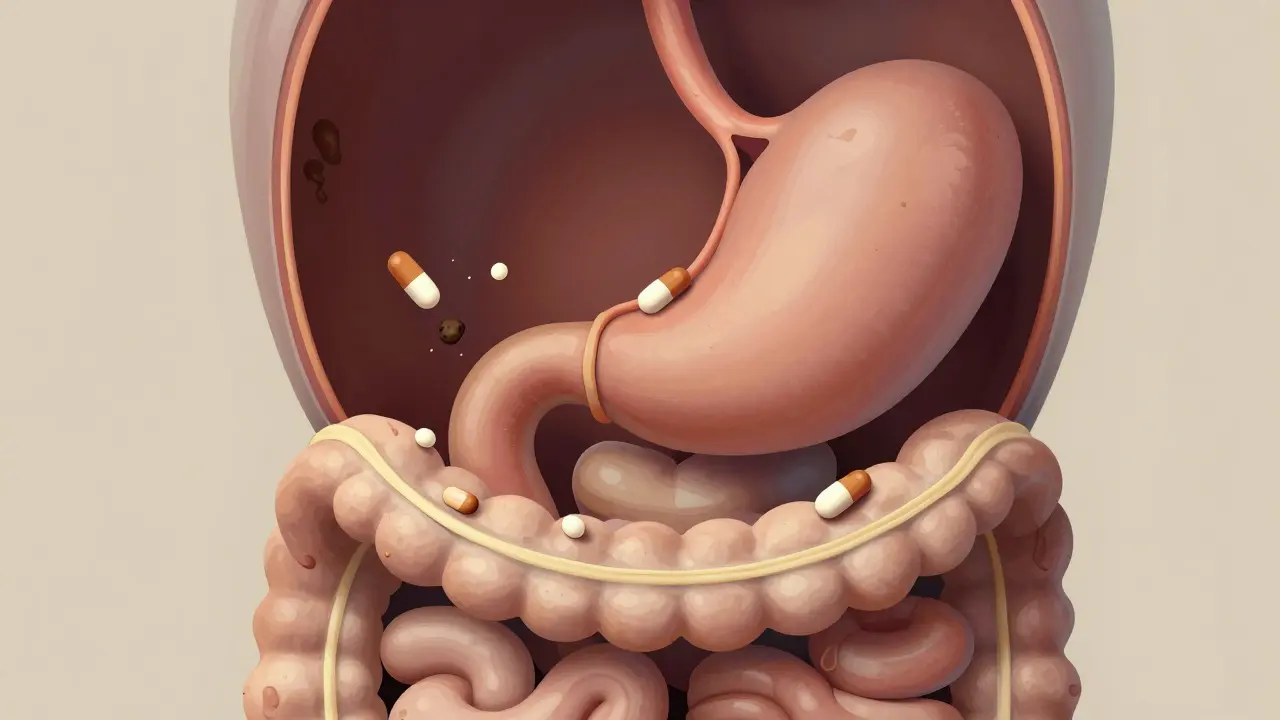
When someone has bariatric surgery, their body changes in ways that go far beyond weight loss. The stomach shrinks. The path food takes through the intestines gets rerouted. Digestive acids drop. And all of this directly affects how your body absorbs medicines. It’s not just about taking pills differently-it’s about whether those pills work at all.
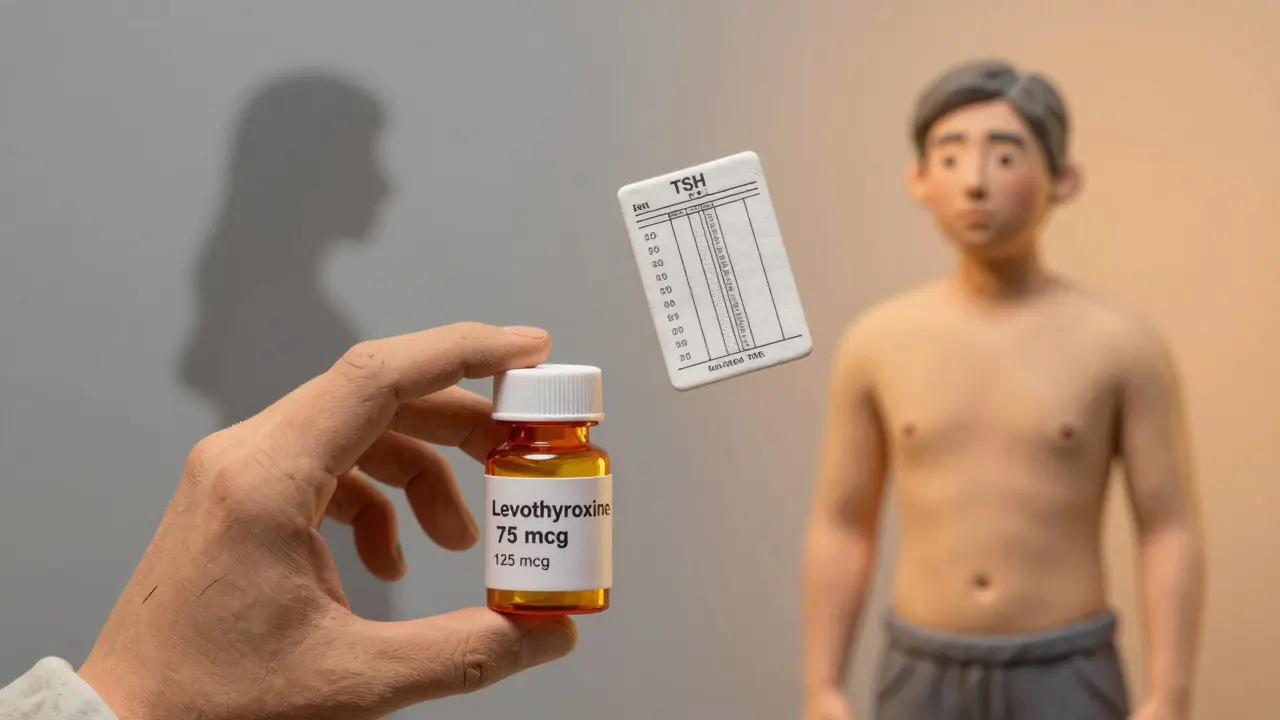
Take levothyroxine, for example. A patient on 75 mcg daily before surgery might need 125 mcg after a Roux-en-Y gastric bypass. Why? Because the drug isn’t being absorbed the same way anymore. The same goes for blood thinners like warfarin, diabetes meds like metformin ER, and even painkillers like oxycodone CR. Many patients report their medications just… stop working. And it’s not because they’re not taking them. It’s because their gut changed.
How Different Surgeries Change Drug Absorption
Not all bariatric surgeries are the same-and that makes a huge difference in how drugs behave. There are two main types: restrictive and malabsorptive.
Sleeve gastrectomy removes about 80% of the stomach, leaving a narrow tube. This reduces acid production, raising gastric pH from around 2 to 5. That’s bad news for drugs that need acid to dissolve, like ketoconazole or itraconazole. But since the small intestine stays intact, most drugs still get absorbed. About 15-20% of patients need dose adjustments here.
Roux-en-Y gastric bypass (RYGB) is more complex. It creates a tiny stomach pouch and bypasses the first part of the small intestine-the duodenum and proximal jejunum. That’s 100-150 cm of absorptive surface gone. Drugs that rely on this area-like calcium, iron, vitamin B12, and many extended-release pills-don’t get absorbed well. Studies show up to 68% of RYGB patients need medication changes. That’s more than double the rate in sleeve patients.
Biliopancreatic diversion with duodenal switch is the most extreme. It bypasses even more of the intestine. Bioavailability for many drugs drops by 50-70%. It’s rare-only 2.5% of bariatric surgeries-but the drug absorption issues here are severe.
The key difference? If the duodenum is bypassed, absorption drops. If it’s still in the path, most drugs work fine. That’s why sleeve gastrectomy is often easier to manage than RYGB when it comes to medications.
Why Extended-Release Pills Often Fail
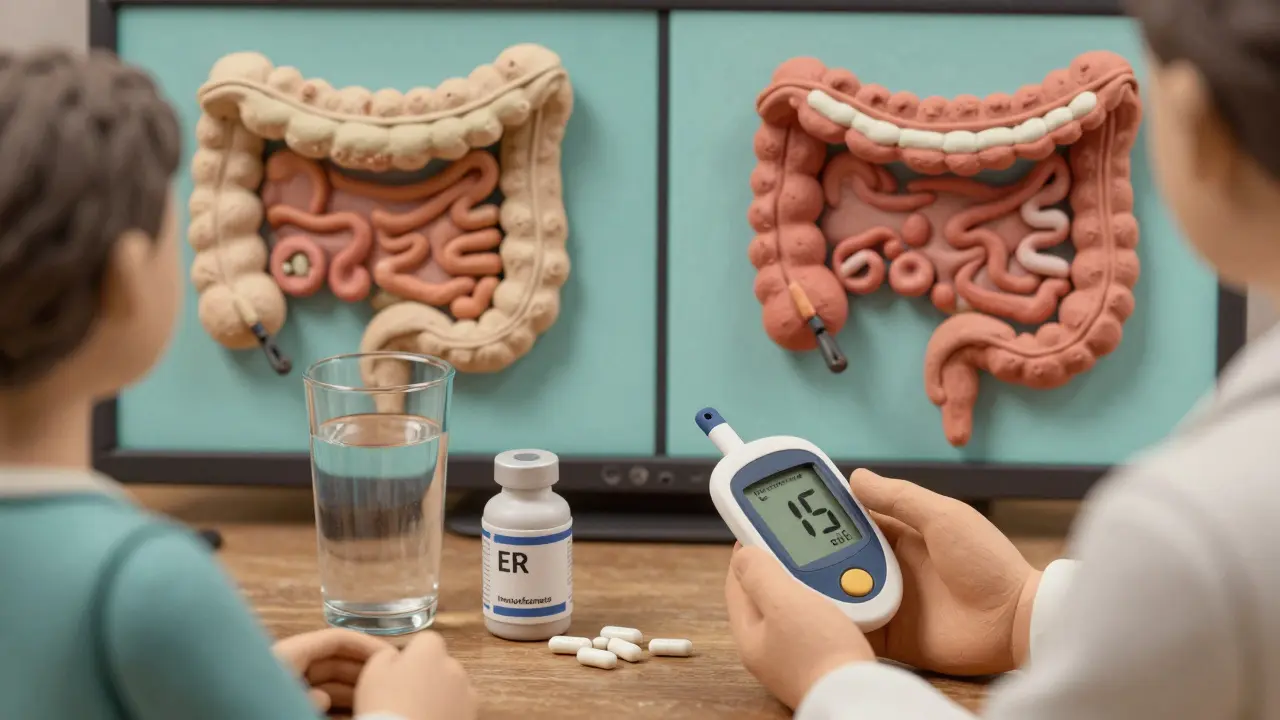
Extended-release (ER) or delayed-release pills are designed to dissolve slowly over hours. They rely on time and distance to release their contents properly. After RYGB, food and pills zip through the system in 30-60 minutes instead of 2-5. That’s not enough time for an ER pill to do its job.
Here’s what happens in real life:
- Metformin ER: Plasma levels drop 30-40%. Blood sugar control suffers.
- Glipizide XL: Up to 75% less effective. Patients see spikes in glucose.
- Oxycodone CR: Bioavailability falls by 60%. Pain returns sooner.
- Warfarin: Unpredictable levels. Risk of clots or bleeding skyrockets.
Mayo Clinic data shows 47% of ER medications post-RYGB need switching to immediate-release versions. That means more pills, more times a day. It’s inconvenient. But it’s safer than letting the drug fail.
Some pills don’t even break down. Patients report swallowing whole tablets that come out unchanged in stool. That’s not just alarming-it’s dangerous. If you’re on an anticonvulsant or immunosuppressant, missing even a fraction of your dose can cause seizures or organ rejection.
What Medications Are Most at Risk?
Not all drugs are affected equally. Some are more sensitive to pH, surface area, or transit time. Here’s what to watch for:
- Acid-dependent drugs: Ketoconazole, itraconazole, atazanavir, rilpivirine. These need low pH to dissolve. Higher stomach pH after surgery = poor absorption.
- Calcium and vitamin D: Absorption drops 35% after RYGB. Patients often need 1,500-2,000 mg of calcium citrate daily-twice the normal dose.
- Levothyroxine: Bioavailability falls 25-30%. TSH levels must be checked every 6-8 weeks for the first year.
- Anticoagulants: Warfarin, apixaban, rivaroxaban. Dose changes are common. Therapeutic drug monitoring is critical.
- Antiepileptics: Phenytoin, carbamazepine, valproate. Narrow therapeutic window. Even small drops in absorption can trigger seizures.
- Immunosuppressants: Mycophenolate, tacrolimus, cyclosporine. Transplant patients need weekly blood tests for months after surgery.
- Extended-release and enteric-coated pills: All of them. Avoid unless proven safe.
Even common OTC meds like ibuprofen or aspirin can be affected. Enteric-coated aspirin may not dissolve at all after bypass. Plain tablets are safer.
How to Adjust Medications Safely
There’s no one-size-fits-all fix. But there are proven steps to stay safe:
- Switch ER to immediate-release: Do this before or right after surgery. For metformin ER, use 1.25 times the original daily dose as immediate-release.
- Use liquids or crushed tablets: For the first 3 months, liquid forms are best. If crushing is safe (check with your pharmacist), it helps absorption.
- Time doses carefully: Take acid-dependent drugs 30-60 minutes before meals. Take fat-soluble drugs (like vitamin D or some antidepressants) with food.
- Use calcium citrate, not carbonate: Citrate doesn’t need acid to absorb. Carbonate won’t work well after surgery.
- Monitor blood levels: For warfarin, antiepileptics, immunosuppressants-check levels weekly at first, then monthly. Don’t guess doses.
- Track symptoms: If your pain returns, your thyroid feels off, or your blood sugar spikes, think medication absorption-not noncompliance.
The NHS developed a 5-step tool used in 127 UK hospitals. It looks at: drug type, surgery type, patient weight, timing, and symptoms. It cut readmissions by 34%.
What Patients Are Saying
Reddit’s r/bariatricsurgery community has thousands of posts about failed meds. One user, ‘PostOpPharmD,’ shared how his levothyroxine dose jumped from 75 mcg to 125 mcg after RYGB. His TSH was normal before. After? It soared. He didn’t know why until his pharmacist asked about the surgery.
Another patient reported taking her 500 mg metformin ER twice a day-and still having high glucose. She switched to 850 mg immediate-release three times a day. Her levels dropped within two weeks.
These aren’t rare cases. A 2022 survey found 63% of community pharmacists had seen at least one medication failure tied to bariatric surgery in the past year. The FDA added warnings to 17 drug labels in 2022-2023. The European Medicines Agency now requires new oral drugs to include bariatric surgery absorption data.
The Future: Better Tools, Better Outcomes
Things are getting better. Pharmacists are getting trained. In 2019, only 12 US pharmacy schools taught bariatric pharmacotherapy. Now, 42 do. Hospitals are hiring specialized bariatric pharmacists. Salaries hit $145,000 in 2023-proof this is a real, growing need.
New tech is helping too:
- AI dosing calculators: Used in 83 US hospitals, they cut dosing errors by 41%.
- pH-adaptive capsules: Being tested in Copenhagen, these release drugs even in higher pH environments. Early results show 85% absorption vs. 45% for regular pills.
- Subcutaneous implants: The ITCA 650 exenatide implant works in 92% of RYGB patients-far better than oral GLP-1s.
- Pharmacogenomics: Mayo Clinic is testing if your genes (CYP450 enzymes) can predict how you’ll absorb drugs after surgery. Early data shows 30% more accurate dosing.
The goal isn’t just to keep people alive after surgery. It’s to help them thrive. That means medicines that work. That means fewer hospital visits. That means real quality of life.
What You Should Do Now
If you’ve had bariatric surgery-or are planning it-talk to your pharmacist before your procedure. Don’t wait for a problem to arise.
Ask:
- Which of my meds are extended-release?
- Which ones need acid to work?
- Do I need to switch to liquid or immediate-release versions?
- Should I get blood tests for my key meds?
- Can you give me a written plan for the first 6 months?
Don’t assume your doctor knows. Many don’t. Pharmacists are the experts here. And if your current pharmacy doesn’t offer this service, find one that does. Your health depends on it.
John Hay
December 21, 2025 AT 02:02Jon Paramore
December 22, 2025 AT 17:11Stacey Smith
December 23, 2025 AT 21:51Theo Newbold
December 25, 2025 AT 16:57Cara C
December 27, 2025 AT 16:52Michael Ochieng
December 28, 2025 AT 19:43Erika Putri Aldana
December 30, 2025 AT 04:59Orlando Marquez Jr
December 31, 2025 AT 22:21Jackie Be
January 1, 2026 AT 05:22Swapneel Mehta
January 1, 2026 AT 23:58Sandy Crux
January 3, 2026 AT 21:30Jerry Peterson
January 5, 2026 AT 17:34Siobhan K.
January 7, 2026 AT 01:29