
Asthma and COPD Inhalers: How to Use Them Right for Better Breathing
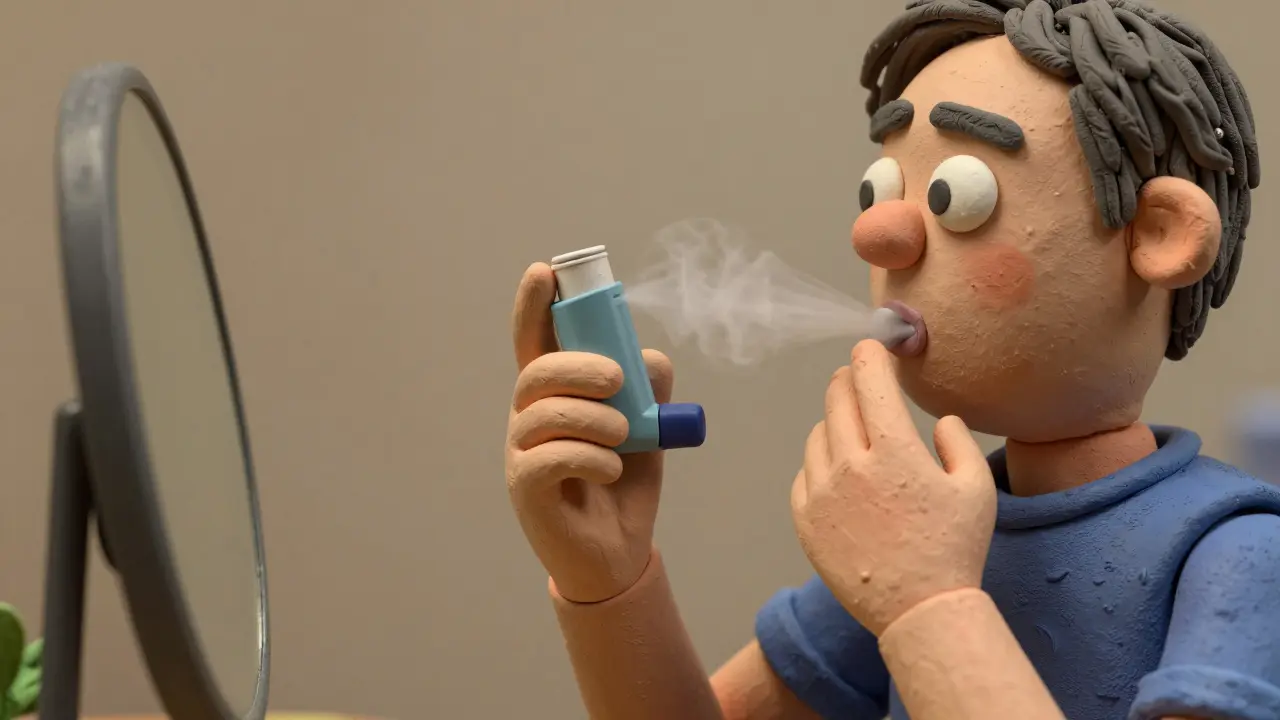
More than 70% of people with asthma or COPD are using their inhalers wrong. Not because they don’t want to, but because no one ever showed them how. And that’s not just a small mistake-it’s the difference between breathing easy and struggling for air. If your inhaler isn’t working like it should, it’s not the medicine. It’s the technique.
Why Your Inhaler Might Not Be Working
You take your inhaler every day. You follow the prescription. But your symptoms don’t improve. You’re not alone. Studies show that between 70% and 90% of people use their inhalers incorrectly. That means only 8% to 30% of the medicine actually reaches your lungs. The rest? It sticks in your mouth, throat, or gets spit out. That’s why you still feel wheezy, even after puffing.
The problem isn’t the device. It’s the method. Many people press the inhaler and breathe in too fast. Or they don’t hold their breath long enough. Some shake the inhaler once and forget to shake it again. Others use a dry powder inhaler like it’s a metered-dose inhaler-and vice versa. These aren’t minor slips. They’re critical errors that cut your medication’s effectiveness in half.
And here’s the scary part: you probably don’t even know you’re doing it wrong. Most people think they’re using their inhaler correctly because they’ve been doing it the same way for years. A 2023 survey found that 37% of users said their biggest worry was, “I don’t know if I’m using it right.” That’s not confidence. That’s guesswork.
The Three Main Types of Inhalers
Not all inhalers work the same way. There are three main types, and each needs a different technique. Mixing them up can make your treatment useless-or even harmful.
- Metered-Dose Inhalers (MDIs): These are the classic canisters with a mouthpiece. You press down while breathing in. They use a propellant to spray medicine out. Common brands include ProAir HFA and Ventolin HFA. They’re great for quick relief, but they require perfect timing. Press and inhale at the same moment. Miss that window, and most of the dose is wasted.
- Dry Powder Inhalers (DPIs): These include Diskus, Turbuhaler, and Ellipta. No propellant. No button to press. You breathe in hard and fast to pull the powder into your lungs. But if you’re too weak, too slow, or too tired-like during a flare-up-you won’t get enough medicine. These are not for everyone, especially older adults or those with severe COPD.
- Soft Mist Inhalers: The Respimat is the only one in this category. It releases a slow, fine mist over 1.5 seconds. You don’t need to time your breath perfectly. It’s easier for people who struggle with coordination. But you still need to inhale slowly and deeply.
There are over 20 different inhaler devices on the market. Each has its own quirks. Just because you switched from one brand to another doesn’t mean you can use it the same way. Always check the instructions that come with your new inhaler-even if it looks familiar.
The Right Way to Use a Metered-Dose Inhaler (MDI)
If you’re using an MDI, here’s the exact sequence you need to follow. Do this every time, no exceptions.
- Remove the cap and shake the inhaler well for 5 seconds.
- Stand or sit up straight. Tilt your head back slightly.
- Breathe out fully-empty your lungs as much as you can.
- Place the mouthpiece in your mouth. Seal your lips tightly around it.
- Start breathing in slowly through your mouth. As you begin to inhale, press down on the inhaler to release the dose.
- Keep breathing in slowly for 3 to 5 seconds until your lungs are full.
- Hold your breath for 10 seconds. This lets the medicine settle into your airways.
- Breathe out slowly through your nose.
If you need a second puff, wait at least 60 seconds. Don’t rush. And if you’re using an inhaled steroid like fluticasone or budesonide, rinse your mouth with water afterward. Spit it out. Don’t swallow. This cuts your risk of oral thrush by 75%.
Shaking the inhaler isn’t optional. One study found 45% of users skip this step. That means the medicine settles at the bottom of the canister. You get a weak dose-or nothing at all.
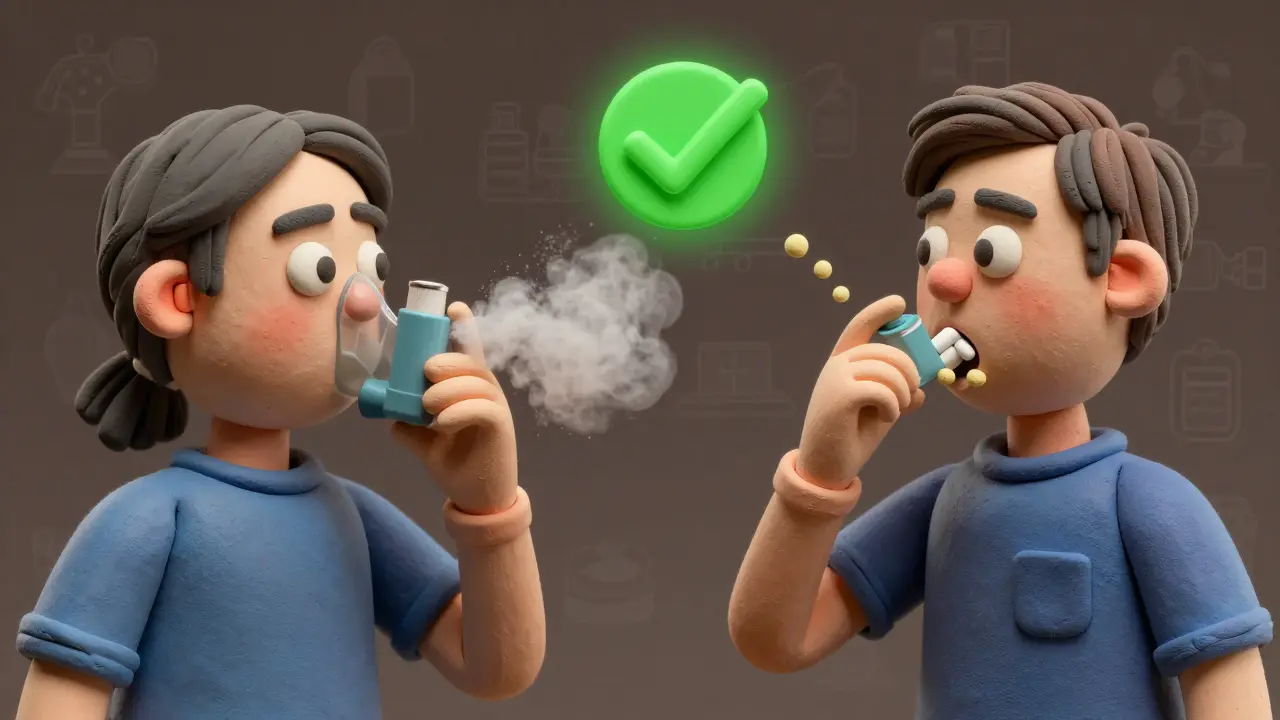
How to Use a Dry Powder Inhaler (DPI)
DPIs are simpler in some ways, but harder in others. No button to press. No timing needed. But you need strong, fast breaths.
- Load the dose according to the device instructions. For Diskus, slide the lever. For Turbuhaler, twist the base. Don’t open capsules or shake the device.
- Stand or sit upright. Breathe out fully-away from the inhaler.
- Place the mouthpiece in your mouth. Seal your lips tightly.
- Breathe in quickly and deeply, like you’re trying to suck through a straw.
- Hold your breath for 10 seconds.
- Breathe out slowly.
Never exhale into a DPI. That’s the most common mistake. It clogs the powder with moisture and ruins the dose. Also, never try to open the capsule. People do this thinking they’ll “see if it’s working.” That’s dangerous. The powder is designed to be inhaled as-is. If you open it, you lose the dose and risk inhaling too much at once.
DPIs are not for everyone. If you have severe COPD, your lungs might not generate enough airflow to activate the powder. In that case, stick with an MDI-or ask your doctor about a soft mist inhaler.
Why Spacers Are a Game-Changer
If you’re using an MDI, get a spacer. It’s not a luxury. It’s a necessity.
A spacer is a tube that attaches to your inhaler. It holds the medicine in a chamber while you breathe in. This removes the need for perfect timing. You press the inhaler, then breathe in slowly over several seconds. It’s easier, more reliable, and delivers 70% to 100% more medicine to your lungs.
Studies show that using a spacer with an MDI can make your treatment just as effective as a DPI-without requiring strong breaths. It’s especially helpful for children, older adults, and anyone with shaky hands or poor coordination.
But here’s the catch: spacers only work with MDIs. Never use a spacer with a DPI. That blocks the airflow and cuts the medicine delivery by 50% to 70%. It’s like putting a sock over a fan. The powder can’t move. The medicine doesn’t reach your lungs.
Spacers are cheap. Most cost under $20. Many pharmacies give them out for free. Ask your doctor or pharmacist for one. If you’re using an MDI without a spacer, you’re not getting the full benefit of your medication.
Common Mistakes (And How to Fix Them)
Here are the five most common mistakes-and how to stop them.
- Not shaking the inhaler: 45% of users skip this. Always shake for 5 seconds before each puff.
- Exhaling into the inhaler: Especially with DPIs. Always breathe out away from the device.
- Not holding your breath: 63% of people exhale right after inhaling. Hold for 10 seconds. It’s hard, but it doubles the medicine in your lungs.
- Using multiple inhalers without training: If you have two different types, get specific instruction for each. Technique confusion cuts effectiveness by 35% to 50%.
- Storing inhalers wrong: Heat kills medicine. Don’t leave your inhaler in a hot car or by the sink. Keep it at room temperature (20-25°C). If it’s been exposed to extreme heat, replace it.
And don’t forget: never use an expired inhaler. Medication loses potency after the expiration date. In a flare-up, that could mean the difference between control and an emergency room visit.
What Your Doctor Should Be Checking
Your doctor should check your inhaler technique at every visit. Not once a year. Every time. The American Lung Association and the Global Initiative for Asthma (GINA) both say this is non-negotiable.
Studies show that when healthcare providers regularly assess technique, patients have 22% fewer emergency visits. That’s huge. It means fewer hospital stays, fewer missed workdays, and better quality of life.
Ask your doctor: “Can you watch me use my inhaler right now?” Don’t be shy. Most providers are happy to do it. If they say no, ask why. You’re not being difficult-you’re being smart.
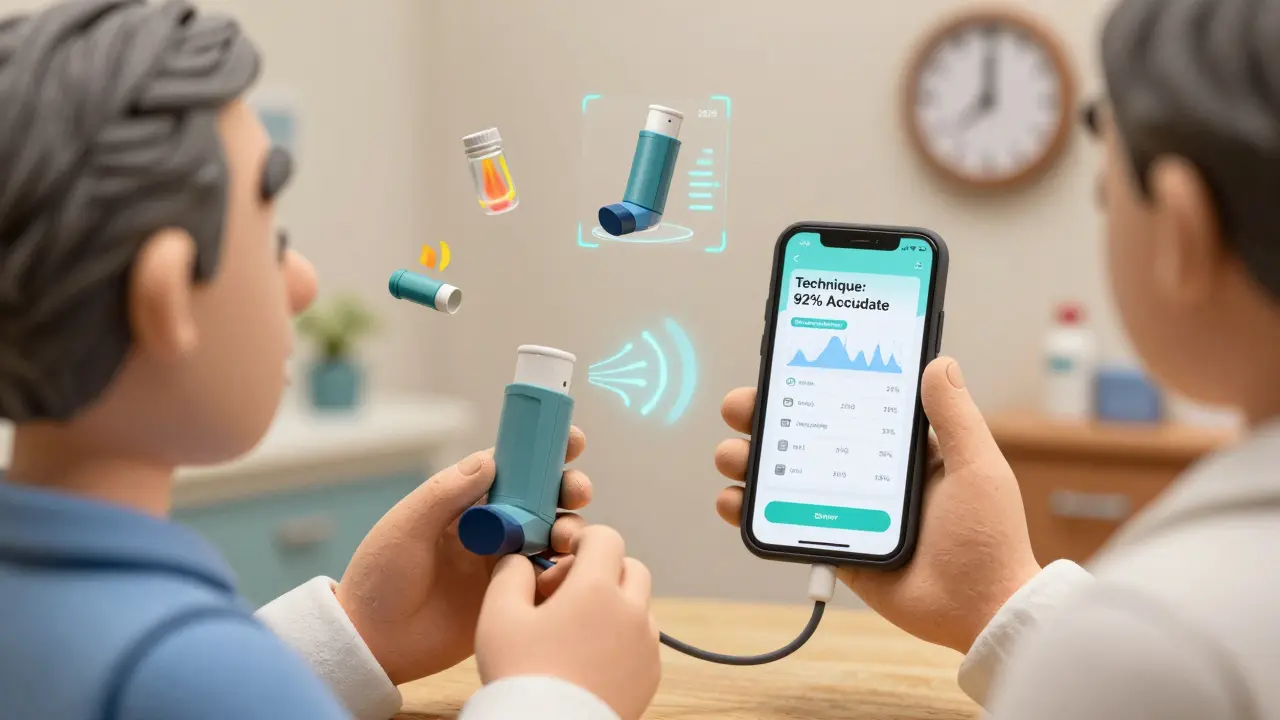
Some clinics now use video tools or apps to record your technique. You can even send a clip to your doctor between visits. It’s easier than you think.
Smart Inhalers and What’s Coming Next
Technology is catching up. Smart inhalers with built-in sensors are now FDA-approved. They track when you use your inhaler-and whether you used it correctly. One device, Propeller Health, has been shown to monitor technique with 92% accuracy.
These devices connect to your phone and send reminders. They show you trends: “You used your rescue inhaler 8 times last week-that’s more than usual.” They can even alert your doctor if your usage spikes.
By 2025, 40% of inhalers are expected to have digital tracking. That doesn’t mean you need one now. But if you’re struggling, it’s worth asking your doctor about them. Some insurance plans cover them.
Future inhalers will adjust the dose based on your breathing patterns. Others will sense when you’re about to have an attack and deliver medicine before symptoms start. These aren’t science fiction. They’re coming by 2026 or 2027.
Final Takeaway: Technique Is Everything
The best medicine in the world won’t help if you don’t use it right. Inhalers are simple tools. But they demand precision. The device you use matters less than how you use it.
Take 10 minutes today to review your technique. Watch a video from the American Lung Association or the National Asthma Council Australia. Practice in front of a mirror. Ask someone to watch you. Don’t guess. Don’t assume. Do it right.
One person can’t fix the 70% misuse rate. But you can fix yours. And when you do, you’re not just taking medicine-you’re taking back your breathing.
Can I use my asthma inhaler for COPD flare-ups?
It depends on the medication. Many inhalers contain the same types of drugs for both asthma and COPD, like albuterol or budesonide. But not all are approved for both conditions. Always check the label or ask your doctor. Using the wrong inhaler during a flare-up could delay treatment or cause side effects. Never share inhalers with others-even if they have the same condition.
Why does my inhaler taste bitter?
The bitter taste usually comes from corticosteroids, like fluticasone or mometasone. It’s normal. But if you don’t rinse your mouth after using it, the medicine can cause oral thrush-a fungal infection that causes white patches and soreness. Rinsing and spitting reduces this risk by 75%. Don’t swallow the rinse water.
Do I need to clean my inhaler?
Yes, especially MDIs. Once a week, remove the metal canister and rinse the plastic mouthpiece under warm water. Let it air-dry completely before reassembling. Never put the canister in water. For DPIs, wipe the mouthpiece with a dry cloth. Don’t wash them-water can damage the powder mechanism.
What if I miss a dose?
If you miss a maintenance dose (like a steroid inhaler), take it as soon as you remember. If it’s almost time for the next dose, skip the missed one. Never double up. For rescue inhalers (like albuterol), use it only when you’re having symptoms. Don’t use it daily unless your doctor told you to. Overuse can make your lungs more sensitive and increase the risk of severe attacks.
Are inhalers safe for older adults?
Yes, but technique matters more. About 62% of people over 65 struggle with dry powder inhalers because they can’t generate enough airflow. For older adults, metered-dose inhalers with spacers are often the best choice. They’re easier to use and more reliable. Always get hands-on training from a pharmacist or respiratory therapist.
William Liu
December 19, 2025 AT 05:42This is one of those posts that makes you realize how much you’ve been doing wrong without even knowing it. I’ve been using my MDI for years and never thought to shake it properly-45% of users skipping that step? Yeah, that’s me. Just grabbed a spacer from the pharmacy today. No more guessing. Breathing feels different already.
Thanks for laying it out so clearly. No fluff, just facts. Exactly what people need.
Aadil Munshi
December 20, 2025 AT 02:38Let’s be real-70% of people use inhalers wrong because medicine companies don’t want you to succeed. Why? Because if you actually got 90% of the dose into your lungs, you’d need fewer refills. Less profit. The system is designed for dependency, not cure.
Spacers? Free? Of course they are. They’re not patented. The inhaler itself? $300 with insurance. The spacer? $12. Coincidence? I think not. The real innovation isn’t the device-it’s the realization that patients are being treated like lab rats with poor hand-eye coordination.
Frank Drewery
December 21, 2025 AT 17:18I’m a respiratory therapist and I see this every single day. People come in with three different inhalers, none of which they know how to use. One guy told me he thought the ‘click’ meant it was done-so he’d just press it and walk away. No inhale at all.
It breaks my heart. But it’s not their fault. No one taught them. This post? Perfect. Print this out. Give it to your doctor. Ask them to watch you use it. Seriously. Do it today.
Danielle Stewart
December 22, 2025 AT 12:21If you’re reading this and you’re struggling with your inhaler-you’re not failing. The system failed you. No one sat you down and showed you how to use it. That’s not your fault.
But here’s the good news: you can fix it. Right now. Take five minutes. Watch the American Lung Association video. Practice in front of the mirror. Use a spacer. Rinse your mouth. These aren’t chores-they’re acts of self-respect.
You deserve to breathe easy. Start today.
Meenakshi Jaiswal
December 23, 2025 AT 13:29In India, most people get inhalers from local pharmacies with zero instructions. I’ve seen elderly patients using DPIs like MDIs-shaking them, pressing buttons, then wondering why they’re still wheezing. One woman told me she thought the ‘powder’ was just dust and blew it out. I showed her how to use a Diskus with a mirror and a straw. She cried. Not from sadness-from relief.
Spacers aren’t common here. But if you can get one, even a homemade one (like a plastic bottle cut in half), it helps. Ask your pharmacist. Don’t wait until you’re in the ER.
bhushan telavane
December 25, 2025 AT 08:45Bro, I thought I was doing it right till I saw a video. I was exhaling into my DPI like it was a whistle. No wonder I kept getting thrush. Rinsing? I didn’t even know that was a thing. Now I do. Thanks for the wake-up call. My lungs thank you too.
holly Sinclair
December 26, 2025 AT 20:48It’s fascinating how such a simple mechanical device-essentially a pressurized canister or a powdered capsule-can become a symbol of systemic neglect in healthcare. We’ve mechanized medicine to the point where patients are expected to become engineers of their own treatment, yet no one provides the manual. The fact that 37% of users are actively worried they’re doing it wrong speaks to a deeper epistemological crisis: we trust technology more than we trust human guidance.
And yet, the solution isn’t more tech-it’s more time. More presence. More clinicians who pause, watch, and say, ‘Let me see how you do it.’ That’s the real innovation. Not the smart inhaler. The human who cares enough to look.
Also, the bitterness of corticosteroids? That’s not a side effect. It’s a warning. A chemical whisper: ‘This is powerful. Treat it with reverence.’ We’ve lost that language. We treat medicine like candy. It’s not.
Emily P
December 28, 2025 AT 04:38My dad’s 78 and uses an MDI. He hates shaking it. Said it ‘makes the canister feel like it’s gonna explode.’ I got him a spacer. He still doesn’t like it, but he uses it now. He says his coughing fits are less intense. I think he’s starting to believe he can breathe better. That’s worth more than any drug.
Dikshita Mehta
December 29, 2025 AT 04:40Just want to add one thing: if you’re using a steroid inhaler and you don’t rinse, you’re not just risking thrush-you’re creating a biofilm in your oropharynx that can harbor resistant fungi. This isn’t just about discomfort. It’s about long-term microbial ecology in your airway. One study showed persistent Candida colonization in 22% of non-rinsers after six months. Don’t underestimate the hygiene. It’s not optional. It’s pharmacological safety.