
Anxiety and Nervousness Caused by Medications: Common Triggers and What to Do

It’s not in your head. You started a new medication - maybe for asthma, thyroid issues, or ADHD - and suddenly you’re jittery, your heart won’t stop racing, and you can’t shake this feeling like something terrible is about to happen. You didn’t have anxiety before. You don’t think you’re ‘stressed out.’ But now, you’re having panic attacks or constant nervousness. And it’s not just you. Around 5-7% of all anxiety cases are directly tied to medications, not mental illness.
What Medications Can Cause Anxiety?
Not all anxiety is mental. Sometimes, it’s chemical. Certain drugs mess with your brain’s natural balance, turning up the volume on your body’s stress response. Here are the most common culprits:
- Corticosteroids - Like prednisone or hydrocortisone. Used for inflammation, allergies, or autoimmune conditions. Even short courses can trigger panic, irritability, and sleeplessness. One user on HealthUnlocked said, “I took prednisone for three days and had three panic attacks. My doctor thought I was overreacting - until I showed him the research.”
- ADHD stimulants - Adderall, Vyvanse, Ritalin. These drugs boost dopamine and norepinephrine to improve focus. But for some, that boost becomes overload. Restlessness, racing thoughts, and heart palpitations are common. Many people mistake this for worsening anxiety - when it’s actually the medicine itself.
- Asthma inhalers - Albuterol (Proventil) and salmeterol (Serevent). These bronchodilators can cause trembling, fast heartbeat, and nervousness. It’s not just in your head - your body is reacting to the adrenaline-like effect of the drug.
- Thyroid meds - Levothyroxine (Synthroid). Too much thyroid hormone speeds up your metabolism and nervous system. Symptoms? Sweating, heart racing, feeling on edge. TSH levels above 4.0 mIU/L often mean the dose is too high.
- Decongestants - Pseudoephedrine (Sudafed). It shrinks blood vessels in your nose - but also in your brain. That can raise blood pressure and trigger anxiety symptoms, especially if you’re sensitive.
- Antibiotics - Certain ones, like fluoroquinolones (Cipro, Levaquin), have been linked to anxiety, insomnia, and even hallucinations in rare cases. The exact reason isn’t clear, but it’s documented.
- Anesthesia and sedatives - Withdrawal from drugs like benzodiazepines (Valium, Xanax) after long-term use can cause rebound anxiety worse than before.
Why Does This Happen?
Your brain runs on chemicals - serotonin, dopamine, norepinephrine. Medications that change those levels don’t just treat symptoms. They can accidentally create them.
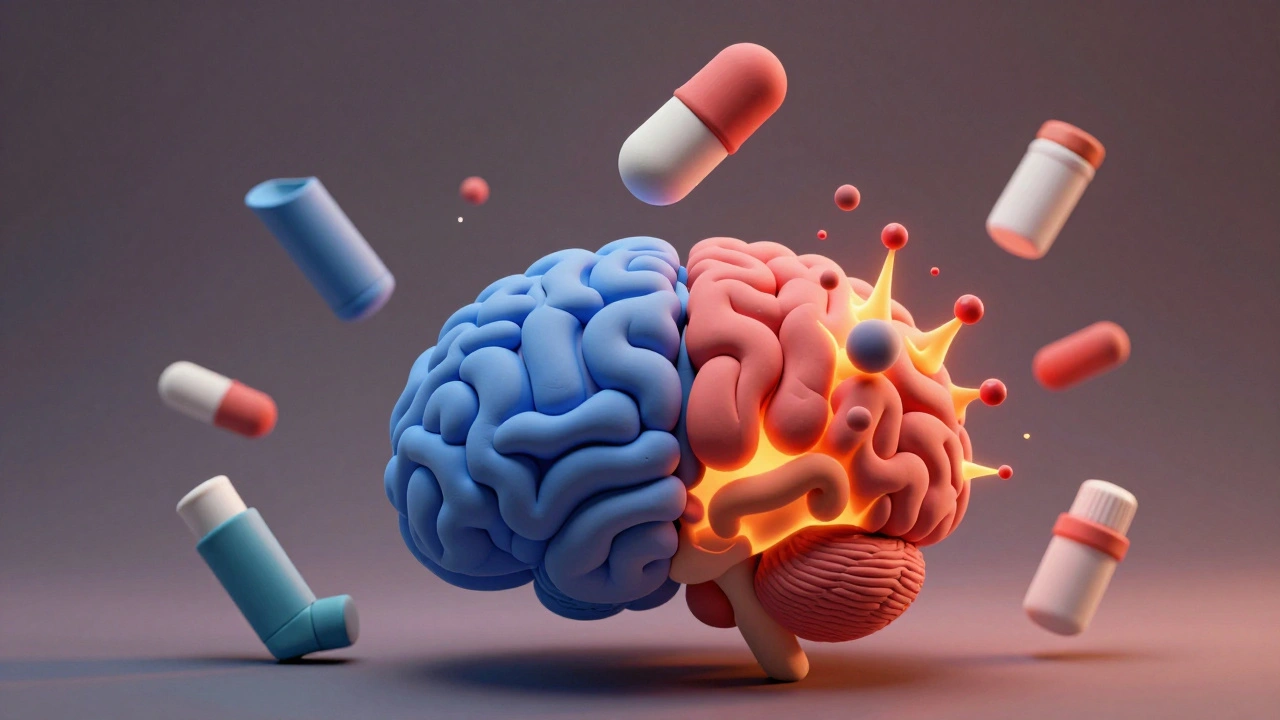
Corticosteroids, for example, interfere with your HPA axis - the system that controls how your body handles stress. When it’s thrown off, your body thinks it’s under constant threat. ADHD stimulants flood your nervous system with signals that make you feel wired. Even asthma inhalers mimic adrenaline, the same chemical your body releases during panic.
It’s not about being “weak” or “overly sensitive.” Some people have genetic differences - like variations in the CYP2D6 enzyme - that make them process these drugs differently. A 2022 study found these variants can double the risk of anxiety side effects from certain medications.
How to Tell If It’s the Medication - Not You
This is the hardest part. If you’ve always been a little anxious, is this new feeling from the drug - or just your condition flaring up? The difference matters.
Here’s how to tell:
- Timing - Did the anxiety start within days or weeks of beginning the medication? If yes, it’s likely connected.
- Pattern - Does the anxiety peak right after taking the pill? Does it fade when you skip a dose? That’s a red flag.
- History - Did you never have panic attacks or constant worry before this drug? If you’ve never had anxiety in your life, this isn’t “just stress.”
- Resolution - Did symptoms improve after stopping or lowering the dose? That’s the biggest clue.
Doctors are taught to wait 4-8 weeks after stopping a medication before diagnosing an independent anxiety disorder. Why? Because symptoms often clear up on their own once the drug is out of your system. But many patients wait months - or even years - before their doctor connects the dots.
One patient on Reddit said: “I went to five therapists. They all wanted to give me SSRIs. I finally told my GP about the prednisone - and he said, ‘Oh. That’s probably it.’”
What to Do If You Think Your Medication Is Causing Anxiety
Don’t stop cold turkey. Don’t assume it’s “all in your head.” Do this instead:
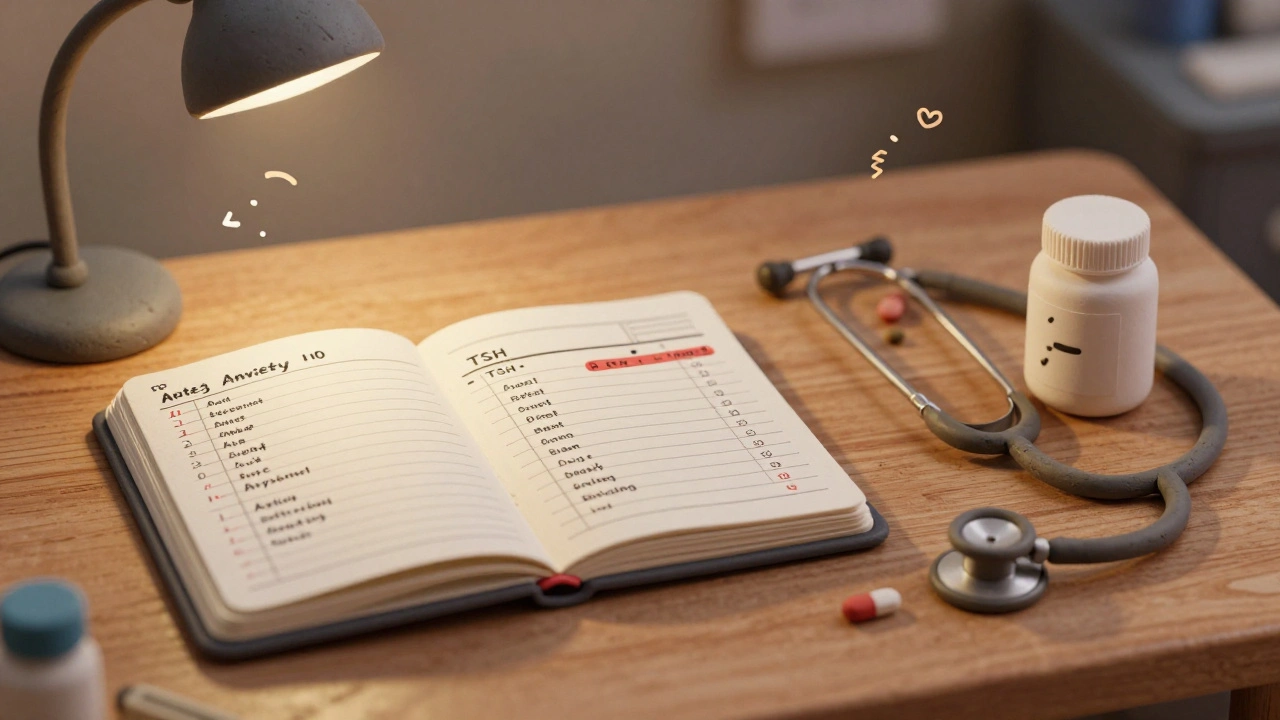
- Track your symptoms - Keep a simple log: date, time, medication taken, anxiety level (1-10), any physical symptoms (racing heart, shaking, etc.). This gives your doctor hard evidence.
- Check your dose - Especially with thyroid meds or steroids. Too much is a common problem. Ask for a blood test (TSH for thyroid) to make sure you’re on the right amount.
- Ask about alternatives - For ADHD: Switch from Adderall to Strattera (a non-stimulant). For asthma: Try a different inhaler or add a steroid spray to reduce albuterol use. For pain or inflammation: Explore non-steroidal options.
- Request a taper - If you’re on steroids or benzodiazepines, stopping suddenly can make anxiety worse. A slow, controlled reduction helps your body adjust.
- Try CBT - Cognitive Behavioral Therapy isn’t just for “mental illness.” It’s a tool to manage the physical symptoms of anxiety while your body clears the drug. Studies show it works in 60-70% of cases during this transition.
One woman on ADDitude Magazine’s forum switched from Adderall to Vyvanse at half the dose. Within two weeks, her anxiety dropped 70%. “It wasn’t that I needed less focus,” she said. “It was that I needed less stimulation.”
How to Prevent This From Happening Again
Once you’ve been burned, you don’t want it to happen again. Here’s how to protect yourself:
- Speak up before starting - If you have a history of anxiety, tell your doctor. Say: “I’ve had bad reactions to stimulants or steroids before. Are there alternatives?”
- Start low, go slow - Especially with ADHD meds or steroids. A low starting dose reduces anxiety risk by up to 65%.
- Know your triggers - Keep a list of meds that caused problems. Bring it to every appointment. It’s your personal safety record.
- Ask about genetic testing - Some clinics now offer CYP2D6 testing to predict how you’ll react to certain drugs. It’s not routine yet, but it’s becoming more available.
- Monitor lab values - If you’re on thyroid meds, get TSH checked every 6-8 weeks until stable. Don’t wait until you feel bad.
It’s Not Your Fault
Medication-induced anxiety isn’t weakness. It’s biology. You didn’t choose this. You didn’t “overthink” it into existence. Your body reacted to a chemical change - just like it might react to a new food or a toxin.
And here’s the good news: Most of the time, it’s reversible. Once the drug is adjusted or stopped, the anxiety fades. No lifelong diagnosis. No endless therapy. Just a change in treatment.
But you have to speak up. You have to track it. You have to ask the hard questions. Because too many people suffer in silence - thinking they’re broken, when all they needed was a different pill.
Can anxiety from medication go away on its own?
Yes, in most cases. Medication-induced anxiety usually clears up within days to weeks after stopping or lowering the dose. For short-acting drugs like albuterol or pseudoephedrine, symptoms may fade in 24-48 hours. For longer-acting drugs like steroids or ADHD stimulants, it can take 1-4 weeks. The key is stopping the trigger - not treating the anxiety with more drugs.
Can antidepressants cause anxiety?
Yes - especially in the first 1-3 weeks. SSRIs like sertraline or fluoxetine can initially increase anxiety, jitteriness, or even panic attacks before they start helping. This is called activation syndrome. It’s temporary for most, but if it’s severe, your doctor may lower the dose or switch to a different class, like SNRIs or buspirone.
Is it safe to stop a medication if it’s causing anxiety?
Only under medical supervision. Stopping steroids, antidepressants, or seizure meds suddenly can be dangerous - leading to rebound symptoms, seizures, or adrenal crisis. Always work with your doctor to taper safely. Never quit cold turkey, even if you think the side effects are worse than the original condition.
How long should I wait before seeing a doctor about medication-related anxiety?
Don’t wait. If anxiety starts within days of beginning a new medication, mention it at your next appointment - or sooner. Early intervention means faster relief. Waiting weeks or months often leads to unnecessary treatments like therapy or anti-anxiety drugs, when the real fix is simply changing the original medication.
Are there natural ways to reduce medication-induced anxiety?
Yes - but they don’t replace medical changes. Deep breathing, reducing caffeine, getting enough sleep, and gentle exercise like walking can help calm your nervous system while you wait for the drug to clear. Magnesium and L-theanine supplements may also help some people, but they won’t fix the root cause. The real solution is adjusting the medication - not masking the symptom.
Can I get tested to see if I’m genetically prone to medication-induced anxiety?
Yes - pharmacogenetic tests like GeneSight or PillCheck analyze how your body metabolizes drugs based on your DNA. They can show if you’re a slow or fast metabolizer of certain medications, which affects side effect risk. These tests aren’t covered by all insurance yet, but they’re becoming more common in mental health and chronic care clinics.
David Palmer
December 10, 2025 AT 13:06bro i took adderall for a week and felt like i was being chased by a bear 24/7. my doctor laughed. then i showed him this post. he apologized.
matthew dendle
December 11, 2025 AT 13:46soooo basically if u r anxious u just gotta blame the pill? wow what a revelation. next u gonna say coffee gives u heart palpitations???
Jack Appleby
December 13, 2025 AT 05:01It's not merely pharmacological-it's neurochemical dysregulation precipitated by exogenous modulation of monoaminergic pathways. The CYP2D6 polymorphism, particularly the *4 allele, confers poor metabolizer status, elevating plasma concentrations of stimulants and corticosteroids beyond therapeutic thresholds. This isn't 'anxiety'-it's iatrogenic noradrenergic storming.
Ben Greening
December 13, 2025 AT 22:58Thank you for compiling this with such precision. I've seen too many patients dismissed as 'hypochondriacs' when their symptoms were clearly drug-induced. The timing correlation is almost always there-if you look.
Michelle Edwards
December 13, 2025 AT 23:45You're not broken. You're not weak. You just got hit with a chemical that didn't agree with your body. That doesn't make you less than-it makes you someone who deserves better care.
Jim Irish
December 14, 2025 AT 06:50My sister had this with levothyroxine. She thought she was losing her mind. TSH was 7.2. Dose cut in half. Two weeks later she cried because she felt normal again. No therapy needed.
Eddie Bennett
December 16, 2025 AT 01:21People don’t realize how many meds are basically adrenaline in a pill. Albuterol? It’s like drinking five espressos while your heart tries to escape your chest. Prednisone? That’s your body thinking it’s in a war zone. You’re not crazy-you’re just chemically assaulted.
Sarah Clifford
December 17, 2025 AT 05:29OMG I took pseudoephedrine for a cold and I thought I was having a heart attack. I called 911. They laughed at me. Then I read this. I’m not alone. I’m not crazy. I’m just poisoned by Sudafed.
Regan Mears
December 17, 2025 AT 07:15I’ve been saying this for years. Doctors treat symptoms, not causes. If your anxiety started the day you started a new med, guess what? It’s the med. Don’t let them gaslight you into another SSRI. Track it. Show them the timeline. Demand a taper. You’re not being dramatic-you’re being smart.
Aileen Ferris
December 17, 2025 AT 12:34yeah but what if its just ur anxiety? i mean like maybe u just need to chill??
Frank Nouwens
December 18, 2025 AT 02:19Thank you for this comprehensive and clinically grounded overview. The emphasis on pharmacogenetic testing and dose titration is particularly vital. I would add that patient-reported outcome measures, when systematically recorded, provide indispensable data for differential diagnosis. Your work here may save lives.