
Antihistamines and Blood Pressure: What You Need to Know About Effects and Monitoring
Antihistamine Safety Checker
This tool helps you determine if your antihistamine is safe based on your blood pressure status and other factors. Select your options below to get personalized safety information.
Select your options above and click "Check Safety" to see your results
Many people with allergies assume antihistamines are harmless-just a quick pill to stop sneezing or itching. But if you have high blood pressure, that assumption could be dangerous. Not all antihistamines are the same. Some can drop your blood pressure. Others, especially when mixed with decongestants, can push it up. And if you’re not monitoring it, you might not even notice until you feel dizzy, lightheaded, or worse.
How Antihistamines Work-And Why They Affect Blood Pressure
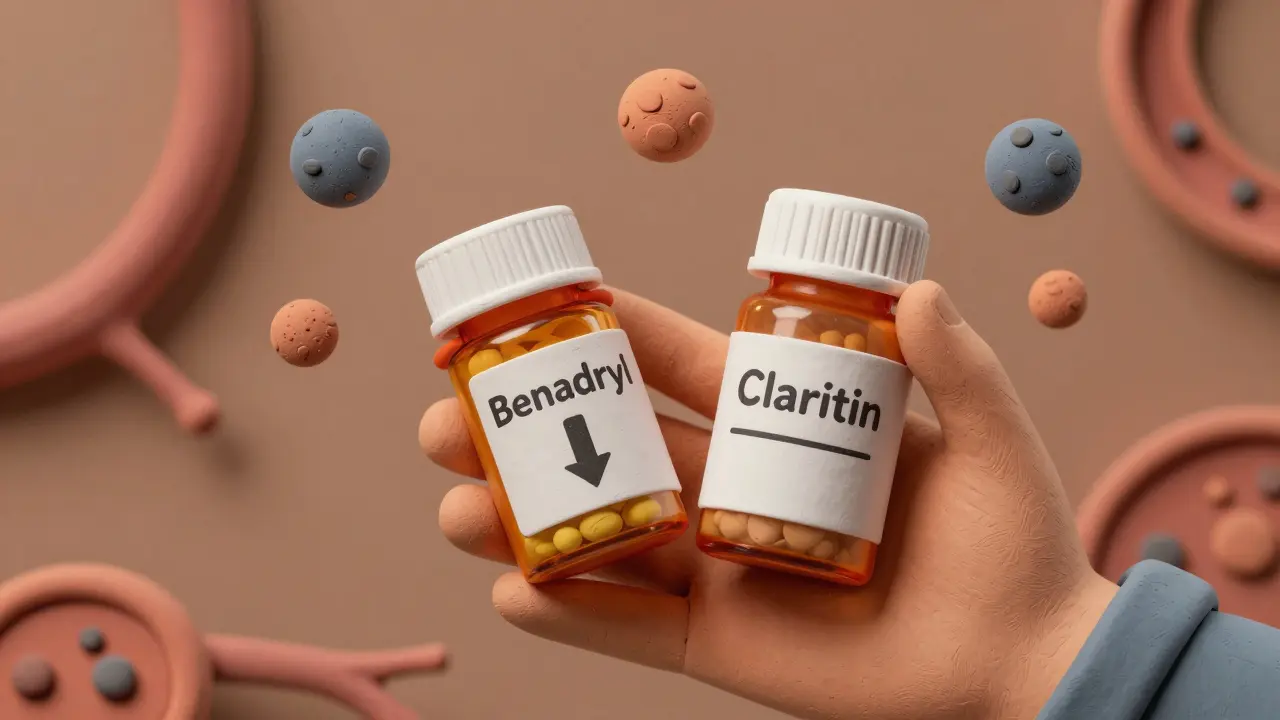
Antihistamines block histamine, a chemical your body releases during allergic reactions. Histamine makes blood vessels swell and leak, which is why your nose runs and your eyes water. But histamine also helps regulate blood vessel tone. When you block it, especially with first-generation antihistamines, you can change how your blood vessels behave.First-generation antihistamines like diphenhydramine (Benadryl) cross the blood-brain barrier easily. They’re strong, fast-acting, and often used for sleep or motion sickness. But they also block H1 receptors in your blood vessels, which can cause vasodilation. That means your blood vessels relax too much. The result? A drop in blood pressure. In clinical settings, IV diphenhydramine has been shown to lower systolic blood pressure by 8-12 mmHg within 15 minutes. That’s enough to make someone feel faint, especially when standing up.
Second-generation antihistamines like loratadine (Claritin), cetirizine (Zyrtec), and fexofenadine (Allegra) were designed to avoid this. They barely enter the brain and don’t interfere with blood vessel tone the same way. Studies show that in 97% of cases, these drugs have no measurable effect on blood pressure. Even better, some-like cetirizine-may actually reduce inflammation in blood vessels, which could help people with hypertension over time.
The Real Danger: Combination Products
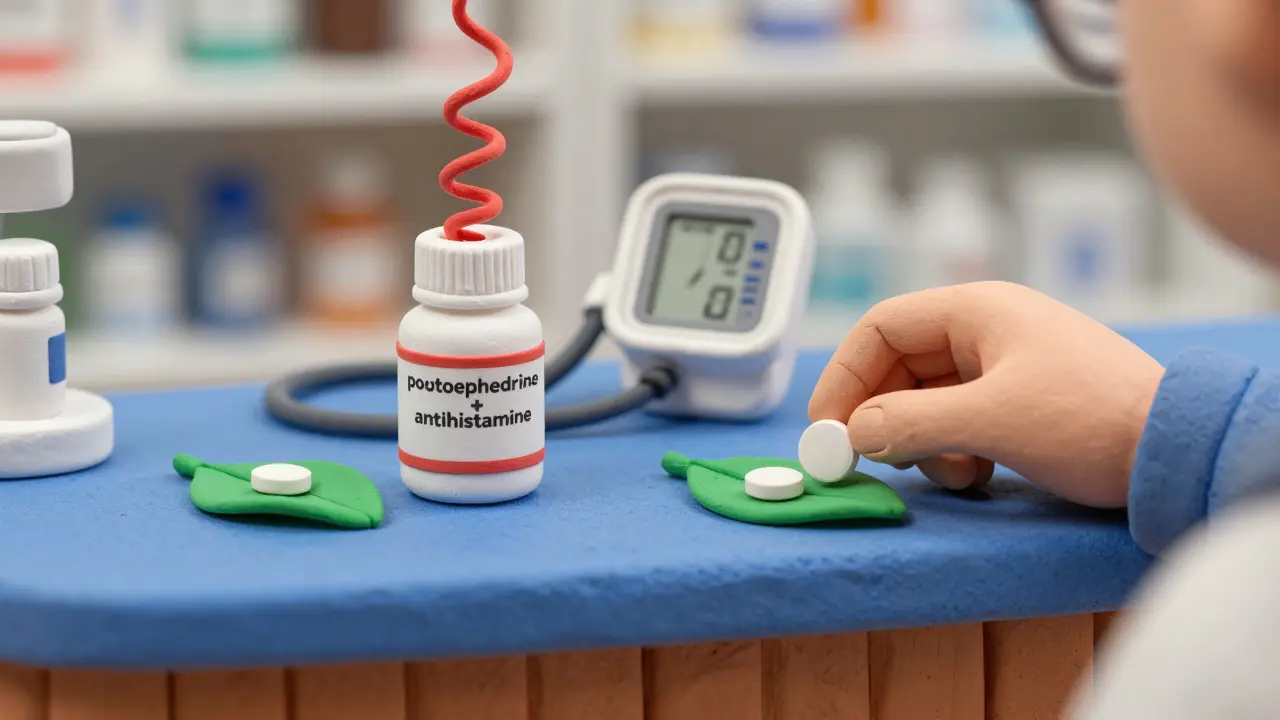
The biggest risk isn’t from antihistamines alone. It’s from what they’re mixed with.Many allergy medicines combine an antihistamine with a decongestant like pseudoephedrine. Decongestants shrink swollen nasal passages-but they also tighten blood vessels throughout the body. That raises blood pressure. GoodRx’s 2023 analysis of 12 clinical trials found that pseudoephedrine alone can raise systolic blood pressure by about 1 mmHg. Sounds small? In someone with uncontrolled hypertension, that’s enough to trigger headaches, chest tightness, or even a spike in heart rate.
And it gets worse. Some cold and allergy meds combine antihistamines with pain relievers like ibuprofen or acetaminophen. Ibuprofen can raise blood pressure by 3-4 mmHg. Acetaminophen, when taken at high doses (over 4,000 mg daily), can push it up by as much as 5 mmHg. That’s not just a number-it’s a real risk for someone already on blood pressure meds.
On Reddit, users with hypertension reported that 47% of those using combination products saw their blood pressure rise by 5-10 mmHg. One user, u/HypertensionWarrior, wrote: “I didn’t realize my ‘allergy combo’ was the reason my readings kept climbing until I switched to plain loratadine.”
First-Gen vs. Second-Gen: A Clear Divide
| Antihistamine | Generation | Blood Pressure Effect | Key Risk Factors |
|---|---|---|---|
| Diphenhydramine (Benadryl) | First | Can cause hypotension (drop of 8-12 mmHg systolic) | IV use, elderly, dehydration, other blood pressure meds |
| Loratadine (Claritin) | Second | Neutral-no significant change in most users | Safe for hypertensive patients |
| Cetirizine (Zyrtec) | Second | Neutral to possibly beneficial-reduces vascular inflammation | May help long-term endothelial health |
| Fexofenadine (Allegra) | Second | Neutral-minimal liver metabolism | Lowest interaction risk with other meds |
| Pseudoephedrine (Sudafed) | Decongestant | Elevates systolic BP by ~1 mmHg | Combined with antihistamines; avoid in uncontrolled hypertension |
There’s a big difference between what you read on the label and what actually happens in your body. First-gen antihistamines like diphenhydramine are still sold over the counter because they’re cheap and effective. But they’re not safe for everyone. The American Heart Association warns that people with uncontrolled hypertension, heart failure, or those on multiple medications should avoid them.
Second-gen antihistamines are the clear choice for people with high blood pressure. Loratadine and fexofenadine are approved for daily use in patients with cardiovascular disease. Cetirizine has even shown promise in reducing inflammation linked to heart stress. In a 2014 Turkish trial, adding loratadine to standard heart attack treatment improved cardiac stress test results by 18%-a finding that surprised even cardiologists.
Who Needs to Monitor Their Blood Pressure?
You don’t need to check your blood pressure every day if you’re taking a second-gen antihistamine. But if you fall into one of these groups, you should:- Have uncontrolled hypertension (systolic over 140 mmHg)
- Take more than one blood pressure medication
- Are over 65 years old
- Have heart rhythm problems or a history of QT prolongation
- Are taking other drugs metabolized by CYP3A4 (like ketoconazole, erythromycin, or grapefruit juice)
The Cleveland Clinic recommends checking your blood pressure 2-4 hours after your first dose of any antihistamine if you’re in one of these groups. For first-gen antihistamines, check at 30-60 minutes. Keep a log. Don’t rely on how you feel-dizziness can be subtle, and blood pressure spikes often have no symptoms.
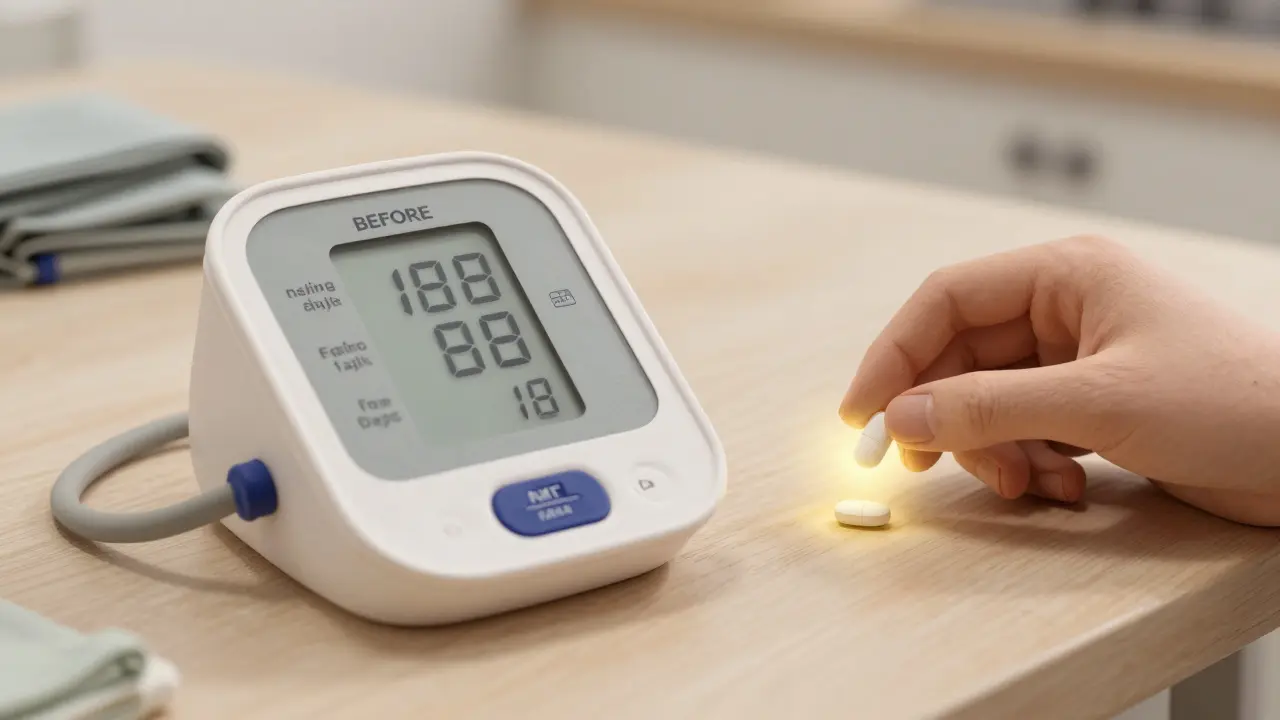
Home blood pressure monitors are your best tool. The American Heart Association recommends using a validated upper-arm cuff device-not wrist or finger monitors-and taking readings at the same time each day. Record your numbers for three days before starting the antihistamine, and three days after. That gives you a real baseline to compare.
What to Do If You’re Already Taking Antihistamines
If you’re currently taking an allergy medication and have high blood pressure, here’s what to do right now:- Check the active ingredients. If it says “pseudoephedrine,” “phenylephrine,” “acetaminophen,” or “ibuprofen,” you’re on a combo product.
- Switch to a single-ingredient antihistamine: loratadine, cetirizine, or fexofenadine.
- Don’t stop your blood pressure meds. Antihistamines don’t replace them-they just add risk if misused.
- Talk to your pharmacist. They can scan your prescriptions and flag interactions you might miss.
- If you’ve felt dizzy, lightheaded, or had headaches after taking your allergy med, write it down. Bring it to your doctor.
One common mistake? People think “natural” means safe. Some herbal allergy remedies contain antihistamine-like compounds that aren’t regulated. Others, like stinging nettle or butterbur, can interact with blood pressure meds. Always check with your doctor before trying anything new.
What’s Changing in 2026?
The science is moving fast. In 2023, the FDA updated labeling rules to make it clearer that pure antihistamines don’t raise blood pressure-but combo products must carry strong warnings. The NIH is funding $4.7 million in research to study genetic differences in how people metabolize antihistamines. Some people have slow CYP2D6 or CYP3A4 enzymes. That means even normal doses can build up to dangerous levels.Health systems in Australia and the U.S. are starting to offer genetic testing before prescribing antihistamines to high-risk patients. If you’ve had a bad reaction to a medication before, ask your doctor about pharmacogenomic testing. It’s not routine yet-but it’s becoming more common.
Researchers at Johns Hopkins are also testing new drugs that activate H3 receptors, which may protect the heart. If successful, these could become the next generation of allergy treatments-effective without any blood pressure risk.
Bottom Line: You Can Still Manage Allergies-Safely
Having high blood pressure doesn’t mean you have to suffer through allergy season. You just need to choose the right medication. Second-generation antihistamines like loratadine and cetirizine are safe, effective, and widely available. Avoid anything with decongestants unless your doctor says it’s okay. Monitor your blood pressure when starting a new drug. And never assume a drug is harmless just because it’s sold over the counter.Allergies are annoying. But they shouldn’t cost you your health. With the right choices, you can breathe easy-without risking your heart.
Can antihistamines raise blood pressure?
Pure antihistamines like loratadine, cetirizine, and fexofenadine do not raise blood pressure in most people. But combination products that include decongestants like pseudoephedrine can increase systolic blood pressure by 1-5 mmHg. Always check the label for hidden ingredients.
Is Benadryl safe if I have high blood pressure?
Diphenhydramine (Benadryl) is not recommended for people with high blood pressure. It can cause a sudden drop in blood pressure, especially when taken intravenously or in older adults. It also causes drowsiness and dizziness, which can increase fall risk. Use second-generation alternatives like Claritin or Zyrtec instead.
Which antihistamine is best for someone with hypertension?
Loratadine (Claritin) and fexofenadine (Allegra) are the safest choices. They have no effect on blood pressure, minimal drug interactions, and are approved for daily use in patients with heart disease. Cetirizine (Zyrtec) is also safe and may even reduce vascular inflammation over time.
Do antihistamines interact with blood pressure medications?
Pure second-generation antihistamines rarely interact with blood pressure drugs. But first-gen antihistamines like diphenhydramine can worsen dizziness when combined with diuretics or beta-blockers. Decongestants in combo products can reduce the effectiveness of some blood pressure meds. Always tell your doctor all the medications you’re taking.
Should I check my blood pressure when starting a new antihistamine?
Yes-if you have uncontrolled hypertension, take multiple blood pressure medications, or are over 65. Check your blood pressure 2-4 hours after your first dose. For first-gen antihistamines, check at 30-60 minutes. Keep a log for three days before and after starting the drug to spot any changes.
Are there natural alternatives to antihistamines for allergy sufferers with high blood pressure?
Some people use saline nasal rinses, air purifiers, or HEPA filters to reduce allergens. Herbal remedies like butterbur or stinging nettle are sometimes used, but they’re not well-regulated and may interact with blood pressure meds. Always talk to your doctor before trying alternatives-what’s natural isn’t always safe.
Susie Deer
January 15, 2026 AT 16:42Just stop taking all that junk and use a neti pot
Andrew Freeman
January 15, 2026 AT 23:47benadryl makes me sleepy as hell but my bp dont budge. yall overthinkin this
Allison Deming
January 16, 2026 AT 08:57It is deeply concerning that so many individuals continue to self-medicate with over-the-counter pharmaceuticals without understanding the nuanced pharmacodynamics at play. First-generation antihistamines, particularly diphenhydramine, exert a profound effect on peripheral H1 receptors, leading to vasodilation and subsequent hypotension-a physiological response that is neither trivial nor benign, especially in elderly populations or those with comorbid cardiovascular conditions. The normalization of these risks in public discourse reflects a broader cultural disregard for medical literacy, which is both irresponsible and dangerous.
Moreover, the widespread availability of combination products containing pseudoephedrine, often marketed as "all-in-one" solutions, represents a systemic failure in pharmaceutical regulation. These products exploit consumer ignorance, bundling vasopressor agents with antihistamines in a manner that obscures their cumulative cardiovascular burden. The American Heart Association’s warnings are not mere suggestions-they are clinical imperatives.
Second-generation antihistamines, by contrast, represent a triumph of rational drug design. Loratadine and fexofenadine, with their minimal CNS penetration and negligible effect on vascular tone, should be the unequivocal first-line recommendation for patients with hypertension. Cetirizine, despite its slightly higher incidence of sedation, may offer ancillary benefits through anti-inflammatory modulation of endothelial function-a point too frequently overlooked.
It is not enough to simply avoid decongestants. One must also scrutinize the excipients and co-formulants in every medication. Acetaminophen, often dismissed as benign, can elevate systolic pressure by up to five mmHg at chronic high doses. Ibuprofen, similarly, is not a harmless pain reliever; it inhibits prostaglandin synthesis, leading to sodium retention and increased vascular resistance. These are not side effects-they are pharmacological actions, and they matter.
Home monitoring is not optional. The notion that "I feel fine" is a valid proxy for cardiovascular stability is a dangerous fallacy. Hypertensive crises often present without symptoms. A validated upper-arm cuff, used consistently at the same time each day, is the most accessible tool for patient empowerment. Three days pre- and post-initiation of any new agent is the bare minimum for establishing a meaningful baseline.
Pharmacogenomics is not science fiction. The CYP2D6 and CYP3A4 polymorphisms that determine metabolic rate are well-documented. Individuals who are slow metabolizers may accumulate toxic levels of even standard doses. This is not theoretical-it is clinical reality. Until genetic screening becomes routine, the burden of vigilance falls on the patient. And that burden should not be borne alone.
The future of allergy management lies not in better decongestants, but in H3 receptor agonists and targeted anti-inflammatory agents. We are on the cusp of a new era. But until then, let us not confuse convenience with safety. Choose wisely. Read labels. Monitor. Educate. And above all, do not assume innocence because a drug is sold on a shelf.
says haze
January 17, 2026 AT 00:36It’s funny how people treat antihistamines like candy, then act shocked when their BP spikes. The real tragedy isn’t the drug-it’s the fact that half the population can’t read a label. You don’t need a PhD to see "pseudoephedrine" on the bottle. You just need to care enough to look.
And yes, cetirizine reduces vascular inflammation. But let’s not pretend it’s a miracle drug. It’s just a better tool. The real miracle would be if people stopped treating their bodies like disposable prototypes.
Henry Sy
January 17, 2026 AT 17:33bro i took benadryl for a week straight last spring and woke up one day with my heart feelin’ like it was tryna escape my chest. doc said it was the combo with my lisinopril. i switched to claritin and now i’m chillin’. no more dizzy spells, no more panic attacks over the scale. just sayin’-don’t be dumb.
Sarah Triphahn
January 18, 2026 AT 03:11you think this is about blood pressure? no. this is about control. the pharma industry wants you dependent. they don’t want you using saline rinses or air filters. they want you buying pills. every time you take a combo med, you’re feeding the machine. and they know you won’t read the fine print. that’s the real allergy here.
the FDA didn’t update labels to protect you. they did it because lawsuits were piling up. don’t trust the system. trust yourself. and if you’re still using benadryl… you’re part of the problem.
Alvin Bregman
January 18, 2026 AT 12:35my grandpa used to say if you can’t spell it you shouldn’t take it. i never knew what he meant till i started reading labels. now i just use zyrtec and keep a neti pot by the sink. no drama. no spikes. just breathe.
Sarah -Jane Vincent
January 18, 2026 AT 16:37you think this is about antihistamines? wrong. it’s about the government letting Big Pharma poison us with hidden chemicals. did you know pseudoephedrine was banned in some countries? they’re hiding the truth. and the FDA? they’re in the pocket of the drug companies. check the source. who funded that "study"? it’s all a scam. you’re being lied to.
Dylan Livingston
January 20, 2026 AT 06:19How quaint. A 2024 article about antihistamines and BP, as if this were news. The real tragedy is that people still believe OTC drugs are "safe" because they’re not prescribed. You might as well hand out dynamite with a "handle with care" sticker. I’ve seen patients on beta-blockers take diphenhydramine and end up in the ER with orthostatic syncope. And they always say, "But it’s just Benadryl." Yes. Just. Benadryl. Like just a bullet. Just a fall. Just a stroke.
And don’t get me started on the "natural" remedies. Butterbur? Stinging nettle? Please. Those are unregulated botanicals with unknown alkaloid profiles. One man’s herbal tea is another man’s arrhythmia. You think your yoga instructor knows pharmacokinetics? Please. Your yoga instructor thinks "detox" means drinking lemon water.
The real solution? Stop treating medicine like a buffet. Take one thing at a time. Read the label like your life depends on it-because it does. And if you can’t? Go to a pharmacist. They’re not paid by the pill. They’re paid by your survival.
And for the love of all that’s rational-stop using acetaminophen as a daily crutch. Four grams isn’t a limit. It’s a suicide note waiting to happen.
Jason Yan
January 20, 2026 AT 11:51It’s wild how we treat our bodies like machines you can just plug and play with. You wouldn’t throw random oil into your car and expect it to run-so why do it to yourself? Antihistamines aren’t magic. They’re chemicals that interact with your biology in ways we’re still learning. The fact that second-gen ones are safe doesn’t mean they’re harmless. It means we’ve gotten smarter.
What I find most hopeful is that people are starting to ask questions. Not just "what’s this pill for?" but "how does it work?" and "what else is in here?" That’s the real progress. Not the drug itself, but the curiosity behind it.
And yeah, monitoring your BP isn’t about paranoia. It’s about paying attention. Like checking your tire pressure before a long drive. You don’t do it because you think you’ll blow out-you do it because you care enough to avoid the crash.
So if you’re on meds, take a second. Read the label. Talk to your pharmacist. Log your numbers. You’re not being obsessive-you’re being responsible. And that’s not just smart. It’s deeply human.
Anna Hunger
January 21, 2026 AT 19:31Thank you for this comprehensive and clinically grounded overview. The distinction between first- and second-generation antihistamines is critical, and the emphasis on combination products is long overdue. As a healthcare professional, I encounter patients daily who are unaware that their "allergy relief" medication contains pseudoephedrine or ibuprofen. This post serves as an essential public service.
For patients with uncontrolled hypertension, I strongly recommend the following: (1) Always consult your pharmacist before initiating any new OTC medication; (2) Use single-agent second-generation antihistamines exclusively; (3) Maintain a written log of home blood pressure readings for at least seven days before and after initiating therapy; and (4) Never discontinue prescribed antihypertensive therapy without medical supervision.
The data supporting loratadine and fexofenadine as first-line agents in cardiovascular patients is robust. Cetirizine’s potential anti-inflammatory effects warrant further study, but current evidence supports its safety profile. In contrast, diphenhydramine remains contraindicated in patients with systolic blood pressure >140 mmHg, particularly those over age 65 or on multiple antihypertensive agents.
Continued education, clear labeling, and patient empowerment are the cornerstones of safe pharmacotherapy. This post exemplifies all three.
Susie Deer
January 23, 2026 AT 14:24neti pot works better than any pill anyway