
Antacids and Antibiotics: How to Time Your Doses to Avoid Treatment Failure
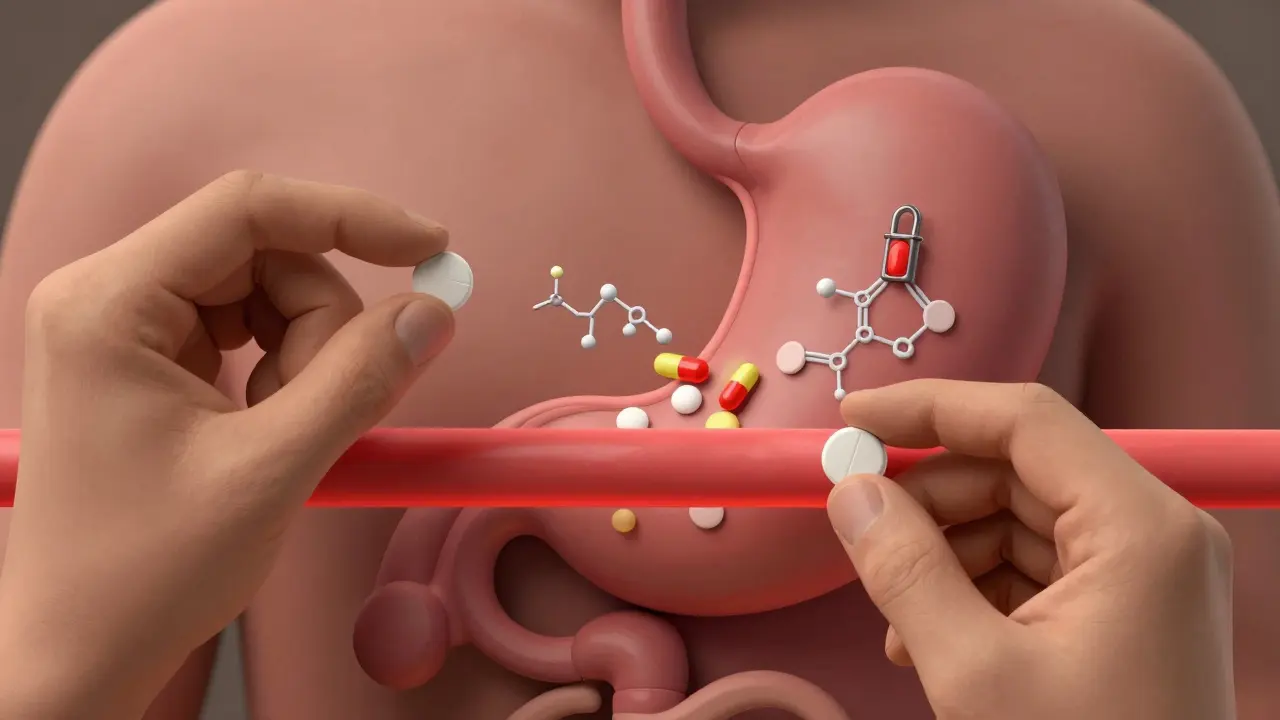
When you're taking an antibiotic for an infection and also need relief from heartburn or indigestion, it's easy to grab an antacid right after your pill. But doing that could be sabotaging your treatment. The truth is, antacids and antibiotics don’t mix well - not because they’re dangerous together, but because they can stop the antibiotic from working at all. This isn’t a rare edge case. About 1 in 3 people on antibiotics also use antacids. And when timing gets mixed up, treatment fails - sometimes repeatedly.
Why Antacids Kill Antibiotic Absorption
Antacids like Tums, Maalox, or Mylanta contain aluminum, magnesium, or calcium. These minerals don’t just neutralize stomach acid - they bind tightly to certain antibiotics in your gut. This binding forms a hard, insoluble complex that your body can’t absorb. Think of it like putting a lock on the antibiotic so it can’t get into your bloodstream. The result? You take the pill, but your body gets almost none of it.It’s not just chelation. Antacids also raise your stomach’s pH. Many antibiotics need an acidic environment to dissolve properly. When you flood your stomach with antacid, you turn it into a neutral or even alkaline zone. That means drugs like doxycycline or ciprofloxacin can’t break down - so they just pass through, useless.
Studies show this isn’t theoretical. In one trial, people who took ciprofloxacin with an antacid had 90% less antibiotic in their blood. Another found doxycycline absorption dropped by 30%. These aren’t small numbers. They’re the difference between healing and a lingering infection.
Which Antibiotics Are Most at Risk?
Not all antibiotics are affected the same way. Some are barely touched. Others? They’re completely vulnerable.- Fluoroquinolones (ciprofloxacin, levofloxacin): These are the most sensitive. Antacids can slash absorption by 75-90%. The NHS recommends taking them 4 hours before or 2 hours after any antacid.
- Tetracyclines (doxycycline, tetracycline): These are also heavily impacted. Absorption drops by 50-70%. The safe window is 2-3 hours before or after antacids.
- Macrolides (azithromycin, clarithromycin): Minimal interaction, but still, 2 hours separation is advised as a precaution.
- Beta-lactams (amoxicillin, cephalexin): These are the outliers. Absorption drops only 15-20%. A 1-hour gap is usually enough. Still, better safe than sorry.
- Metronidazole: No known interaction. You can take it with antacids without worry.
Here’s the catch: many people don’t even know what class their antibiotic belongs to. If you’re on ciprofloxacin and you’re taking Tums for heartburn, you’re at high risk. If you’re on amoxicillin, you’re lower risk - but not zero.
What Happens When Timing Goes Wrong?
You might not feel anything right away. No vomiting. No rash. Just… the infection doesn’t get better. Or it comes back.One patient, a 58-year-old woman with a UTI, took ciprofloxacin with her nightly antacid for three days. Her symptoms didn’t improve. Her doctor assumed it was a resistant strain. Only after reviewing her meds did she realize she was swallowing Tums 20 minutes after her antibiotic. Once she spaced them 4 hours apart, her infection cleared in 48 hours.
This isn’t an outlier. A 2021 FDA review of 15,000 patients found that those who took fluoroquinolones with antacids within 2 hours had a 22% higher chance of treatment failure. In outpatient clinics, about 18% of apparent antibiotic failures are traced back to this exact mistake.
And it’s not just about the infection. Subtherapeutic antibiotic levels - caused by poor absorption - are one of the biggest drivers of antibiotic resistance. When bacteria are exposed to low doses of antibiotics, they adapt. They survive. They multiply. And suddenly, you’ve got a superbug on your hands.
How to Actually Get the Timing Right
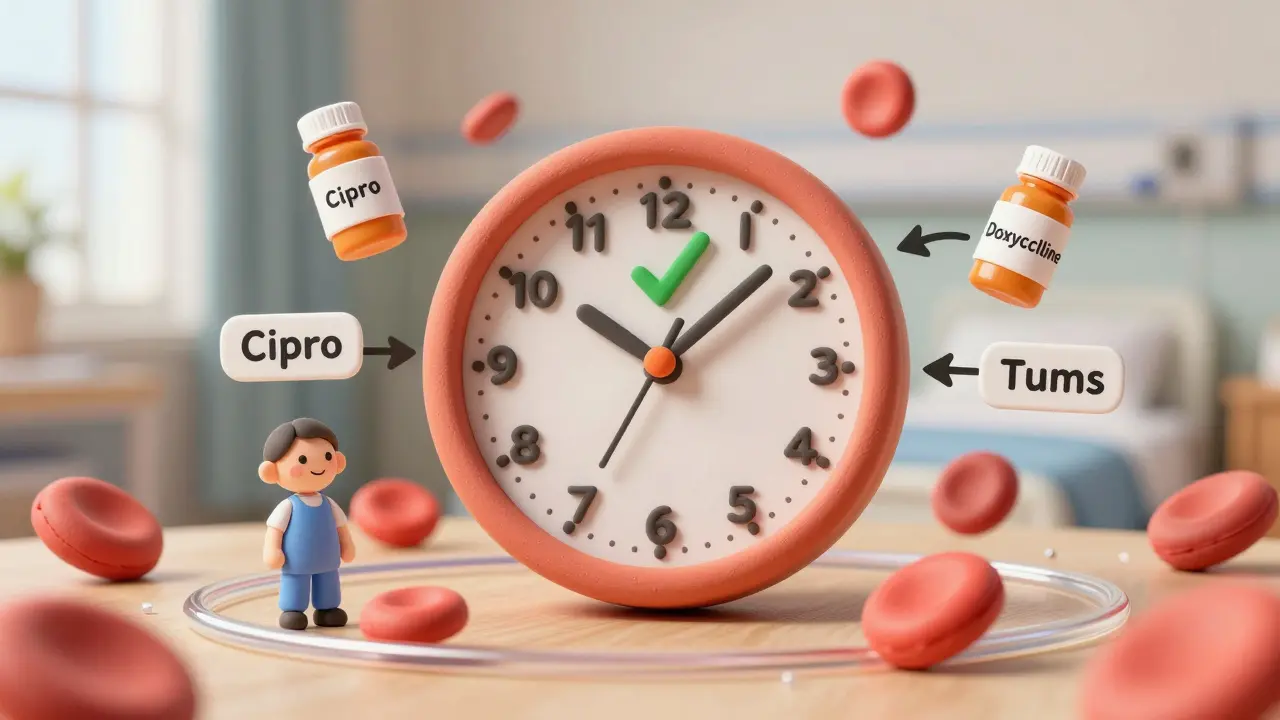
Knowing the numbers isn’t enough. You need a system.Here’s what works in real life:
- Take antibiotics on an empty stomach. Most work best when taken 1 hour before or 2 hours after meals. That’s your baseline.
- Separate antacids by 2-4 hours. For fluoroquinolones, wait 4 hours after an antacid before taking your antibiotic. Or take the antibiotic 2 hours before the antacid. For tetracyclines, 2-3 hours is enough.
- Use a pill organizer with time slots. Don’t rely on memory. A simple 7-day box with labeled AM/PM slots helps immensely.
- Try a reminder app. Apps like MyMedSchedule now include specific alerts for antacid-antibiotic conflicts. They’ll ping you: “Wait 4 hours before taking Tums.”
- Ask your pharmacist. Pharmacists see this mistake daily. They’ll spot it before you even leave the pharmacy.
For patients who need antacids daily - say, for GERD - switching to an H2 blocker (like famotidine) or proton pump inhibitor (like omeprazole) can help. These drugs don’t contain aluminum or calcium, so they’re much less likely to interfere. A 2023 study showed that switching cut treatment failure rates from 27% to just 9%.
What About Newer Antibiotics?
There’s hope on the horizon. In May 2023, the FDA approved a new extended-release form of ciprofloxacin called Cipro XR-24. In clinical trials, it showed only 8% reduction in absorption when taken with antacids - compared to 90% with the original version. This could be a game-changer for patients who need both acid control and antibiotics.But it’s not widely available yet. For now, the old rules still apply. And they’re still critical.

What If You Already Took Them Together?
If you accidentally took your antibiotic and antacid at the same time, don’t panic. Don’t double up. Just wait. If it’s been less than 2 hours, wait until the recommended separation time has passed, then take your next dose as scheduled. If it’s been more than 2 hours, your body may have already absorbed enough. Skip the extra dose - overdosing can cause side effects without helping.Keep a log. Note the time you took each. If symptoms don’t improve in 48 hours, call your provider. They may need to adjust your treatment.
Why This Matters More Than You Think
This isn’t just about one pill. It’s about the bigger picture. In the U.S., 45 million antibiotic prescriptions are filled every year. Roughly 22% of those - nearly 10 million - involve patients who also use antacids. The cost of failed treatments? Over $1.2 billion annually in extra doctor visits, repeat prescriptions, hospitalizations, and complications.And it’s preventable. With simple timing, you can avoid unnecessary suffering, extra costs, and even the rise of superbugs. That’s why major health systems like Epic and Mayo Clinic now build timing reminders directly into their electronic records. When a doctor prescribes ciprofloxacin, the system automatically flags: “Avoid antacids within 4 hours.”
But the system isn’t perfect. A 2023 CMS audit found only 63% of prescriptions included timing instructions. That means most patients are left to figure it out on their own.
So if you’re on antibiotics and you have heartburn - don’t guess. Don’t assume. Ask. Look up the name of your antibiotic. Know the class. And space it out.
Can I take antacids with amoxicillin?
Yes, but with caution. Amoxicillin is a beta-lactam antibiotic and isn’t strongly affected by antacids. Studies show only a 15-20% drop in absorption when taken together. Still, to be safe, wait at least 1 hour between doses. If you’re prone to stomach upset or have a history of treatment failure, 2 hours is better.
How long should I wait after taking an antacid before taking my antibiotic?
It depends on the antibiotic. For fluoroquinolones like ciprofloxacin, wait at least 4 hours. For tetracyclines like doxycycline, wait 2-3 hours. For penicillins like amoxicillin, 1 hour is usually enough. If you’re unsure, always aim for 2-4 hours - it covers most cases safely.
Do all antacids cause this interaction?
No. Only antacids containing aluminum, magnesium, or calcium cause this problem. Common brands like Tums (calcium carbonate), Maalox (aluminum/magnesium), and Mylanta (magnesium hydroxide) are risky. Antacids with sodium bicarbonate (like Alka-Seltzer) have less impact but still aren’t recommended. H2 blockers (famotidine) and PPIs (omeprazole) don’t interfere the same way and are safer alternatives.
Can I take antacids after my antibiotic instead of before?
Yes - and often it’s better. Taking the antibiotic first, then waiting 2-4 hours before the antacid gives your body the best chance to absorb the drug. For example, take your doxycycline at 7 a.m., then take your antacid at 10 a.m. This works better than taking the antacid first and then the antibiotic.
What if I’m on antibiotics twice a day and need antacids three times a day?
This is tricky, but doable. Plan your schedule around the antibiotic timing. For example, if you take ciprofloxacin at 8 a.m. and 8 p.m., take antacids at 11 a.m., 2 p.m., and 11 p.m. That keeps you 3 hours away from each dose. Use a pill organizer and set phone alarms. If this becomes too hard, talk to your doctor - switching to an H2 blocker or PPI might be a better long-term solution.
If you’re managing antibiotics and antacids together, you’re not alone. But the solution is simple: time matters. A few extra hours between doses can mean the difference between healing and another round of illness. Don’t let a simple mistake cost you your recovery.