
Allergy Medications During Pregnancy: What’s Safe and What to Avoid
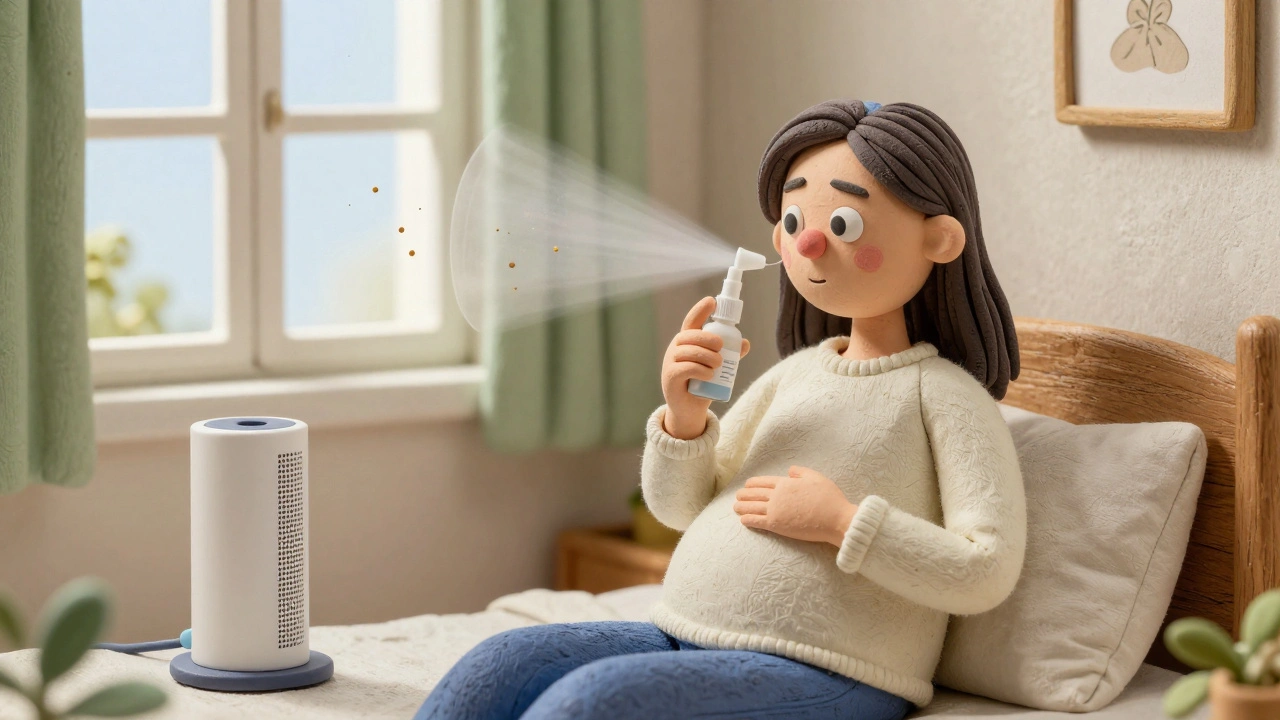
Managing allergies during pregnancy isn’t just about sneezing and itchy eyes-it’s about making smart choices that protect both you and your baby. About 1 in 3 pregnant people deal with allergic rhinitis, hives, or conjunctivitis, and many need medication to feel normal. But not all allergy drugs are created equal when you’re pregnant. Some are safe. Others carry real risks. And the timing? That matters just as much as the drug itself.
First Trimester: The Most Sensitive Window
The first 12 weeks of pregnancy are when your baby’s organs are forming. That’s why doctors urge caution with any medication during this time-even ones you’ve taken safely before. If you can avoid meds entirely, you should. Simple steps like using a saline nasal spray, running a HEPA filter, keeping windows closed during high pollen seasons, and washing your face and hair after being outside can make a big difference.
Still, if symptoms are severe enough to disrupt sleep, eating, or daily function, some medications are considered low-risk. First-generation antihistamines like diphenhydramine (Benadryl) and chlorpheniramine (Chlor-Trimeton) have been used for decades in pregnancy. Studies tracking over 200,000 pregnancies found no link between these drugs and birth defects. But they come with a trade-off: drowsiness. If you’re already tired from pregnancy hormones, adding sleepiness isn’t ideal.
Nasal Steroids: Your Best Bet for Congestion
If nasal congestion is your main problem, nasal corticosteroids are the top recommendation. Unlike oral decongestants, these sprays work locally in your nose with minimal absorption into your bloodstream. That means less risk to your baby.
Rhinocort (budesonide) has the strongest safety record. It’s the only nasal steroid classified as Pregnancy Category B by the FDA-meaning animal studies showed no harm, and human data supports its safety. Flonase Sensimist (fluticasone furoate), Nasonex (mometasone), and Flonase Allergy Relief (fluticasone propionate) are also considered safe throughout pregnancy, according to GoodRx’s 2023 clinical review. You can use them daily without worry.
But avoid Nasacort (triamcinolone). It doesn’t have enough safety data to recommend it during pregnancy. Even though it’s a steroid like the others, the lack of long-term studies makes it a no-go.
Oral Antihistamines: First-Gen vs. Second-Gen
Second-generation antihistamines like cetirizine (Zyrtec), loratadine (Claritin), and fexofenadine (Allegra) are popular because they don’t cause drowsiness. They’re also generally safe after the first trimester. Cetirizine and loratadine have been studied in thousands of pregnancies with no increased risk of birth defects. The American College of Obstetricians and Gynecologists (ACOG) and the American Academy of Allergy, Asthma & Immunology (AAAAI) both support their use.
Fexofenadine is trickier. It’s classified as Pregnancy Category C-meaning animal studies showed possible harm, but human data is limited. Still, no red flags have emerged in real-world use. Many doctors still prescribe it when other options don’t work.
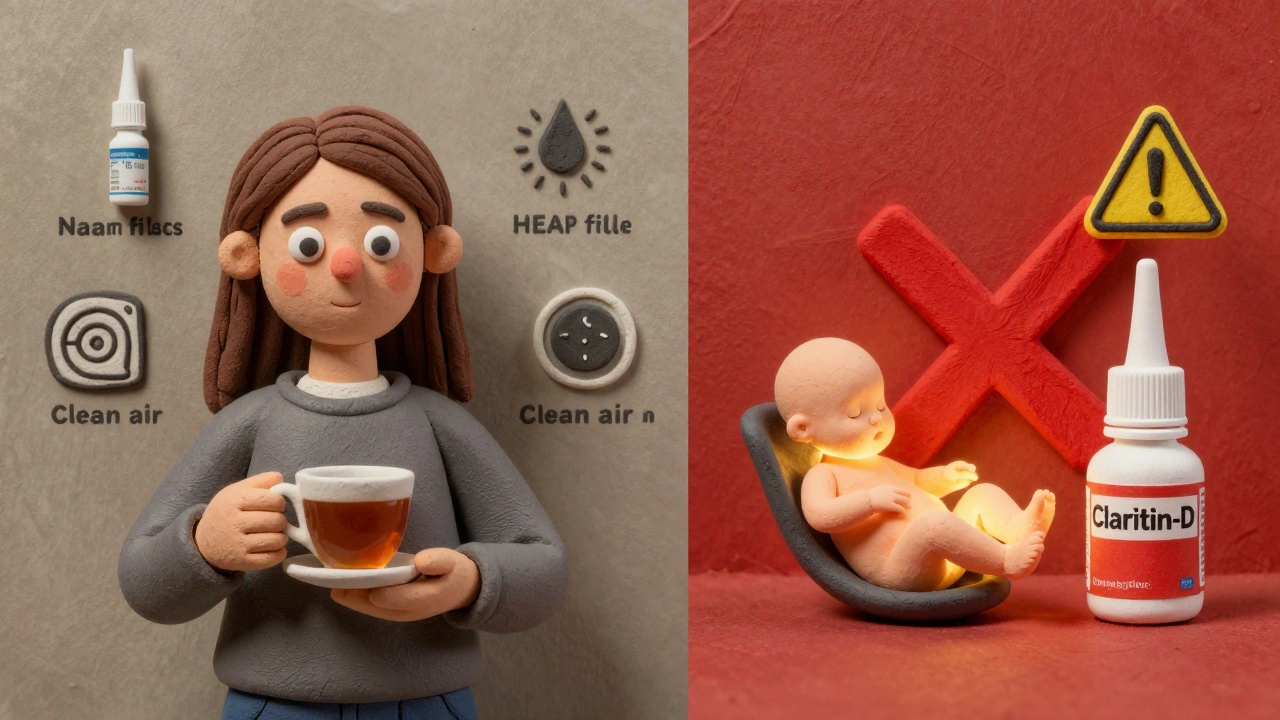
Don’t confuse Claritin with Claritin-D. The “D” means it contains pseudoephedrine, a decongestant. That’s a different story entirely.
Decongestants: The Big No in Early Pregnancy
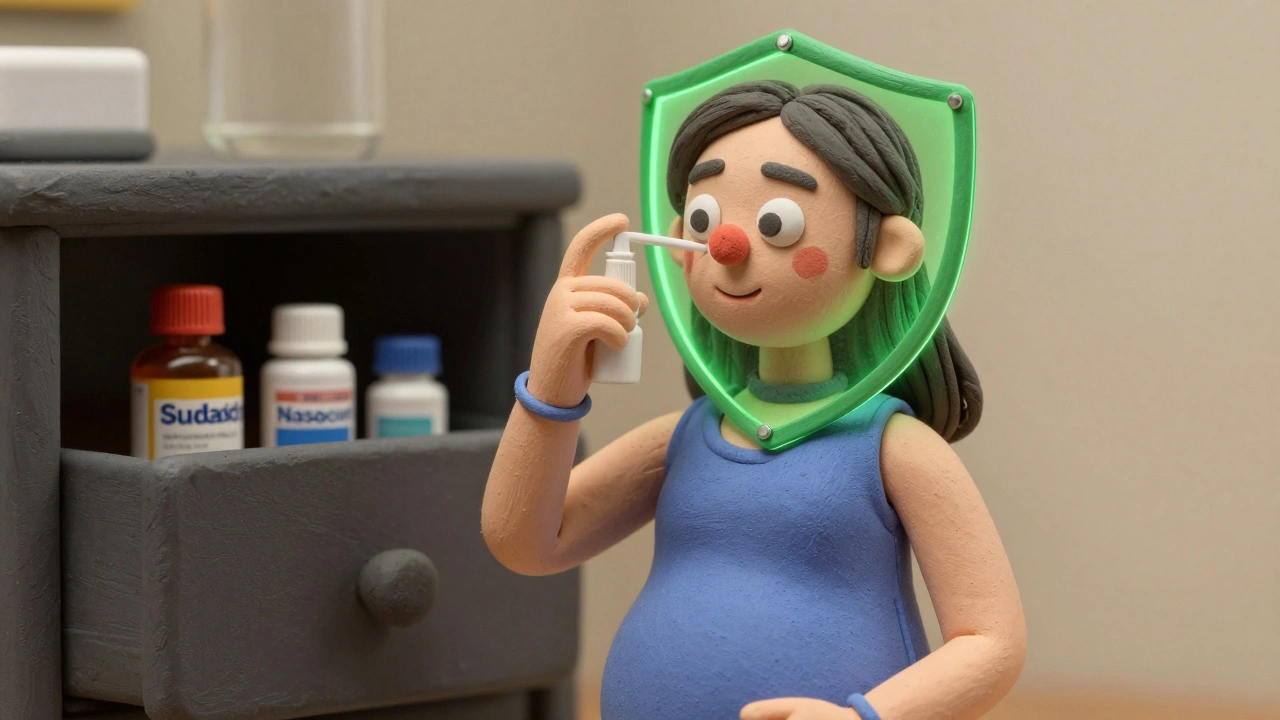
Pseudoephedrine (Sudafed) and phenylephrine are the most dangerous allergy meds during pregnancy. Pseudoephedrine has been linked to a 2.4-times higher risk of gastroschisis-a rare birth defect where the baby’s intestines develop outside the abdomen. That risk is highest in the first trimester.
Mayo Clinic updated its guidelines in December 2023 to say pseudoephedrine can be used in the second and third trimesters, but only under strict limits: no more than 30-60 mg every 4-6 hours, and never more than 240 mg in 24 hours. Even then, it’s not recommended if you have high blood pressure, which is common in pregnancy.
Phenylephrine, found in many OTC cold and allergy products, has even less safety data. It’s also Pregnancy Category C and shouldn’t be used unless absolutely necessary.
And skip nasal decongestant sprays like Afrin (oxymetazoline). They’re only meant for 3 days of use, even outside pregnancy. In pregnancy, they’re not recommended at all-there’s just not enough proof they’re safe.
What About Allergy Shots?
If you were already getting allergy shots before you got pregnant, you can usually keep going. Studies show no increased risk to the baby when immunotherapy continues. But starting shots during pregnancy? That’s a hard no. Your immune system is already adjusting to support the pregnancy. Adding a new allergen therapy could trigger unpredictable reactions.
Asthma and Allergies: Don’t Ignore the Connection
About 8% of pregnant people have asthma. And uncontrolled asthma is far more dangerous to your baby than most allergy meds. Inhaled corticosteroids like budesonide (Pulmicort) and fluticasone (Flovent) are safe throughout pregnancy. In fact, they’re the preferred treatment. Oral steroids like prednisone should be avoided unless your asthma is life-threatening.
Don’t assume your allergies are just a nuisance. If they’re triggering asthma symptoms, you need to treat them properly. Talk to your doctor about a plan before symptoms get out of hand.
Dosing and Formulations: Watch the Fine Print
It’s not just about the drug-it’s about the form. Avoid extended-release (ER), sustained-release (SA), or multi-symptom products. These often combine antihistamines with decongestants, cough suppressants, or pain relievers you shouldn’t take during pregnancy.
Stick to plain versions:
- Zyrtec (cetirizine) 10 mg once daily
- Claritin (loratadine) 10 mg once daily
- Benadryl (diphenhydramine) 25-50 mg every 4-6 hours as needed
- Rhinocort (budesonide) 1 spray per nostril once daily
Always check the active ingredients. If you see pseudoephedrine, phenylephrine, or “D” in the name, put it back.
The Bottom Line: Safety Is a Balance
There’s no perfect pill for allergies during pregnancy. But there are safe options-if you know which ones to pick. Your goal isn’t to eliminate every sneeze. It’s to control symptoms enough to sleep, eat, and function without risking your baby’s health.
Start with non-drug methods. If you need meds, choose nasal steroids or plain antihistamines. Avoid decongestants in the first trimester. Stick to single-ingredient products. And always talk to your doctor before starting or stopping anything-even something you think is harmless.
The science is clear: most antihistamines and nasal steroids won’t hurt your baby. But the wrong choice? That can. Don’t guess. Get the facts. Your body is doing something incredible. Let your meds help, not hinder, that process.
Is Benadryl safe during pregnancy?
Yes, diphenhydramine (Benadryl) is considered safe during pregnancy based on decades of use and studies involving over 200,000 pregnancies. It’s classified as Pregnancy Category B, meaning no increased risk of birth defects has been found. However, it causes drowsiness, which may worsen pregnancy fatigue. Use it only when needed and avoid long-term daily use.
Can I take Zyrtec or Claritin while pregnant?
Yes, both cetirizine (Zyrtec) and loratadine (Claritin) are generally safe during pregnancy, especially after the first trimester. Large studies show no increased risk of birth defects. They’re non-sedating, which makes them preferable for daily use. Stick to the standard dose: 10 mg once a day. Avoid Claritin-D or any product with “D” in the name-it contains pseudoephedrine.
Is Sudafed safe in the second trimester?
Sudafed (pseudoephedrine) should be avoided in the first trimester due to a possible link to gastroschisis. After the first trimester, it may be used cautiously under medical supervision: no more than 30-60 mg every 4-6 hours, and never more than 240 mg in 24 hours. It’s not recommended if you have high blood pressure. Always check with your doctor first.
Are nasal sprays safer than pills for allergies during pregnancy?
Yes, nasal corticosteroid sprays like Rhinocort, Flonase, and Nasonex are safer than oral decongestants or pills because they act locally in the nose with minimal absorption into the bloodstream. Rhinocort (budesonide) has the most evidence supporting its safety throughout pregnancy. Oral decongestants like pseudoephedrine carry higher risks, especially early on.
Should I stop my allergy shots if I get pregnant?
No, if you were already receiving allergy shots before pregnancy, you can usually continue them. Studies show no increased risk to the baby. However, you should not start allergy shots during pregnancy. The immune system changes in pregnancy, and introducing new allergens could trigger unpredictable reactions.
What’s the safest allergy medication in the first trimester?
The safest approach in the first trimester is to avoid medications unless absolutely necessary. If you need relief, saline nasal sprays, HEPA filters, and allergen avoidance are best. If medication is required, diphenhydramine (Benadryl) and chlorpheniramine are the best-studied antihistamines with no evidence of harm. Avoid all decongestants and nasal sprays like Nasacort during this time.
James Kerr
December 2, 2025 AT 23:09Been using Benadryl since week 8 and honestly? My nose hasn’t felt this clear in years 😊 No drowsiness either-maybe my body’s just used to it. Still avoiding anything with ‘D’ though. Stay safe, mama!
shalini vaishnav
December 3, 2025 AT 16:48This article is laughably basic. In India, we’ve been using chlorpheniramine for decades without a single documented birth defect. Western medicine overcomplicates everything with its FDA categories and overpriced sprays. Saline and common sense work better than any pharmaceutical marketing.
vinoth kumar
December 4, 2025 AT 19:14Just wanted to add-my OB actually recommended Rhinocort over everything else after I had a bad flare-up at 14 weeks. I was skeptical but it worked like magic. No drowsiness, no weird side effects. Also, I switched to a HEPA filter and noticed my nighttime sneezing dropped by like 80%. Small changes matter!
bobby chandra
December 5, 2025 AT 08:09Let’s be real-pregnancy isn’t a time to wing it with OTC meds. You’re not just treating a runny nose; you’re safeguarding a whole damn human being. Zyrtec? Safe. Claritin? Safe. Sudafed? A gamble with consequences you can’t undo. Don’t be the person who says ‘it’s just one pill’ and then spends six months in NICU hell. Your baby deserves better than your laziness.
Archie singh
December 6, 2025 AT 18:49Everyone’s acting like this is groundbreaking info. Newsflash: doctors have known this for 20 years. The real problem? Pharma companies push combo drugs because they make more money. And you people? You buy it. Wake up. Read the label. One ingredient. That’s it.
Gene Linetsky
December 7, 2025 AT 03:47Did you know the FDA’s Pregnancy Category B system was basically made up in 1979 and never updated? And Rhinocort? It’s just a branded version of a generic steroid that’s been in use since the 80s. They’re selling you fear disguised as science. Meanwhile, the real danger is stress from overthinking every sneeze.
Ignacio Pacheco
December 7, 2025 AT 19:01So… if I used Claritin-D last month before I knew I was pregnant, am I a monster now? Just wondering. Because I did. And now I’m Googling gastroschisis at 3 a.m. Thanks, internet.
Jim Schultz
December 8, 2025 AT 02:29Let’s be brutally honest: if you’re relying on OTC allergy meds during pregnancy, you’re already losing the game. The real solution? Move to a low-pollen zone. Install a whole-house HEPA system. Hire a cleaner. Stop touching your face. But no-people want a pill. Because convenience > responsibility. And now we have a generation of moms who think ‘safe’ means ‘FDA-approved.’
Kidar Saleh
December 9, 2025 AT 12:44In the UK, we’re taught to treat pregnancy as a time of heightened sensitivity-not fragility. That means avoiding unnecessary drugs, yes-but also not fearing the ones proven safe. I used loratadine daily in all three trimesters. My daughter is now a healthy 4-year-old who doesn’t even know what an antihistamine is. Balance, not fear.
Chloe Madison
December 11, 2025 AT 01:26As a nurse and a mom of two, I can’t stress this enough: if you’re unsure, call your OB. Don’t rely on Reddit. Don’t trust TikTok. Don’t guess. Your doctor has access to databases that track millions of pregnancies. They’re not judging you-they’re helping you. And yes, Benadryl is fine. Just not every night. And no, you don’t need to panic about one accidental dose.
Vincent Soldja
December 11, 2025 AT 03:14Too long. Didn't read.
Makenzie Keely
December 12, 2025 AT 11:58Just had my 18-week scan-baby’s perfect. And I’ve been taking Zyrtec daily since week 6. No issues. Also, I started using a humidifier + nasal rinse combo and my sinus pressure vanished. It’s not about avoiding all meds-it’s about choosing the right ones and pairing them with lifestyle tweaks. You’ve got this!
Francine Phillips
December 13, 2025 AT 09:39My doctor said avoid everything. So I did. Just drank more water, slept more, and wore a mask outside. My allergies are worse, but my baby’s fine. Sometimes the simplest choice is the safest one.